How to Start Outbound Sales in 2026 (60 Day Roadmap)
How to start outbound sales from zero in 2026: the 60 day roadmap from ICP to first meetings, the starter stack, and the metrics that prove the channel.
Learning how to start outbound sales is mostly learning what not to buy, automate, or scale in the first 60 days. The channel itself is not in question: 78 percent of B2B decision makers call outbound essential to growth and 80 percent of high performing revenue teams run it as a core motion, per the evidence laid out in why outbound sales still works. What kills first attempts is sequencing, teams that buy a sequencer before defining a customer, blast a purchased list before warming a domain, and hire an SDR before proving a single repeatable sequence exists. This roadmap runs the order that works: two weeks of definition, two weeks of infrastructure and list building, then a month of manual, founder led outbound that either finds the signal or tells you honestly why not.
Two numbers frame the whole plan. First, targeting beats volume by multiples at this stage: signal based campaigns to tight lists earn 5 to 8 percent reply rates against 1 to 2 for broad blasts in Apollo’s 2026 benchmarks, which means a list of 200 signal matched contacts outperforms 2,000 cold names on every metric while needing a tenth of the infrastructure. Second, the alternative to doing this yourself costs real money: a fully loaded SDR runs 98,000 to 173,000 dollars a year, and hiring one before the channel is validated means paying six figures to discover something a founder can learn in 60 days.
This piece is the on ramp of the cluster: the full system reference lives in the b2b outbound sales pillar, and every stage below links to its deep dive. Here we compress how to start outbound sales into the sequence a founder or first sales hire can actually run.
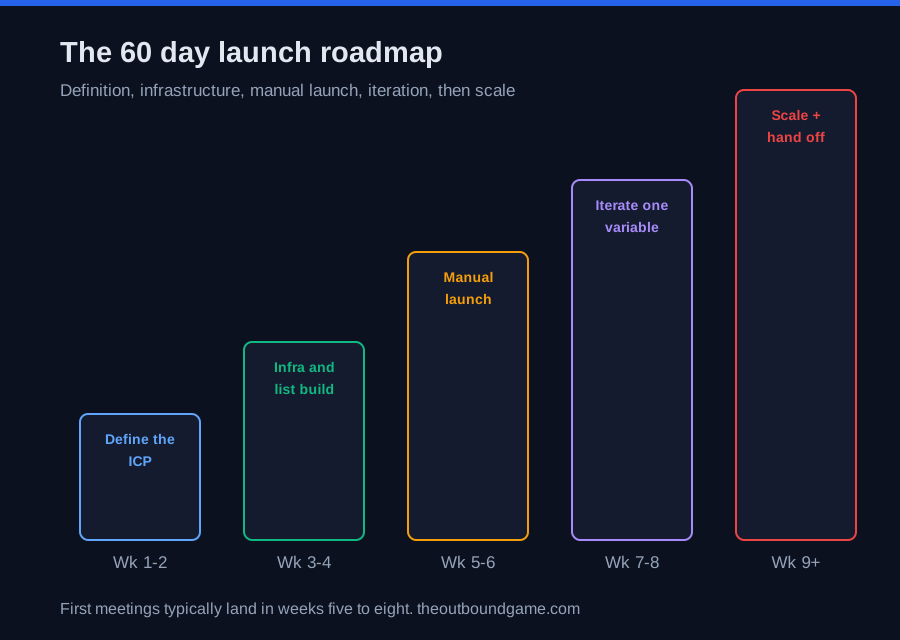
Days 1 to 14: define before you dial
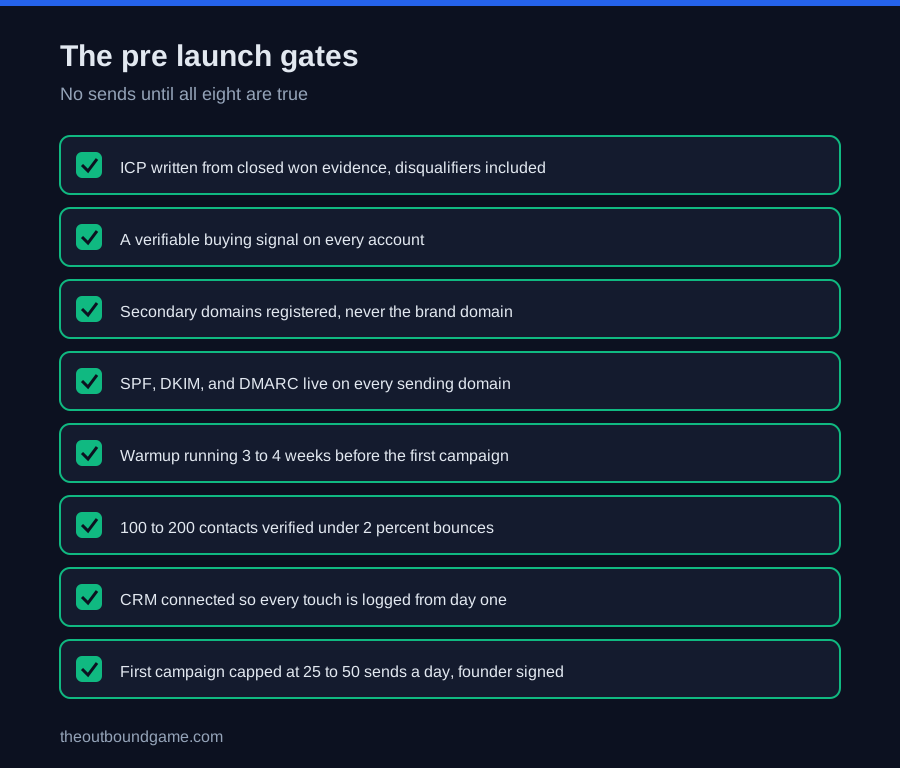
Everything downstream inherits the ideal customer profile, so it comes first and it comes from evidence, not aspiration. Pull your closed won deals, or at the pre revenue stage your most painful discovery conversations, and answer three questions: who has this pain most acutely, who can pay without a procurement committee, and who can move within 30 days. Write exact title clusters, firmographic bounds, and explicit disqualifiers, and make the definition narrow enough to feel uncomfortable, because 10 to 20 named accounts you deeply understand beat a segment of thousands you do not. The full worksheet lives in how to build a b2b prospect list.
Then attach buying signals, because timing is the cheapest relevance there is: funding announcements, hiring surges in the function you sell to, executive job changes with their 90 day mandates, technology switches, and competitor complaints in public. Every account on the first list should carry one verifiable reason why now, and accounts without one wait in nurture rather than burning your first impressions. The stakes of timing are structural: per Gartner, B2B buyers spend only 17 percent of their purchase journey meeting suppliers, so arriving at the signal moment is most of the game.
Days 15 to 28: infrastructure before volume
The least glamorous fortnight is the one that decides deliverability for the next year. Register 1 to 2 secondary domains for sending, never the brand domain, configure SPF, DKIM, and DMARC on each, create 2 inboxes per domain, and start warmup immediately, because the ramp takes 3 to 4 weeks and it gates everything, per the schedule in how many cold emails per day. While the domains warm, build the list: 100 to 200 contacts sourced against the ICP through Sales Navigator or a data platform, enriched with the signal, verified to a projected bounce rate under 2 percent.
The starter tech stack stays deliberately small, four tools and often under 150 dollars a month: a data and sequencing platform, a free CRM tier from HubSpot or similar so every touch is logged from day one, a calendar link, and the warmup tool. Spend on data quality before sending volume, and skip everything else, the dialers, the intent platforms, the AI SDRs, until the manual motion has proven what a good conversation looks like.
Days 29 to 60: launch manual, founder led, and small
The first campaign is founder led outbound by design, because nobody sells the product better pre scale, a founder’s name carries authority a template cannot, and every reply sharpens the roadmap. Budget roughly 90 minutes a day: 25 to 50 sends, each with 5 to 10 minutes of research and one specific observation in the opening line, built on the anatomy in how to write a cold email, under 100 words, one soft interest question. The sequence runs 4 to 6 touches over two weeks on the day 1, 4, 8, 15 skeleton from how to follow up on cold emails, with a LinkedIn touch interleaved per the sales cadence rhythm, since adding a social step reliably lifts replies above email alone.
Write everything manually for the first month and resist automation completely, because automating a broken system scales the breakage; the moment one message pattern books meetings repeatedly, and only then, move it into your cold email software and scale the sends, with the personalization surviving through the assembly line in how to personalize cold emails at scale.
Judge the first 30 live days on the founder stage metrics panel, which reads differently than mature benchmarks: reported opens above 50 percent, below 40 means a deliverability or subject problem per the diagnostics in why cold emails go to spam; total replies at 8 to 15 percent positive or neutral, achievable at this personalization depth; 30 to 50 percent of positive replies converting to held calls; and 20 to 30 percent of calls revealing genuine fit. Small samples mean directional reads, not statistics, so change one variable at a time and let two weeks pass before verdicts.
Five mistakes that kill first outbound attempts
-
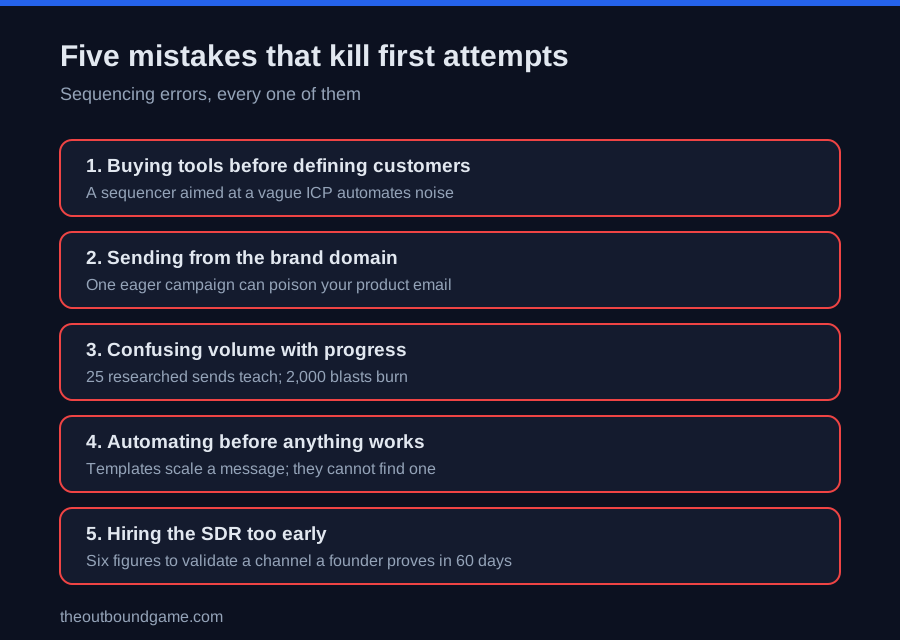
Buying tools before defining customers. A sequencer pointed at a vague ICP automates noise. The definition is free and it is the whole foundation.
-
Sending from the brand domain on day one. One eager first campaign can poison the domain your product emails depend on. Secondary domains, warmed, always.
-
Confusing volume with progress. Two thousand unverified sends produce spam placement and a false negative on the channel. Twenty five researched sends produce learning.
-
Automating before anything works. Templates scale a proven message; they cannot find one. Manual first, automation as a reward.
-
Hiring the SDR too early. Six figures fully loaded to validate a channel is the most expensive experiment in sales. Prove the sequence, then hand it over with the numbers attached.
The eight step launch sequence, compressed
-
Week 1: write the ICP from evidence. Three questions, exact titles, explicit disqualifiers, 10 to 20 named accounts to start.
-
Week 2: attach a signal to every account. Funding, hiring, exec changes, tech switches. No signal, no send.
-
Week 3: build the sending infrastructure. Secondary domains, authentication, 2 inboxes per domain, warmup started, CRM connected.
-
Week 4: build and verify the list. 100 to 200 contacts, enriched and verified under 2 percent projected bounces.
-
Weeks 5 to 6: run the first campaign manually. 25 to 50 founder signed sends a day, one observation each, 4 to 6 touches over two weeks.
-
Weeks 7 to 8: read the panel and iterate one variable. Opens gate deliverability, replies gate the message, calls gate the fit.
-
Scale what booked meetings. The proven pattern moves into the sequencer at 3x the volume, benchmarked against the tiers in cold email benchmarks.
-
Hire only after the system runs without heroics, handing the first SDR a working sequence, a signal sourced list, and a metrics panel instead of a quota and a prayer.
How the launch plan fits the broader outbound stack
-
The system it grows into is the b2b outbound sales pillar, every stage of this roadmap at mature scale.
-
The case for running it at all is made in why outbound sales still works, survivorship math included.
-
Its foundation is built in how to build a b2b prospect list, where the ICP becomes rows.
-
Its sending limits and warmup ramp live in how many cold emails per day, the physics of week three.
-
Its first email follows how to write a cold email, five decisions inside 11 seconds.
-
Its persistence engine is how to follow up on cold emails, where half the replies live.
-
Its research arm runs through how to use linkedin sales navigator for prospecting, accounts first.
-
And its graduation exam is the cold email benchmarks hub, where founder stage numbers meet the market tiers.
FAQ
Frequently asked questions
How do you start outbound sales from scratch?
How long does it take to see results from outbound?
Should founders do outbound themselves?
How many contacts do you need to start outbound?
What tools do you need to start outbound sales?
What is a good reply rate for a first outbound campaign?
When should you hire an SDR?
The bottom line
How to start outbound sales is a sequencing problem wearing a tooling costume: definition, then infrastructure, then a deliberately tiny manual launch, then scale, in that order and no other. The counterintuitive parts are the strategy, two silent weeks before any send, a first campaign small enough to feel pointless, a founder writing every email while the sequencer sits unbought, and they exist because each one prevents the failure mode that kills most first attempts. Sixty days in, you either hold a repeatable sequence with numbers attached, ready to scale and eventually to hand off, or an honest, cheap answer about fit that no six figure hire was needed to find. Both outcomes beat the alternative, which is guessing louder.
Want more tested breakdowns like this? We publish one honest teardown of outbound tools, tactics, and playbooks each week. Join the newsletter.
More on Outbound Strategy
Cold Email vs LinkedIn Outreach: Which Wins in 2026?
Cold email vs LinkedIn outreach in 2026: the reply rate and cost data, the volume caps, when each channel wins, and the combined sequence that beats both.
LinkedIn Connection Request Message: What Works in 2026
LinkedIn connection request message guide for 2026: the note paradox, the 120 to 180 character sweet spot, and the acceptance rate math that gates volume.
Multichannel Outbound in 2026: The Complete Playbook
Multichannel outbound in 2026: the channel roles, the coordinated 15 day cadence, behavior triggers, and why orchestration beats channel count.