The Best Cold Email Software in 2026, Compared Fully
The best cold email software in 2026, compared on deliverability not features. An operator guide to Instantly, Smartlead, Apollo, and pricing.
The best cold email software in 2026 is the one that lands in the inbox, not the cold email tools with the longest feature list, and that distinction matters more this year than ever. Reply rates have fallen to 3.43 percent on average, down from 5.1 percent in 2025, while the top quartile of B2B senders still clears 10 percent or more. The gap is not subject lines. It is deliverability infrastructure and data quality, the two things most feature comparisons bury under workflow screenshots. Pick the tool that protects inbox placement and feed it clean data, and you are already ahead of most senders.
Two forces define the category now. First, the market split into two camps: volume tools that optimize for sends per day and cheap unlimited mailboxes, and signal-first platforms that optimize for replies per send by triggering on real buying intent. Second, Google and Microsoft tightened bulk-sender rules again in February 2026, and tools that leaned on shared IPs saw deliverability drop 30 to 50 percent, while platforms that invested in private IP rotation held up. That single shift reordered the rankings, and it is why deliverability tooling, not feature breadth, is the right lens for choosing.
This is the tooling layer of the cold email channel, and it leans on a hard truth from our sister publication: the software cannot save bad sending habits. The deeper deliverability mechanics live in email deliverability and sender reputation, and the data that feeds any sequence comes from the data enrichment tools layer, because even the best tool bounces 30 to 40 percent of emails on a stale list.
Why deliverability is the real comparison
Before features, understand what actually separates these tools, because most feature lists are noise. Five capabilities decide cold email outcomes, and they all trace back to inbox placement.
Inbox rotation and sending infrastructure
The single most important feature in 2026. Inbox rotation distributes sends across many mailboxes to stay under per-provider limits and protect each domain, and after the February rule changes it separated the winners from the losers. Smartlead and Instantly invested early in private IP rotation and held their placement; tools on shared IPs did not. A cold email platform without sophisticated rotation is a liability at any volume.
Warmup, and its limits
Warmup builds sender reputation by simulating real engagement before you send cold. Smartlead, Instantly, and Lemlist include it; Apollo discontinued its warmup in 2024, which is a real gap for pure cold sending. But warmup alone does not guarantee deliverability, it is necessary, not sufficient, and pairing it with rotation, authentication, and clean data is what actually lands mail.
Unified inbox and reply handling
At scale across many mailboxes, replies scatter. A unified inbox consolidates them so the conversation stays personal and nothing slips. Smartlead and Instantly lead here, and for founder-led motions clean reply handling matters more than workflow depth.
Authentication and monitoring
SPF, DKIM, and DMARC are now mandatory under the bulk-sender rules, and the better tools automate the setup and monitor domain health and blacklists continuously. This is where deliverability-first platforms pull ahead of all-in-one tools that treat sending as a secondary feature.
The leading cold email software by use case
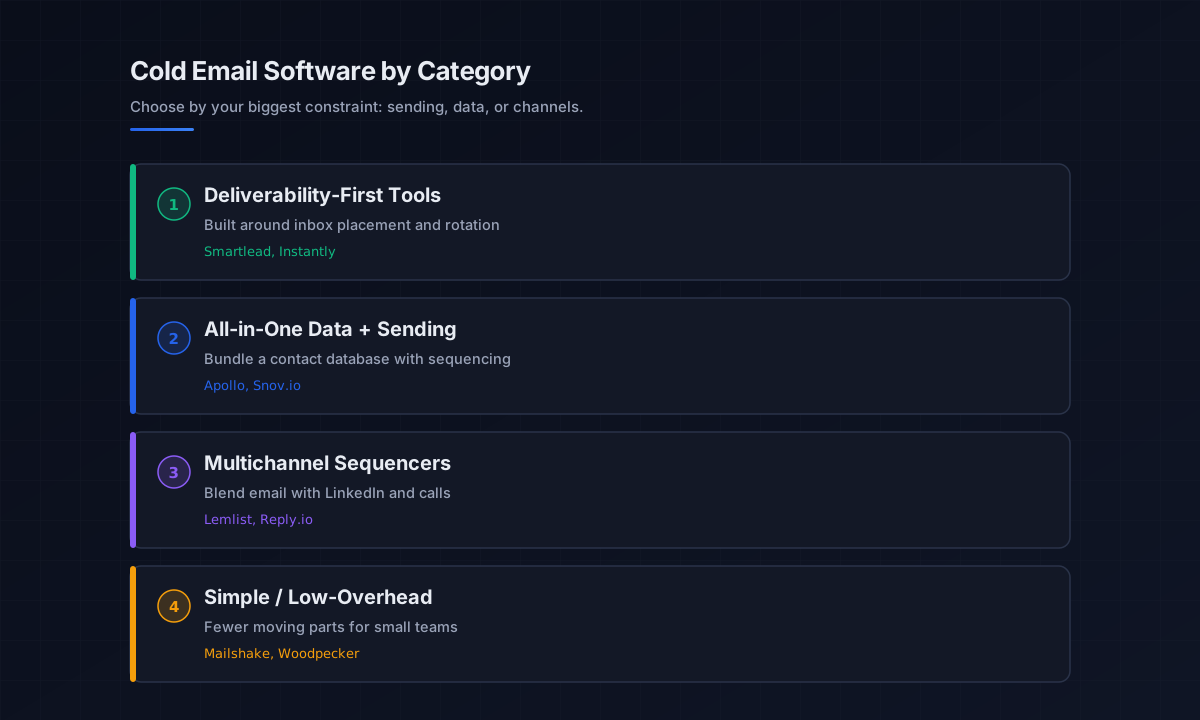
With deliverability as the frame, here are the tools teams actually reach for, grouped by who they fit. Pricing is current for 2026 and reflects the shift to volume-based tiers over per-seat plans.
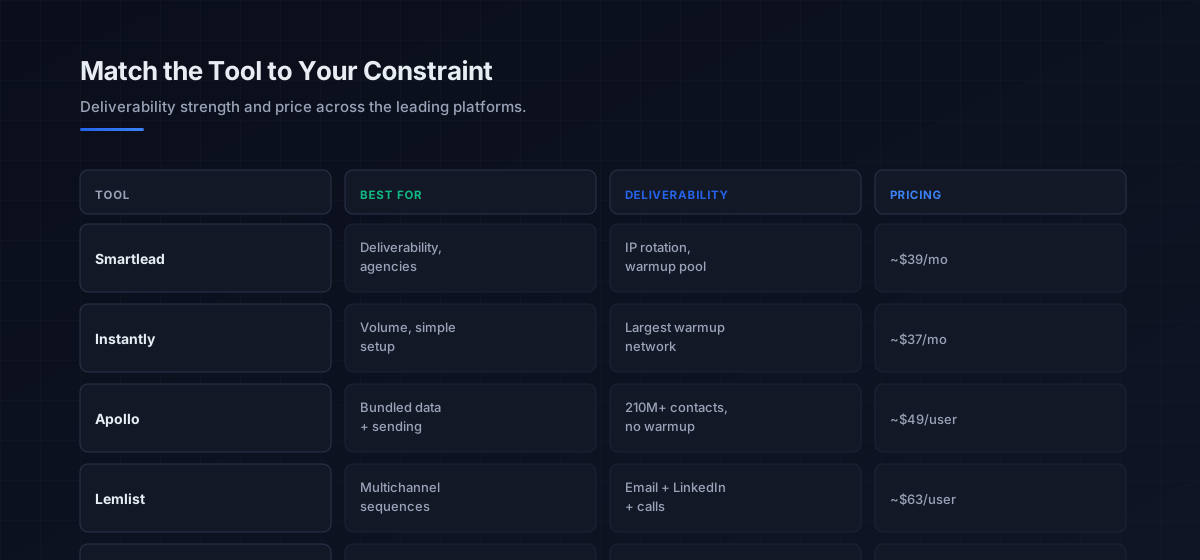
For deliverability-obsessed and agency teams, Smartlead leads, built almost entirely around inbox placement, unlimited mailboxes, dynamic IP rotation, a private warmup pool, and 400-plus blacklist monitoring, from around 39 dollars a month. In one 50,000-email head-to-head it produced the highest reply rate (4.8 percent against a 3.2 percent average) on the strength of its rotating IP pools, and its white-label workspaces make it the default for agencies managing many client accounts. For volume senders wanting the simplest setup, Instantly matches the core deliverability features with one of the largest warmup networks and the cleanest UI, from around 37 dollars a month, with benchmarks citing 95 percent-plus inbox placement on properly warmed setups.
For all-in-one prospecting plus sending, Apollo bundles a large contact database with sequencing from around 49 dollars a user, which suits teams without their own data, though it is a prospecting platform first and a sending platform second, warmup is gone and rotation is less sophisticated, so it trades deliverability depth for data convenience. For multichannel sequences blending email with LinkedIn and calls, Lemlist and Reply.io fit, and for simpler, fewer-moving-parts operations, Mailshake and Woodpecker serve smaller teams. The pattern: choose by your biggest constraint, sending infrastructure, bundled data, or multichannel breadth.
Volume vs signal-first: which camp fits you
The category’s split into two camps is the strategic choice underneath tool selection. Volume tools, the Smartlead and Instantly model, optimize for sends per day and low cost per email, and they suit teams with their own data running scaled outbound where the math works on reply volume. This is the dominant model and the right starting point for most B2B cold email teams.
Signal-first platforms optimize for replies per send by triggering outreach on real buying intent, fewer emails, better timed, higher conversion. They cost more and suit teams whose deal sizes justify precision over volume. The two are not mutually exclusive: the strongest 2026 motion often runs volume tooling on a base list while layering intent signals to prioritize, which connects to the sales intelligence tools layer. Whichever camp you choose, the deliverability rules are identical, because a perfectly targeted email in the spam folder converts exactly as poorly as a generic one.
How cold email software fits the outbound stack
Cold email automation sends and sequences for you, but a cold email platform sits on top of two layers that decide whether it works at all. Beneath it is the data, since the cleanest tool bounces 30 to 40 percent on stale lists, which is why the data enrichment tools and b2b data providers layers matter as much as the sender. Around it is deliverability discipline, the warmup, authentication, and reputation management covered in email deliverability, without which no platform lands.
Above and beside it sits the rest of outbound. Email is one channel in a multichannel motion, strongest stacked with the cold calling phone channel and LinkedIn outreach, all coordinated under the broader outbound sales playbook. The email sequencing software is the execution layer; the data feeds it, deliverability protects it, and multichannel coordination multiplies it. Get those surrounding layers right and the choice between Smartlead and Instantly becomes a detail rather than the decision.
Five mistakes teams make choosing cold email software
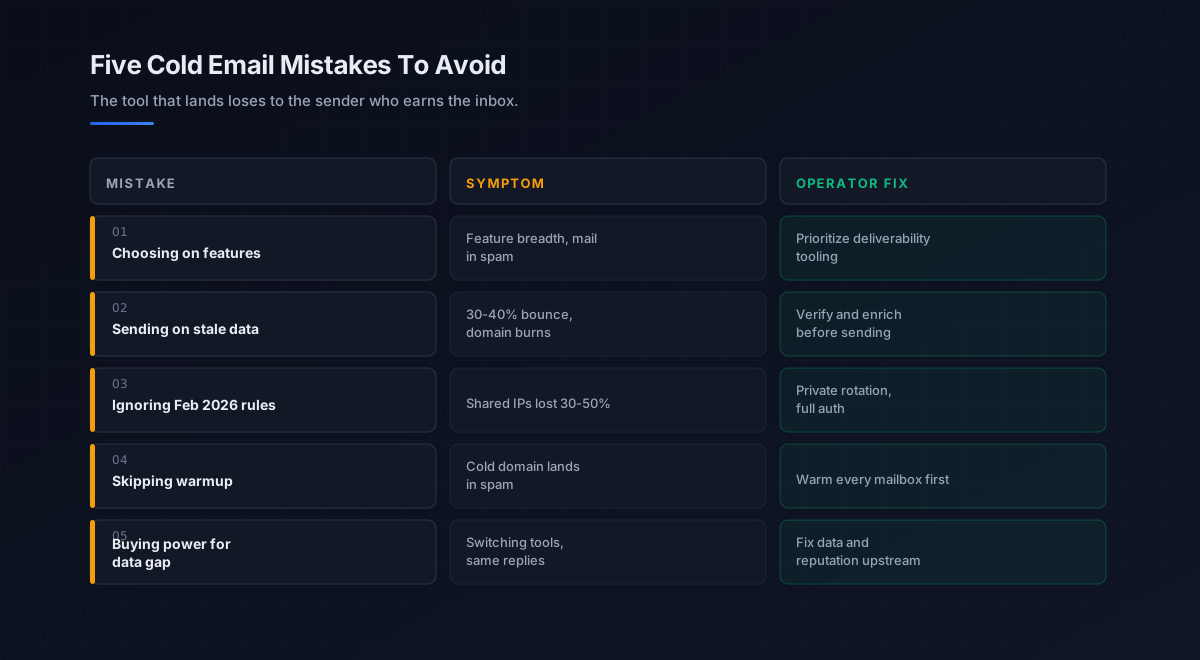
What we see most often is the same handful of errors that tank reply rates regardless of tool.
-
Choosing on features over deliverability. Feature breadth is noise next to inbox placement. Prioritize rotation, warmup, and authentication, the capabilities that decide whether mail lands.
-
Sending on stale data. Even the best tool bounces 30 to 40 percent on old lists, which wrecks domain reputation. Verify and enrich data before loading a single sequence.
-
Ignoring the February 2026 rule changes. Tools on shared IPs saw 30 to 50 percent deliverability drops. Use a platform with private IP rotation and compliant authentication, not a legacy shared-IP setup.
-
Skipping warmup. Sending cold from a cold domain lands in spam. Warm every mailbox first, and note that some all-in-one tools no longer include warmup at all.
-
Buying sending power to fix a data problem. Switching platforms rarely lifts reply rates when the real issue is the list. Fix data and reputation upstream before blaming the software.
An eight-step framework for choosing cold email software
This is the order we work through with the teams we work with when they pick a sending platform. Run it before buying anything.
- Verify the data first. Source and enrich a clean list, because a 30 to 40 percent bounce rate sinks any tool and burns the domain.
- Prioritize deliverability features. Weight inbox rotation, warmup, authentication, and monitoring above workflow breadth.
- Pick your camp. Volume tooling for scaled outbound on your own data, signal-first for precision when deal size justifies it.
- Match the tool to your constraint. Smartlead or Instantly for sending, Apollo for bundled data, Lemlist for multichannel.
- Set up authentication. Configure SPF, DKIM, and DMARC correctly, now mandatory under the bulk-sender rules.
- Warm every mailbox. Run warmup before cold sending, and confirm the tool includes it rather than assuming it does.
- Keep volume conservative. Respect per-provider limits and the new rules, using rotation to distribute rather than spike.
- Measure reply rate, not sends. Judge the platform on replies and positive replies per send, not raw sending capacity.
How cold email fits the broader stack
Cold email is one channel in a larger outbound system. Each layer connects to a deeper guide.
- Deliverability. The discipline that lands mail, on email deliverability.
- Sender reputation. Keeping domains healthy, on sender reputation.
- The data layer. Clean lists that feed sequences, in b2b data providers and data enrichment tools.
- Prospecting. Finding the right people, in best AI tools for sales prospecting.
- The phone channel. Stacking calls with email, in the cold calling pillar.
- LinkedIn. Adding the trust channel, in LinkedIn outreach.
- Strategy. The motion email serves, in outbound sales.
- AI agents. Where sending meets automation, in the AI SDR pillar.
That is the map. The data supplies clean addresses, deliverability discipline earns the inbox, the software sends and sequences, and multichannel coordination turns a delivered email into a booked meeting.
Frequently asked questions
What is the best cold email software in 2026?
Why are my cold email reply rates so low?
What changed for cold email in 2026?
How much does cold email software cost?
What is inbox rotation and why does it matter?
Does cold email software handle deliverability for me?
Should I use Smartlead or Instantly?
The bottom line
The best cold email software in 2026 is the one that protects inbox placement, not the one with the most features. Smartlead leads for deliverability and agencies, Instantly for simple high-volume sending, and Apollo for teams that need bundled data, but the choice between them matters far less than the layers around them. The February 2026 bulk-sender rules made private IP rotation and proper authentication non-negotiable, and reply rates falling to 3.43 percent raised the premium on clean data and warmed domains.
If you take one rule from this guide, make it this: the tool that lands in the inbox loses to the sender who earns the inbox. Pick a deliverability-first platform, then spend your real effort upstream, on verified data, warmed mailboxes, and correct authentication. Do that and you join the top quartile clearing 10 percent replies while the average sender wonders why cold email stopped working.
Get the operator playbook in your inbox. The Outbound Game publishes one operator-grade breakdown a week on B2B outbound sales, tactics, tooling, and ops. No fluff, no vendor talking points. Subscribe and get the next one when it ships.
More on Cold Email
Cold Email Call to Action: What Converts in 2026 (Data)
Cold email call to action data for 2026: why interest CTAs win cold, when specific time asks take over, and the ladder that escalates across a sequence.
How to Respond to Cold Email Replies (2026 Playbook)
How to respond to cold email replies in 2026: the six reply lanes, the speed windows that decide conversion, and the plays that turn replies into meetings.
How to Follow Up on Cold Emails in 2026 (What to Send)
How to follow up on cold emails in 2026: the day by day map, what each touch should say, breakup emails that earn replies, and when to stop.