The Best Sales Intelligence Tools in 2026, Compared
The best sales intelligence tools in 2026, compared by category and gap. An operator guide to contact data, intent signals, and what you actually pay.
The best sales intelligence tools in 2026 answer two questions a CRM cannot: who to contact, and why they are worth contacting now. That is the line that separates this category from everything around it. For serious B2B prospecting, a CRM is a system of record that stores what you already know; sales intelligence feeds it the verified data, intent signals, and account context it does not generate on its own. Without that feed, the record rots, Salesforce’s own research found 91 percent of CRM data is incomplete and 70 percent decays annually, so the intelligence layer is what keeps the whole system pointed at real, in-market buyers.
The mistake that defines this market is buying by feature count instead of by gap. Most B2B teams still toggle between five or six tools to prep for a single meeting, and they got there by stacking platforms that overlap on data while leaving the actual gap, usually timing or account context, unfilled. The category has split into clear sub-types, contact databases, intent and ABM platforms, conversation intelligence, and all-in-one data-plus-engagement, and the right purchase is the one that fills your specific weakness, not the one with the longest matrix. Pick by gap, not by feature count.
This is the intelligence layer of the Data and AI stack, a companion to the data enrichment tools guide that keeps the data accurate and the sales prospecting workflow that acts on it. Enrichment makes the data correct; intelligence makes it actionable; prospecting turns it into outreach.
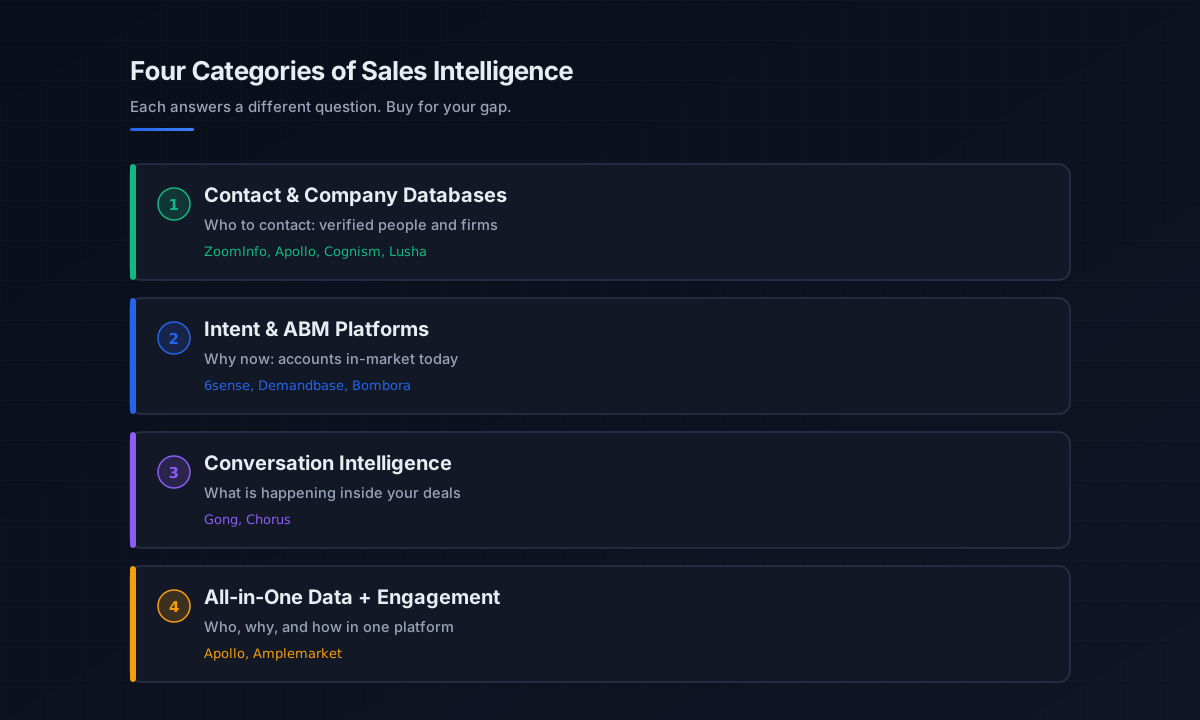
The categories of sales intelligence software
Understanding the sub-types is what stops you from overpaying for overlap. Each category solves a different question, and most teams need at least two, or one platform that genuinely combines them.
Contact and company databases
This is the foundation: a database of verified people and companies in your ICP, answering who to contact. ZoomInfo brings the largest breadth (500 million-plus contacts, deep firmographics, org charts), Apollo leads on value with transparent pricing for SMB and mid-market, Cognism is purpose-built for GDPR-compliant EMEA coverage and phone-verified mobiles, and Lusha covers simple, low-cost contact lookup. This layer overlaps heavily with the enrichment stack, which is why teams often consolidate the two.
Intent and ABM platforms
This is the timing layer, and the one with the largest unfilled gap at most teams. Intent data answers why now by surfacing accounts actively researching your category, often before they fill out a form. 6sense and Demandbase lead enterprise ABM with predictive intent scoring, Bombora provides account-level third-party intent, and first-party signal tools identify buyers engaging with your own site in real time. Buyer intent data is what lets a team with a full pipeline but low conversion fix the real problem, which is timing and targeting, not volume.
Conversation intelligence
This category sits after the conversation, not before it. Gong and Chorus record, transcribe, and analyze sales calls to surface what is actually happening inside deals, feeding coaching and forecasting. It is intelligence about your own pipeline rather than the market, and it pairs with the data categories rather than replacing them.
All-in-one data plus engagement
The newest shift: the line between intelligence (who and why) and engagement (how) is collapsing. Platforms now combine 100-plus intent signals and large contact databases with multichannel execution in one product, closing the signal-to-action gap that slows pipeline. Apollo bundles data with sequencing and a dialer at the value end; richer all-in-one platforms sit at mid-market pricing.
The leading sales intelligence tools by fit
With the categories clear, here are the tools teams actually reach for, grouped by who they fit. Pricing is current for 2026 and noted where it shapes the decision.
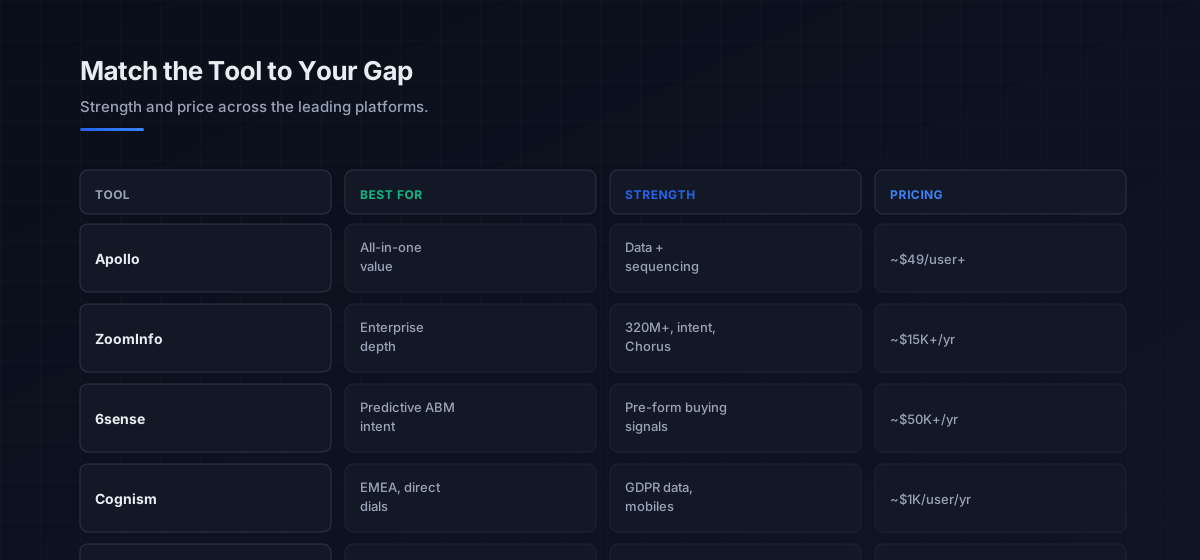
For affordable all-in-one prospecting, Apollo offers the best value, a contact database plus sequencing from a free tier and roughly 49 dollars a user, with the trade-off of mid-80s data accuracy against ZoomInfo’s higher mark. For enterprise depth, ZoomInfo is the default, 500 million-plus contacts, intent, conversation intelligence via Chorus, and org charts, starting around 15,000 dollars a year with gated, credit-based pricing. For enterprise ABM with predictive intent, 6sense is strongest, surfacing the large share of buying activity that happens before a form fill, though it starts around 50,000 dollars-plus a year and requires real ABM maturity to extract value.
For EMEA teams needing compliant data and phone-verified mobiles, Cognism earns its price, with case studies citing ROI in weeks from intent plus direct dials. For stitching multiple data sources into custom workflows, Clay orchestrates waterfall enrichment across providers. The honest pattern from teams that test on their own data: evaluate total cost of ownership, not license fees, because the enterprise platforms often need dedicated ops resources that mid-market companies do not have.
Sales intelligence vs sales engagement vs enrichment
Three categories get blurred constantly, and keeping them straight saves real money. Sales intelligence identifies who to contact and why, through data, intent signals, and account research. Sales engagement handles how you contact them, through email sequences, calling, and LinkedIn. Data enrichment keeps the underlying records accurate as they decay. Historically these were separate tools; in 2026 the lines are collapsing, with all-in-one platforms covering intelligence and engagement together, but the functions remain distinct even when one vendor sells them as a bundle.
The practical consequence is that you should map your stack by function before buying. Buying intelligence and engagement separately can cost two to three times more and creates a signal-to-action gap where a known in-market account sits idle because the intelligence tool does not act and the engagement tool does not know. Whether you consolidate or run best-of-breed, the test is the same: does a buying signal reach an outreach sequence without manual copying? The data enrichment tools guide covers the accuracy layer, and the engagement side connects to the broader outbound sales motion and the sales prospecting workflow.
How sales intelligence fits the data stack
A sales intelligence software subscription supplies the who and the why, but it does not, alone, keep data fresh or execute outreach. It needs the layers around it. Enrichment keeps the contact records accurate, since b2b sales intelligence is only as good as the data feeding it and that data decays about 2 percent a month. Prospecting routes the intelligence into sequences. And the intent signals are most valuable when they trigger a real, timely action across channels, the verified dials feeding cold calling, the inboxes kept healthy per email deliverability, the targeting behind LinkedIn Sales Navigator, and the lists driving LinkedIn automation tools.
This is the same through-line as the rest of the stack: intelligence tells you who and when, enrichment keeps it accurate, and the channels turn it into meetings. For most mid-market teams the right shape is one database plus one signal source, deferring heavy ABM platforms until the account-based motion is mature, because a 50,000-dollar intent platform returns little to a team without a defined target-account list to point it at.
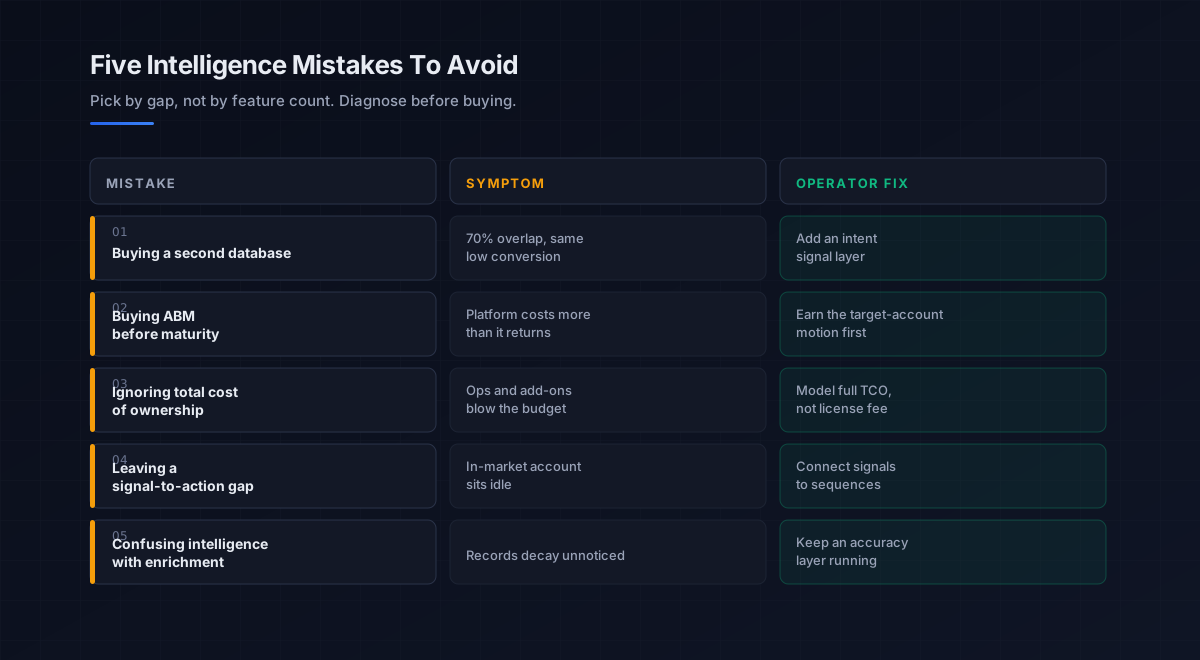
Five mistakes teams make with sales intelligence tools
What we see most often is the same handful of errors that waste intelligence budget.
-
Buying a second overlapping database. When conversion is low on a full pipeline, the gap is timing, not contacts. Add an intent signal layer, not another list that overlaps the first.
-
Buying ABM before ABM maturity. Enterprise intent platforms cost more than they return without a defined target-account list and a coordinated marketing-sales motion. Earn the maturity first.
-
Ignoring total cost of ownership. Enterprise platforms need dedicated ops and Data Passport-style add-ons. Model the full TCO, not the license fee, before signing.
-
Leaving a signal-to-action gap. A known in-market account is worthless if the signal never reaches a sequence. Confirm intelligence connects to engagement without manual copying.
-
Confusing intelligence with enrichment. Intelligence finds who and why; enrichment keeps it accurate over time. Buying one and assuming it does the other leaves your records decaying.
An eight-step framework for choosing sales intelligence tools
This is the order we work through with the teams we work with when they build an intelligence stack. Run it before buying anything.
- Diagnose the real gap. Contacts, timing, account context, or deal execution. Buy for the gap, not the feature matrix.
- Start with one database. ZoomInfo for enterprise depth, Apollo for value, Cognism for EMEA, Lusha for simplicity.
- Add one signal source. Intent or first-party signals to answer why now, once contact data is adequate.
- Match ABM spend to maturity. Defer 6sense or Demandbase until you have a target-account list and marketing-sales alignment.
- Layer conversation intelligence later. Add Gong-style tools when the gap is deal execution and coaching, not targeting.
- Test accuracy on your own list. Measure data quality on your records, since accuracy varies by vertical and vendor.
- Close the signal-to-action gap. Ensure signals flow into outreach automatically, by consolidating or integrating tightly.
- Model total cost of ownership. Include ops resources, add-ons, and credits, then judge on pipeline produced, not features bought.
How sales intelligence fits the broader stack
Sales intelligence is the who-and-why layer of the data foundation. Each connects to a deeper guide.
- Data accuracy. Keeping the records fresh, in data enrichment tools.
- Prospecting. The workflow intelligence feeds, in best AI tools for sales prospecting.
- The phone channel. Where verified dials and timing meet, in the cold calling pillar.
- LinkedIn targeting. Account and contact context for outreach, in LinkedIn Sales Navigator.
- The wider AI stack. All six categories of sales AI in best AI sales tools.
- Strategy. The motion the intelligence serves, in outbound sales.
- AI agents. Where intelligence meets automation, in the AI SDR pillar.
- Email coordination. Acting on signals over email, on email deliverability and sender reputation.
That is the map. Intelligence tells you who is in-market and why, enrichment keeps the data accurate, prospecting routes it into sequences, and the channels turn a well-timed signal into a booked meeting.
Frequently asked questions
What are the best sales intelligence tools in 2026?
What is the difference between sales intelligence and a CRM?
What is intent data in sales intelligence?
How much do sales intelligence tools cost?
Do I need both sales intelligence and data enrichment?
Should a mid-market team buy 6sense or Demandbase?
What is the difference between sales intelligence and sales engagement?
The bottom line
The best sales intelligence tools in 2026 are the ones that fill your specific gap, not the ones with the longest feature matrix. Sort the field by category, contact databases like Apollo, ZoomInfo, Cognism, and Lusha for who; intent platforms like 6sense, Demandbase, and Bombora for why now; conversation intelligence like Gong for deal execution; and all-in-one platforms that bundle data with engagement, then buy for the weakness you actually have. Test accuracy on your own list and model total cost of ownership before committing.
If you take one rule from this guide, make it this: pick by gap, not by feature count. A full pipeline with low conversion needs timing, not more contacts; decaying records need enrichment, not another database; stalled deals need conversation intelligence, not intent. Diagnose the gap first, fill it with the right category, and connect the signal to action so a known in-market account never sits idle.
Get the operator playbook in your inbox. The Outbound Game publishes one operator-grade breakdown a week on B2B outbound sales, tactics, tooling, and ops. No fluff, no vendor talking points. Subscribe and get the next one when it ships.
More on Data Providers
Apollo vs Cognism in 2026: Which Data Platform to Buy
Apollo vs Cognism compared for 2026: real pricing, EMEA versus US coverage, phone verified mobiles, GDPR posture, and which platform fits your motion.
Apollo vs ZoomInfo in 2026: A Full Operator Verdict
Apollo vs ZoomInfo compared on independent 2026 benchmarks: real pricing, email and phone data accuracy, the new AI agents, and which one to buy.
The Best Data Enrichment Tools in 2026, Compared Fully
The best data enrichment tools in 2026, compared by fit. Apollo, ZoomInfo, Clay, and Cognism on accuracy, waterfall vs single-source, and real pricing.