The Best Data Enrichment Tools in 2026, Compared Fully
The best data enrichment tools in 2026, compared by fit. Apollo, ZoomInfo, Clay, and Cognism on accuracy, waterfall vs single-source, and real pricing.
The best data enrichment tools in 2026 are not the ones with the biggest database; they are the ones that keep your records accurate for the segments you actually sell into. The old model of enrichment, buy one database, export a CSV, fill in the missing fields, is broken, because B2B contact data decays at roughly 2 to 3 percent a month and the average database loses around 30 percent of its data accuracy every year. A single source that was 90 percent accurate at purchase is materially wrong within months, and no single vendor covers every segment equally. So the real question is not which tool has the most contacts, it is which approach keeps your data fresh and which fits your team’s scale, stack, and budget.
That reframing matters because the field splits along a line most buyers miss: single-source versus waterfall. A single-source enrichment tool enriches from its own proprietary database, simple and fast but limited to that vendor’s coverage. A waterfall enrichment approach queries many providers in sequence, so when one misses a field the next tries, which in independent tests delivers materially higher coverage than any single source. The best data enrichment tools sort into a few clear jobs around that divide, and once you see the jobs, the crowded field of fifty-plus vendors becomes a short, decidable shortlist. This guide compares them the way an operator actually decides: by fit and accuracy, not database size.
This is a tool comparison inside the b2b data providers cluster, which covers the discipline of sourcing and verifying data. It sits alongside the data enrichment tools guide on the how, and the sales intelligence tools layer on intent. Whichever tool you choose feeds the contacts your B2B prospecting, cold email, and sales cadence run on and lands in your CRM software.
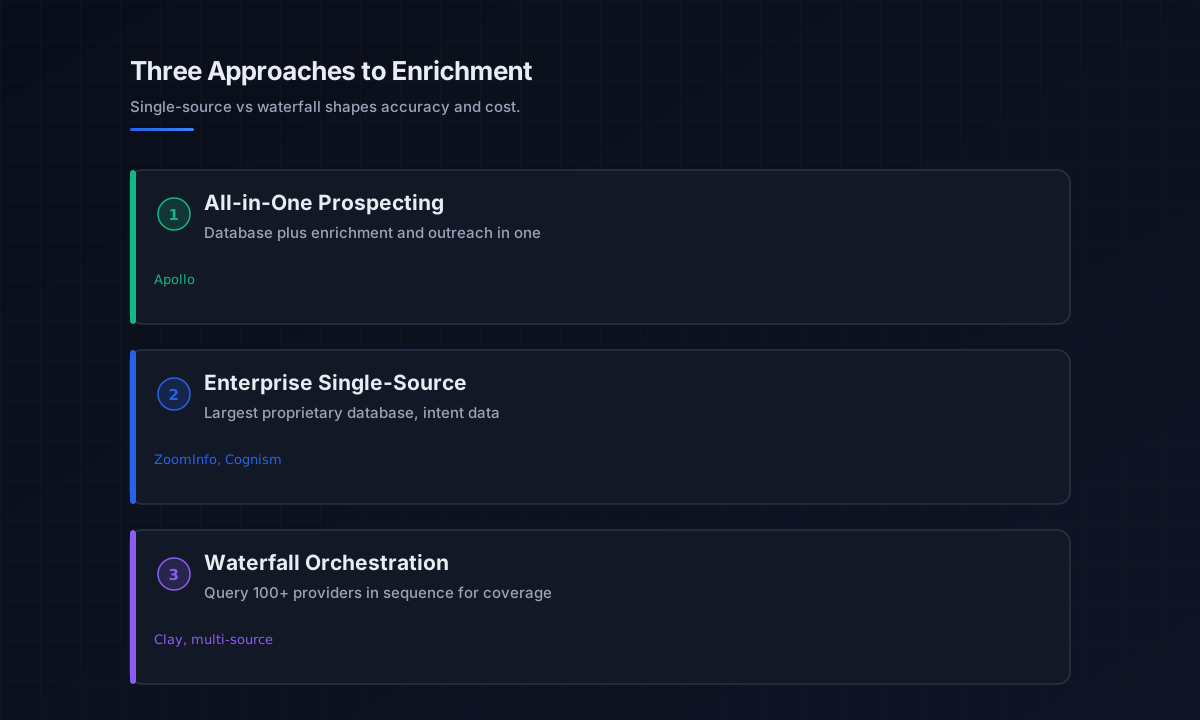
How the best data enrichment tools sort by approach
Before comparing specs, group the field by approach, because the single-source versus waterfall choice shapes accuracy, cost, and who should operate the tool more than any feature does. The leading data enrichment software falls into three jobs.
All-in-one prospecting plus enrichment
Apollo leads here: a large contact database (230M-plus) combined with enrichment and outreach in one platform, at transparent SMB pricing from around 49 to 149 dollars a user. It enriches CRM records and net-new leads with verified emails, titles, and company details, and runs sequences off the same data. The trade-off is that enrichment depth is secondary to outreach, accuracy sits around 80 percent in many segments, below the dedicated data vendors, so it is the fit for SMB and mid-market teams that want one affordable tool rather than maximum accuracy.
Enterprise single-source databases
ZoomInfo and Cognism own this job: the largest proprietary databases (ZoomInfo at 300M-plus contacts) with deep firmographics, intent data, and automated CRM sync. They deliver strong accuracy (ZoomInfo around 85 percent, Cognism around 87 percent and the strongest phone coverage for European data) but start at 15,000-plus dollars a year. This is the fit when you need the broadest out-of-the-box coverage for large-scale outbound or ABM and have the budget to support it.
Waterfall orchestration
Clay defines this job: rather than one database, it orchestrates 100-plus providers in sequence behind a spreadsheet-style interface, so coverage gaps in one source are filled by the next. It is the most flexible and highest-coverage approach, from around 149 dollars a month, but it burns credits per enrichment step, has unpredictable costs on large lists, and needs a RevOps engineer to configure. This is the fit for technical teams that want maximum coverage and control and have someone to run it.
The leading tools by fit and price
With the jobs clear, here is how the leading platforms compare, with current 2026 pricing. Weight tested accuracy and segment coverage above raw database size.
For all-in-one on a budget, Apollo is the SMB pick: 230M-plus contacts, waterfall-style fill across multiple sources, sequences included, transparent pricing from roughly 49 dollars a user, with accuracy near 80 percent. For enterprise single-source, ZoomInfo offers the largest database and intent data from 15,000-plus dollars a year at around 85 percent accuracy, while Cognism matches it for GDPR-compliant European data with phone-verified mobile numbers and around 87 percent accuracy. For waterfall orchestration, Clay queries 100-plus providers from about 149 dollars a month with credit-based pricing, and dedicated multi-provider tools push tested email accuracy higher still by running 15-plus sources with triple verification. For HubSpot shops, Clearbit (now Breeze, bundled into HubSpot) gives real-time native enrichment, and for developers, People Data Labs offers API-first enrichment priced per record.
A note on credit-based pricing, which catches most teams: tools like Clay and the enterprise platforms charge per enrichment, and overages can double your bill if you run large lists without monitoring consumption. Model your real volume before committing, since the headline price rarely reflects what you will actually spend.
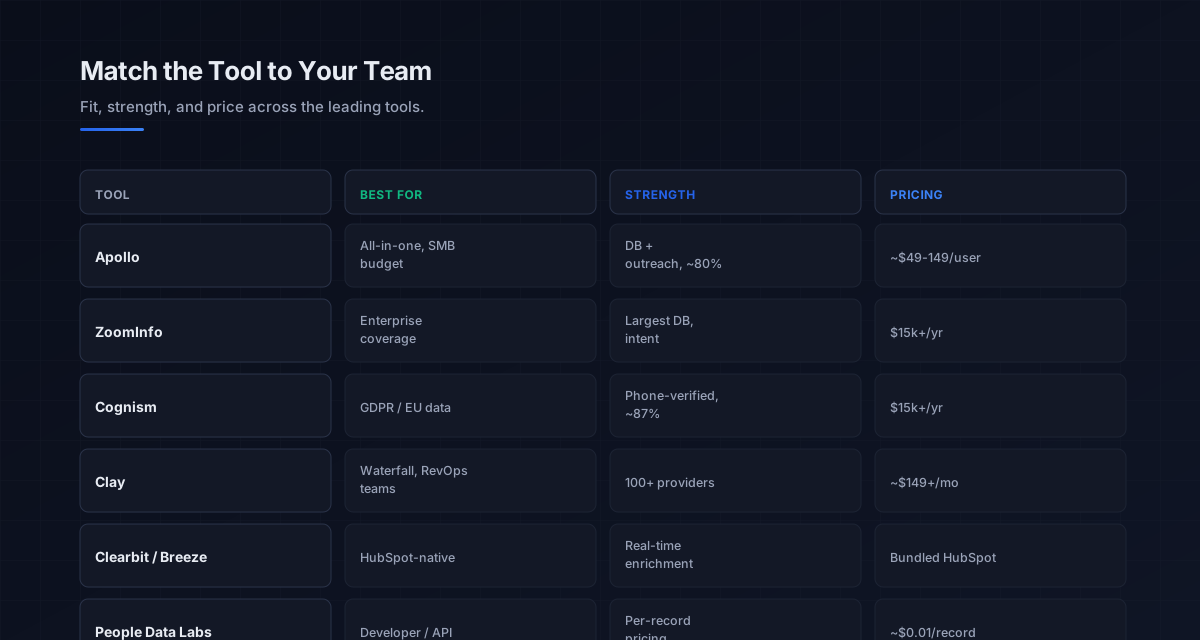
Choosing the right enrichment tool for your team
The selection is a sequence, not a feature shootout. Start by naming the approach your situation calls for: budget and an all-in-one workflow point to the all-in-one tools, broad out-of-the-box coverage points to enterprise single-source, and maximum accuracy with a RevOps engineer to run it points to waterfall. That single decision narrows fifty vendors to a shortlist of three.
Then weight three things in order. First, tested accuracy in your segments, run a sample of your own list through finalists rather than trusting headline accuracy claims, since real accuracy varies sharply by industry and geography. Second, CRM and stack fit, confirm the tool syncs cleanly with your CRM and keeps records fresh automatically, because enrichment that does not sync becomes a manual chore that decays. Third, the true cost including credits, model your real enrichment volume so overage pricing does not double the bill. Right-size to scale too: an SMB team is usually better served by an affordable all-in-one or a focused waterfall than a six-figure enterprise contract. The discipline behind all of this lives in the b2b data providers pillar and the data enrichment tools guide.
Why the tool sits downstream of the process
A data enrichment tool is one layer in the data motion, and its value depends on the process around it. The first principle is that enrichment is continuous, not one-time: because data decays at 2 to 3 percent a month, the tool has to re-enrich on a schedule, and a one-time bulk fill leaves you stale within the year regardless of which tool did it. The second is that enrichment serves the layers downstream of it. Clean, verified data only pays off when it flows into a deliverable domain and a real outreach motion.
That is why the tool sits between the b2b data providers that supply raw contacts and the channels that use them. The verified records feed the cold email software and sales engagement platforms that run sequences, but only land if the domain has clean email deliverability and sender reputation, since enriching a list and then bouncing it on a cold domain wastes the spend twice. The enriched data lands in your CRM software as the system of record, and the sales intelligence tools layer adds the intent that decides who to enrich and reach first. The tool is the engine; the process and the foundation are what make it pay.
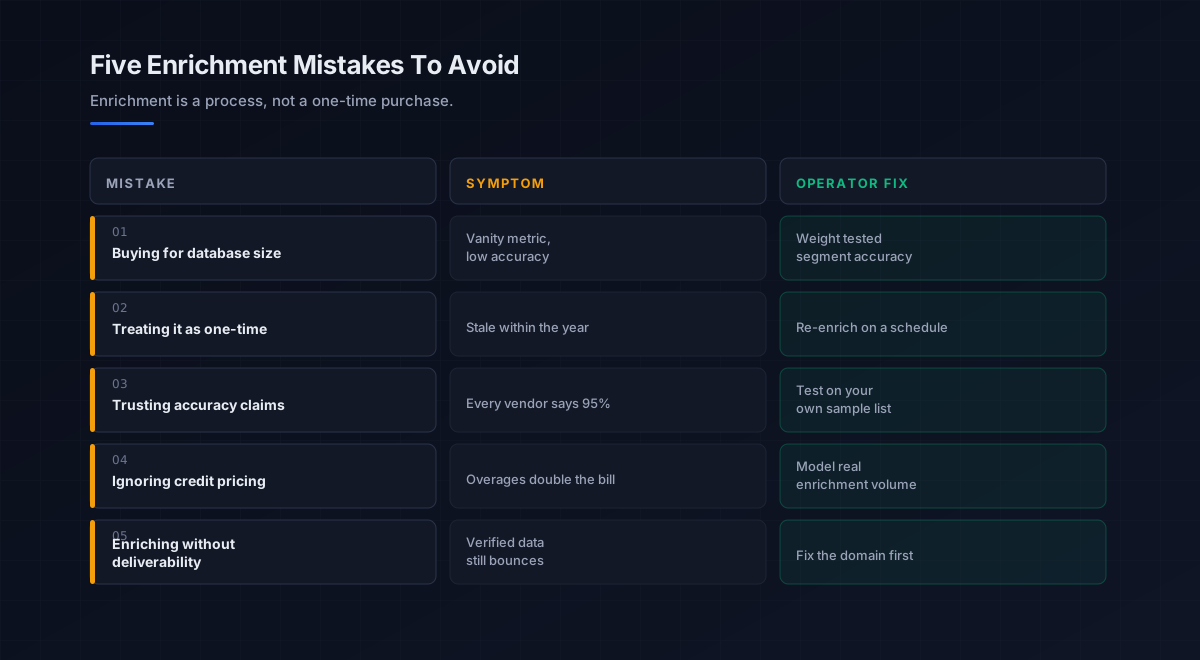
Five mistakes teams make choosing an enrichment tool
What we see most often is the same handful of errors that lead to a stale, expensive database.
-
Buying for database size. Contact count is a vanity metric. Weight tested accuracy in your segments above the number on the sales page.
-
Treating enrichment as one-time. Data decays monthly. A bulk fill you never refresh is stale within the year. Choose a tool that re-enriches on a schedule.
-
Trusting headline accuracy claims. Every vendor claims 95 percent. Test finalists on a real sample of your own list, since accuracy varies sharply by segment.
-
Ignoring credit-based pricing. Overages can double your bill. Model your real enrichment volume before committing to a credit-based plan.
-
Enriching without deliverability. Verified data bounces on a cold domain. Fix deliverability so the enrichment spend actually reaches inboxes.
An eight-step framework for choosing an enrichment tool
This is the order we work through with the teams we work with when they pick an enrichment tool. Run it before buying anything.
- Name the approach. Decide between all-in-one, enterprise single-source, and waterfall orchestration based on budget, coverage, and who will run it.
- Shortlist within the approach. Pick two or three tools built for that job rather than comparing the whole field.
- Test on your own list. Run a real sample through finalists and measure email and phone accuracy in your segments.
- Check CRM and stack fit. Confirm clean, automatic sync that keeps records fresh without manual work.
- Model the true cost. Include credit consumption and overage pricing against your real enrichment volume.
- Plan for continuous enrichment. Set a re-enrichment schedule, since one-time fills decay within the year.
- Confirm deliverability downstream. Verify a deliverable domain so the enriched data actually lands.
- Pilot, then scale. Run the finalist on live outreach, measure bounce and reply rate, then roll out.
How data enrichment tools fit the broader stack
A data enrichment tool is a layer in the data motion that feeds the whole outbound stack. Each connected layer has a deeper guide.
- The data pillar. Sourcing and verifying contacts, in b2b data providers.
- The enrichment discipline. The how and the workflow, in data enrichment tools.
- Intent. Which records to enrich and reach first, in sales intelligence tools.
- The email channel. Where verified data is used, in cold email software and the cold email pillar.
- The cadence. How enriched contacts are sequenced, in sales cadence and sales engagement platforms.
- The system of record. Where enriched data lands, in CRM software.
- The AI layer. AI research and personalization on enriched data, in best AI sales tools.
- Strategy. The motion the data feeds, in outbound sales.
That is the map. The data providers supply raw contacts, the enrichment tool verifies and completes them, deliverability earns the inbox, and the cadence puts the data to work, with the enrichment tool only as valuable as the process that keeps it fresh and the foundation that lets it land.
Frequently asked questions
What are the best data enrichment tools in 2026?
What is waterfall enrichment?
How much do data enrichment tools cost?
Is Apollo or ZoomInfo better for enrichment?
How accurate are data enrichment tools?
Why does my enriched data go stale so fast?
Does the enrichment tool matter more than deliverability?
The bottom line
The best data enrichment tools in 2026 are the ones that keep your data accurate for the segments you sell into, not the ones with the biggest database. The field sorts by approach: all-in-one tools like Apollo for affordable prospecting plus enrichment, enterprise single-source databases like ZoomInfo and Cognism for broad out-of-the-box coverage, and waterfall orchestrators like Clay for maximum accuracy and control. Because no single source covers every segment and data decays 2 to 3 percent a month, the waterfall approach increasingly wins on coverage, but the right pick depends on your budget, stack, and whether you have someone to run it.
If you take one rule from this comparison, make it this: enrichment is a process, not a purchase. Database size is a vanity metric, headline accuracy claims are unreliable, and a one-time bulk fill is stale within the year. Name the approach, test the best data enrichment tools on your shortlist against your own list, model the true credit cost, and choose the tool that keeps records fresh continuously, then make sure the verified data flows into a deliverable domain and a real cadence, because that is what turns clean data into booked meetings.
Get the operator playbook in your inbox. The Outbound Game publishes one operator-grade breakdown a week on B2B outbound sales, tactics, tooling, and ops. No fluff, no vendor talking points. Subscribe and get the next one when it ships.
More on Data Providers
Apollo vs Cognism in 2026: Which Data Platform to Buy
Apollo vs Cognism compared for 2026: real pricing, EMEA versus US coverage, phone verified mobiles, GDPR posture, and which platform fits your motion.
Apollo vs ZoomInfo in 2026: A Full Operator Verdict
Apollo vs ZoomInfo compared on independent 2026 benchmarks: real pricing, email and phone data accuracy, the new AI agents, and which one to buy.
The Best B2B Data Providers in 2026: An Operator Guide
The best B2B data providers in 2026, compared on accuracy not database size. An operator guide to coverage, compliance, and the real pricing.