The Best Sales Engagement Platforms in 2026, Compared
The best sales engagement platforms in 2026, compared by sales motion. An operator guide to Outreach, Salesloft, Apollo, pricing, and total cost.
The best sales engagement platforms in 2026 are the ones that match your sales motion, not the ones with the longest feature list or the biggest name. That is the distinction that decides whether the tool gets adopted or abandoned. A sales engagement platform is the orchestration layer of outbound: it sequences and coordinates every touch across email, phone, and LinkedIn, tracks what happens, and feeds the data back so reps work the right accounts in the right order. It is not a contact database, not a pure cold email sender, and not a CRM, and confusing it with any of those is how teams end up overpaying for a platform their reps never fully use.
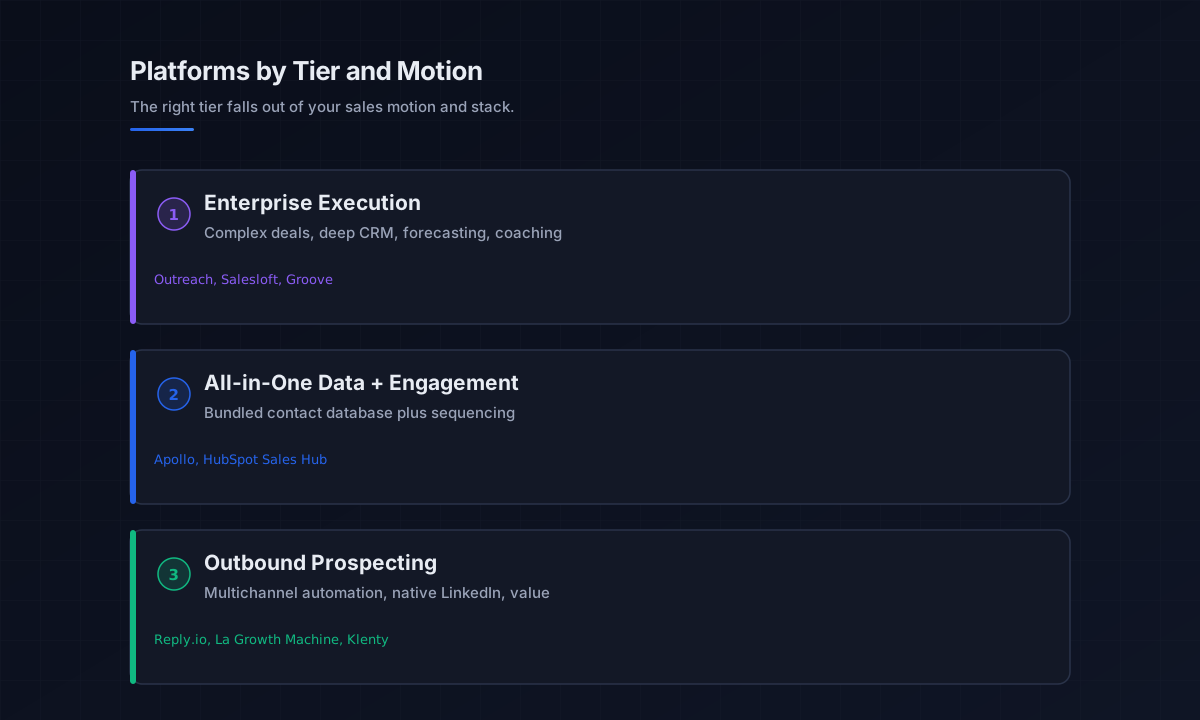
Sales engagement tools have sorted into clear tiers, and the right choice falls out of two questions: what is your sales motion, and what is already in your stack. Enterprise teams running complex, multi-stage deals need deep CRM sync, forecasting, and coaching. Outbound prospecting teams need multichannel automation and deliverability. All-in-one buyers running B2B prospecting want data and sequencing in one tool. Pick for the motion you actually run, and budget for the total cost, because per-seat pricing of 100 to 175 dollars plus hidden fees for email accounts, enrichment, and implementation is where the real number hides.
This opens the sales engagement layer that sits on top of every channel covered across the site. It orchestrates the cold email, cold calling, and LinkedIn outreach motions into one cadence, and it depends on the b2b data providers layer to feed it, since a sequencing engine is only as good as the contacts and signals running through it.
What a sales engagement platform actually does
Before comparing tools, fix what this category is, because it overlaps with three others and the overlap drives most bad purchases. A sales engagement platform orchestrates and executes outreach; it is the layer between your data and your buyer.
Sequencing and cadence
The core job: build multi-step, multichannel sequences, email, calls, LinkedIn touches, social, spaced over days, and run them at scale while keeping each touch personal. This is what separates sales sequencing software from a simple mail-merge: it coordinates channels and timing, not just sends.
Execution and tracking
The platform logs every touch, surfaces what to do next, and tracks opens, replies, calls, and meetings so reps spend time on live accounts. The better platforms layer AI on top, real-time call coaching, deal health scoring, and automated note-taking, which is now table stakes rather than a differentiator.
CRM as the source of truth
A sales engagement platform is not a CRM. The CRM is the system of record; the engagement platform is the system of action that syncs to it. Depth of that sync is a major differentiator, and for Salesforce-centric teams it is often the deciding factor, which is why CRM fit, covered in the broader outbound sales motion, shapes the choice as much as features do.
The leading sales engagement platforms by fit
With the category clear, here are the platforms teams actually reach for, grouped by sales motion and stack. Pricing is current for 2026.
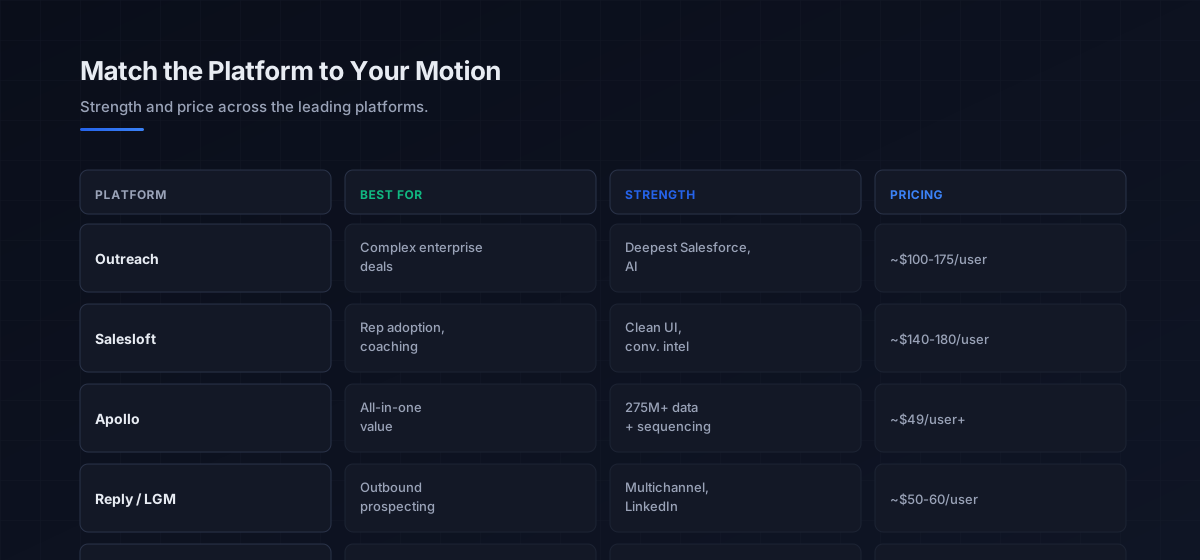
For enterprise teams running complex, multi-stage deals, Outreach is the default, the deepest Salesforce integration, advanced forecasting, and the most comprehensive AI assistant (real-time call coaching, deal health scoring, predictive forecasting), positioned as a complete sales execution platform. Salesloft is its closest rival and often wins on rep adoption, with the cleanest interface, fastest onboarding, and strong conversation intelligence and coaching built in, typically around 140 to 180 dollars a user with an annual contract. The Outreach vs Salesloft choice usually comes down to depth of Salesforce governance (Outreach) versus day-to-day usability (Salesloft).
For all-in-one prospecting plus engagement, Apollo is the most cost-effective option, bundling a 275 million-plus contact database with sequencing and a dialer from around 49 dollars a user, ideal for teams that want data and outreach in one tool without enterprise complexity or cost. For Salesforce-native execution, Groove runs inside Salesforce itself, and for HubSpot shops, HubSpot Sales Hub enables the tightest marketing-to-sales handoff. For pure outbound prospecting teams wanting multichannel automation with native LinkedIn, Reply.io and La Growth Machine deliver strong value from around 50 to 60 dollars, and Klenty stands out for transparent, published pricing with built-in dialers and deliverability where Outreach and Salesloft gate those behind add-ons.
Sales engagement platform vs the tools around it
Three adjacent categories get confused with sales engagement, and keeping them straight prevents both overlap and gaps. A sales engagement platform orchestrates and executes outreach across channels. A data provider supplies the contacts and signals it runs on. A cold email tool is a deliverability-first sender optimized purely for inbox placement at volume. And a CRM is the system of record the engagement platform syncs to.
The practical consequence: an all-in-one like Apollo collapses data and engagement into one tool, while enterprise platforms like Outreach and Salesloft deliberately are not databases and expect you to pair them with a data layer. Neither is wrong, they fit different motions. The test is whether a buying signal flows into a sequence and a logged touch flows back to the CRM without manual copying. The sales engagement software is the action layer; the data enrichment tools keep its fuel clean, and the sales intelligence tools tell it which accounts to prioritize.
How sales engagement platforms fit the outbound stack
A sales engagement platform only produces pipeline when the layers around it are right, because it executes outreach but does not source data, guarantee deliverability, or decide strategy on its own. Beneath it sits the data: the platform sequences contacts it does not find, so the b2b data providers and enrichment layers decide the quality of who gets touched. Around it sits deliverability, since a sequence that lands in spam converts at zero, which is why high-volume email motions still lean on the dedicated infrastructure in cold email software and the discipline in email deliverability and sender reputation.
The platform’s real value is coordination: turning separate cold calling, cold email, and LinkedIn outreach touches into one timed, tracked cadence per account, with the data syncing back to the CRM. That coordination is the entire point, since email-only or siloed channels underperform a unified sequence, and it is the execution arm of the broader outbound sales motion. Get the data and deliverability layers right first, then the engagement platform multiplies them.
Five mistakes teams make choosing sales engagement platforms
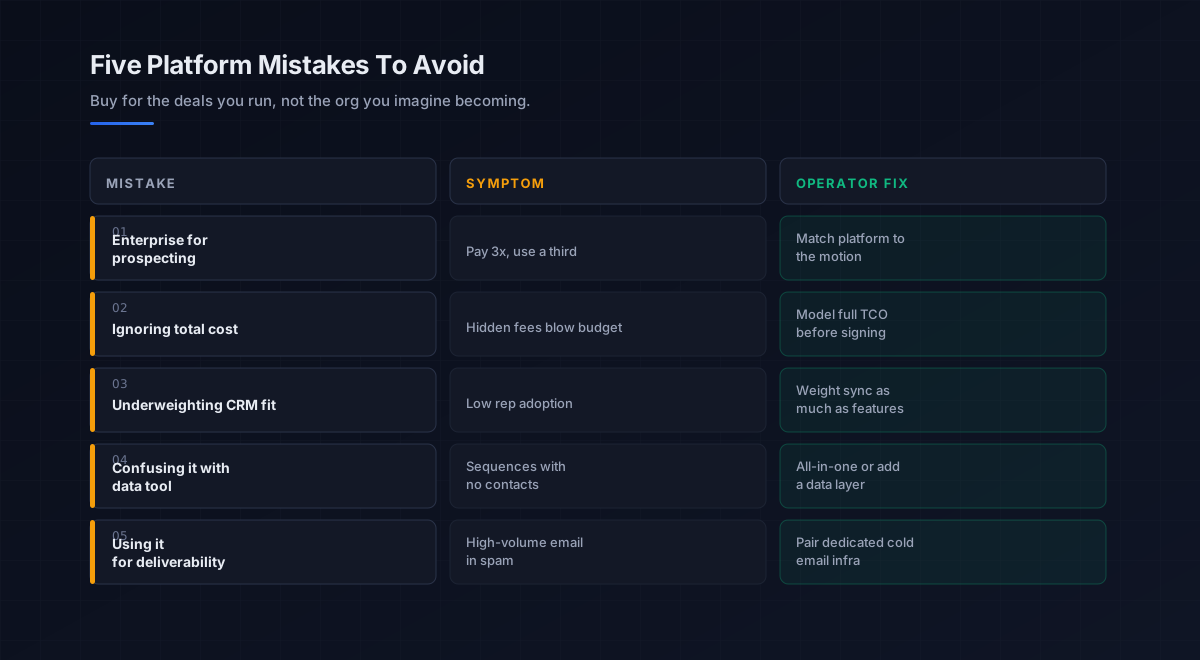
What we see most often is the same handful of errors that waste engagement-platform budget.
-
Buying enterprise for a prospecting motion. A high-velocity outbound team rarely needs Outreach-level forecasting. Match the platform to the deals you actually run, not the brand name.
-
Ignoring total cost of ownership. Per-seat pricing hides email-account, enrichment, and one-to-eight-thousand-dollar implementation fees. Model the full TCO before signing, not the sticker price.
-
Underweighting CRM fit. The sync depth to Salesforce or HubSpot makes or breaks adoption. Weight CRM integration as heavily as sequencing features.
-
Confusing it with a data tool. Enterprise platforms are not databases. Either pick an all-in-one like Apollo or budget for a separate data layer to feed the sequences.
-
Treating it as a deliverability solution. A sequencing engine is not built for inbox placement at volume. Pair high-volume email with dedicated cold email infrastructure.
An eight-step framework for choosing a sales engagement platform
This is the order we work through with the teams we work with when they pick an engagement platform. Run it before buying anything.
- Define your sales motion. Complex enterprise deals, high-velocity outbound, or inbound-led, the motion drives the whole decision.
- Map your CRM and stack. Salesforce-centric favors Outreach or Groove; HubSpot favors Sales Hub; stack fit shapes adoption.
- Decide all-in-one or best-of-breed. Apollo bundles data and engagement; Outreach and Salesloft expect a separate data layer.
- Match tier to team size. Enterprise execution for large complex teams, mid-market tools like Reply.io or Apollo for lean outbound.
- Model total cost of ownership. Include seats, email accounts, enrichment, implementation, and CRM fees, not just the per-seat price.
- Check the data and deliverability fit. Confirm how it sources contacts and whether high-volume email needs separate infrastructure.
- Test rep adoption. The best platform is the one reps use; weight interface and onboarding, where Salesloft tends to lead.
- Judge on pipeline and adoption. Measure meetings booked and daily active usage, not the length of the feature matrix.
How sales engagement fits the broader stack
A sales engagement platform is the orchestration layer of outbound. Each connected layer has a deeper guide.
- The data layer. The contacts and signals it sequences, in b2b data providers and data enrichment tools.
- Intent. Which accounts to prioritize, in sales intelligence tools.
- The email channel. Deliverability-first sending at volume, in cold email software and the cold email pillar.
- The phone channel. Calls inside the cadence, in the cold calling pillar.
- LinkedIn. The social touches in the sequence, in LinkedIn outreach.
- Deliverability. Keeping sequenced email in the inbox, on email deliverability.
- The AI layer. AI assistants and agents across the stack, in best AI sales tools.
- Strategy. The motion the platform executes, in outbound sales.
That is the map. The data layer supplies who and why, intelligence prioritizes the accounts, the engagement platform sequences and coordinates the touches across channels, and the CRM records the result, each only as effective as the layers feeding it.
Frequently asked questions
What are the best sales engagement platforms in 2026?
What is the difference between a sales engagement platform and a CRM?
How much do sales engagement platforms cost?
Outreach vs Salesloft: which should I choose?
Is Apollo a sales engagement platform?
Do I need a sales engagement platform if I have a cold email tool?
What should a small sales team use instead of Outreach?
The bottom line
The best sales engagement platforms in 2026 are the ones matched to your sales motion and stack, not the biggest names or the longest feature lists. Outreach and Salesloft lead for complex enterprise deals on CRM depth and forecasting, Apollo wins on all-in-one value for teams wanting data and engagement together, and Reply.io, La Growth Machine, and Klenty serve high-velocity outbound at a fraction of enterprise cost. Define the motion, map the CRM, and model the full total cost of ownership including the hidden fees.
If you take one rule from this guide, make it this: buy for the deals you actually run, not the org you imagine becoming. An enterprise platform on a prospecting motion is overkill and overpriced, while a prospecting tool on a complex enterprise motion leaves capability on the table. Match the platform to the motion, feed it clean data, pair it with real deliverability, and the engagement layer turns scattered touches into a coordinated cadence that books meetings.
Get the operator playbook in your inbox. The Outbound Game publishes one operator-grade breakdown a week on B2B outbound sales, tactics, tooling, and ops. No fluff, no vendor talking points. Subscribe and get the next one when it ships.
More on Sales Engagement
Apollo vs Outreach in 2026: A Full Operator Verdict
Apollo vs Outreach in 2026, compared by job. The all-in-one database vs the enterprise engine: real pricing, the 2x cost gap, and which one fits.
HubSpot vs Salesloft in 2026: A Full Operator Guide
HubSpot vs Salesloft in 2026, compared by job. The all-in-one CRM platform vs the engagement-only layer: real pricing and which one fits your team.
Outreach vs Salesloft in 2026: An Operator Comparison
Outreach vs Salesloft in 2026, compared honestly. The 90% they share, and the 10% that decides it: pricing, implementation, CRM fit, and AI.