Outreach vs Salesloft in 2026: An Operator Comparison
Outreach vs Salesloft in 2026, compared honestly. The 90% they share, and the 10% that decides it: pricing, implementation, CRM fit, and AI.
The honest answer to Outreach vs Salesloft in 2026 is that they are about 90 percent the same product, and the 10 percent that differs is what should actually decide your choice. Both have been the two dominant names in sales engagement for the better part of a decade, both serve nearly identical customer profiles, both price at comparable levels, and both have grown from B2B prospecting email sequencers into full revenue platforms with multichannel sequencing, conversation intelligence, deal management, and forecasting. Stare at the two feature lists and you will go cross-eyed looking for daylight. The daylight is not in the features. It is in pricing structure, implementation pain, CRM fit, and strategic direction.
That is why this comparison does not try to crown a universal winner, because there is not one. The right pick depends on your team size, your sales motion, your CRM, and how much administrative investment you can make. Outreach leans toward enterprise depth, the deepest Salesforce sync, the most sophisticated automation, and conversation intelligence as a core feature. Salesloft, now merged with Clari, leans toward faster time-to-value, a cleaner interface, stronger coaching, and signal-driven workflow through its Rhythm engine. Same category, genuinely different day-to-day experience.
This is a head-to-head inside the sales engagement platforms category, where these two anchor the enterprise tier. Both are the execution layer that orchestrates cold email, cold calling, and LinkedIn outreach into one cadence, and neither is a data source, a gap that shapes the decision more than most buyers expect.
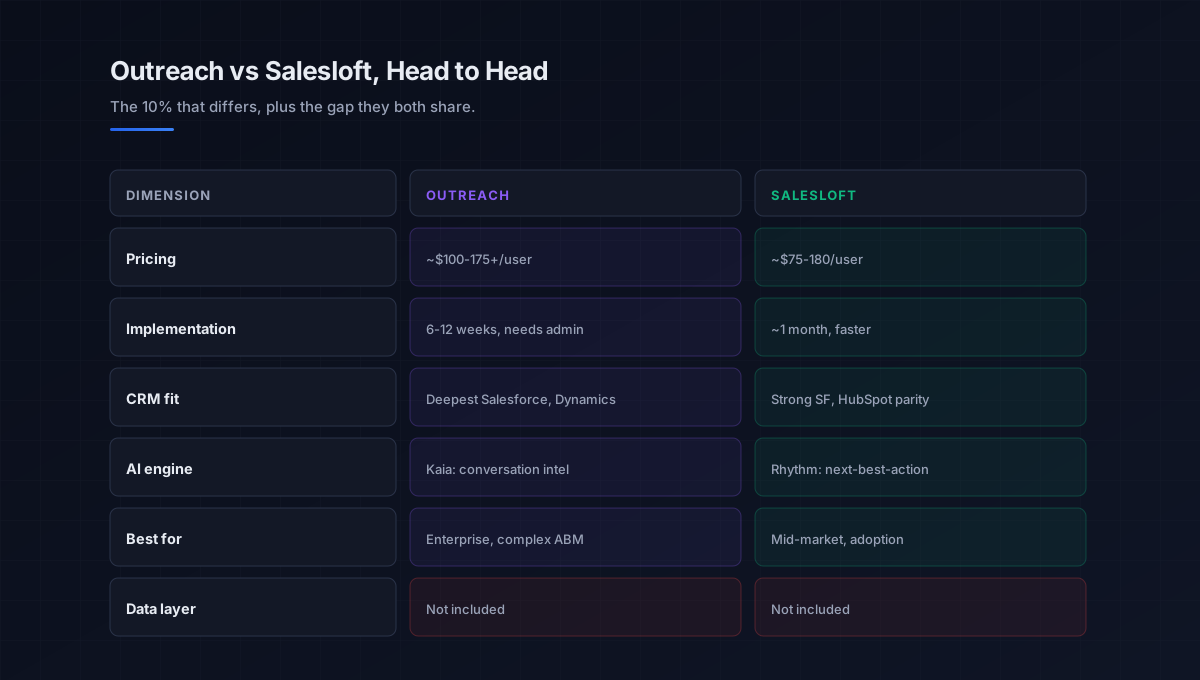
Where the two genuinely differ
Since the feature lists overlap, focus on the dimensions where the experience actually diverges. This is the 10 percent that should drive the decision.
Pricing and contracts
Neither publishes transparent pricing, both require a sales conversation and a custom quote, which tells you something about their go-to-market. Based on what teams actually report, Salesloft runs roughly 75 to 180 dollars per user per month, while Outreach typically starts higher, around 100 to 175 and ranging up toward 300 at the top. For most teams, Salesloft comes in somewhat cheaper, but the only number that matters is your negotiated quote, so get both in writing. The Outreach pricing premium tends to track the enterprise depth you are paying for.
Implementation and time-to-value
This is one of the sharpest differences. Salesloft is known for faster onboarding, often productive in around a month, while Outreach’s depth comes with a longer ramp, frequently six to twelve weeks, and a real need for dedicated admin resources. If you lack a RevOps team to own configuration, that gap matters, and the Salesloft pricing advantage compounds with its faster time-to-value.
CRM fit
Both integrate deeply with Salesforce, and the Salesforce connector is the most feature-complete on each. Outreach historically went deeper, supporting multiple Salesforce environments and Microsoft Dynamics, and offering the most bi-directional sync depth, which is why heavily customized Salesforce instances often favor it. Salesloft’s HubSpot integration, once weaker, reached comparable depth by early 2026, so HubSpot is now viable on either. For non-Salesforce CRMs, check connector availability carefully before committing.
AI and strategic direction
Both put AI front and center, but they bet differently. Outreach’s Kaia focuses on conversation intelligence, deal health scoring from 0 to 100, risk identification, and forecasting, depth across individual features. Salesloft’s Rhythm aggregates buyer signals into a dynamic, prioritized task list for reps, betting on workflow orchestration, and the Clari merger pushes it further toward unified revenue orchestration. Outreach wants maximum control over execution; Salesloft wants to tell reps what to do next.
The verdict by team profile
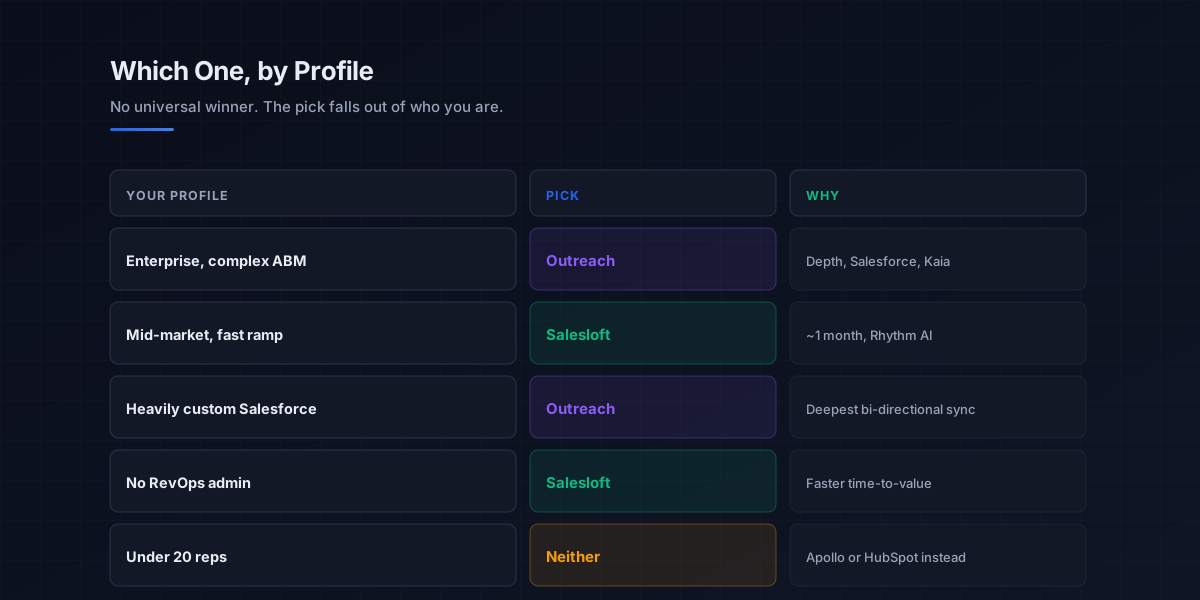
Because there is no universal winner, the useful answer is by profile. This is the salesloft vs outreach decision reduced to who you are.
Choose Outreach if you are an enterprise team running complex, multi-threaded ABM, you have a heavily customized Salesforce instance, you want the deepest sequencing and conversation intelligence, and you have the admin resources to unlock that depth. Outreach rewards teams that invest in configuration with maximum control.
Choose Salesloft if you are mid-market, you want faster onboarding and a cleaner rep experience, you value strong coaching and signal-driven prioritization through Rhythm, and you want the revenue-orchestration direction the Clari merger points toward. Salesloft rewards teams that want time-to-value over maximum configurability.
Skip both if your team is under about 20 reps. At that size, the enterprise complexity and cost are overkill, and an all-in-one like Apollo gives you most of the functionality plus a built-in contact database at a fraction of the price, or HubSpot Sales Hub covers the basics with minimal integration overhead. This connects to the wider sales engagement platforms tiering.
The data layer problem neither solves
The single most important thing to understand before buying either is that neither Outreach nor Salesloft is a data provider. Both are pure execution layers: they sequence and orchestrate outreach, but they do not supply the contacts or the verified emails and phone numbers those sequences run on. This is by design, they expect you to bring your own data layer, and it is the gap an all-in-one like Apollo fills by bundling data with engagement.
The practical consequence is that a sales engagement platform comparison that ignores the data layer is incomplete. A pristine Outreach or Salesloft instance running on a list that bounces 30 to 40 percent burns sender reputation exactly like any other tool, and no amount of conversation intelligence fixes a wrong phone number. Budget for the data layer separately, the b2b data providers and data enrichment tools that feed the sequences, and keep the email half inbox-safe per email deliverability and sender reputation practice, before you spend six figures on the engine that runs on top of it.
How this comparison fits the outbound stack
Outreach and Salesloft are the enterprise tier of the engagement layer, and that layer only performs when the surrounding ones are right. Beneath it sits the data that decides who gets sequenced, since both platforms are execution-only and depend on the b2b data providers and enrichment layers for their fuel. Around it sits deliverability, since a six-figure sequencer still lands in spam without warmed, authenticated domains, which is why high-volume email motions pair it with the infrastructure in cold email software.
The platform’s value is coordination: turning separate cold calling, cold email, and LinkedIn outreach touches into one tracked cadence that syncs to the CRM, the execution arm of the broader outbound sales motion. Whether you land on Outreach or Salesloft, the platform multiplies a good data-and-deliverability foundation and cannot substitute for one. Settle the layers beneath first, then the choice between these two becomes the manageable, 10-percent decision it actually is.
Five mistakes teams make choosing between Outreach and Salesloft
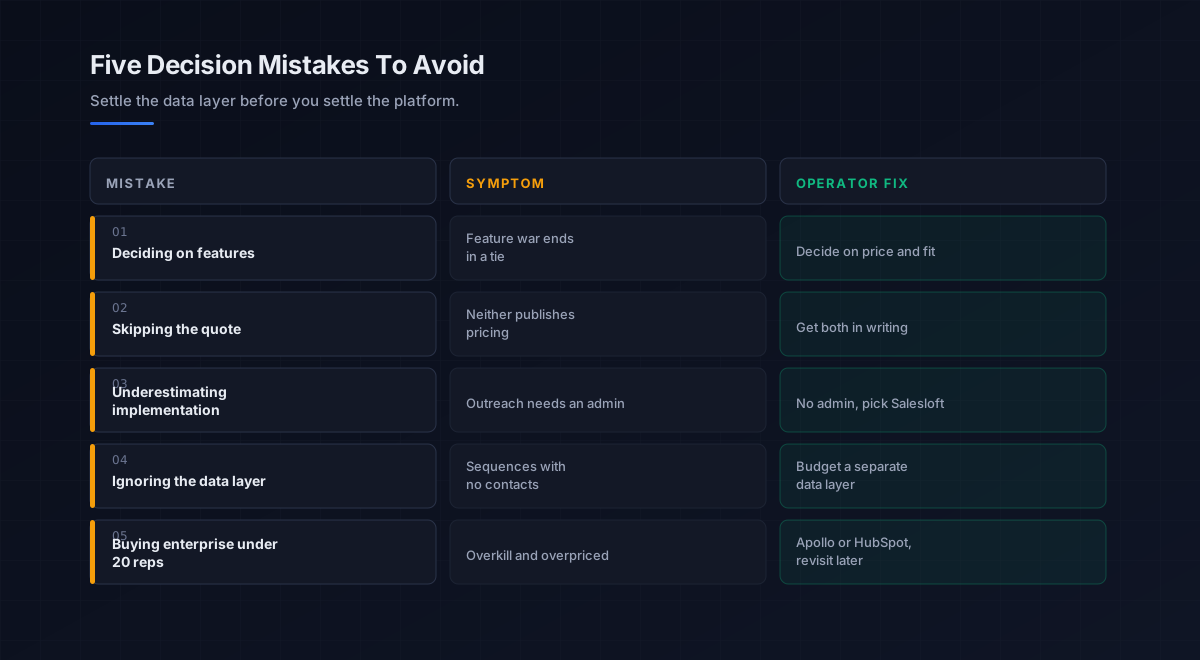
What we see most often is the same handful of errors in this specific decision.
-
Deciding on features. The two are roughly 90 percent identical on capability. Decide on price, implementation, CRM fit, and direction, not a feature war that ends in a tie.
-
Skipping the negotiated quote. Neither publishes pricing, and quotes move a lot. Get both in writing and compare real numbers, not list-price guesses.
-
Underestimating implementation. Outreach’s depth needs a RevOps admin and six to twelve weeks. If you lack that capacity, Salesloft’s faster ramp is the safer pick.
-
Ignoring the data layer. Neither includes contacts. Budget for a separate data provider, or the sequencer runs on a stale list and bounces like any other tool.
-
Buying enterprise under 20 reps. At small scale both are overkill and overpriced. Use Apollo or HubSpot Sales Hub and revisit these two at scale.
An eight-step framework for the Outreach vs Salesloft decision
This is the order we work through with the teams we work with on this specific choice. Run it before signing either contract.
- Settle the data layer first. Decide who supplies verified contacts and signals, since neither platform does, before evaluating either.
- Confirm team size fits. Under about 20 reps, skip both for Apollo or HubSpot and revisit at scale.
- Map your CRM. Heavily customized Salesforce leans Outreach; HubSpot is now viable on either; check other CRMs carefully.
- Assess implementation capacity. RevOps admin available favors Outreach depth; no admin favors Salesloft’s faster ramp.
- Get both quotes in writing. Neither publishes pricing, so negotiate and compare real numbers including implementation fees.
- Weigh AI direction. Conversation-intelligence depth favors Outreach Kaia; signal-driven task orchestration favors Salesloft Rhythm.
- Involve actual users. Run trials with the reps who will live in it daily, since adoption decides the return.
- Judge on adoption and pipeline. Pick the one your team will actually use, then measure meetings booked, not feature checkboxes.
How sales engagement fits the broader stack
The engagement platform is the orchestration layer of outbound. Each connected layer has a deeper guide.
- The category overview. All tiers of engagement tooling, in sales engagement platforms.
- The data layer. The contacts neither platform supplies, in b2b data providers and data enrichment tools.
- The email channel. Deliverability-first sending at volume, in cold email software and the cold email pillar.
- The phone channel. Calls inside the cadence, in the cold calling pillar.
- LinkedIn. Social touches in the sequence, in LinkedIn outreach.
- Intent. Which accounts to prioritize, in sales intelligence tools.
- Deliverability. Keeping sequenced email in the inbox, on email deliverability.
- Strategy. The motion the platform executes, in outbound sales.
That is the map. The data layer supplies who and why, the engagement platform sequences and coordinates the touches, the CRM records the result, and Outreach or Salesloft is simply which engine you run, a decision that matters far less than the foundation beneath it.
Frequently asked questions
What is the main difference between Outreach and Salesloft?
Is Outreach or Salesloft cheaper?
Which has better Salesforce integration, Outreach or Salesloft?
How long does it take to implement Outreach vs Salesloft?
Do Outreach or Salesloft include contact data?
Should a small sales team use Outreach or Salesloft?
What is Salesloft Rhythm and how does it compare to Outreach Kaia?
The bottom line
Outreach vs Salesloft in 2026 is the closest it has ever been on features and more differentiated than ever on strategic direction. The two are roughly 90 percent the same product, so the decision should turn on the 10 percent that differs: pricing and the negotiated quote, implementation capacity, CRM fit, and AI direction, with Outreach favoring enterprise depth and Salesloft favoring faster time-to-value and rep adoption. Under about 20 reps, skip both for an all-in-one like Apollo or HubSpot Sales Hub.
If you take one rule from this comparison, make it this: settle the data layer before you settle the platform. Neither Outreach nor Salesloft supplies the contacts their sequences run on, so the engine you pick matters far less than the fuel you feed it. Decide the data and deliverability foundation first, get both quotes in writing, weight implementation and CRM fit over a feature war that ends in a tie, and the choice between these two becomes the manageable decision it always should have been.
Get the operator playbook in your inbox. The Outbound Game publishes one operator-grade breakdown a week on B2B outbound sales, tactics, tooling, and ops. No fluff, no vendor talking points. Subscribe and get the next one when it ships.
More on Sales Engagement
Apollo vs Outreach in 2026: A Full Operator Verdict
Apollo vs Outreach in 2026, compared by job. The all-in-one database vs the enterprise engine: real pricing, the 2x cost gap, and which one fits.
HubSpot vs Salesloft in 2026: A Full Operator Guide
HubSpot vs Salesloft in 2026, compared by job. The all-in-one CRM platform vs the engagement-only layer: real pricing and which one fits your team.
Sales Cadence in 2026: A Day-by-Day Operator Guide
How to build a sales cadence that books meetings in 2026, day by day. An operator guide to spacing, channels, touch jobs, and the metrics that matter.