HubSpot vs Salesloft in 2026: A Full Operator Guide
HubSpot vs Salesloft in 2026, compared by job. The all-in-one CRM platform vs the engagement-only layer: real pricing and which one fits your team.
The honest answer to HubSpot vs Salesloft in 2026 is the distinction most comparisons skip: they are not competitors, because one is a CRM and the other is not. HubSpot is an all-in-one customer platform (see HubSpot), CRM, marketing, sales, and service in a single system of record. Salesloft is an engagement-only layer, a purpose-built sales execution tool that sits on top of a CRM it does not replace, with no marketing automation, no service product, and no inbound capabilities. That single fact decides almost everything else, because choosing Salesloft means you still need a CRM underneath it, while choosing HubSpot means the CRM and the engagement live in one place.
Once you see that, the choice stops being a feature contest and becomes a question of architecture and stage. HubSpot is the path of least friction for teams that want CRM and engagement consolidated, especially smaller and inbound-influenced motions, and it starts free. Salesloft is the specialist execution engine for dedicated SDR teams running complex, multi-channel cadences with conversation intelligence and coaching, typically on top of Salesforce, and it carries an enterprise price with no public list. This guide compares them the way a RevOps team actually decides: by what each is built for, what you really pay, and the stage you are at.
This is a head-to-head inside the sales engagement platforms category, connected to the sales automation discipline and the best sales automation tools landscape. The CRM side of the decision is covered in the crm software pillar, and the closest sibling comparison in pipedrive vs hubspot.
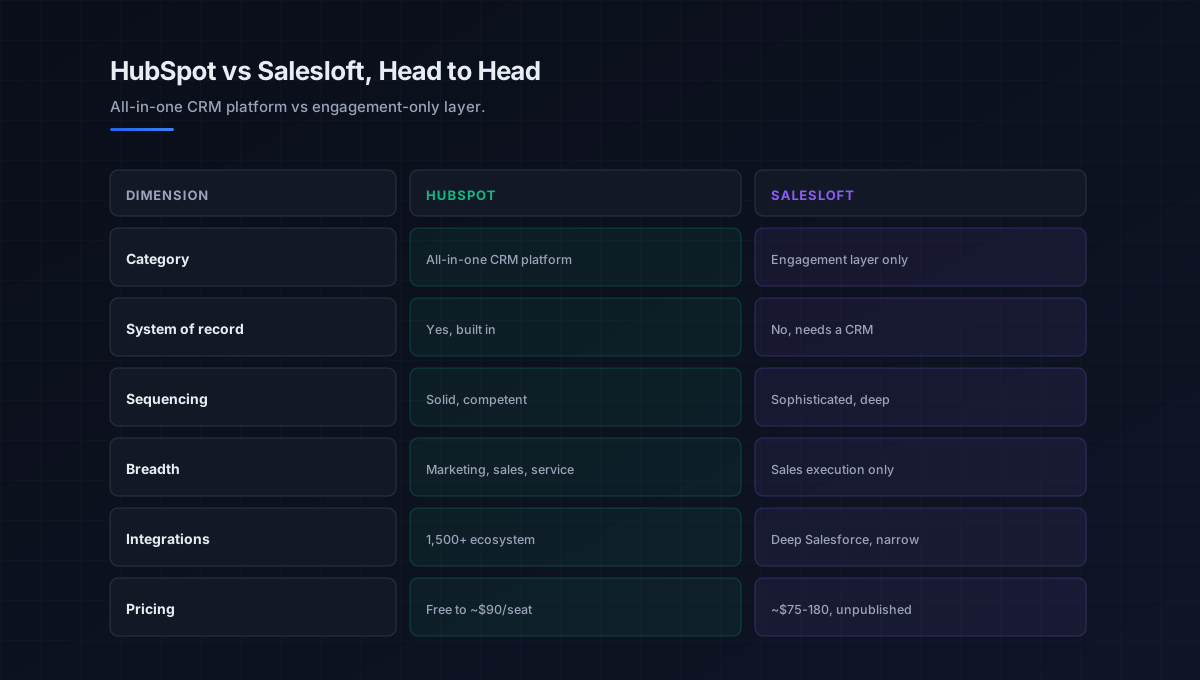
HubSpot vs Salesloft: where the two genuinely differ
They overlap on sequences and email tracking, so focus on the dimensions where they diverge structurally, because that is what should settle the choice.
CRM versus engagement layer
This is the foundational difference. HubSpot is CRM-first: sequences, calling, deal management, reporting, and automation all sit inside the same system of record, which makes adoption easier and admin lighter. Salesloft is engagement-only: it depends on a separate CRM for customer data, deal management, and reporting, and is built to complement that CRM rather than replace it. A team running standalone Salesloft pays for two licenses (the CRM plus Salesloft) and lives with sync overhead between them. HubSpot wins CRM decisively; Salesloft does not compete there because it is not trying to.
Sequencing and conversation intelligence
This is where Salesloft earns its place. Its cadences, multi-channel orchestration, call repository, and real-time coaching are more sophisticated than HubSpot’s, purpose-built for high-volume SDR execution and rep development at scale. HubSpot’s sales automation is solid and improving but not as deep as a dedicated engagement platform. For a team whose entire motion is structured outbound and coaching, Salesloft wins on sequences and calling; for a team that wants competent sequencing inside its CRM, HubSpot is enough.
Breadth and integrations
HubSpot’s strength is breadth: Marketing Hub, Sales Hub, Service Hub, and Content Hub around the Smart CRM, plus 1,500-plus integrations, so it can be the central platform for the whole revenue motion. Salesloft is narrower by design, focused on sales execution with deep, reliable Salesforce sync but a smaller ecosystem. If you want one platform spanning marketing, sales, and service, HubSpot; if you want a focused execution layer on an existing stack, Salesloft.
Pricing and transparency
HubSpot publishes prices; Salesloft does not. HubSpot pricing offers a free CRM with paid Sales Hub tiers (Professional around 90 dollars a seat), accessible from the bottom up. Salesloft pricing is quote-based, with industry estimates around 75 to 100 dollars a seat at Essentials, 125 to 180 at Advanced (the most commonly purchased, after negotiation), and 20 to 40 percent more at Premier, with a 10-seat minimum and the dialer as a separate add-on. The transparency gap itself signals who each is built for.
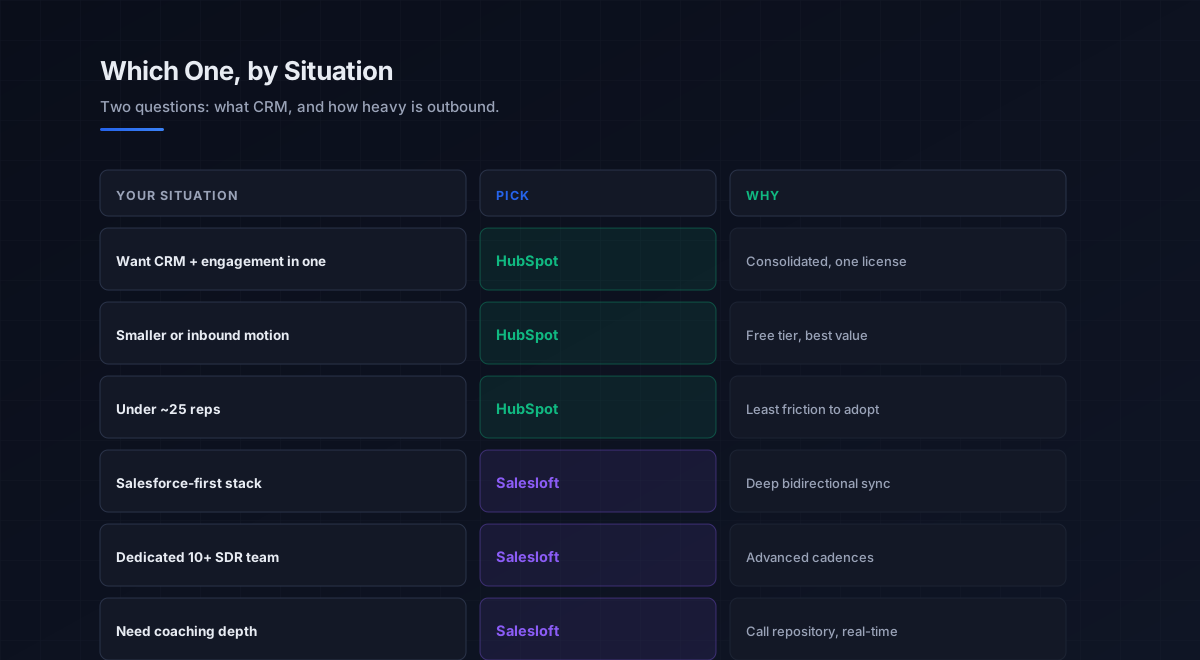
The decision in two questions
Because one is a CRM and one is not, the cleanest way through the salesloft vs hubspot choice is two questions: what CRM are you on, and how heavy is your outbound motion. The answers resolve it faster than any feature list.
If you want CRM and engagement in one place, are not already committed to Salesforce, and run a smaller or inbound-influenced motion (roughly under 25 reps), choose HubSpot Sales Hub. The consolidation, the free starting point, and the included marketing and service tools make it the best value and the least friction for most B2B teams starting out. If you are Salesforce-first with a dedicated SDR team of 10-plus running high-volume, complex, multi-channel cadences and you need conversation intelligence and coaching, choose Salesloft. The advanced cadence automation and coaching are designed for exactly that scale, and you already have the CRM it sits on.
There is no real overlap path here, since Salesloft is not a CRM: if you pick it, you are also running HubSpot, Salesforce, or another CRM beneath it. That is the standard enterprise arrangement (Salesloft on Salesforce), but it means two licenses and sync to manage, which only pays off when the engagement sophistication genuinely earns it. Picking the right category in the first place is what the broader best sales automation tools guide is for, and the closely related all-in-one-versus-enterprise question lives in apollo vs outreach.
What this means for most teams
If you are choosing between these two and you are not a scaled, Salesforce-governed enterprise, HubSpot is usually the right call, because it gives you a CRM and competent engagement for B2B prospecting in one system without a second license or a sync to babysit. But the more important point holds for either choice: the platform is the last layer, and its value depends on what sits beneath it.
The contacts both tools act on come from the b2b data providers and data enrichment tools layers, since neither platform fixes a list that bounces at 15 to 20 percent, no engagement tool rescues bad contact data. The outreach lands only if the domain has clean email deliverability and sender reputation, since automating volume from either platform onto a cold domain burns it just as fast. HubSpot serves as its own system of record, while Salesloft logs to whatever CRM software sits beneath it, and the cadence design that drives both is covered in sales cadence. Whichever you pick is a multiplier on a motion, never a substitute for the data, deliverability, and process that make it work.
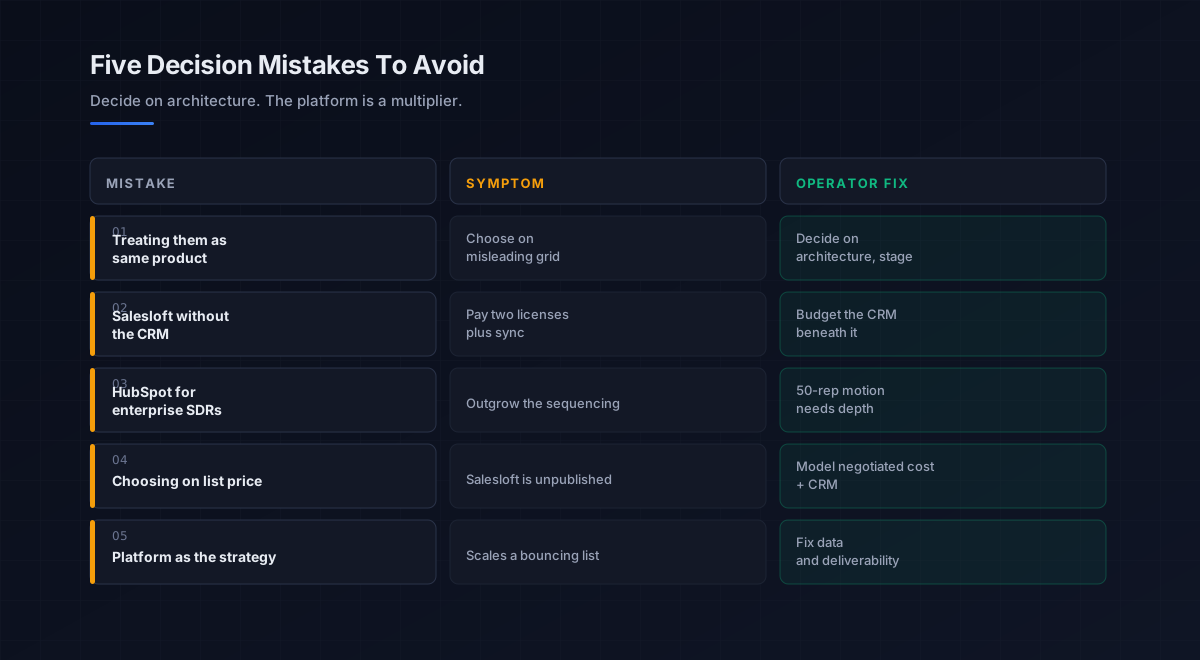
Five mistakes teams make choosing between them
What we see most often is the same handful of errors in this specific decision.
-
Treating them as the same product. One is a CRM, one is not. Decide on architecture and stage, not a feature grid that hides the difference.
-
Buying Salesloft without accounting for the CRM. Salesloft needs a CRM beneath it. Budget for two licenses and sync, not just the engagement seat.
-
Buying HubSpot for an enterprise SDR motion. HubSpot’s sequencing is competent, not specialist. A 50-rep cadence-and-coaching motion may outgrow it.
-
Choosing on published price alone. HubSpot lists prices; Salesloft does not. Model Salesloft’s real negotiated cost plus the CRM it requires.
-
Expecting the platform to fix the funnel. Neither rescues a 15 to 20 percent bounce rate. Fix contact data and deliverability before the platform.
An eight-step framework for the decision
This is the order we work through with the teams we work with on this specific choice. Run it before signing anything.
- Name your CRM situation. Decide whether you want CRM and engagement in one platform or already run Salesforce, the first deciding factor.
- Gauge outbound intensity. Measure how complex and high-volume your SDR cadences are, since that points to Salesloft’s depth or HubSpot’s breadth.
- Match the architecture. Consolidation and inbound influence point to HubSpot; dedicated Salesforce-based SDR execution points to Salesloft.
- Model the true cost. Compare HubSpot all-in against Salesloft plus the CRM it requires, including the dialer add-on and negotiated tiers.
- Weigh breadth versus depth. Decide whether you need marketing and service in one suite or the deepest sequencing and coaching.
- Check integration fit. Confirm Salesforce sync for Salesloft or the 1,500-plus ecosystem for HubSpot against your stack.
- Verify the foundation. Ensure clean contact data and a deliverable domain, since neither platform fixes those.
- Trial, then commit. Use HubSpot’s free tier or a Salesloft pilot to confirm fit before an annual contract.
How this choice fits the broader stack
Whichever platform you pick, it is a layer that executes the motion. Each connected layer has a deeper guide.
- The category. Sales engagement platforms in depth, in sales engagement platforms.
- The discipline. What to automate and what to keep human, in the sales automation pillar.
- The CRM decision. Choosing the system of record, in the crm software pillar and pipedrive vs hubspot.
- The data layer. The contacts both tools run on, in b2b data providers and data enrichment tools.
- The cadence. How the sequences are designed, in sales cadence.
- The channels. What gets automated, in cold email software and LinkedIn outreach.
- The wider field. All the automation tools by job, in best sales automation tools.
- Strategy. The motion the platform amplifies, in outbound sales.
That is the map. The data layer feeds the platform, the CRM records it (HubSpot is its own; Salesloft needs one), deliverability earns the inbox, and the platform executes the motion, only as valuable as the data and process beneath it.
Frequently asked questions
Is HubSpot or Salesloft better in 2026?
What is the main difference between HubSpot and Salesloft?
How much do HubSpot and Salesloft cost in 2026?
Does Salesloft replace a CRM?
Which is better for a small business or startup?
When should I choose Salesloft over HubSpot?
Does the platform matter more than my contact data?
The bottom line
HubSpot vs Salesloft in 2026 is not a contest of which is better, but of which architecture fits your stack and stage, because one is a CRM and one is not. HubSpot is the all-in-one customer platform, CRM plus marketing, sales, and service in one place, starting free, the best value and least friction for most B2B teams and especially smaller, inbound-influenced motions. Salesloft is the engagement-only specialist, deeper cadences, conversation intelligence, and coaching, built for dedicated Salesforce-based SDR teams at scale and priced at an enterprise premium on top of the CRM it requires. Answer two questions, what CRM are you on and how heavy is your outbound, and the HubSpot vs Salesloft choice resolves itself.
If you take one rule from this comparison, make it this: decide on architecture, not the feature grid, and never forget the platform is only a multiplier. For most teams that means HubSpot, since it consolidates CRM and engagement without a second license; for scaled, Salesforce-centric SDR orgs it means Salesloft, since the execution depth earns its premium. Either way, model the true total cost including the CRM Salesloft requires, and keep the contact data and deliverability sound underneath, because no engagement platform fixes a list that bounces, it just runs your motion faster, for better or worse.
Get the operator playbook in your inbox. The Outbound Game publishes one operator-grade breakdown a week on B2B outbound sales, tactics, tooling, and ops. No fluff, no vendor talking points. Subscribe and get the next one when it ships.
More on Sales Engagement
Apollo vs Outreach in 2026: A Full Operator Verdict
Apollo vs Outreach in 2026, compared by job. The all-in-one database vs the enterprise engine: real pricing, the 2x cost gap, and which one fits.
Outreach vs Salesloft in 2026: An Operator Comparison
Outreach vs Salesloft in 2026, compared honestly. The 90% they share, and the 10% that decides it: pricing, implementation, CRM fit, and AI.
Sales Cadence in 2026: A Day-by-Day Operator Guide
How to build a sales cadence that books meetings in 2026, day by day. An operator guide to spacing, channels, touch jobs, and the metrics that matter.