The Best Sales Automation Tools in 2026, Compared Fully
The best sales automation tools in 2026, grouped by job: full-stack platforms, all-in-one sequencers, enterprise engagement, and adjacent tools.
The best sales automation tools in 2026 are not a ranking; they are a grouping, and the buyers who get this wrong end up paying for the most popular platform instead of the one that fixes where their pipeline is actually breaking. The best sales automation tools look at first like a single crowded list, Apollo, Outreach, Salesloft, HubSpot, Clay, and dozens more, but it sorts into four distinct jobs: full-stack workflow platforms, all-in-one sequencers, enterprise engagement platforms, and adjacent tools that complement rather than replace. Each job solves a different problem for a different team, so the right choice depends entirely on your existing stack, your scale, and the specific friction you are trying to remove.
That framing matters because the deciding factor is almost never the feature list; it is your CRM, your team size, and where pipeline breaks down. A team drowning in manual data entry needs a different tool than one with high call volume and low connect rates, or one whose inbound leads convert poorly. Diagnosing the actual friction point first is what keeps you from buying the popular tool instead of the right one. And a sober note on AI: in 2026 it delivers real but incremental gains in sales automation software, drafting copy, summarizing calls, predicting outcomes, on the order of 10 to 20 percent efficiency, not the autonomous selling the marketing promises. This guide compares the leading tools the way an operator actually decides: by job and fit, then by price.
This is a tool comparison inside the sales automation cluster, which covers the discipline of what to automate and what to keep human. It sits alongside the sales engagement platforms guide on that specific category and the best AI sales tools guide on the AI layer. Whichever tool you pick runs on top of your CRM software and the data from your b2b data providers.
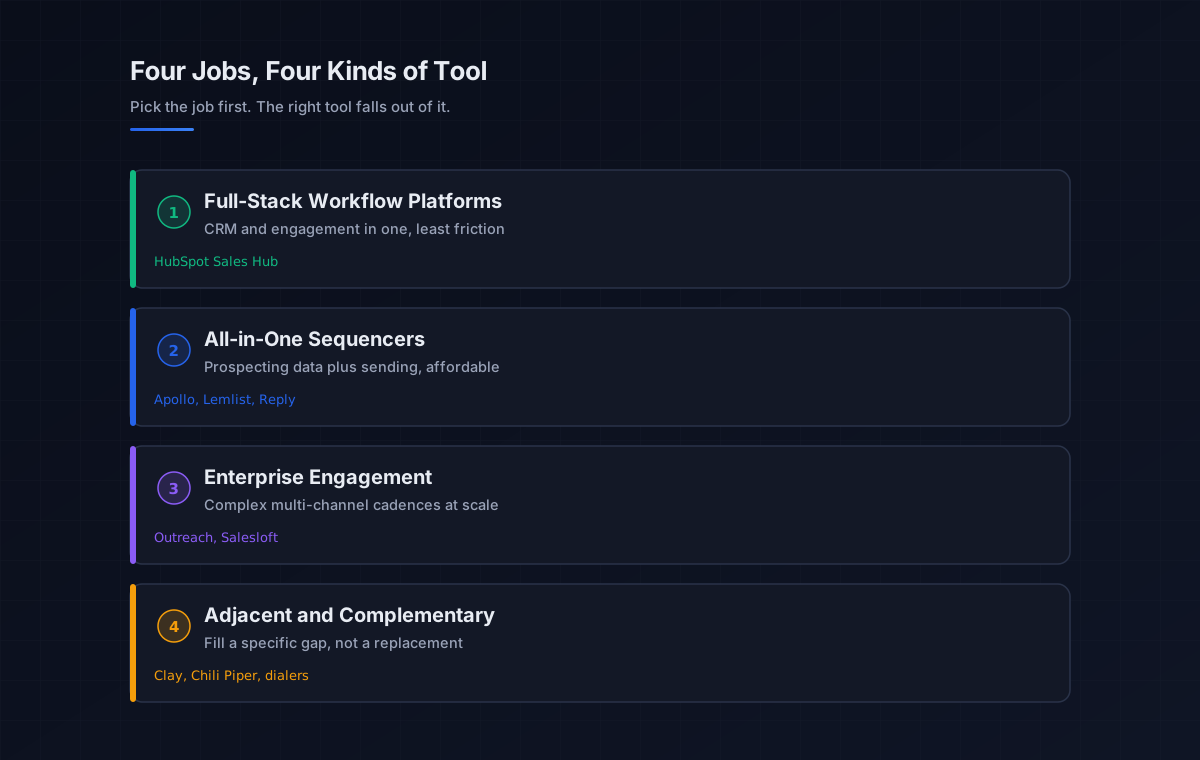
How the best sales automation tools sort by job
Before comparing specs, group the field by the job each tool is built around, because picking the wrong category is more expensive than picking the wrong brand. The leading sales automation software falls into four jobs.
Full-stack workflow platforms
When you want CRM and engagement in one platform with the least friction, this is the category. HubSpot Sales Hub leads it for teams already on HubSpot, blending CRM, email sequences, meeting scheduling, and workflow automation in a single environment, from around 90 dollars a seat for Professional. The advantage is consolidation: no separate outbound stack to manage. It is the path of least friction when your motion mixes inbound and outbound and your CRM is already HubSpot.
All-in-one sequencers
When you need prospecting data and sequencing together at accessible pricing, Apollo leads, combining a 275M-plus contact database with multichannel sequences (email, phone, LinkedIn) from around 49 dollars a user. This is the strongest starting point for earlier-stage outbound teams and B2B prospecting, since it covers find-and-send in one affordable tool. The trade-off is that as you scale past ten to twenty reps, you typically add a dedicated data tool, a warmup tool, and an intent layer, and the per-seat math that made it attractive begins to shift.
Enterprise engagement platforms
When you run high-volume, structured, multi-channel cadences at scale, Outreach and Salesloft are the standard, both from around 100 dollars a seat. Outreach leans into advanced sequencing and process rigor with conversation intelligence; Salesloft pairs cadence automation with pipeline management and forecasting through the Clari ecosystem. A sales engagement platform like these sits on top of the CRM and is where reps spend most of their working day, so the choice often comes down to whether your priority is process rigor or forecasting.
Adjacent and complementary tools
Some tools are not replacements but specialists you add to fill a specific gap. Clay is the enrichment and data-orchestration layer (it scores zero as an engagement platform because that is not its job); Chili Piper handles inbound lead routing and scheduling; dedicated dialers solve low connect rates. These complement whatever sending platform you run rather than competing with it.
The leading tools by fit and price
With the jobs clear, here is how the leading platforms compare, with current 2026 pricing. Weight your existing CRM and the friction point above the feature count.
For CRM-native consolidation, HubSpot Sales Hub runs about 90 dollars a seat (Professional) and is the least-friction pick for HubSpot teams. For affordable all-in-one outbound, Apollo starts around 49 dollars a user with database plus sequencing, the best earlier-stage starting point. For enterprise engagement, Outreach and Salesloft both run 100-plus dollars a seat, with Outreach favoring process rigor and Salesloft favoring forecasting. For the data layer, Clay (from around 149 dollars a month) is a complement, not a sequencer. Newer all-in-one workflow platforms like Amplemarket consolidate data, signals, and multichannel sending for teams that want the deepest orchestration in one tool. For a 5-rep team, the enterprise sales layer alone runs roughly 5,400 to 9,000 dollars a year on top of the CRM, which is exactly why the stack-versus-platform math matters.
A note on the move up the tiers, which catches most teams: the all-in-one tier is overbuilt for motions under ten reps and attractive on price, but the move to a full-stack platform is less about headcount and more about when your stack costs (data tool plus warmup plus intent layer plus sequencer) pass the platform cost, usually between ten and twenty reps. Model the full stack cost, not just the sequencer.
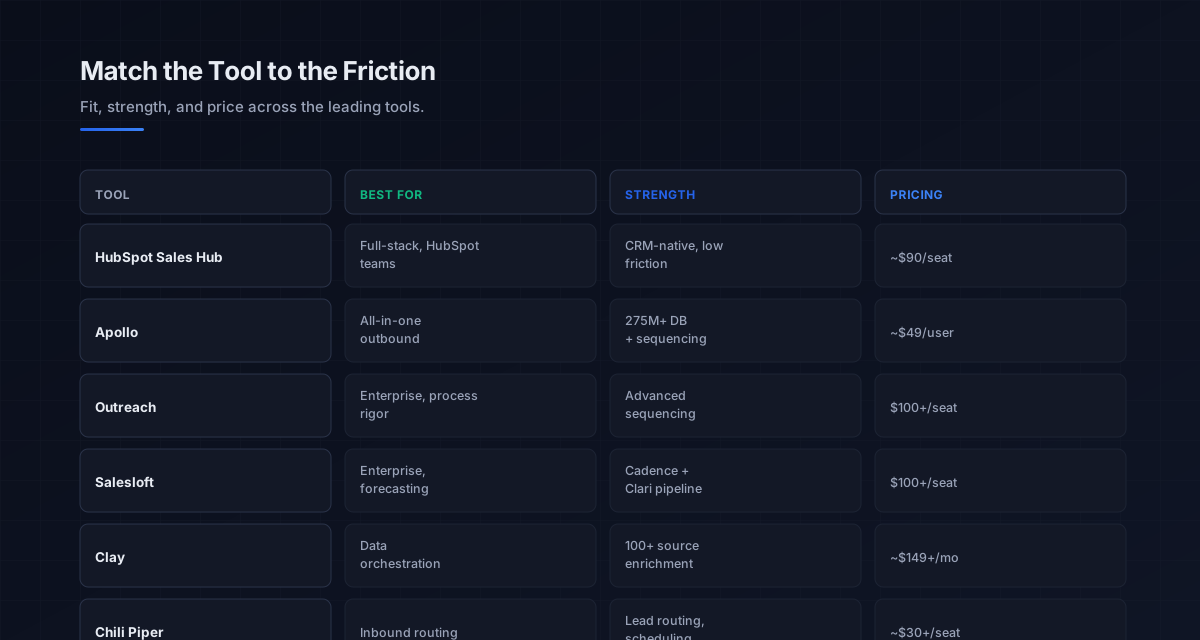
Choosing the right tool for your team
The selection is a sequence, not a feature shootout. Start by diagnosing the friction: where is pipeline actually breaking down. Manual research and data entry point to enrichment and a workflow platform; low connect rates point to a dialer; poor inbound conversion points to routing and scheduling; high outbound volume on a thin stack points to an all-in-one sequencer. That diagnosis narrows the field to one category before you compare a single feature.
Then weight three things in order. First, your existing CRM, since it shapes almost every other decision: Salesforce and HubSpot create different integration requirements, and the deepest integrations follow the CRM you already run. Second, native integration depth, because a tool that does not sync cleanly into the system of record becomes a manual chore and quietly dies from friction. Third, the true total cost as you scale, model the full stack (data, warmup, intent, sequencer) against a consolidated platform, since the right answer flips somewhere between ten and twenty reps. Right-size to your motion: an earlier-stage outbound team is usually best served by an affordable all-in-one, while an enterprise team with complex cadences needs the dedicated engagement platform. The discipline behind all of this lives in the sales automation pillar and the sales cadence guide.
Why the tool is downstream of the process
A sales automation tool is one layer in a motion, and its value depends entirely on what sits beneath it. The first principle, carried straight from the pillar, is that automation amplifies the process it runs: the most powerful platform bought to fix a broken motion or a dirty list just scales the problem faster and at greater cost. So the tool is the last decision, not the first.
The contacts the tool acts on come from the b2b data providers and data enrichment tools layers, since automating outreach to decayed records bounces at scale no matter which platform sends it. The outreach lands only if the domain has clean email deliverability and sender reputation, since automating volume onto a cold domain is the fastest way to burn it. The activity logs to the CRM software as the system of record, the intent that prioritizes it comes from sales intelligence tools, and the channels it automates are covered in cold email software and LinkedIn outreach. The tool is the multiplier; the data, deliverability, and process are what make it pay.
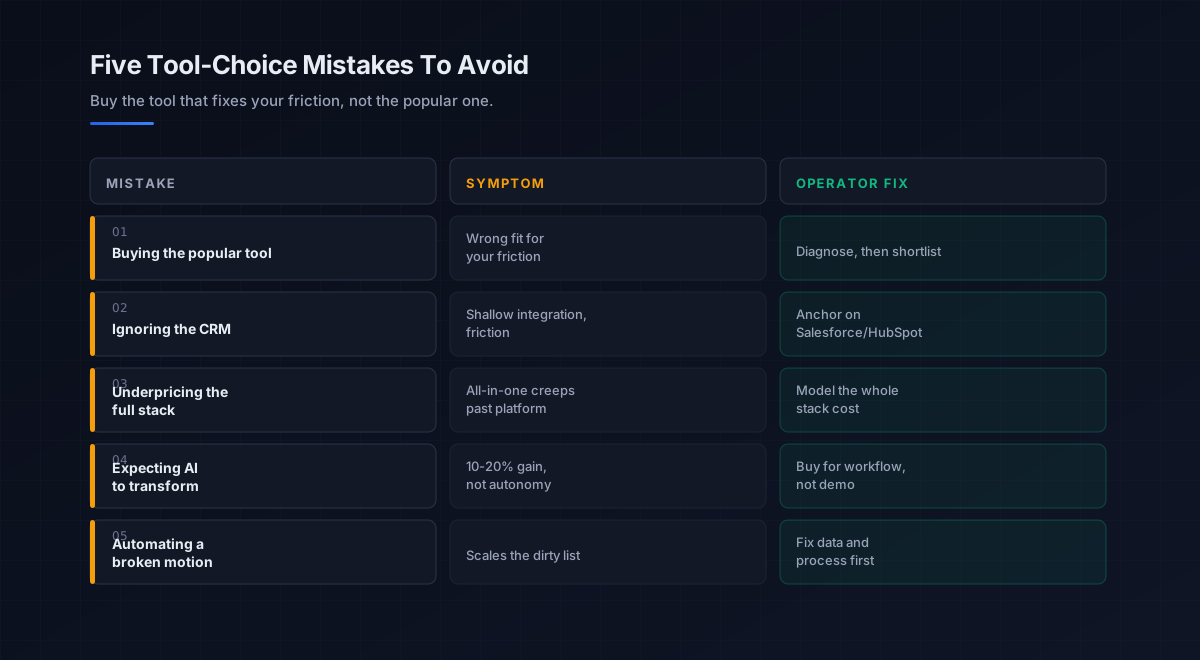
Five mistakes teams make choosing a sales automation tool
What we see most often is the same handful of errors that lead to an expensive, underused subscription.
-
Buying the popular tool, not the right one. The enterprise standard is wrong for a six-rep team with a thin list. Diagnose the friction point first, then shortlist within that category.
-
Ignoring the CRM. Your CRM shapes every integration. Weight native sync with Salesforce or HubSpot above standalone features, since the deepest integrations follow your CRM.
-
Underpricing the full stack. An all-in-one looks cheap until you add data, warmup, and intent. Model the full stack cost against a platform before committing.
-
Expecting AI to transform results. AI adds 10 to 20 percent efficiency in 2026, not autonomous selling. Buy for the workflow it fits, not the demo it promises.
-
Automating a broken motion. No tool fixes a dirty list or a vague ICP, it scales them. Fix the data and process before buying the platform.
An eight-step framework for choosing a sales automation tool
This is the order we work through with the teams we work with when they pick a sales automation tool. Run it before buying anything.
- Diagnose the friction. Find where pipeline actually breaks, data entry, connect rates, inbound conversion, or outbound volume.
- Match the category. Map that friction to one of the four jobs rather than comparing the whole field.
- Anchor on your CRM. Start from Salesforce or HubSpot, since it shapes every integration decision downstream.
- Shortlist within the category. Pick two or three tools built for that job and CRM rather than the longest feature list.
- Weight native integration. Confirm clean two-way sync with the system of record, since a tool that does not sync dies from friction.
- Model the full cost. Compare the all-in-one stack (data, warmup, intent, sequencer) against a consolidated platform at your scale.
- Set honest AI expectations. Plan for 10 to 20 percent efficiency from AI features, not transformation.
- Pilot, then commit. Run the finalist on a real motion, measure selling time recovered and conversion held, then roll out.
How sales automation tools fit the broader stack
A sales automation tool is a layer that executes the motion. Each connected layer has a deeper guide.
- The discipline. What to automate and what to keep human, in the sales automation pillar.
- The engagement category. The sequencer layer in depth, in sales engagement platforms.
- The system of record. What the tool syncs to, in CRM software.
- The AI layer. The intelligence on top, in best AI sales tools and AI cold email.
- The data layer. What the tool runs on, in b2b data providers and data enrichment tools.
- The cadence. How the touches are sequenced, in sales cadence.
- The channels. What gets automated, in cold email software and LinkedIn outreach.
- Strategy. The motion the tool amplifies, in outbound sales.
That is the map. The data layer feeds the tool, the CRM records it, deliverability earns the inbox, and the tool executes the motion, only as valuable as the process and data beneath it, since it amplifies whatever it runs.
Frequently asked questions
What are the best sales automation tools in 2026?
How do I choose a sales automation tool?
How much do sales automation tools cost in 2026?
Is Apollo or Outreach better for sales automation?
Can AI sales automation replace SDRs in 2026?
When should I move from an all-in-one to a full-stack platform?
Does the tool matter more than the data and process?
The bottom line
The best sales automation tools in 2026 are not a ranking but a grouping by job: full-stack workflow platforms like HubSpot Sales Hub for CRM-native consolidation, all-in-one sequencers like Apollo for affordable outbound, enterprise engagement platforms like Outreach and Salesloft for complex cadences at scale, and adjacent tools like Clay that complement rather than replace. The deciding factor is your CRM, your scale, and where pipeline actually breaks, not the feature list, so diagnose the friction first and shortlist within the one category that addresses it.
If you take one rule from this comparison, make it this: buy the tool that fixes your friction, not the one that tops a generic list. To find the best sales automation tools, diagnose where pipeline breaks, anchor on your CRM, weight native integration above features, model the full stack cost, and keep your AI expectations honest at 10 to 20 percent efficiency rather than transformation. And never forget that the tool is a multiplier on the motion beneath it, so a sound process, clean data, and a deliverable domain are what turn any of these platforms from an expensive subscription into recovered selling time and booked meetings.
Get the operator playbook in your inbox. The Outbound Game publishes one operator-grade breakdown a week on B2B outbound sales, tactics, tooling, and ops. No fluff, no vendor talking points. Subscribe and get the next one when it ships.
More on Metrics & Ops
Cold Email Open Rates: What Is Good and What Is Real
Cold email open rates in 2026: the honest benchmarks, how Apple MPP inflates the number, the three uses that survive, and what to track instead.
How to Measure Outbound Sales: KPIs That Matter in 2026
How to measure outbound sales in 2026: the three layer KPI stack, pipeline coverage and velocity formulas, benchmarks, and the review cadence that works.
Cold Email Benchmarks 2026: Every Number That Matters
Cold email benchmarks for 2026 in one place: reply rate, open rate, bounce rate, sequence length, meeting rates, and cost per meeting, tiered and sourced.