Sales Automation in 2026: A Full Operator Playbook
Sales automation in 2026 for B2B teams: what to automate, what to keep human, the time it wins back, and why it amplifies the process beneath it.
Sales automation in 2026 exists to fix one brutal statistic: B2B reps spend only about 28 percent of their week actually selling, while the other 72 percent disappears into admin, data entry, tool-switching, internal meetings, and manual research. Every hour a rep spends updating a CRM record or copying a lead into a sequence is an hour not spent in a conversation that closes revenue, and that is the problem the entire category is built to solve. Done well, it gives that time back: teams that automate their repetitive workflows report 30 to 40 percent sales productivity gains and save roughly 8 to 12 hours per rep every week. The promise is simple, more selling time and more consistency, by handing the machine the work that never needed a human.
That said, automation is not a magic multiplier you bolt onto any motion. It amplifies whatever process it runs, which means automating a broken process just produces bad outreach faster, sequences without good targeting behind them simply automate bad outreach at scale. So the operator’s job is not to automate everything; it is to automate the repetitive, rules-based work that steals selling time, keep human judgment where it belongs, and build the automation that powers your B2B prospecting on a foundation of clean data and a real process. This guide covers what to automate, what to leave alone, and how to choose sales automation tools without scaling your mistakes.
This is the pillar reference for the sales automation discipline. It ties together the layers that execute it: the sales engagement platforms that run sequences, the CRM software that logs the activity, the best AI sales tools that make automation intelligent, and the b2b data providers that feed it clean data.
What sales automation actually is
Before automating anything, fix the definition, because the term sprawls. Sales automation is the use of software to handle the repetitive, predictable tasks in a sales process, data entry, follow-up reminders, sequence sending, lead routing, CRM logging, so reps spend their time on the work that genuinely needs a human: conversations, qualification, and closing. It is not about removing people from the loop; it is about removing the busywork that surrounds them.
The category has evolved in layers. Early CRM systems centralized customer data, workflow automation tools improved activity tracking and execution, and now AI adds a layer of intelligence on top, predicting timing, surfacing signals, and recommending actions rather than just following static rules. The important distinction in 2026 is between rules-based automation (it does exactly what you configure) and AI-driven automation (it learns from patterns and adapts). Both have their place, but neither changes the core principle: automation executes a process, it does not invent one.
What to automate and what to keep human
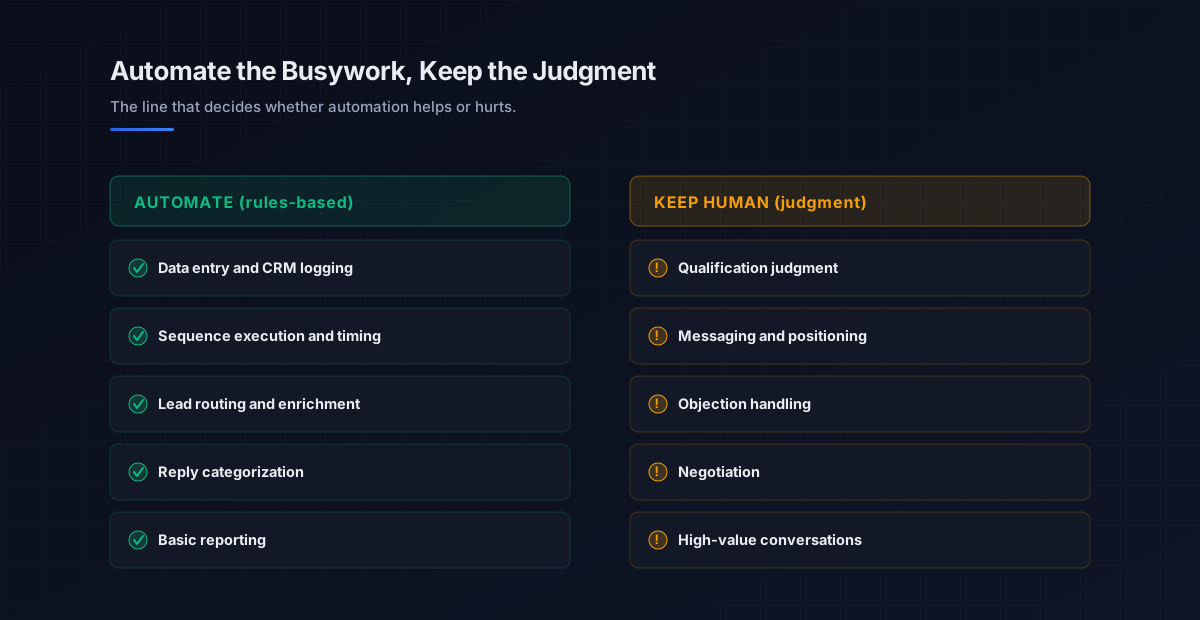
The most important decision in sales automation is the boundary, because automating the wrong things is how teams scale their problems. The line is simple: automate the repetitive and rules-based, keep the judgment-heavy human.
Automate the time sinks. Data entry and CRM logging, the single largest drain, where reps lose hours to manual updates. Sequence execution and follow-up timing, so no lead falls through a crack. Lead routing and enrichment, so records arrive complete. Reply categorization and basic reporting, the work that needs consistency, not creativity. These are the tasks where a machine is more reliable than a person, and automating them is what wins back the 8 to 12 hours a week.
Keep human the work that closes. Qualification judgment, reading whether a deal is real. Messaging strategy and positioning, the creative core that AI can draft but not own. Objection handling and negotiation, where relationship and nuance decide the outcome. High-value conversations, the entire point of freeing up the time. The goal when you automate sales tasks is not to replace the seller; it is to delete everything that is not selling so the seller can do more of it.
How to implement sales automation
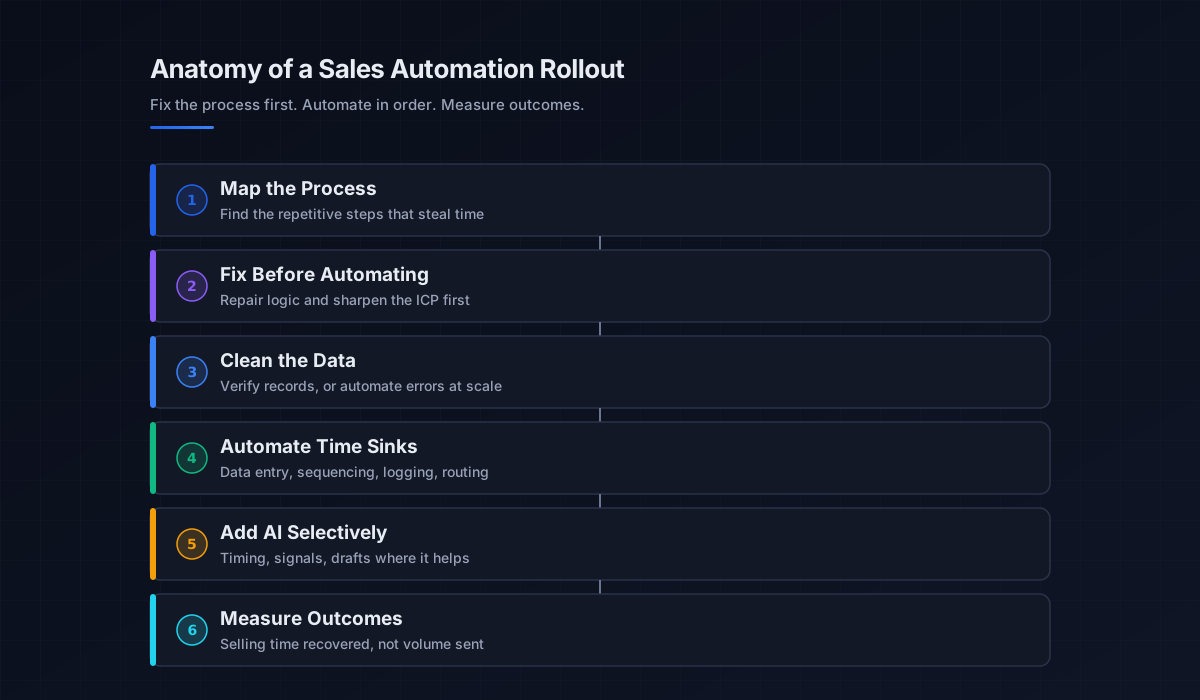
The rollout is a sequence, not a switch you flip. Done in the right order, automation compounds; done backward, it scales whatever is broken.
Start by mapping and fixing the process. Document how your sales motion actually works, since sales workflow automation only helps once the steps are clear, find the repetitive steps that steal time, and fix any broken logic before you automate it, since automating a flawed process just makes the flaws faster. Then clean the data foundation, because automation that runs on decayed or incomplete records produces confident, automated errors. Next, automate the highest-time-sink tasks first, usually data entry and sequence execution, where the hours-saved payoff is largest, and confirm each tool integrates natively with your CRM and data layer so it fits the workflow rather than adding another silo. Add AI selectively where it genuinely helps, predictive timing, signal detection, draft generation, rather than everywhere at once. Throughout, weight adoption: an automation reps route around is worse than none, so favor tools that embed in the daily workflow. And measure the right outcomes, selling time recovered and conversion held, not raw volume. The tools that execute each layer are covered in sales engagement platforms, best AI sales tools, and the crm software pillar.
Why automation amplifies the process beneath it
The single most important principle in sales automation is that it is a multiplier, not a fix. It takes whatever process you point it at and runs that process faster and at greater scale, which is wonderful when the process works and disastrous when it does not. A sharp ICP, a clean list, and a converting message, automated, compound into more pipeline; a vague ICP, a stale list, and a generic message, automated, compound into more spam, faster domain burn, and lower reply rates. The automation did not cause the failure; it accelerated one that was already there.
That is why the foundation matters more than the tooling. The clean data comes from the b2b data providers and data enrichment tools layers, since automated outreach to decayed records just bounces at scale. The deliverable domain comes from the discipline in email deliverability and sender reputation, since automating volume onto a cold domain is the fastest way to burn it. And the process logic, the ICP, the sequence design, the qualification criteria, has to be sound before you scale it, which is the strategy covered in the outbound sales and sales cadence guides. Get those right, and automation is the best lever you have; get them wrong, and it is the fastest way to amplify the problem.
Five mistakes teams make with sales automation
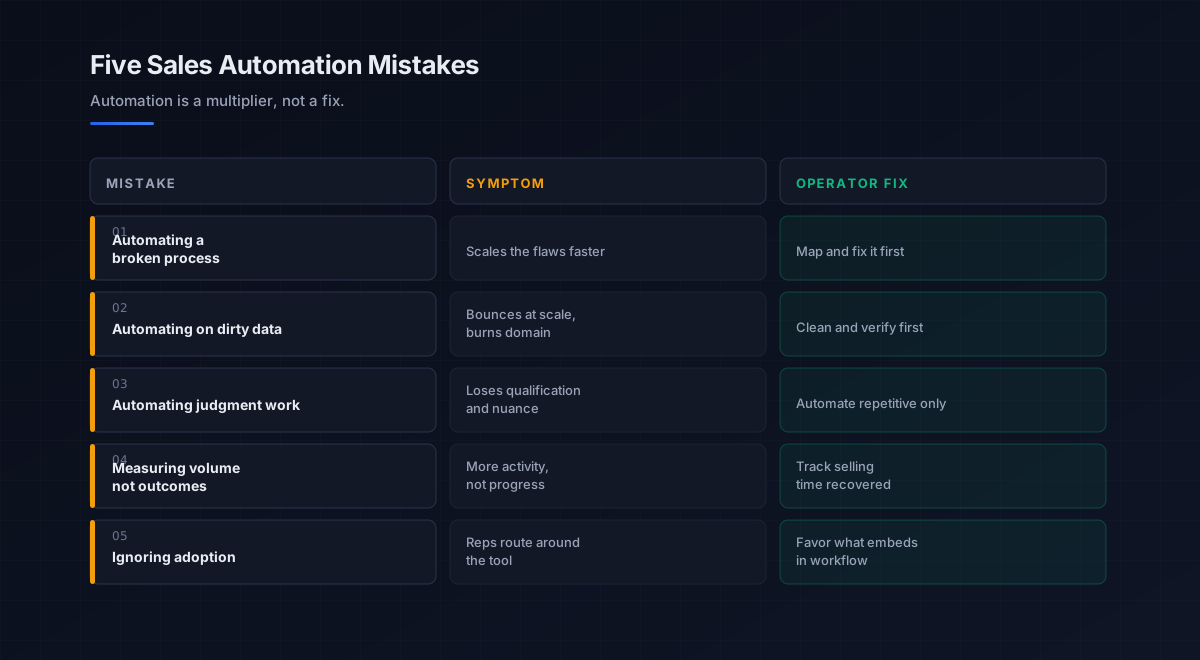
What we see most often is the same handful of errors that turn automation from a multiplier into an accelerant for failure.
-
Automating a broken process. Speed does not fix a bad motion, it scales it. Map and fix the process before you automate it.
-
Automating on dirty data. Automated outreach to decayed records bounces at scale and burns the domain. Clean and verify the data first.
-
Automating judgment work. Qualification, positioning, and negotiation need a human. Automate the repetitive, not the strategic.
-
Measuring volume, not outcomes. More activity is not progress. Track selling time recovered and conversion held, not emails sent.
-
Ignoring adoption. An automation reps route around is wasted. Favor tools that embed in the daily workflow over the longest feature list.
An eight-step framework for sales automation
This is the order we work through with the teams we work with when they automate a sales motion. Run it top to bottom.
- Map the process. Document how the motion actually works and find the repetitive steps that steal selling time.
- Fix before automating. Repair broken logic and sharpen the ICP first, since automation scales whatever it runs.
- Clean the data. Verify and enrich the records, since automated outreach to bad data fails at scale.
- Automate the biggest time sinks. Start with data entry and sequence execution, where the hours-saved payoff is largest.
- Integrate natively. Confirm each tool syncs with the CRM and data layer so it fits the workflow rather than adding a silo.
- Add AI selectively. Apply intelligence where it helps, timing, signals, drafts, rather than everywhere at once.
- Drive adoption. Favor tools reps will actually use daily, since an automation they route around is wasted.
- Measure outcomes. Track selling time recovered and conversion held, not raw volume, and iterate on what works.
How sales automation fits the broader stack
Sales automation is the discipline that ties the execution layers of the outbound stack together. Each connected layer has a deeper guide.
- The engagement layer. What runs the automated sequences, in sales engagement platforms and sales cadence.
- The system of record. What automation logs to, in CRM software.
- The AI layer. What makes automation intelligent, in best AI sales tools and AI cold email.
- The data layer. What automation runs on, in b2b data providers and data enrichment tools.
- Intent. The signals that trigger smart automation, in sales intelligence tools.
- The channels. What gets automated, in cold email software, video prospecting, and LinkedIn outreach.
- Deliverability. What automated volume depends on, in email deliverability.
- Strategy. The motion automation amplifies, in outbound sales.
That is the map. The data layer feeds it, the engagement and channel layers execute it, the CRM records it, and AI makes it intelligent, with sales automation only as valuable as the process and data beneath it, since it amplifies whatever it runs.
Frequently asked questions
What is sales automation?
How much time does sales automation actually save?
What sales tasks should you automate, and which should stay human?
Can sales automation hurt your results?
What is the difference between rules-based and AI sales automation?
How do you implement sales automation without scaling mistakes?
Does the automation tool matter more than the process?
The bottom line
Sales automation in 2026 is the discipline of winning back the selling time that admin steals, reps spend only about 28 percent of their week selling, and automating the repetitive work returns 8 to 12 hours a rep each week with 30 to 40 percent productivity gains. The discipline is not automating everything; it is drawing the line between the repetitive, rules-based work a machine should own, data entry, sequencing, logging, routing, and the judgment work a human must keep, qualification, positioning, negotiation. Automate the first, protect the second, and measure selling time recovered rather than raw volume.
If you take one rule from this pillar, make it this: automation is a multiplier, not a fix. It runs whatever process you give it faster and at greater scale, so it compounds a good motion and compounds a broken one just as efficiently. Map and fix the process, clean the data, lock down deliverability, then automate the busywork on top of a foundation that already works, because the fastest way to fail is to automate bad outreach, and the fastest way to grow is to delete everything that is not selling so your team can do more of what closes.
Get the operator playbook in your inbox. The Outbound Game publishes one operator-grade breakdown a week on B2B outbound sales, tactics, tooling, and ops. No fluff, no vendor talking points. Subscribe and get the next one when it ships.
More on Metrics & Ops
Cold Email Open Rates: What Is Good and What Is Real
Cold email open rates in 2026: the honest benchmarks, how Apple MPP inflates the number, the three uses that survive, and what to track instead.
How to Measure Outbound Sales: KPIs That Matter in 2026
How to measure outbound sales in 2026: the three layer KPI stack, pipeline coverage and velocity formulas, benchmarks, and the review cadence that works.
Cold Email Benchmarks 2026: Every Number That Matters
Cold email benchmarks for 2026 in one place: reply rate, open rate, bounce rate, sequence length, meeting rates, and cost per meeting, tiered and sourced.