Cold Email in 2026: A Full Operator-Grade Playbook
Cold email in 2026 wins on targeting and deliverability, not volume. An operator playbook on reply rates, the new rules, sequences, copy, and the metrics.
Cold email in 2026 is not dead, but the outbound playbook that worked in 2019 is, and the data is blunt about the difference. The average reply rate has fallen from 8.5 percent in 2019 to 3.43 percent today, dragged down by inbox saturation, tighter spam filters, and a flood of low-effort AI-generated outreach. Yet the top 10 percent of campaigns still clear 10.7 percent or higher, and signal-personalized campaigns hit 15 to 25 percent, a 5x improvement over the average. The channel still works. What stopped working is mass-blasting generic templates from an unauthenticated domain.
That gap between average and elite is the entire subject of this cold email strategy playbook, and the cause is not copywriting. It is targeting, timing, and deliverability, the three pillars of cold email deliverability and targeting the 2019 playbook ignored because it did not have to. In 2026 it has to. Bounce rates above 2 percent damage sender reputation, spam complaints above 0.3 percent trigger enforcement, and as of early 2026 mail from domains without proper authentication is not sent to spam, it is rejected outright. The teams winning on this channel are not writing cleverer subject lines. They are running clean infrastructure on verified, well-targeted data.
This is the pillar reference for the channel. It pairs with the cold email software comparison for tooling and leans on the deeper deliverability mechanics in our sister publication, email deliverability and sender reputation, because on this channel more than any other, the infrastructure decides the outcome before the message is even read.
Does cold email still work in 2026?
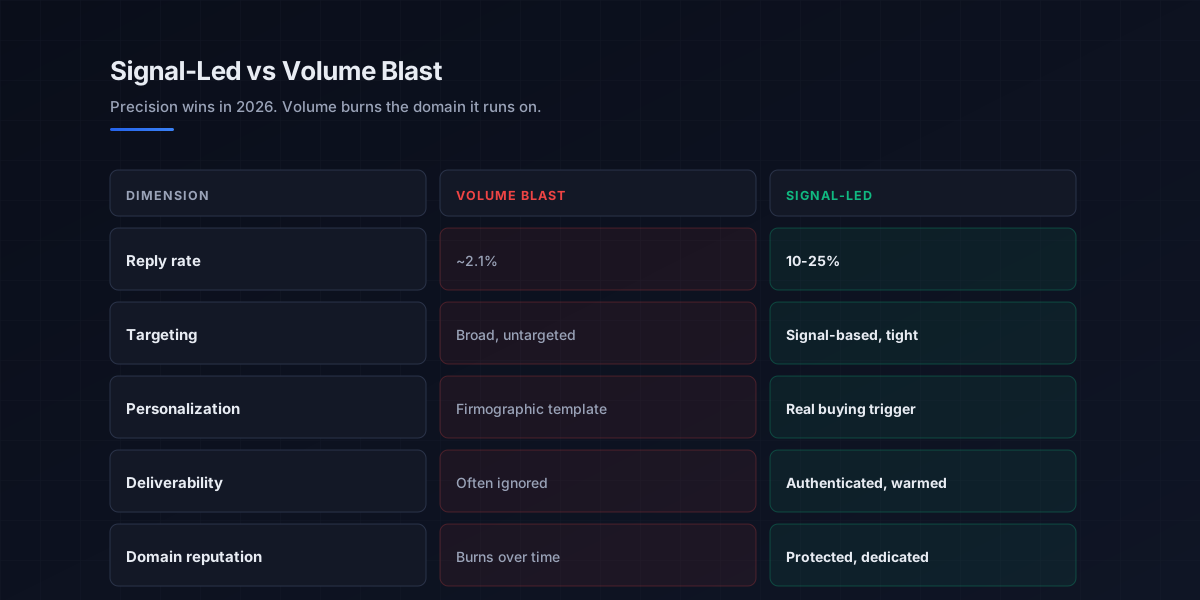
Yes, with the right approach, and the evidence is in the spread. The average cold email reply rate sits at 3.43 percent, but that average hides two very different worlds. Larger, less-targeted campaigns of 500-plus recipients average just 2.1 percent, while the top decile clears 10.7 percent and signal-based personalized campaigns reach 15 to 25 percent. The channel remains one of the highest-ROI outbound motions when it is done with proper targeting, signal-based personalization, and deliverability discipline. The teams that are struggling are the ones still running a 2019 playbook into 2026 spam filters.
The channel survives on economics and reach: done well, it scales top-of-funnel pipeline more cheaply than any other outbound motion, and it reaches buyers who never raised a hand. The reason most senders fail is that the bar moved. What used to be optional, authentication, warmup, verified lists, tight targeting, is now mandatory, and skipping any one of them caps results no matter how good the rest is.
The three structural shifts that changed everything
Three changes reshaped cold email and made the old playbook obsolete. First, authentication enforcement: SPF, DKIM, and DMARC went from best practice to hard requirement, and major providers now reject non-compliant mail rather than filtering it to spam. Second, the bulk-sender rules: Gmail and Yahoo require senders to keep spam complaints below 0.3 percent and bounce rates low, with enforcement that can block a domain from the inbox entirely. Third, the personalization arms race: with AI making generic outreach trivially cheap, signal-based personalization referencing real buying triggers now outperforms firmographic personalization by 3 to 5x. Every one of these pushes the same direction, precision over volume.
The anatomy of an outbound email system
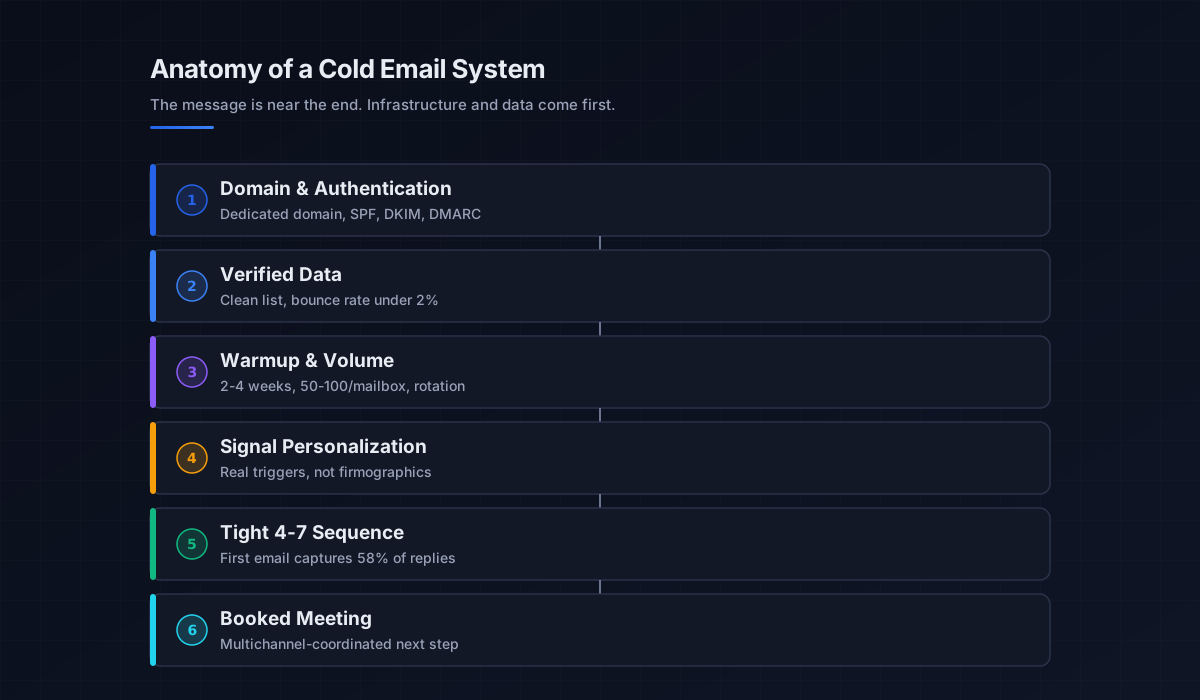
A working outbound email motion is a system, and the message is one of its smaller parts. The strongest b2b cold email programs build from the infrastructure outward, because a brilliant email in the spam folder converts at zero.
The domain and authentication layer
Before a single send, the foundation has to be right. Use a dedicated sending domain separate from your primary brand domain, so cold outreach never risks your main reputation, and configure SPF, DKIM, and DMARC correctly on every one. This is non-negotiable in 2026, since unauthenticated mail is rejected. This layer is the cheapest insurance in the whole system and the most commonly skipped.
The data layer
Even a perfectly warmed, authenticated domain fails on a bad list. Verify every address before sending, keep bounce rates under 2 percent, and remove hard bounces immediately after each campaign. A list bouncing above 5 percent gets the account throttled or suspended. Clean, verified, well-targeted data is what separates a 2.1 percent campaign from a 10 percent one, which is why the data enrichment tools and b2b data providers layers matter as much as the copy.
The warmup and volume layer
New domains need two to four weeks of gradual warmup, starting around five emails a day and ramping to a safe ceiling of 50 to 100 per mailbox. Sending cold from a cold domain at volume is the fastest way into spam. Rotation across multiple mailboxes distributes the load and keeps each under provider limits, the infrastructure the cold email software layer provides.
The message and sequence
Only now does copy matter. Keep emails short, under 80 to 125 words, plain text, with a single link and one clear call to action. Lead with the prospect’s problem, not your product. The first email captures roughly 58 percent of all replies, with follow-ups capturing the rest, so the opener carries the most weight.
The sequence and cadence that converts
Cadence is settled science in 2026. The optimal cold email sequence is four to seven emails, and the data is specific about why: the first email captures about 58 percent of replies, and follow-ups capture the remaining 42 percent, so stopping after one send forfeits nearly half your potential replies. One follow-up can lift responses by close to 49 percent. But there is a ceiling, too many follow-ups erode goodwill, so the tight 5-touch, 14-day window has become the high-performing standard.
Timing and channel matter on top of count. Replies cluster midweek, with Wednesday mornings consistently strong. And the single biggest cadence upgrade is going multichannel: email-only campaigns underperform coordinated sequences by around 40 percent. Stacking the channel with the cold calling phone channel and LinkedIn outreach turns a flat email cadence into a coordinated motion where each touch reinforces the others, which is the heart of the broader outbound sales playbook.
Personalization that actually moves reply rates
Cold email personalization is the lever most teams pull wrong. Firmographic personalization, referencing company size or industry, is now table stakes and barely moves the needle. Signal-based personalization, referencing a real buying trigger like a funding round, a new hire, a product launch, or a public problem, outperforms it by 3 to 5x. The personalization that works in 2026 is not the generic “Hi there, I help companies like yours” template. It is a message that could only have been sent to this one person, this week, because of something they actually did.
The practical rule is quality over quantity: 50 highly personalized, signal-anchored emails beat 500 generic ones on positive replies, and the generic 500 actively damage your domain reputation while they fail. Even templating 80 percent of the email and customizing the 20 percent that references the signal yields far better outcomes than a pure form letter. This is where the sales intelligence tools layer earns its place, surfacing the signals that make real personalization possible at scale.
The metrics that actually diagnose the channel
The diagnostic set is short, and reading it in order tells you exactly which layer to fix. Open rate is the first gate: below 30 percent signals deliverability or reputation trouble, not weak subject lines, and the fix is checking authentication, domain reputation, and inbox placement before touching copy. Note that Apple Mail Privacy Protection inflates open rates by pre-loading pixels, so treat open rate as a rough health signal, not a true north metric.
Reply rate is the real measure: above 5 percent is good, above 10 percent is top-decile, and below 2 percent on healthy open rates points to a message or targeting problem. Positive reply rate, the share that are genuine interest, is what maps to pipeline. And bounce rate and spam complaint rate are the safety gauges: keep bounces under 2 percent and complaints under 0.3 percent, because crossing either triggers the enforcement that can blacklist a domain. Report these per domain and per segment, since a blended number hides the burned domain dragging down the healthy ones.
Five mistakes that quietly kill cold outreach
What we see most often is the same handful of errors that crater reply rates and burn domains.
-
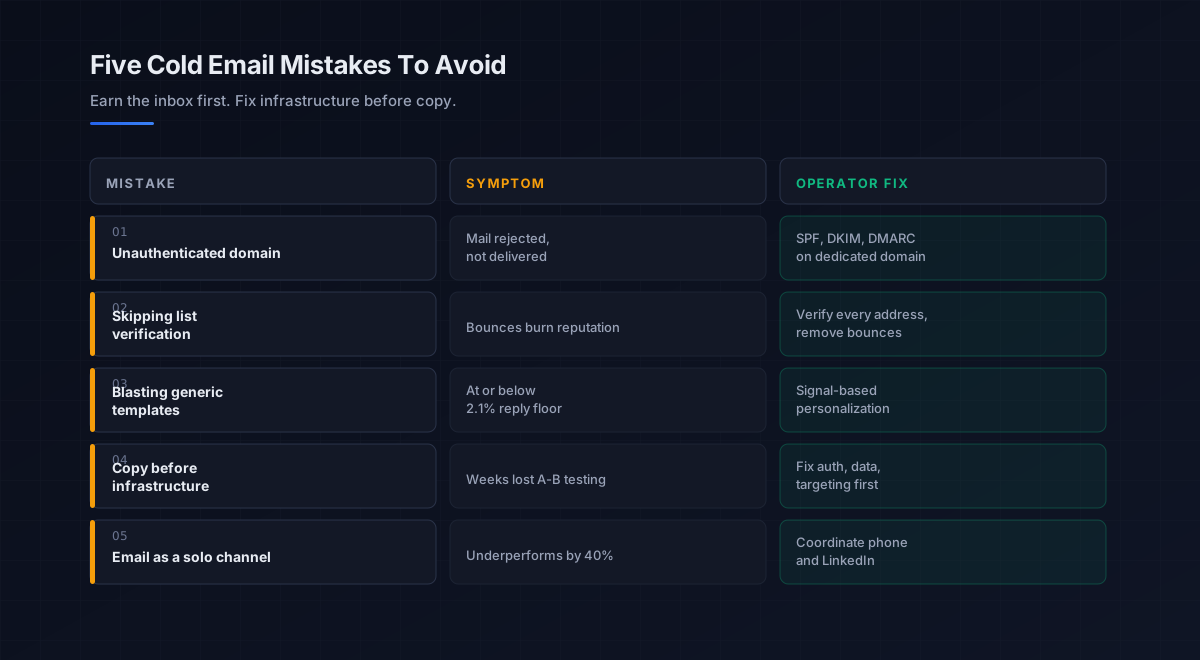
Sending from an unauthenticated domain. Without SPF, DKIM, and DMARC, mail is now rejected outright. Configure all three on a dedicated sending domain before the first send.
-
Skipping list verification. A list bouncing above 2 percent damages reputation; above 5 percent gets the account suspended. Verify every address and remove hard bounces after each campaign.
-
Blasting generic templates. Mass firmographic outreach sits at or below the 2.1 percent average and erodes reputation. Use signal-based personalization that references a real trigger.
-
Optimizing copy before infrastructure. Teams A-B test subject lines while the real problem is deliverability. Fix authentication, data, and targeting before touching the message.
-
Running email as a solo channel. Email-only campaigns underperform by around 40 percent. Coordinate cold email with phone and LinkedIn in one multichannel cadence.
The eight-step build sequence
This is the order we build a cold email motion in, for our own outreach and for the teams we work with. Run it top to bottom.
- Set up dedicated domains. Register sending domains separate from your brand domain, and configure SPF, DKIM, and DMARC on each.
- Warm every mailbox. Run two to four weeks of warmup, ramping from about five sends a day to a 50 to 100 ceiling.
- Verify and target the data. Source and verify a clean, tightly-targeted list, keeping bounce rate under 2 percent.
- Anchor on signals. Build personalization around real buying triggers, not firmographics, for the 3 to 5x reply lift.
- Write short and problem-first. Keep emails under 80 to 125 words, plain text, one link, one CTA, leading with the prospect’s problem.
- Sequence 4 to 7 touches. Run a tight 5-touch, 14-day cadence, since follow-ups capture 42 percent of replies.
- Go multichannel. Coordinate with phone and LinkedIn, since email-only underperforms by around 40 percent.
- Read the metrics in order. Diagnose via open rate, then reply rate, then bounce and complaint rate, fixing the broken layer before scaling.
How the channel fits the broader stack
Outbound email is one channel in a larger system, strongest when coordinated rather than siloed. Each layer connects to a deeper guide.
- The tooling. Sending platforms and inbox rotation, in cold email software.
- Deliverability. The discipline that lands mail, on email deliverability.
- Sender reputation. Keeping domains healthy, on sender reputation.
- The data layer. Clean, verified lists, in b2b data providers and data enrichment tools.
- Signals. The intent that powers personalization, in sales intelligence tools.
- The phone channel. Stacking calls with email, in the cold calling pillar.
- LinkedIn. Adding the trust channel, in LinkedIn outreach.
- Strategy. The motion email serves, in outbound sales.
That is the map. The domain and authentication earn the inbox, verified data and signals make the message land and matter, the sequence captures the replies, and multichannel coordination turns a delivered email into a booked meeting.
Frequently asked questions
Does cold email still work in 2026?
What is a good cold email reply rate?
How many emails should a cold email sequence have?
Why are my cold emails going to spam?
How many cold emails can I send per day?
What makes cold email personalization effective?
Should I use my main domain for cold email?
The bottom line
Cold email in 2026 rewards infrastructure and targeting over volume and clever copy. The channel is not dead, the top decile clears 10.7 percent replies and signal-personalized campaigns reach 15 to 25 percent, but the bar has moved: authentication is now mandatory, mail from unauthenticated domains is rejected, and generic blasting sits at the 2.1 percent reply floor while burning the domains it runs on. Build from the infrastructure outward, dedicated authenticated domains, warmed mailboxes, verified data, signal-based personalization, a tight 4-to-7 touch sequence, and multichannel coordination around it.
If you take one rule from this pillar, make it this: earn the inbox before you optimize the message. Most struggling programs do not need better copy, they need a verified list sent from a properly authenticated, warmed domain. Get the infrastructure and data right, anchor personalization on real signals, and cold email still books pipeline at a cost no other channel matches.
Get the operator playbook in your inbox. The Outbound Game publishes one operator-grade breakdown a week on B2B outbound sales, tactics, tooling, and ops. No fluff, no vendor talking points. Subscribe and get the next one when it ships.
More on Cold Email
Cold Email Call to Action: What Converts in 2026 (Data)
Cold email call to action data for 2026: why interest CTAs win cold, when specific time asks take over, and the ladder that escalates across a sequence.
How to Respond to Cold Email Replies (2026 Playbook)
How to respond to cold email replies in 2026: the six reply lanes, the speed windows that decide conversion, and the plays that turn replies into meetings.
How to Follow Up on Cold Emails in 2026 (What to Send)
How to follow up on cold emails in 2026: the day by day map, what each touch should say, breakup emails that earn replies, and when to stop.