How to Respond to Cold Email Replies (2026 Playbook)
How to respond to cold email replies in 2026: the six reply lanes, the speed windows that decide conversion, and the plays that turn replies into meetings.
Knowing how to respond to cold email replies is the expensive skill nobody optimizes, because the entire industry stops measuring at the reply. Here is what happens after it: the average team converts just 10 to 15 percent of positive replies into held meetings, disciplined teams reach 20 plus, and the best SDR teams hit 25 to 30 percent or more on the same quality of interest, which means most programs quietly lose the majority of the replies they spent all that infrastructure, warmup, and copy earning. The gap between 15 and 30 percent is almost never the offer. It is speed and follow through, the two things this playbook covers.
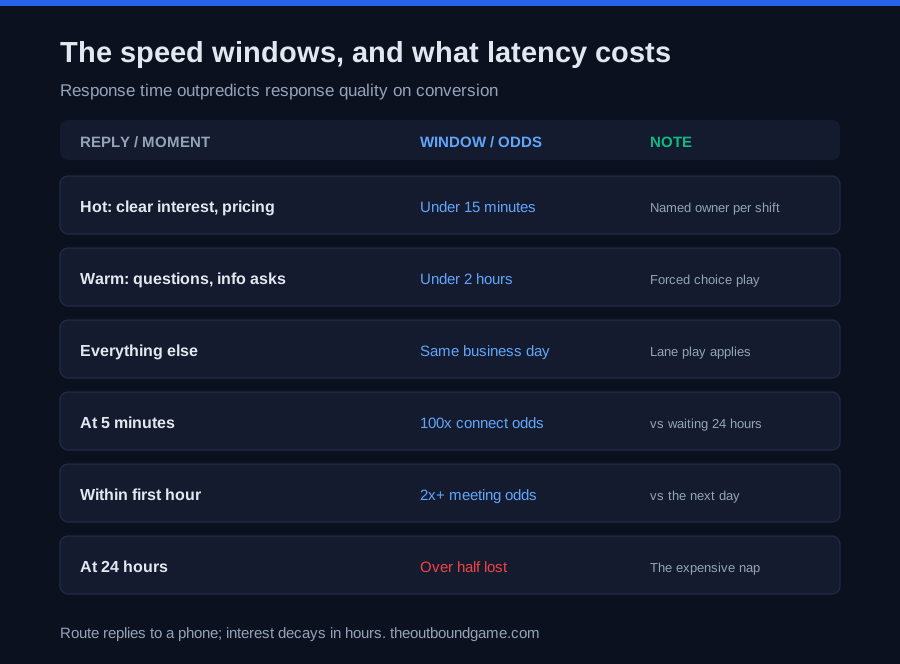
The speed math is brutal and settled: you are roughly 100 times more likely to connect with a lead responding within 5 minutes versus 24 hours, 21 times more likely to qualify one inside 30 minutes, and answering a positive reply within the first hour dramatically improves meeting conversion while waiting a day cuts the probability by more than half. The mechanism is momentum, not politeness. A prospect who replies at 10 AM is thinking about their problem right now; by noon they are in another meeting, another priority, or another vendor’s inbox, and the interest your sequence manufactured has a half life measured in hours.
This piece completes the reply arc of our cold email coverage: earning the reply is covered in cold email reply rate and the follow up craft, the silence problem in why cold emails get no replies, and here we handle the moment everything was for: the reply is the halfway point, not the win, and every reply type gets a lane, a window, and a play.
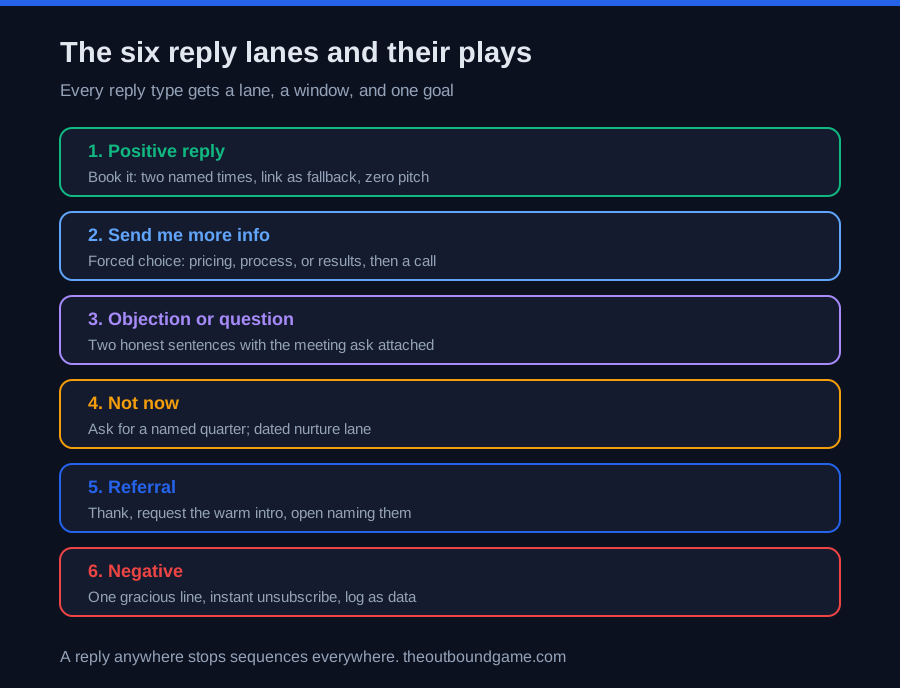
The six reply lanes, and the play for each
Lane one, the positive reply: interest, a question about a call, a yes. The play is a single goal executed instantly, book the meeting, and nothing else: two specific time options led first, Tuesday at 2 or Wednesday at 10, with the calendar link as the backup for neither, because a naked link alone converts worse than named times and no link at all converts worst. Lane two, the information request, send me more details: never the deck. The counter play is a forced choice, ask whether they want pricing, process, or results, numbered so answering costs one keystroke, then 2 to 3 targeted bullets and a call proposal, because the prospect who picks a number just qualified themselves.
Lane three, the objection or question: answer it honestly in two sentences and attach the meeting ask to the answer, per the objection handling discipline the sequence already uses. Lane four, the not now: respect it literally, ask permission for a specific quarter, and move them to the nurture lane with a calendar note, since a not now with a date attached converts later at multiples of a re pitched one. Lane five, the referral, talk to my colleague: thank the referrer, ask for the warm intro in the same thread, and open the new thread naming them, the highest converting opener in outbound. Lane six, the negative: one gracious sentence, an easy unsubscribe honored instantly, and the reply logged as targeting data, because per the reply rate diagnostics, a pile of polite passes is an ICP finding wearing a rejection’s clothes.
The speed windows: response time is the conversion lever
The 2026 operating windows turn speed to lead into policy: hot replies, clear interest or pricing questions, get answered inside 15 minutes during business hours; warm replies, questions and info requests, inside 2 hours; everything else the same business day; and per HubSpot’s sales research the pattern generalizes across channels, with response speed outpredicting response quality on conversion. Hitting the windows is an operations problem, not a willpower problem: reply notifications routed to a phone or a triage channel, a unified inbox across every sending address so nothing hides in mailbox seventeen, hot reply alerts flagged by sentiment in the sequencer, and a written rule for who owns replies inside which window, because the alternative, per the audits, is positive replies aging 26 hours in an inbox nobody checked.
Two automations pay for themselves immediately: sentiment classification that separates the six lanes automatically, standard in the platforms compared in sales engagement platforms, and the sequence stop, since the single most trust destroying event in outbound is a scheduled follow up bumping a thread the prospect already answered. A reply anywhere stops everything everywhere, the same shared record rule the multichannel doctrine enforces across channels.
The booking mechanics: one goal, minimal friction
The positive reply response has one goal, the held meeting, and everything in it either serves that or gets cut. Keep it under five sentences: acknowledge their reply specifically, one line of relevant value if genuinely needed, then the ask with two named times and the calendar link as fallback, in their time zone, inside the next 2 to 4 business days because distant slots decay. Do not sell in the email, the word budget logic applies double after the reply: the product conversation belongs to the call, and every paragraph of pitch added before the booking measurably lowers the booking.
Then defend the meeting you booked, because booked is not held: a same day confirmation with a one line agenda, a reminder the morning of, and a show rate tracked against the 75 to 80 percent healthy band from how to measure outbound sales. No shows get one graceful rebook attempt within the hour of the miss, then a slot in the nurture lane rather than a guilt sequence. The full funnel arithmetic explains the obsession: at roughly 0.3 to 0.7 percent of sends becoming meetings, per the tiers in cold email benchmarks, every positive reply represents hundreds of sends of invested cost, which is why letting one age overnight is the most expensive nap in outbound.
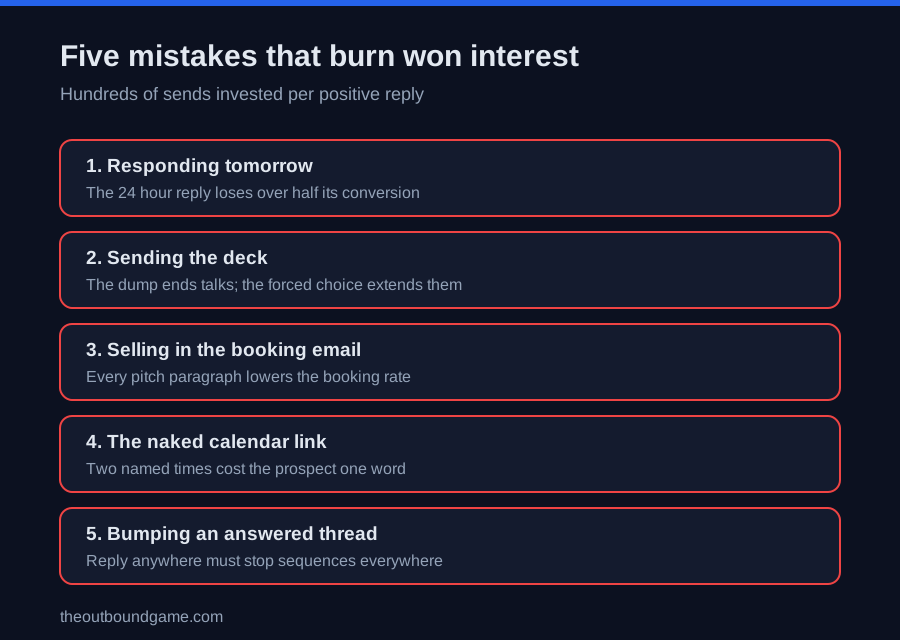
Five reply handling mistakes that burn won interest
-
Responding tomorrow. The 24 hour reply loses more than half its conversion probability. Interest decays in hours, and your competitor answered at minute twelve.
-
Sending the deck to send me more. The dump ends conversations; the forced choice, pricing, process, or results, extends them and qualifies the asker.
-
Selling in the booking email. Every pitch paragraph before the calendar ask lowers the booking. One goal per email, and after a positive reply the goal is a time.
-
The naked calendar link. Two named times convert better; the bare link outsources effort to the interested party and reads as volume outreach confirming itself.
-
Letting the sequence bump an answered thread. Nothing evaporates trust faster. Reply anywhere, stop everywhere, enforced by the platform, not by memory.
The eight step reply handling system
-
Route every reply through sentiment lanes. Positive, info request, objection, not now, referral, negative, classified automatically and triaged to a named owner.
-
Set the SLA windows in writing. Fifteen minutes for hot, two hours for warm, same day for the rest, with notifications that reach a human wherever they are.
-
Wire the sequence stop across channels. One reply halts every scheduled touch on every channel, the non negotiable plumbing rule.
-
Template the six plays, personalize the top line. The structure is repeatable; the first sentence always references their actual words.
-
Book with two named times, near term, their time zone. Calendar link as fallback, never as the whole ask.
-
Defend the hold. Confirmation with agenda, morning of reminder, one graceful rebook on a miss, show rate on the dashboard.
-
Run the nurture lane as a real asset. Not nows with dates, no shows, and closed lost replies re approached at their named quarter with a fresh trigger, per the signals discipline in how to personalize cold emails at scale.
-
Report reply to meeting conversion weekly, beside the reply rate it completes, because per Apollo’s measurement guidance and Instantly’s benchmark data alike, the teams that instrument the handoff are the ones collecting the 30 percent tier, the same closing loop the whole b2b outbound sales system depends on.
How reply handling fits the broader outbound stack
-
It converts the output of cold email reply rate, where the replies get manufactured lever by lever.
-
Its objection and not now lanes extend the touch craft in how to follow up on cold emails.
-
Its silence counterpart, the reply that never came, is diagnosed in why cold emails get no replies.
-
Its one goal discipline inherits the word budget from how to write a cold email, compressed further.
-
Its funnel position, reply to meeting to held, is benchmarked in cold email benchmarks and graded in how to measure outbound sales.
-
Its plumbing, sentiment lanes and sequence stops, is bought in sales engagement platforms.
-
Its cross channel stop rule is enforced by the multichannel outbound shared record doctrine.
-
And its earliest version, the founder answering every reply personally, ships inside how to start outbound sales, where the habit is cheapest to build.
FAQ
Frequently asked questions
How do you respond to a positive cold email reply?
How fast should you respond to cold email replies?
What percentage of positive replies should become meetings?
How do you respond to send me more information?
How do you handle a not interested reply?
Should you send a calendar link in reply to a cold email response?
How do you stop sequences when someone replies?
The bottom line
How to respond to cold email replies comes down to treating the reply as the halfway point it is: six lanes, each with a play, three speed windows with named owners, one goal per response, and plumbing that stops every sequence the moment a human answers. The economics justify the rigor, because at hundreds of sends invested per positive reply, the difference between the 15 percent converters and the 30 percent converters is the cheapest pipeline expansion available, bought with response speed and forced choice questions rather than more volume. The whole machine upstream exists to make a stranger reply. When one does, answer like it mattered, within the hour, with two times and nothing to read.
Want more tested breakdowns like this? We publish one honest teardown of outbound tools, tactics, and playbooks each week. Join the newsletter.
More on Cold Email
Cold Email Call to Action: What Converts in 2026 (Data)
Cold email call to action data for 2026: why interest CTAs win cold, when specific time asks take over, and the ladder that escalates across a sequence.
How to Follow Up on Cold Emails in 2026 (What to Send)
How to follow up on cold emails in 2026: the day by day map, what each touch should say, breakup emails that earn replies, and when to stop.
How to Write a Cold Email in 2026 (Line by Line Guide)
How to write a cold email in 2026, line by line: the five decisions, word counts that win, CTA formats that get replies, and the pre send checklist.