Multichannel Outbound in 2026: The Complete Playbook
Multichannel outbound in 2026: the channel roles, the coordinated 15 day cadence, behavior triggers, and why orchestration beats channel count.
Multichannel outbound carries the best headline numbers in the entire discipline and the worst execution record. Campaigns coordinating three or more channels convert at 287 percent above single channel efforts, sequences weaving email, LinkedIn, and phone book 2 to 3 times the meetings of any channel alone, and coordinated teams book meetings at roughly half the activity cost of single channel teams. Yet only 30 percent of teams running multichannel report major success with it, because most of what gets called multichannel is actually three parallel campaigns hitting the same list with no memory of each other, a LinkedIn tool here, an email tool there, a dialer nowhere, and every channel cheerfully touching prospects who already ignored the other two.
So this playbook starts from the honest thesis: multichannel outbound is an orchestration problem, not a channel count problem. The 287 percent belongs exclusively to sequences where every channel knows what every other channel did, where a triple opened email triggers a same day call, and where the prospect experiences one coherent narrative instead of three strangers with the same logo. Gartner made the shift official by collapsing sales engagement and revenue intelligence into a single category, Revenue Action Orchestration, in 2025: the market no longer rewards static cadences, it rewards sequences that respond to behavior.
This is the channel coordination pillar of the site: each channel’s craft lives in its own guide, cold email, cold calling, linkedin outreach, and video prospecting, the rhythm layer lives in sales cadence, and here we assemble them into one machine: the roles, the map, the triggers, and the measurement.
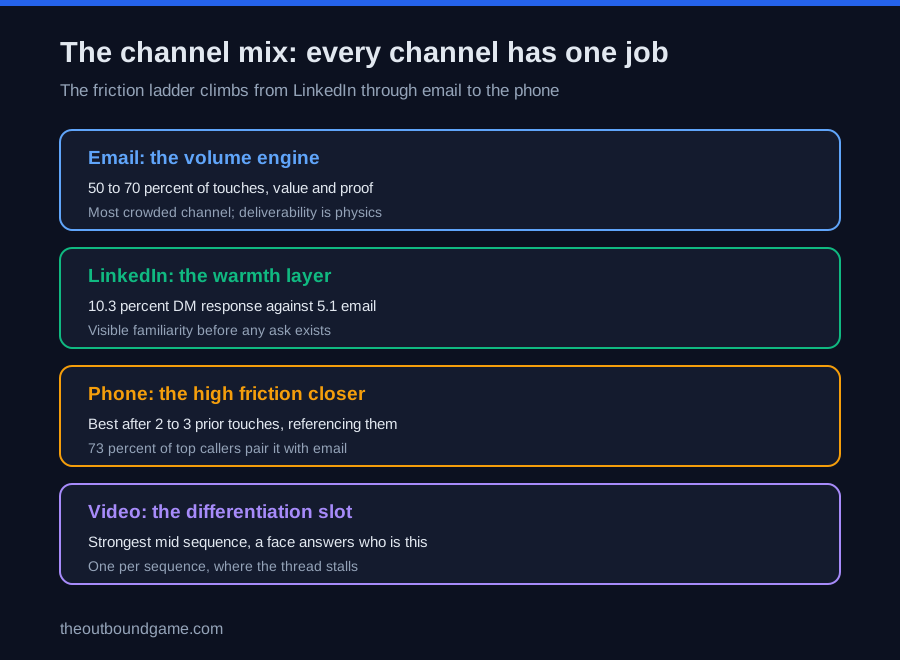
The channel mix: every channel has one job
Email is the volume engine and should carry 50 to 70 percent of the touch load in most B2B motions: it scales, it tracks, everyone reads it, and it is also the most crowded and most filtered channel, which is why its deliverability physics and word budgets get entire guides of their own. LinkedIn is the warmth layer: DMs earn roughly 10.3 percent response rates against 5.1 for cold email, at lower volume and higher cost per touch, with 42 percent of sales professionals in HubSpot’s research naming social the highest response cold channel, and the platform contributes something no other channel can, visible familiarity, since a profile view, a thoughtful comment, and a connection request build recognition before any ask exists.
The phone is the high friction closer, and its 2026 role is precise: 73 percent of top performing cold callers run it combined with email rather than standalone, and the highest converting slot for a call is after 2 to 3 prior touches, when the voicemail can reference the email and the opener can build on the LinkedIn thread, per the survivorship math in why cold calling still works. Video is the differentiation layer, strongest at the mid sequence slot where a face answers the who is this question text cannot. The friction ladder orders them: LinkedIn is low friction, email is medium, phone is high, and sequences that climb the ladder warm the prospect before asking for their time.
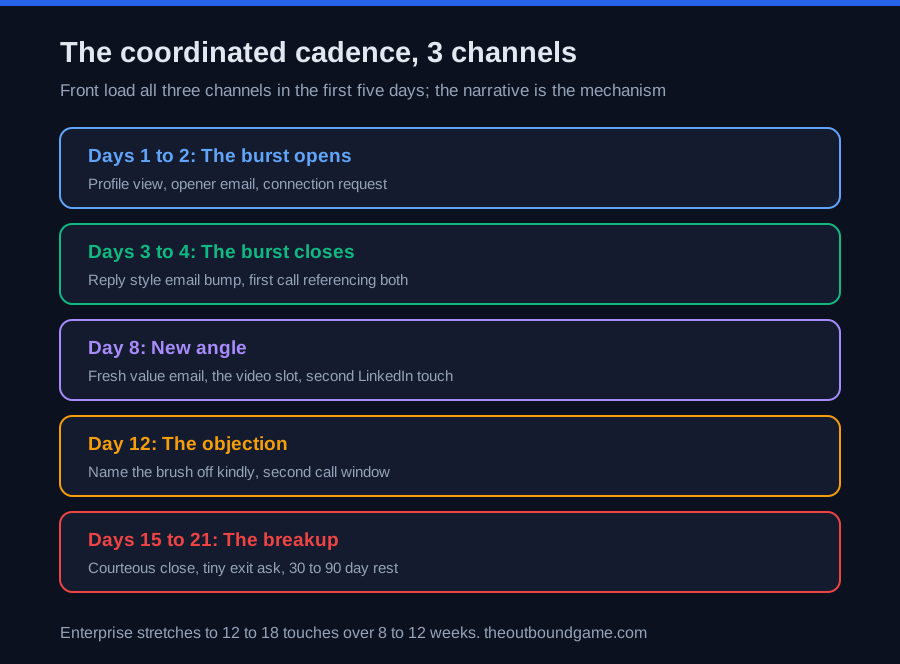
The map: a coordinated cadence, front loaded
The touch math for 2026: 8 to 12 touchpoints over 14 to 21 days for SMB and mid market, stretching to 12 to 18 over 8 to 12 weeks for enterprise, and the coordination matters more than the count. The strongest sequences front load all three channels in the first five days as a multichannel burst, day 1 a LinkedIn profile view plus the opener email, day 2 a connection request, day 3 the reply style email bump, day 4 the first call referencing both, rather than drip feeding one channel at a time, because the burst builds the coherent narrative reinforcement effect that produces the multiples.
From there the sequence follows the follow up craft: new angle email with a video option around day 8, the objection touch at day 12, a second call window, and the courteous breakup by day 15 to 21, each email inheriting the value per touch rules from how to follow up on cold emails, and the whole rhythm respecting per channel limits, email volume under the sending ceilings, LinkedIn under connection caps, calls inside the golden windows. Channel switching is the tactic that pays the rent: a fresh channel after a stalled email thread breaks through noise that another email cannot.
The triggers: behavior beats calendar
The 2026 upgrade to static multichannel outbound is signal responsiveness, and it is where the intent signals earn their keep. The working trigger set: three email opens without a reply escalates to a same day call or voice note, because interest without action means stuck, not uninterested; a pricing page visit gets a call within the hour, the speed to lead moment where response time is worth multiples; engagement with your LinkedIn content triggers a personalized email referencing the specific post; and a champion changing jobs fires a re engagement sequence before a competitor notices. Each trigger converts a scheduled touch into a timed one, and timed touches are the entire mechanism behind the signal tier’s outsized reply rates.
The plumbing requirement is unforgiving: triggers only work when every channel writes to and reads from one record, which is the actual product being bought in the sales engagement platforms category, and why the tool decision is an architecture decision. A stack where the LinkedIn tool, sequencer, and dialer share no state cannot run a single trigger, and per Apollo’s channel mix research, step level tracking by channel is also the only way to diagnose the mix, since sequence level numbers hide which channel is carrying and which is coasting.
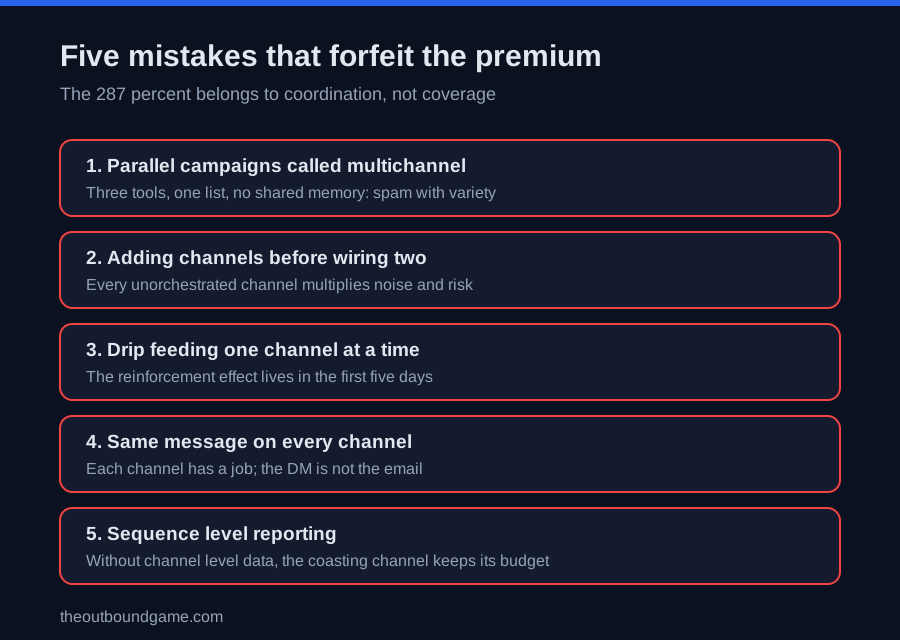
Five multichannel outbound mistakes that forfeit the premium
-
Running parallel campaigns and calling it multichannel. Three tools on one list with no shared memory is spam with variety. The premium is paid for coordination.
-
Adding channels before wiring the first two. Every unorchestrated channel multiplies noise and complaint risk. Email plus LinkedIn genuinely synced beats four channels of chaos.
-
Drip feeding channels one at a time. The reinforcement effect lives in the first five days. A LinkedIn touch in week three of an email sequence reads as a stranger, not a narrative.
-
Same message, different channel. Each channel has a job: warmth, value, or the ask. Copy pasting the email pitch into a DM burns the channel that was supposed to feel human.
-
Sequence level reporting. Without step and channel level reply rates, the mix cannot be diagnosed, and the coasting channel keeps its budget forever.
The eight step multichannel outbound build
-
Start from a working single channel. Usually email, tuned against the cold email benchmarks tiers, because orchestration multiplies whatever exists.
-
Wire LinkedIn second. Profile views and connection requests as warmth touches in the same sequence, with acceptance and replies writing back to the record.
-
Add the phone third, slotted after 2 to 3 prior touches, voicemails referencing the thread, calls inside the midweek windows.
-
Front load the burst. All three channels inside the first five days, then the value led follow up spine through day 15 to 21.
-
Wire the four core triggers. Multi open escalation, speed to lead on high intent pages, content engagement echoes, and champion job changes.
-
Assign each channel one job in the copy. LinkedIn warms, email carries the value and proof, phone handles objections and the close of the loop.
-
Report at step and channel level, per the measurement stack in how to measure outbound sales, and rebalance the channel mix quarterly toward whatever books.
-
Scale by tightening, not adding. More coordination on three channels beats a fourth channel every time; direct mail and SMS enter only after the core trio runs without handoff drops, the same discipline the whole b2b outbound sales system runs on.
How the multichannel layer fits the broader outbound stack
-
It is the coordination layer of the b2b outbound sales system, where the channel guides become one motion.
-
Its rhythm engine is the sales cadence playbook, spacing, touch counts, and the ceilings per channel.
-
Its volume spine is cold email, 50 to 70 percent of the touches and all of the deliverability physics.
-
Its high friction closer is argued for in why cold calling still works and taught in cold calling.
-
Its warmth layer runs through linkedin outreach, where familiarity is built before the ask.
-
Its differentiation slot belongs to video prospecting, the mid sequence face.
-
Its follow up spine inherits how to follow up on cold emails, value per touch, never reminders.
-
And its plumbing is bought in the sales engagement platforms category, where shared state is the real product.
FAQ
Frequently asked questions
What is multichannel outbound?
How much better is multichannel than single channel outreach?
What is the best multichannel sequence structure?
What is each channel best for in outbound?
When should a cold call happen in a multichannel sequence?
What are behavior triggers in outbound sequences?
How many channels should an outbound sequence use?
The bottom line
Multichannel outbound pays its 287 percent premium to a minority of teams for a reason that has nothing to do with channel count: orchestration is the product, and most stacks cannot deliver it. The playbook is short. Give every channel one job, email for volume and value, LinkedIn for warmth, phone for the close of the loop, video for the face. Front load the burst, run the value led spine to a courteous breakup, and let behavior triggers convert the calendar into timing. Wire everything to one record, report by step and channel, and scale by tightening rather than adding. The teams collecting the multiples are not running more channels than everyone else. They are running the same three as one conversation, and the prospect can tell.
Want more tested breakdowns like this? We publish one honest teardown of outbound tools, tactics, and playbooks each week. Join the newsletter.
More on Outbound Strategy
Cold Email vs LinkedIn Outreach: Which Wins in 2026?
Cold email vs LinkedIn outreach in 2026: the reply rate and cost data, the volume caps, when each channel wins, and the combined sequence that beats both.
How to Start Outbound Sales in 2026 (60 Day Roadmap)
How to start outbound sales from zero in 2026: the 60 day roadmap from ICP to first meetings, the starter stack, and the metrics that prove the channel.
LinkedIn Connection Request Message: What Works in 2026
LinkedIn connection request message guide for 2026: the note paradox, the 120 to 180 character sweet spot, and the acceptance rate math that gates volume.