Why Cold Calling Still Works in 2026 (The Real Data)
Why cold calling still works in 2026: the data behind the 2.7 percent average, the connect rate levers, who still answers, and when the phone wins.
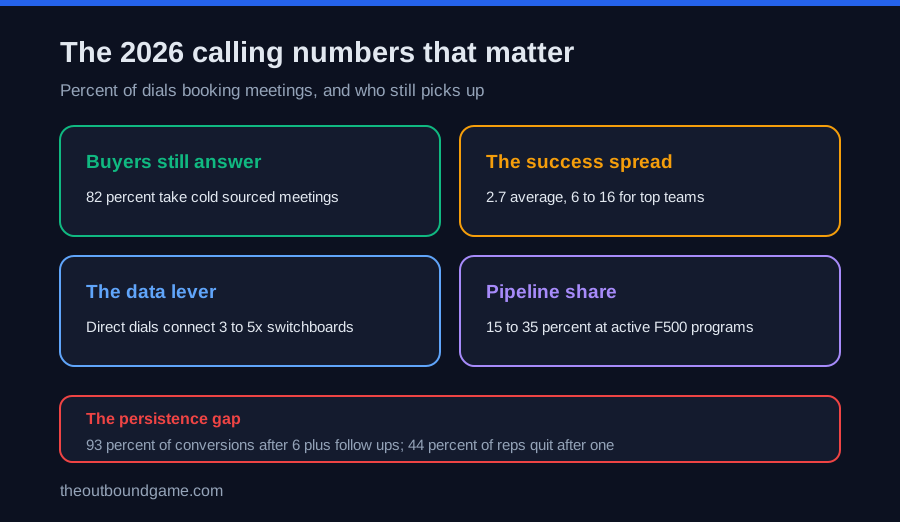
The case for why cold calling still works in 2026 starts with the number its obituaries always quote: an average cold call success rate around 2.7 percent of dials booking a meeting. What the obituaries skip is what that average contains. It blends every rep hammering scraped switchboard numbers off a purchased list with the teams calling verified mobile numbers into researched accounts, and those two activities barely share a channel. Top performing teams book meetings on 6 to 16 percent of dials, convert 16.7 percent of live conversations against a 4.6 percent average, and reach live humans at 18 to 22 percent on verified direct dials versus 5 to 8 on generic data. The average measures the market’s data laziness; the spread measures the channel.
The demand side settles the rest of the argument. In 2026, 57 percent of C-level and VP buyers still prefer the phone over any other channel, 82 percent of buyers accept meetings at least occasionally from sellers who called cold, over half of B2B leads still originate in cold outreach, and 82 percent of B2B sales organizations keep active calling programs, with Fortune 500 outbound teams attributing 15 to 35 percent of pipeline to them. In an inbox flooded with AI written sequences, a live human voice has become scarcer, and scarcity is exactly what senior decision makers respond to: a real conversation carries tone, allows objection handling in the moment, and compresses weeks of email tennis into six minutes.
This is the evidence piece of our calling coverage, the sibling of why outbound sales still works: the how-to craft lives in the cold calling pillar, the machine layer in ai cold calling, and the tooling in best cold calling software. Here we lay out the numbers, the conditions where the phone wins, and the levers that separate 2.7 from 16.
The connect rate is a data problem, not a rep problem
Everything downstream of the dial depends on the connect rate, the share of attempts that reach a live human, and in 2026 it is the most diagnostic number in the whole program. Generic and switchboard data connects at 5 to 8 percent; verified mobile direct dials connect at 18 to 22, roughly double to quadruple, and the operators’ rule is blunt: a connect rate persistently below 7 percent is almost always a technical problem, wrong numbers, spam labeled caller ID, bad calling windows, not a script or a rep problem. Direct dials reach live people 3 to 5 times more often than main company lines, local presence numbers add another 20 to 30 percent to answer rates, and unmonitored spam labeling quietly kills programs whose activity dashboards still look healthy.
That is why the highest ROI fix in most calling programs is bought at the data layer, not the coaching layer: the same 80 dials a day at a doubled connect rate produces double the conversations, double the meetings, and roughly half the cost per meeting, with not one word of the script changed. Persona targeting compounds it, since SMB managers pick up at 18 to 25 percent while C-suite numbers run 4 to 6, so smart teams match list segments to seniority and route their dialing capacity accordingly.
Persistence and timing: where the meetings actually live
The persistence math in calling is even more lopsided than in email. Reaching a prospect takes 6 to 10 attempts on average, 80 percent of sales require five or more calls, and 93 percent of eventual conversions happen after six or more follow ups, yet 44 percent of reps quit after a single attempt. The reps who systematize the follow up inherit the meetings everyone else paid dials for and abandoned. There is a ceiling, after about six attempts to the same prospect the incremental connect rate falls below 1 percent, which is when the sales cadence rotates the effort to email, LinkedIn, and back.
Timing is a real but smaller lever. Wednesday and Thursday produce the best connect rates, the two golden windows are 10 to 11:30 AM and 4 to 5:30 PM local time, Monday mornings are the worst slot of the week, and voicemail is not wasted breath: consistently left voicemails generate 3 to 4 percent callbacks against zero without, and an email sent within an hour of a call nearly doubles response versus waiting a day, which is the multichannel interlock working as designed. Multi channel cadences pairing calls with email and LinkedIn touches book 2 to 3 times more meetings than any single channel alone.
When the phone wins, and when it honestly does not
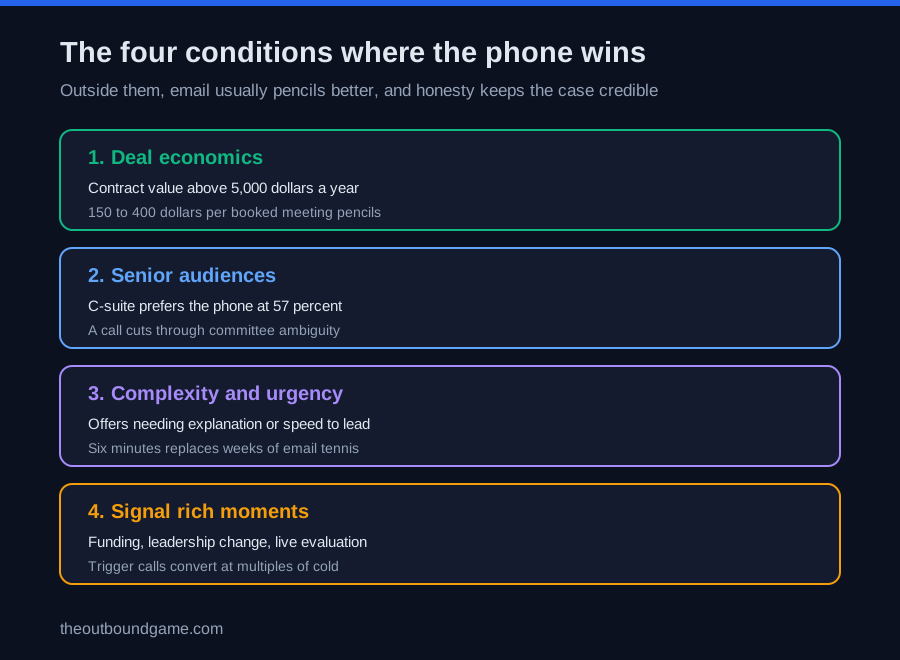
Cold calling earns its cost under four conditions. First, deal economics: the channel’s median cost per booked meeting runs 150 to 400 dollars for US programs, which pencils beautifully when annual contract value exceeds roughly 5,000 dollars and gets questionable below it. Second, senior audiences: the same C-suite that ignores email prefers the phone at 57 percent, and a conversation is the fastest path through committee ambiguity. Third, urgency and complexity: when the offer needs explanation, objection handling, or speed to lead, a call compresses cycles nothing asynchronous matches. Fourth, signal rich moments: calling into a funding round, a leadership change, or an active evaluation converts at multiples of calling into silence.
Honesty about the other side keeps the argument credible. Tiny deal sizes, transactional products, and audiences that live in text make calling a luxury; a rep costs real money per conversation, and per Salesforce’s research the average rep already spends most of the week not selling, so aiming that scarce live time at low value dials is malpractice. And the AI substitution has limits in both directions: autonomous voice agents currently convert 50 to 80 percent below human reps in complex B2B, which is why the winning 2026 stack, per the analysis in ai cold calling and the dialer math in best ai dialer, uses machines for research, dialing mechanics, and coaching while humans own the conversation. Parallel dialers alone produce roughly 4 times more conversations per hour on the same headcount.
Five mistakes that make the phone look dead
-
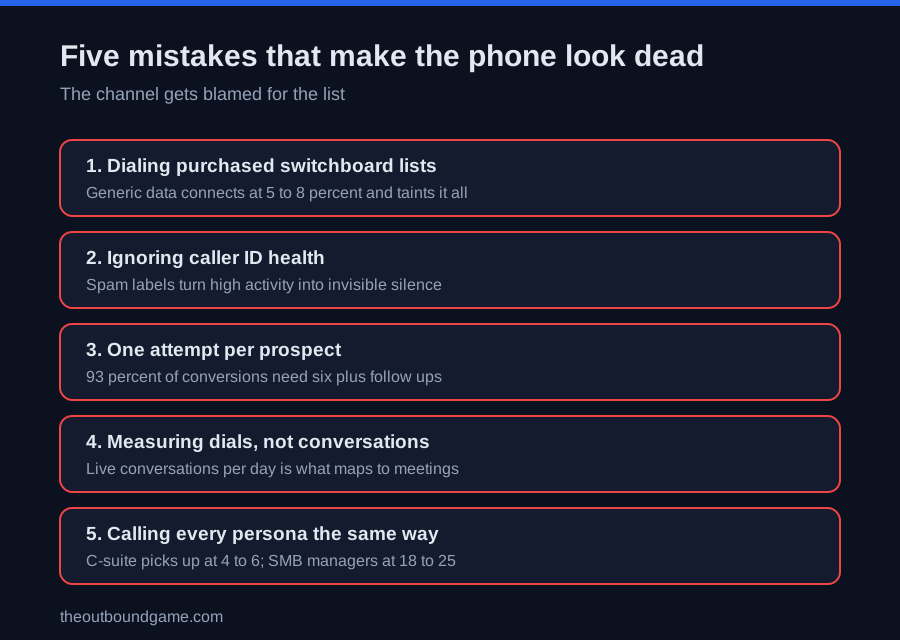
Dialing purchased switchboard lists. Generic data connects at 5 to 8 percent and colors every downstream number. The channel gets blamed for the list.
-
Ignoring caller ID health. Spam labeled numbers turn high activity into silence, invisibly. Monitor labeling monthly and rotate numbers before reputation dies.
-
One attempt per prospect. With 93 percent of conversions after six plus follow ups, a single dial strategy donates nearly the whole payoff to whoever calls next.
-
Measuring dials instead of conversations. Activity dashboards reward the wrong behavior; live conversations per rep per day is the number that maps to meetings.
-
Calling everyone the same way. C-suite at a 4 to 6 percent pickup needs different windows, data, and persistence than SMB managers at 18 to 25. Segment or subsidize failure.
The eight step calling program that beats the average
-
Reserve the phone for where it wins. Deals over 5,000 dollars in annual value, senior decision makers, complex or urgent offers, and signal rich accounts.
-
Buy verified mobile direct dials. The single highest ROI fix: connect rates double, cost per meeting halves, before any coaching.
-
Protect the caller ID. Local presence numbers, monthly spam label checks, and rotation the moment reputation degrades.
-
Call the windows. Wednesday and Thursday, late morning and late afternoon local time, first week of the quarter over the last.
-
Systematize five to eight attempts inside a multichannel cadence, voicemail on every miss, email within the hour of every call.
-
Coach on conversations, not scripts. Successful calls run nearly six minutes and ask 11 to 14 questions; record, review, and train toward that shape, since coaching lifts conversion by up to 38 percent per HubSpot’s sales research.
-
Instrument the funnel. Connect rate by data source, conversation to meeting rate, meetings per rep per day, cost per meeting, reviewed weekly.
-
Feed the machine layer carefully. Parallel dialing, AI research, and call intelligence multiply a working system, and only a working system, the same multiplier law that governs the whole b2b outbound sales stack.
How the calling case fits the broader outbound stack
-
The case for why cold calling still works is the channel level twin of why outbound sales still works, the same survivorship math applied to the phone.
-
The craft it argues for is taught in the cold calling pillar, openers, questions, and objection handling.
-
Its data lever is built in how to build a b2b prospect list, where direct dials and fit get sourced.
-
Its rhythm lives in the sales cadence playbook, where calls interleave with email and social.
-
Its machine layer is mapped honestly in ai cold calling, assistance yes, replacement not yet.
-
Its tooling economics are compared in best cold calling software and the parallel dialer tier in orum vs nooks.
-
Its email counterpart’s numbers live in the cold email benchmarks hub, for the channel mix decision.
-
And the multichannel lift it feeds is orchestrated across linkedin outreach, where the third channel closes the loop.
FAQ
Frequently asked questions
Does cold calling still work in 2026?
What is a good cold call connect rate?
What is the average cold call success rate?
How many times should you call a prospect?
When is the best time to cold call?
Is cold calling worth it compared to email?
Should you leave a voicemail on a cold call?
The bottom line
Why cold calling still works reduces to the same survivorship logic as the rest of outbound: the ugly average is manufactured by bad data, spam labeled numbers, and one attempt persistence, while the operators who fix those three things book meetings at 3 to 6 times the market rate into an ever quieter phone channel. The buyers never left, a majority of senior decision makers still prefer a call, and the economics still clear easily wherever deals are large and conversations move them. The phone is not dead. It is under called, over averaged, and quietly profitable for the teams that treat the dial tone like infrastructure instead of a lottery ticket.
Want more tested breakdowns like this? We publish one honest teardown of outbound tools, tactics, and playbooks each week. Join the newsletter.
More on Cold Calling
Orum vs Nooks in 2026: A Full Operator Field Guide
Orum vs Nooks in 2026, compared by job. The high-volume dialer vs the coaching salesfloor: real pricing, the data caveat, and which one fits your team.
AI Cold Calling in 2026: Tools, Modes, and New Rules
AI cold calling in 2026 splits into voice agents, assisted dialers, and call intelligence. An operator guide to the tools, dialer modes, and new FCC rules.
The Best AI Dialer in 2026: Modes, Tools, Tradeoffs
The best AI dialer in 2026 depends on dialer mode and data quality, not brand. An operator guide to power, parallel, and predictive dialers.