Why Outbound Sales Still Works in 2026 (The Evidence)
Why outbound sales still works in 2026: the evidence behind the obituaries, what actually died, the numbers elite teams post, and when outbound is wrong.
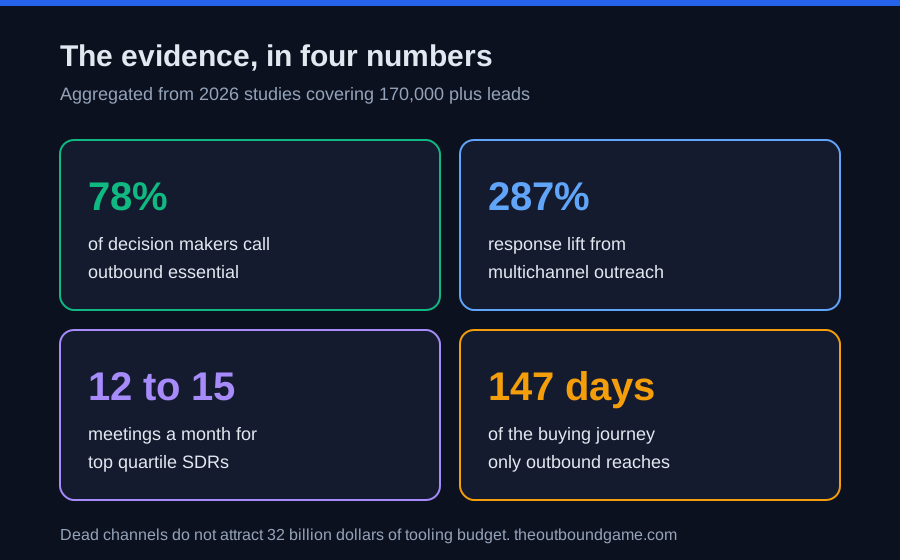
Understanding why outbound sales still works in 2026 starts with an inconvenient fact for the obituary writers: the buyers never stopped answering. Research aggregated across 2026 studies shows 78 percent of B2B decision makers consider outbound essential to their growth strategy, 39 percent rely on it as a core growth engine, more than 80 percent of buyers say they are open to meetings from proactive sellers, and 43 percent of sales teams name cold email their single most effective channel. Meanwhile the software market built to execute outbound is growing toward roughly 32 billion dollars. Dead channels do not attract that kind of budget.
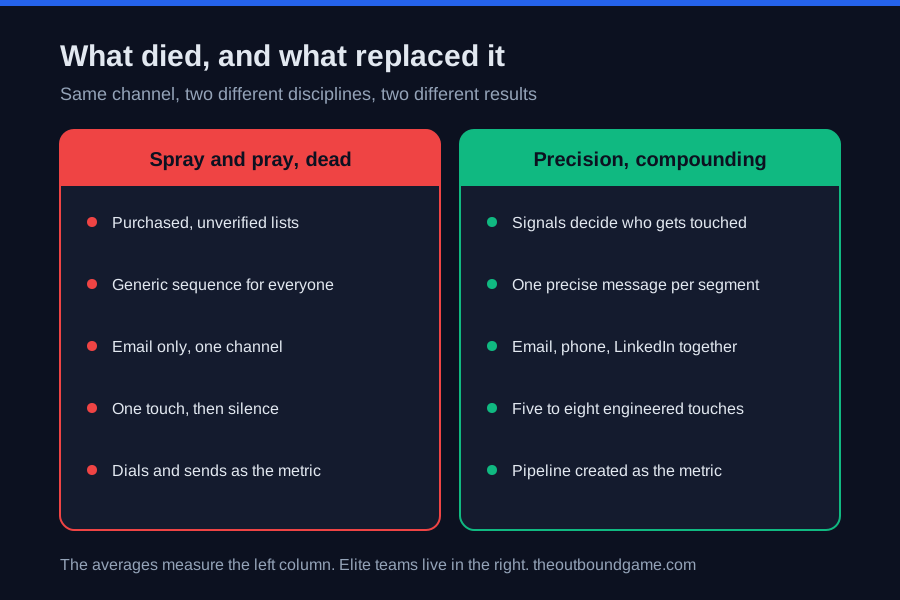
And yet the outbound is dead crowd is not hallucinating either. Average cold email reply rates sit near 3.4 percent, roughly 91 percent of cold outreach gets no response at all, and about half of outbound marketers say their own strategy is not effective. Both datasets are true at once, and the resolution is the whole story: what died is spray and pray, the purchased list blasted with a generic sequence, and what replaced it is a precision discipline whose practitioners quietly post 12 to 15 qualified meetings per SDR per month while the averages drown in everyone else’s spam.
This piece is the evidence file for that claim, and it anchors the strategy side of our b2b outbound sales pillar. It steelmans the case against, shows the survivorship error hiding in the averages, lays out what the working version looks like, and, because honesty is the house style, names the situations where outbound genuinely is the wrong channel and inbound marketing deserves the budget instead.
The case against, stated fairly
The skeptics have real numbers. Inboxes are flooded, average reply rates hover in the low single digits, and only a fraction of a percent of cold outreach converts to closed revenue. Mailbox providers now enforce authentication and complaint thresholds with outright rejections, sales cycles are lengthening according to 57 percent of professionals in Salesforce’s State of Sales research, and 84 percent of reps missed quota last year. Add buying committees of six to ten people doing 70 percent of their journey before ever talking to sales, and the obituary writes itself.
Except every one of those numbers indicts an execution model, not a channel. The flooded inbox is full of the lazy version. The enforcement wave punishes senders who never built infrastructure, and as our ranked diagnosis in why cold emails go to spam shows, those causes are fixable line by line. And the committee doing research before talking to sales is an argument for outbound, not against it, which brings us to the most misread statistic in b2b sales.
The survivorship error in the averages
The typical B2B buying journey now runs about 211 days, and only 60 of those days happen inside anyone’s visible pipeline. The other 147 days are the hidden window: the committee forming opinions, shortlists quietly assembling, before a single form is filled. Inbound marketing, by definition, waits at the end of that window for whoever arrives. Outbound is the only motion that can enter the hidden 147 days, reach the committee while the shortlist is still soft, and shape the criteria instead of competing on them. That structural property did not expire; it got more valuable as journeys lengthened.
The averages hide this because they aggregate two different populations. Platform wide reply rates near 3.4 percent are dragged down by an ocean of low effort volume, while the teams running precision outbound sit at entirely different numbers: advanced personalization doubles responses at 18 versus 9 percent, trigger event outreach earns 3 times the replies of name and company tokens, and combining email, phone, and LinkedIn lifts response rates by 287 percent over any single channel. The mean measures the laziness of the market. It says nothing about the ceiling of the channel, elite teams live at the ceiling, and that split population is the entire answer to why outbound sales still works while its averages look terminal.
What the working version looks like
Start with signals, because timing beats targeting and targeting beats volume. The teams booking 15 plus meetings a month start from funding rounds, hiring surges, leadership changes, and high intent behavior rather than static lists, exactly the sourcing discipline in how to build a b2b prospect list. Trigger based cold outreach earns triple the replies because it answers the only question a stranger’s email must answer: why you, why now.
Then relevance at scale. The 18 percent tier belongs to the assembly line from how to personalize cold emails at scale: tight segments, verified data, one strong template per segment with researched slots. Then channel orchestration, since buyers engage across an average of ten channels and the 287 percent multichannel lift means email only programs leave most replies unclaimed; the cold calling and linkedin outreach motions are multipliers, not competitors. Then persistence engineered into the sales cadence, because 80 percent of closed deals require five or more touches while 44 percent of reps quit after one, which means follow up discipline alone out competes most of the market. And underneath everything, infrastructure: authentication, warmup, verification, and speed, since responding to a hot signal within five minutes makes a connection 100 times more likely than waiting half an hour, and the average team takes 29 hours.
None of this requires an army. It requires a system, which is why the automation economics in sales automation ROI and the agent leverage in best ai sdr tools keep pointing the same direction: precision outbound is increasingly a solo operator’s game with the right stack.
When outbound genuinely is the wrong channel
Honesty earns the verdict, so here is the other side. Outbound is the wrong primary channel when your deal size cannot carry the cost of a researched touch, when your product is a low consideration self serve purchase where a free trial outsells any email, when your TAM is so small that every account is already a named relationship, and when you are unwilling to fund the infrastructure and follow up the channel demands, because half built outbound is worse than none: it burns domains and brand goodwill while producing the very statistics the skeptics quote. In those cases, inbound marketing, product led growth, and partnerships deserve the budget, and pipeline generation should be measured there instead.
For everything else, meaning considered B2B purchases with definable committees and deal sizes above a few thousand dollars, the channel question is settled by the evidence above, and the only real question is execution quality.
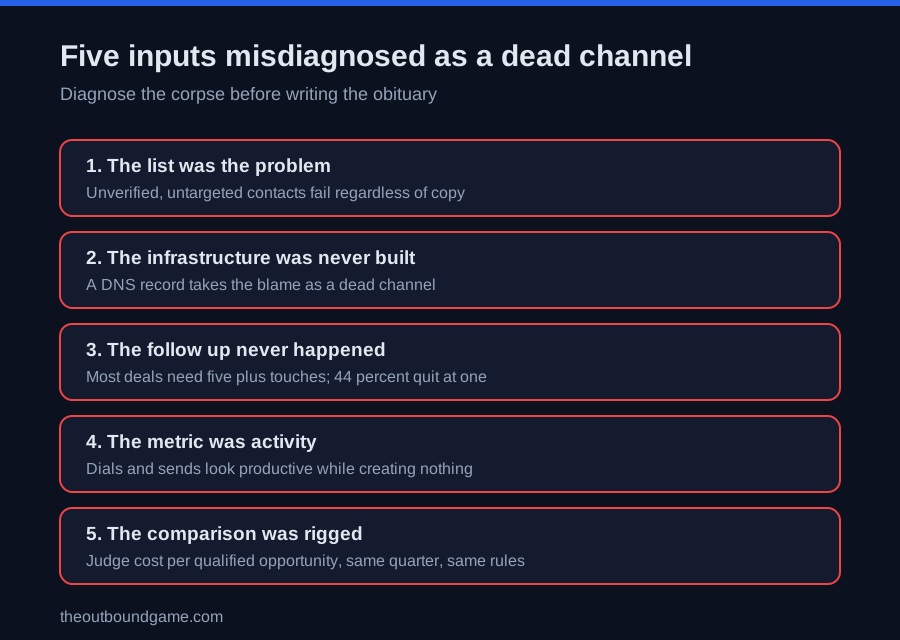
Five reasons teams conclude outbound is dead, and what is actually broken
-
The list was the problem. Unverified, untargeted contacts produce bounces and silence regardless of copy. The fix lives in list discipline, not channel strategy.
-
The infrastructure was never built. Unauthenticated domains and cold mailboxes route everything to spam, and the channel takes the blame for a DNS record.
-
The follow up never happened. With most deals needing five plus touches, a one touch program is a coin flip against 44 percent of the market that also quit early.
-
The metric was activity. Dials and sends look productive while creating nothing. Pipeline created per rep is the only number that settles the debate, and HubSpot’s benchmark research keeps showing the same gap between activity and outcomes.
-
The comparison was rigged. Outbound gets judged on cold math while inbound’s content costs hide in another budget line. Judged on cost per qualified opportunity this quarter, with the market data Gartner tracks on tooling investment as the tiebreaker, precision outbound holds its own and usually wins on speed.
An eight step reboot for anyone who wrote the obituary
-
Audit the corpse first. Pull last quarter’s list quality, authentication status, touch counts, and reply rates. Diagnose before rebuilding.
-
Fix the infrastructure. Domains, records, warmup, safe volumes. Nothing else counts until sends arrive.
-
Rebuild one list properly. Fifty to two hundred accounts, closed won evidence in the ICP, a signal on every row, verification gate at 2 percent.
-
Write one precise message per segment. Under 80 words, one ask, the signal in the first line.
-
Sequence five to eight touches across three channels. Email carries scale, phone carries urgency, LinkedIn carries familiarity, and the combination carries the 287 percent lift.
-
Respond to hot signals in minutes. Build the alert before the campaign, because speed to lead is the cheapest 100x in sales.
-
Measure meetings held and pipeline created. Per segment, per signal, per channel, so the next iteration is evidence led.
-
Compound for two quarters before judging. Outbound sales is a system that improves with data; the first month funds the learning, the second quarter pays for it.
How the outbound question fits the broader stack
-
The full operating system lives in the b2b outbound sales pillar, which this evidence file argues for.
-
The email motion is built at the cold email layer, where precision replaced volume.
-
The phone motion holds its own lane in cold calling, where connect rates reward persistence and data quality.
-
The social motion runs through linkedin outreach, the familiarity channel in the multichannel lift.
-
Timing and touch discipline follow the sales cadence playbook, where the five plus touch reality lives.
-
Supply comes from how to build a b2b prospect list, the infrastructure the whole argument rests on.
-
Relevance at scale is manufactured by how to personalize cold emails at scale, the 18 percent tier’s assembly line.
-
And the modern leverage question, human, agent, or hybrid, is settled in ai sdr vs human sdr, where the same precision rules apply to both senders.
FAQ
Frequently asked questions
Is outbound sales dead in 2026?
Why do outbound reply rates look so bad then?
Is outbound better than inbound marketing?
What makes outbound work in 2026?
Does cold calling still work?
When is outbound the wrong choice?
How long before outbound shows results?
The bottom line
Why outbound sales still works in 2026 is ultimately a story about two populations sharing one average. The obituary is accurate for the version that deserved to die: unverified lists, generic blasts, one touch, no infrastructure. The evidence is equally clear about the version that replaced it: signal led, verified, personalized, multichannel, persistent, and measured on pipeline, posting reply rates and meeting counts the averages never show. Buyers remain open, the hidden 147 days of the journey remain reachable by no other motion, and the market keeps voting with 32 billion dollars of tooling budget. Outbound did not die. It raised its price, and the teams willing to pay it inherited the channel.
Want more tested breakdowns like this? We publish one honest teardown of outbound tools, tactics, and playbooks each week. Join the newsletter.
More on Outbound Strategy
Cold Email vs LinkedIn Outreach: Which Wins in 2026?
Cold email vs LinkedIn outreach in 2026: the reply rate and cost data, the volume caps, when each channel wins, and the combined sequence that beats both.
How to Start Outbound Sales in 2026 (60 Day Roadmap)
How to start outbound sales from zero in 2026: the 60 day roadmap from ICP to first meetings, the starter stack, and the metrics that prove the channel.
LinkedIn Connection Request Message: What Works in 2026
LinkedIn connection request message guide for 2026: the note paradox, the 120 to 180 character sweet spot, and the acceptance rate math that gates volume.