Sales Automation ROI in 2026: How to Prove the Return
Sales automation ROI in 2026: the formula, realistic payback benchmarks, and how to prove the return without claiming growth you would have got anyway.
Sales automation ROI is easy to claim and hard to prove, which is exactly why most teams get it wrong in both directions. Vendors quote returns of five dollars or more for every dollar spent, and buyers either believe the brochure or dismiss the whole category as hype. The truth sits in between, and it is knowable: the return is real, it shows up fast, and it is measurable if you count the right things and refuse to count the wrong ones.
The single most common error is taking credit for growth that would have happened anyway. A tool that coincides with a good quarter did not necessarily cause it. The honest calculation strips out organic growth and the full cost of the tool before it claims a return, and it separates the hard, defensible savings from the soft, estimated ones. Do that and the number you get is one you can defend to a finance team, not just one that looks good on a slide.
This guide lays out how to measure sales automation ROI properly: the formula, the realistic benchmarks, what counts as defensible, and the costs people forget. It closes the loop on the sales automation pillar, sits beside the best sales automation tools guide, and ties back to the broader outbound sales motion the spend is meant to serve.
Quick verdict: is sales automation worth it
If you only read one section, read this one.
- Yes, when measured honestly. Published benchmarks put the return near five dollars for every dollar spent and the payback period at two to four months for sales automation, with most teams positive inside the first year.
- Lead with payback, not a three-year multiple. A two to four month break-even is a more honest, more useful number than a headline 500 percent return over three years.
- Subtract what you would have earned anyway. Real return on investment removes organic growth and the full cost of the tool before claiming a gain.
- Count freed hours only if they get reinvested. Time saved is worth nothing unless it goes back into selling, so attach the savings to meetings and pipeline, not to activity.
The rest of this guide is the math and the discipline behind that verdict.
What sales automation ROI actually measures
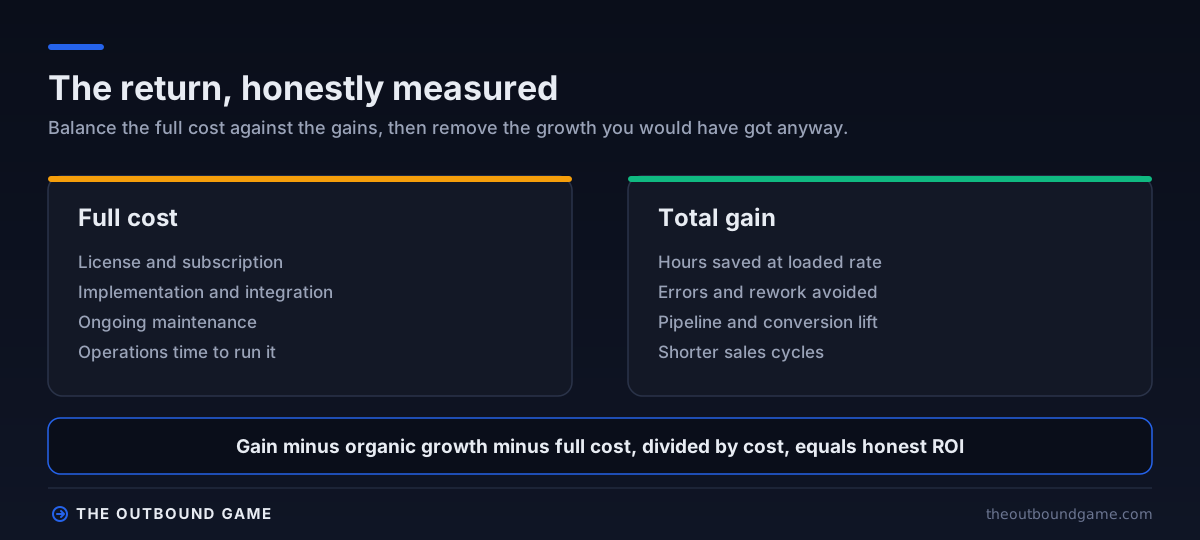
At its simplest, return on investment compares what you gained to what you spent. Take the value the automation created, subtract its cost, and divide the result by that cost. The output is a ratio you can compare across investments.
The naive version of that formula assumes every bit of improvement came from the tool, which is almost never true. The honest version subtracts two things from the gain before dividing: the cost of the automation itself, and the growth you would have captured without it. In plain terms, take the value created, remove the organic growth and the tool cost, then divide what is left by that cost. That correction is the difference between a number a finance team will accept and one they will quietly discount.
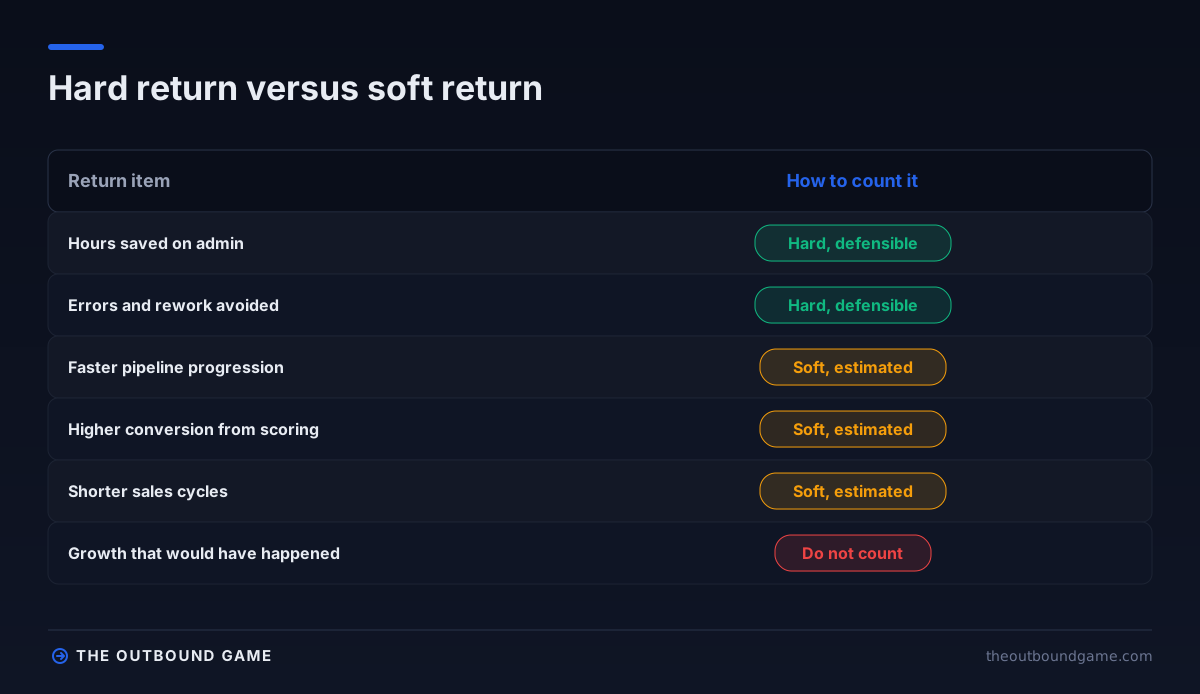
Value itself comes in two forms, and conflating them is where credibility dies. Hard return is defensible and countable: hours saved multiplied by a fully loaded hourly rate, plus reduced error and rework. Soft return is estimated and probabilistic: faster pipeline, higher conversion, shorter cycles. Both are real, but you report them separately so nobody can accuse you of inflating one with the other.
The benchmarks, with a grain of salt
The headline numbers are genuinely strong, and you should still treat the vendor-sourced ones as directional rather than gospel.
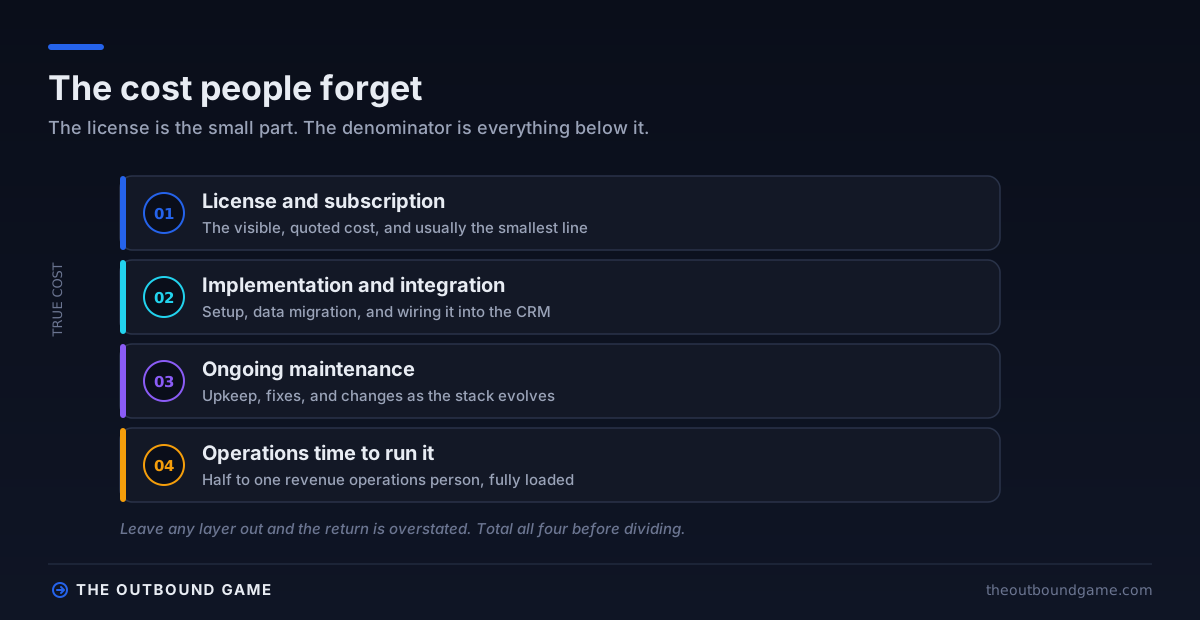
Across studies, automation returns roughly five dollars for every dollar spent over a three-year horizon, and about three-quarters of companies report a positive return inside the first year. The median payback period for sales automation lands around two to four months, far faster than most software categories. Sales teams report median time savings near twelve hours per representative per month, the raw material of the hard return. It is worth noting the trend line is not infinite: independent CRM research now puts return closer to three dollars per dollar, down from over eight a decade ago, as the category matured and easy wins got harder. The point is not to distrust the numbers but to model your own, since results vary widely by adoption and implementation quality. You can sanity-check vendor claims and user sentiment on G2, and the measurement frameworks from HubSpot and Salesforce reflect the same separation of saved time from revenue impact.
How to calculate it without fooling yourself
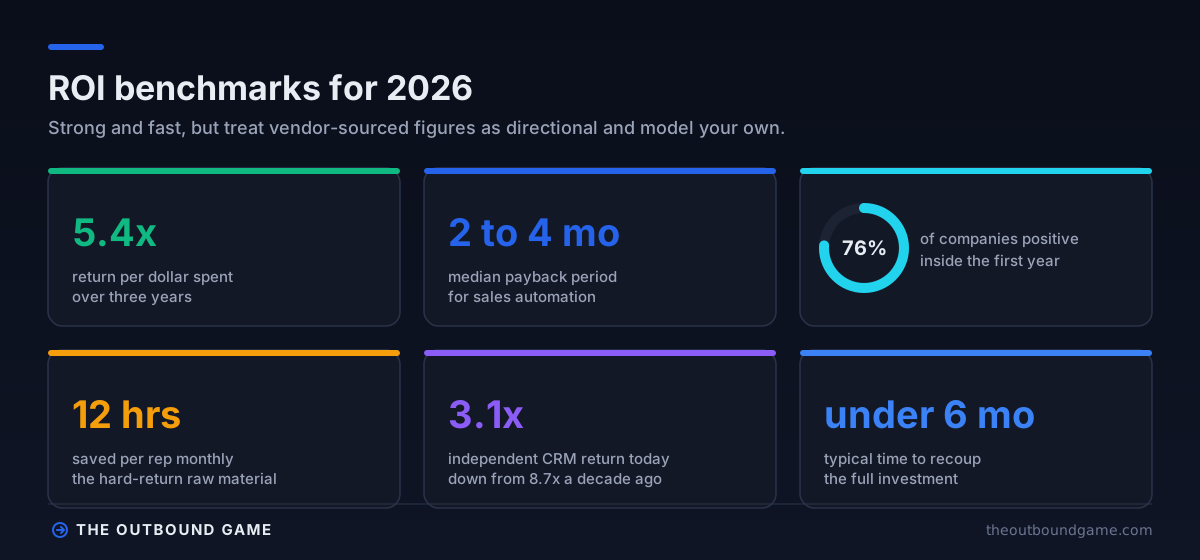
A defensible sales automation ROI calculation runs in a fixed order, and the order is what keeps you honest.
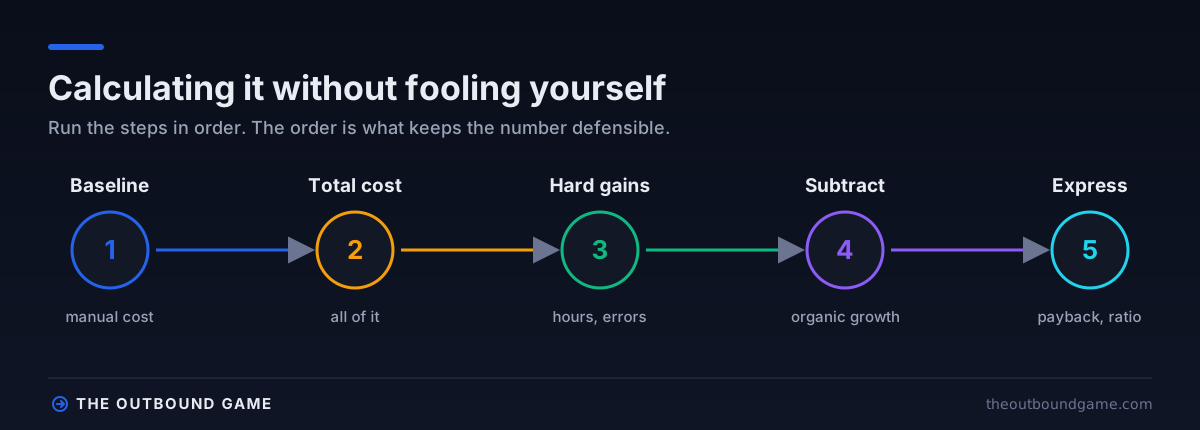
Start by setting a baseline: capture the current cost of the manual work and the current pipeline before you change anything, because a return with no baseline is a guess. Then total the real cost, which is more than the license. Add implementation, the half to full person of revenue operations time it takes to run, ongoing maintenance, and the integration work, since the costs people forget are what turn a positive return negative. Next, count the hard gains: hours genuinely freed multiplied by the loaded hourly rate, plus error reduction. Then estimate the soft gains separately and conservatively. Subtract organic growth so you are not billing the tool for a rising market. Finally, express the result two ways: a payback period in months, and a return ratio, so the reader sees both how fast it pays back and how much it returns.
Hard return versus soft return
The fastest way to lose a budget argument is to blend the two kinds of return into one confident-looking figure. Keep them on separate lines and your case survives scrutiny.
Hard return is what you can defend with a spreadsheet: hours removed from data entry, routing, logging, and research, priced at the loaded rate, plus the cost of errors avoided. This is the floor of your case and it stands on its own. Soft return is the upside: more pipeline from faster follow-up, higher conversion from better lead scoring, shorter cycles from coordinated outreach. It is usually the larger number, but it is an estimate, so present it as a modeled range with best, base, and worst cases rather than a single figure. The same discipline applies to the sales automation tools you are evaluating and to the crm automation and crm software layers underneath, where the data that proves any of this actually lives.
Where the return actually comes from
The biggest line items are predictable. Freed selling time is the foundation, since reps who lose the majority of the week to admin get hours back for conversations. Faster response and follow-up lift conversion, because speed to a fresh signal beats a perfect message sent late. Cleaner data and scoring concentrate effort on the right accounts, which is where the data enrichment tools and sales intelligence tools layers pay off. And consistency removes the dropped follow-ups that quietly leak pipeline. None of these require automating the parts of selling that need a human, and the strongest returns come from automating the repetitive scaffolding while keeping personalization, discovery, and closing with the rep. That balance feeds healthy lead generation and disciplined b2b prospecting rather than replacing it.
Five mistakes that wreck the ROI case
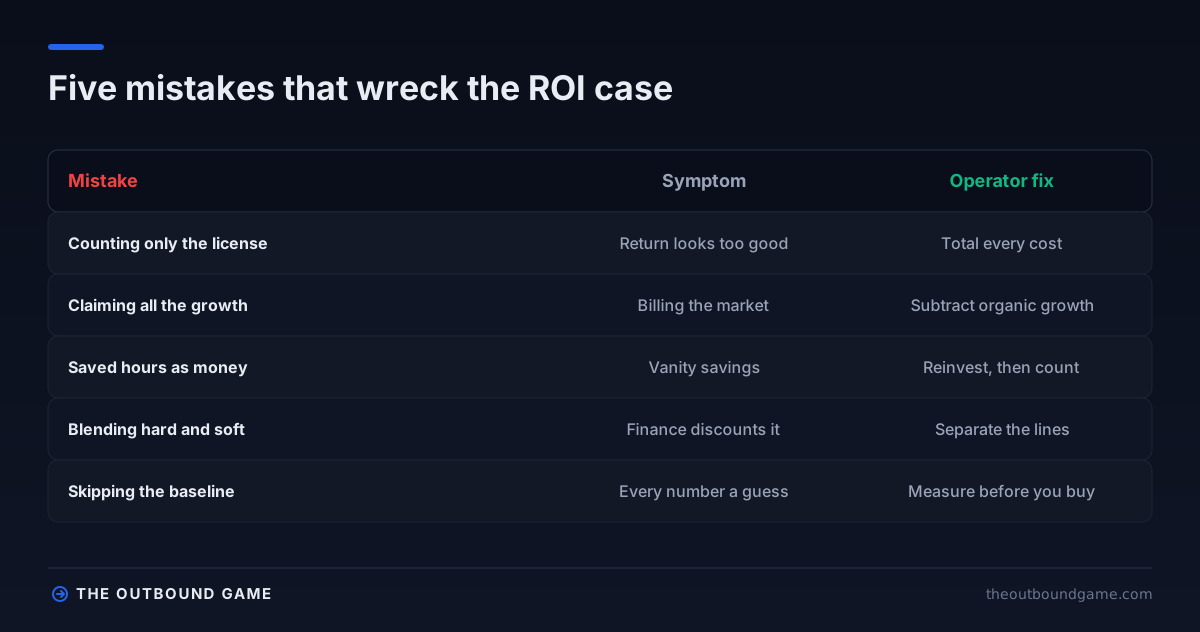
What we see most often is the same handful of errors, and each one either inflates the gain or hides the cost.
-
Counting only the license. The real cost includes implementation, maintenance, integration, and the operations time to run it. Omit those and the return is fiction.
-
Claiming all the growth. If you do not subtract organic growth, you are billing the tool for a rising market. Strip it out before you calculate.
-
Treating saved hours as money. Time saved is worth nothing unless it is reinvested into selling. Attach it to a specific reinvestment or do not count it.
-
Blending hard and soft return. Mixing defensible savings with estimated pipeline into one number invites a finance team to discount the whole thing. Separate the lines.
-
Skipping the baseline. Without a before number, every after number is a guess. Capture the manual cost and current pipeline first.
An eight-step framework to measure the return
Run this order before and after you buy, so the number holds up.
- Baseline the manual cost. Measure the hours and the pipeline before any automation goes live.
- Total the true cost. Add license, implementation, maintenance, integration, and the operations headcount to run it.
- Count the hard return. Price freed hours at the loaded rate and add the cost of errors avoided.
- Reinvest the freed time. Point the saved hours at a named activity like more conversations or faster follow-up.
- Estimate the soft return. Model pipeline and conversion gains as a best, base, and worst case range.
- Subtract organic growth. Remove the gains you would have earned without the tool.
- Express payback and ratio. Report the payback period in months and the return ratio side by side.
- Review on the deal clock. Re-measure after a full sales cycle, since pipeline gains take a cycle to mature.
How this fits the broader stack
Proving the return is the last layer on top of the rest of the automation motion. Each piece has a deeper guide.
- The foundation. What sales automation is and where it fits, in the sales automation pillar.
- The tools. The platforms whose return you are measuring, in best sales automation tools.
- The workflows. The automations that produce the saved hours, in b2b sales workflow automation.
- The examples. What to automate and what to keep human, in sales automation examples.
- The system of record. Where the numbers live, in crm automation and crm software.
- The data layer. What concentrates effort on the right accounts, in data enrichment tools and sales intelligence tools.
- The channels and cadence. Where freed time gets reinvested, in sales engagement and sales cadence.
- Deliverability. Whether the automated outreach is ever seen, in email deliverability.
The map is consistent: baseline first, count the full cost, separate hard from soft, subtract what you would have earned anyway, and lead with payback. A return measured that way survives a finance review; one measured any other way gets discounted the moment someone looks closely.
Frequently asked questions
What is a good ROI for sales automation?
How do you calculate sales automation ROI?
What is the payback period for sales automation?
Should you count saved hours as ROI?
What costs do teams forget when calculating ROI?
Why separate hard return from soft return?
Do sales automation tools always deliver positive ROI?
The bottom line
Sales automation ROI is real, fast, and defensible, but only when you measure it honestly. The category genuinely returns several dollars for every dollar spent and pays back in a couple of months, yet those headline numbers mean nothing until you rebuild them from your own baseline, your own full cost, and your own reinvested hours.
The discipline is the whole game. Count every cost, not just the license. Separate the hard savings you can defend from the soft gains you can only estimate. Reinvest the freed time and prove it landed as pipeline. And subtract the growth you would have earned anyway, so the number belongs to the tool and not to luck. Do that and you walk into the budget review with a payback period a finance team will sign off on, instead of a vendor multiple they will quietly ignore.
Get the operator playbook in your inbox. The Outbound Game publishes one operator-grade breakdown a week on B2B outbound sales, tactics, tooling, and ops. No fluff, no vendor talking points. Subscribe and get the next one when it ships.