B2B Sales Workflow Automation: A Full Operator Guide
B2B sales workflow automation in 2026: how to map the funnel, turn each branch into a trigger, and automate the steps without scaling the friction.
B2B sales workflow automation in 2026 is not about buying a tool that does everything; it is about mapping the steps your deals actually move through, then turning each repetitive branch into a trigger so reps stop forgetting the obvious next move. A sales workflow is the real sequence a lead travels, capture, enrichment, scoring, routing, engagement, and analytics, and most of the time lost in B2B selling lives in the manual handoffs between those steps, not in the selling itself. Reps spend only about 28 percent of their week actually selling, and at least 30 percent of their activities are already partially automatable today (per HubSpot and McKinsey research), so the opportunity is large and specific: remove the friction between steps, not the judgment inside them.
That framing matters because the goal is not to replace rep thinking but to protect it. The best automation handles the routine decisions, route this lead, enrich that record, schedule the next touch, so reps can spend their judgment on the customer conversation. Done right, it delivers faster speed-to-lead, cleaner CRM data, and higher conversion without adding headcount, with teams reporting 30 to 40 percent productivity gains and 8 to 12 hours saved per rep each week. Done wrong, by automating a process you never mapped, it just scales the friction. This guide shows how to map the workflow, turn each branch into a trigger, and automate the steps that should be automated.
This is a practical guide inside the sales automation cluster, which covers the discipline at the pillar level and the tools in best sales automation tools. It runs on top of your CRM software and the sales engagement platforms that execute the sequences.
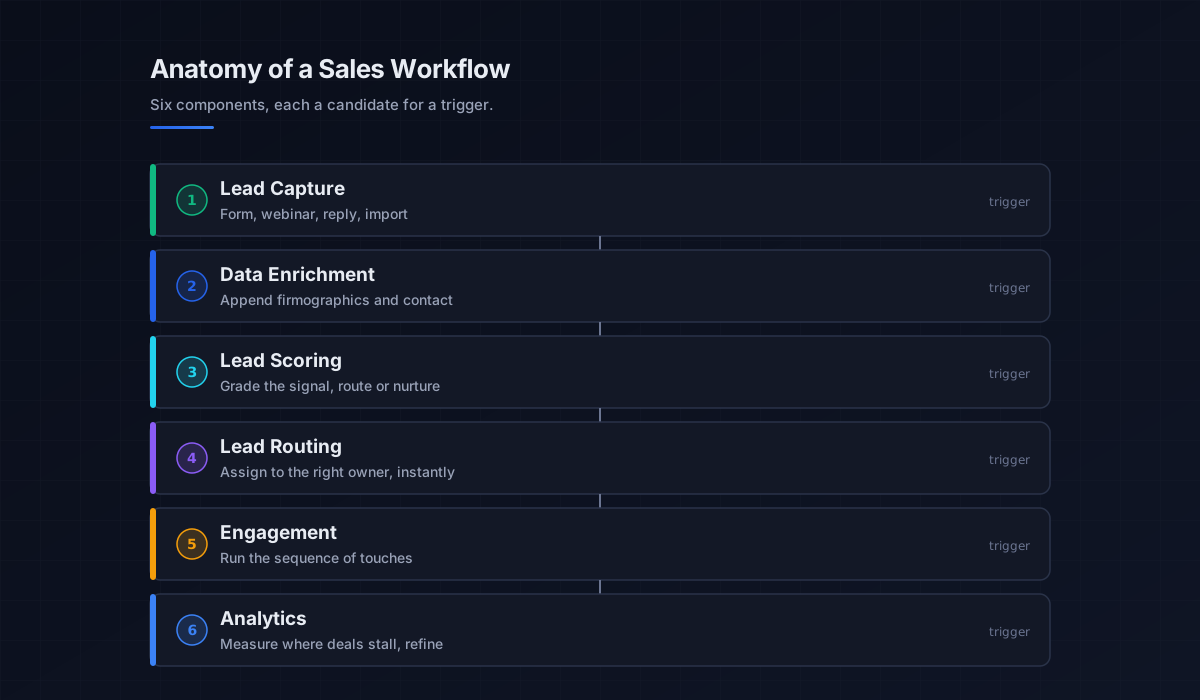
The six components of a sales workflow
Before automating anything, name the parts, because you cannot automate a workflow you have not mapped. A modern B2B sales workflow automation motion has six components, and each is a place where a manual step can become a trigger.
Lead capture is the entry point, a form fill, a webinar signup, a reply, a list import, where a raw signal enters the system. Data enrichment fills the record out, appending firmographics, contact details, and context so the lead arrives complete rather than as a bare email. Lead scoring grades the signal, deciding whether it routes straight to a rep or into a nurture track. Lead routing assigns it to the right owner instantly, the step where speed-to-lead is won or lost. Engagement and outreach run the sequence of touches, email, calls, and social, that move the deal forward. And analytics and feedback close the loop, measuring where deals stall so the workflow can be refined. Each component converts a raw signal one step closer to a closed deal, and each is a candidate for trigger-based automation.
Map the workflow before you automate it
The first discipline, and the one teams most often skip, is mapping the actual workflow before touching a tool. Document how a deal really moves, from the first touch through discovery, demo, proposal, and close, because the gap between how leaders think the process works and how it actually works is usually where the friction hides. Mapping the cycle is what reveals where deals slow down: if most leads stall after demos, that is where to look, not at the top of the funnel.
Once the map is complete, resist the urge to build a 20-item project plan. Pick the few changes that are both high impact and easy to prove. In B2B outbound, that often means fixing list rules, reply routing, or stage-entry criteria before rewriting a single line of email copy, because those changes give the team cleaner data and faster follow-up, and they reveal whether the message itself is even the problem. The map turns a vague sense that things are slow into a specific, fixable list, and it is the foundation the whole sales process and the outbound sales motion rest on.
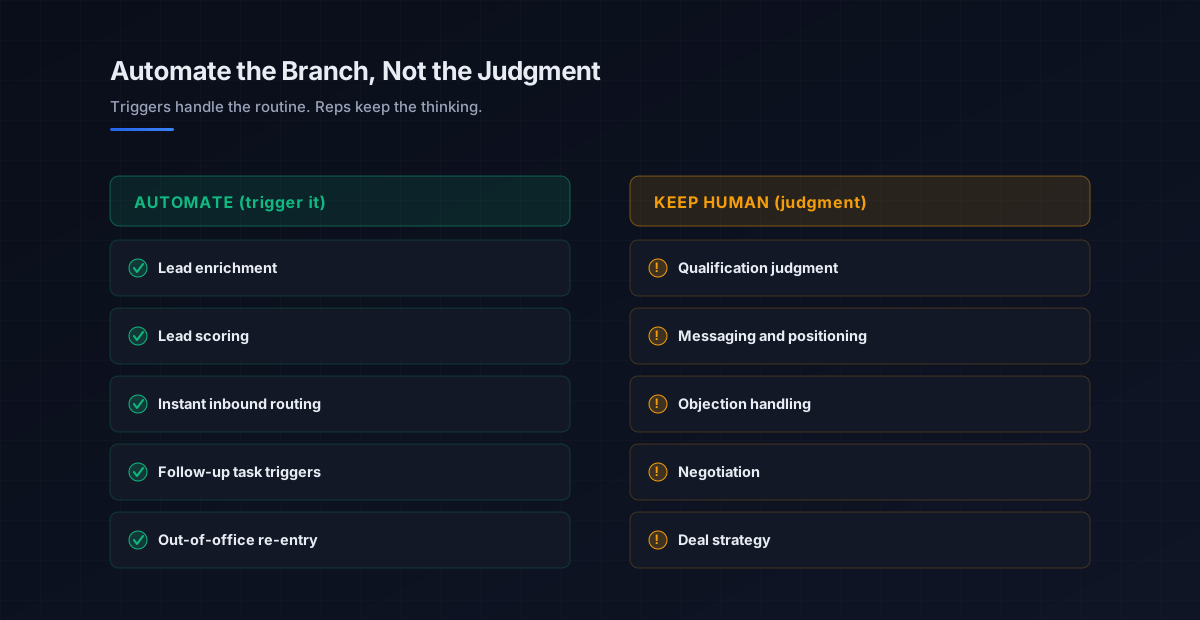
Turn each branch into a trigger
With the workflow mapped, the work of B2B sales workflow automation is translating each repetitive branch into a trigger: a condition that always produces the same next action. This is what turns a static process diagram into an executable system, and it is where the time savings actually come from.
The pattern is consistent across the funnel. An inbound demo request triggers instant enrichment and routing to the right rep, winning speed-to-lead. A high lead score triggers direct routing to sales while a low score triggers a nurture sequence. A completed discovery call with no booked next meeting triggers a follow-up task and a recap sequence. An out-of-office reply triggers timed re-entry rather than a dead end. A procurement or legal mention triggers an internal notification to the deal owner. Each trigger lives somewhere concrete, a CRM rule, an outreach sequence, a task queue, or webhook-based routing, and the discipline is consistency: the same condition produces the same move every time, so reps never have to remember it. Trigger-based automation is what removes the manual handoffs where deals leak, and the engagement side of it runs through the cold email software and sales cadence that execute the touches.
Why the workflow runs on a clean foundation
A trigger-based workflow is only as good as the data flowing through it, which is why automation sits on top of a data and deliverability foundation, not in place of one. The average B2B sales stack now runs 8.3 tools at roughly 187 dollars per rep a month (a benchmark echoed across review sites like G2), and the value comes not from adding more tools but from tight integration and clean data flow between the components you already have. A workflow that routes and sequences decayed records just moves bad data faster.
So the foundation comes first. The contacts and their enrichment come from the b2b data providers and data enrichment tools layers, since a routing rule firing on a wrong address wastes the speed it was built to win. The intent that feeds scoring comes from the sales intelligence tools layer. The outreach the workflow triggers lands only if the domain has clean email deliverability and sender reputation, since automating volume onto a cold domain burns it at scale. And the whole thing logs to the CRM software as the system of record. The workflow is the orchestration layer; the data, deliverability, and process beneath it are what make the orchestration pay.
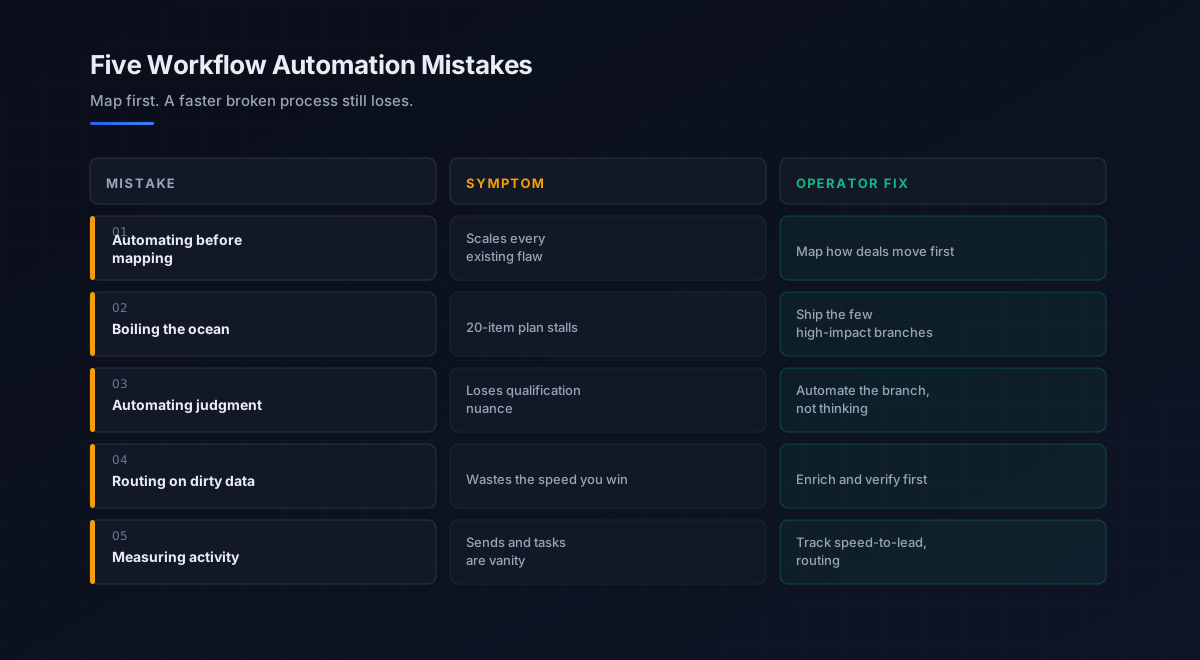
Five mistakes teams make automating their workflow
What we see most often is the same handful of errors that turn workflow automation into faster failure.
-
Automating before mapping. Triggers on an undrawn process scale its flaws. Map how deals actually move before wiring anything up.
-
Boiling the ocean. A 20-item automation plan stalls. Pick the few high-impact, easy-to-prove branches and ship those first.
-
Automating judgment. Routing and follow-up are rules; qualification and positioning are judgment. Automate the branch, not the thinking.
-
Routing on dirty data. A trigger firing on a decayed record wastes the speed. Enrich and verify before the routing rule runs.
-
Measuring activity, not flow. Sends and tasks completed are vanity. Track speed-to-lead, routing accuracy, and workflow completion instead.
An eight-step framework for sales workflow automation
This is the order we work through with the teams we work with when they automate a B2B sales workflow. Run it top to bottom.
- Map the real workflow. Document how deals actually move from first touch to close, and find where they stall.
- Name the six components. Lay out capture, enrichment, scoring, routing, engagement, and analytics for your motion.
- Pick the high-impact branches. Choose the few changes that are both high impact and easy to prove, not all of them.
- Clean the data first. Verify and enrich records, since a trigger firing on bad data wastes the speed it wins.
- Translate branches into triggers. Turn each repetitive decision into a CRM rule, sequence, task queue, or webhook.
- Win speed-to-lead. Automate instant enrichment and routing on inbound, where response time decides conversion.
- Keep judgment human. Leave qualification, positioning, and negotiation to reps; automate only the routine next move.
- Measure flow, then iterate. Track speed-to-lead, routing accuracy, and completion, and refine the branches that leak.
How sales workflow automation fits the broader stack
A sales workflow is the orchestration layer that connects the outbound stack. Each connected layer has a deeper guide.
- The discipline. What to automate and what to keep human, in the sales automation pillar.
- The tools. The platforms that execute workflows, in best sales automation tools.
- The engagement layer. Where sequences run, in sales engagement platforms and sales cadence.
- The system of record. Where the workflow logs, in CRM software.
- The data layer. What flows through the workflow, in b2b data providers and data enrichment tools.
- Intent. The signals that trigger scoring, in sales intelligence tools.
- The channels. What the triggers fire, in cold email software and LinkedIn outreach.
- Strategy. The motion the workflow runs, in outbound sales.
That is the map. The data layer feeds the workflow, the triggers route and sequence, the channels execute, and the CRM records it, with the workflow only as effective as the process you mapped and the data you ran through it.
Frequently asked questions
What is B2B sales workflow automation?
How do I start automating my sales workflow?
What sales tasks should be automated with triggers?
What is speed-to-lead and why does it matter?
Can workflow automation hurt my results?
What metrics show sales workflow automation is working?
Does the workflow matter more than the tools?
The bottom line
B2B sales workflow automation in 2026 is a mapping exercise before it is a tooling exercise. A sales workflow is the real sequence a deal travels, capture, enrichment, scoring, routing, engagement, analytics, and the time lost in B2B selling and B2B prospecting lives in the manual handoffs between those steps, not in the selling. Map how deals actually move, find where they stall, pick the few high-impact branches, and turn each into a trigger that always produces the same next move. Done well, that returns 8 to 12 hours a rep each week and wins speed-to-lead; done without a map, it just scales the friction.
If you take one rule from this guide, make it this: map before you automate, and automate the branch, not the judgment. The best workflow automation does not replace rep thinking, it protects reps from forgetting the obvious next step, so they spend their judgment where it counts, in the conversation. Clean the data, fix the high-impact friction, translate each repetitive decision into a consistent trigger, and measure speed-to-lead and routing accuracy rather than raw activity, because a workflow is only ever as good as the process you mapped and the data you ran through it.
Get the operator playbook in your inbox. The Outbound Game publishes one operator-grade breakdown a week on B2B outbound sales, tactics, tooling, and ops. No fluff, no vendor talking points. Subscribe and get the next one when it ships.
More on Metrics & Ops
Cold Email Open Rates: What Is Good and What Is Real
Cold email open rates in 2026: the honest benchmarks, how Apple MPP inflates the number, the three uses that survive, and what to track instead.
How to Measure Outbound Sales: KPIs That Matter in 2026
How to measure outbound sales in 2026: the three layer KPI stack, pipeline coverage and velocity formulas, benchmarks, and the review cadence that works.
Cold Email Benchmarks 2026: Every Number That Matters
Cold email benchmarks for 2026 in one place: reply rate, open rate, bounce rate, sequence length, meeting rates, and cost per meeting, tiered and sourced.