CRM Software in 2026: A Full Operator Buying Guide
CRM software in 2026, explained for B2B teams: the types, how to choose, why adoption beats features, and the data foundation that makes any CRM work.
CRM software is the single source of truth for your customer relationships, the system of record where every deal, contact, and interaction lives, and in 2026 it is the largest software category in the world, a milestone Gartner first marked years ago. Companies that run it well report material gains: roughly 29 percent more sales, 34 percent better sales productivity, and 42 percent more accurate forecasting, with an average return often cited near 8 dollars for every dollar spent. Yet the same market hides an uncomfortable statistic: about 30 percent of all implementations are still considered failures. The gap between those two numbers is the whole subject of this guide, because the difference is almost never the tool.
The reason implementations fail is adoption, not features. The top cause of failure is poor user adoption at 43 percent, followed by bad data quality at 34 percent and insufficient training at 22 percent. In other words, teams buy a powerful platform, configure it, and then watch reps quietly revert to spreadsheets because the system is too heavy to keep current, and an unused CRM is worse than none because it gives leadership false confidence in data nobody maintains. So the operator’s job is not to find the most capable CRM software. It is to choose the type that fits your motion, weight adoption above the feature list, and feed it clean data.
This is the pillar reference for the CRM layer, the system of record that the rest of the stack writes to. It anchors the comparisons in best CRM for sales and Pipedrive vs HubSpot, it is where the sales engagement platforms sync activity back, and it depends on the b2b data providers layer for the contacts it stores.
What CRM software actually is
Before choosing, fix the definition, because the term covers more ground than most buyers assume. A CRM system is the central database and workflow layer for customer relationships: it stores contacts and companies, tracks deals through a sales pipeline, logs every interaction, and surfaces what to do next. It is the system of record, the place all your customer data lands and becomes a single, trusted source for pipeline and forecasting.
What it is not is a data provider or an outreach engine. The CRM holds the contacts; it does not find them, that is the data and enrichment layer. It records the outreach; it does not run the sequences, that is the engagement layer. Understanding those boundaries is the first step to choosing well, because buying a CRM expecting it to do a neighboring layer’s job is a reliable way to end up disappointed. The CRM’s value is concentration: one clean place where the whole revenue motion is visible.
The three types of CRM software
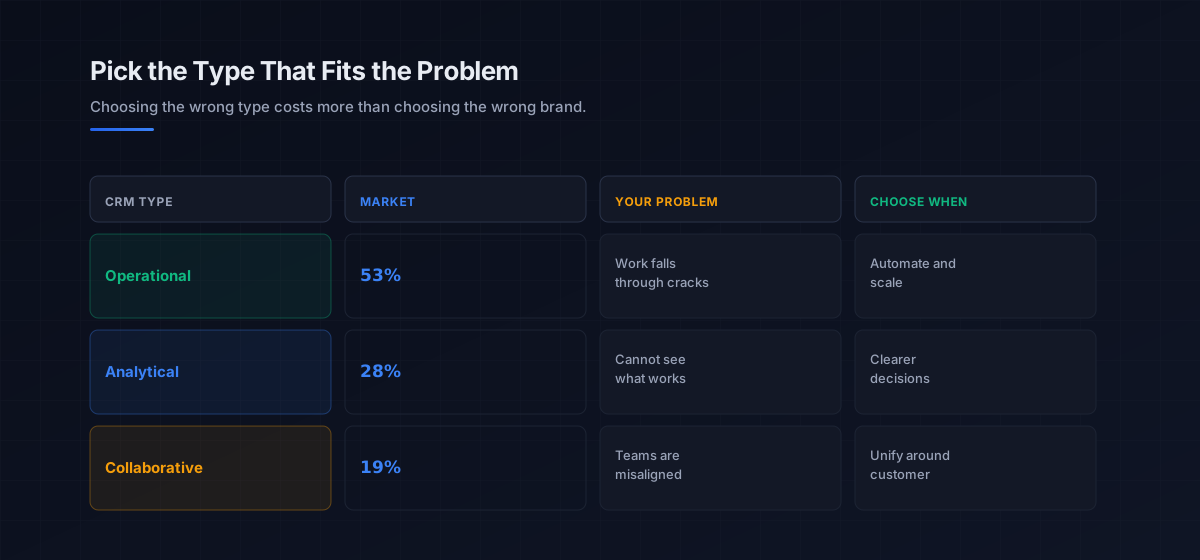
The most important framing in any CRM decision is type, because choosing the wrong type is more expensive than choosing the wrong brand. Most platforms blend all three but emphasize one, and the types of CRM map directly to what you most need to fix.
Operational CRM
The largest category at roughly 53 percent of the market, operational CRM automates the daily work of sales, marketing, and service: lead routing, pipeline stages, follow-up reminders, and repetitive admin. If your problem is that work falls through the cracks and reps spend too long on manual tasks, this is the type to choose. It converts more leads by making the process visible and automatic, and it is what most B2B sales teams mean when they say CRM.
Analytical CRM
About 28 percent of the market, analytical CRM turns the stored data into insight: dashboards, forecasting, win-rate analysis, and segmentation. It collects from many sources and finds the patterns, so you act on facts rather than guesses. If your problem is that you cannot see what is working or forecast reliably, the analytical emphasis is what you need. Teams that use analytics in decisions are markedly faster to act than those that do not.
Collaborative CRM
Around 19 percent of the market, collaborative CRM exists to break internal silos, making sure sales, marketing, and service all work from the same customer record. If your problem is that teams are misaligned and the customer experience is fragmented across departments, this is the fit. The choice is genuinely about your goal: clearer decisions point to analytical, scaling without headcount points to operational, and unifying teams points to collaborative.
How to choose CRM software
With the type decided, the selection process is a sequence, not a feature shootout. This is how to choose a crm without ending up in the failed third.
Start by defining your use cases and the few must-have capabilities that actually matter for your motion, rather than collecting every feature on offer. Then check three things in order: integration depth with your existing stack, ease of use for the people who will live in it daily, and total cost of ownership including the paid tiers that unlock real functionality. Integration matters more than buyers expect, since a CRM that does not sync cleanly with your engagement platform, enrichment, and calendar forces manual entry, and manual entry is what kills adoption.
Then pilot before you commit. Migrate a sample dataset, run a small team on it against real deals, and validate concrete outcomes, win rate, pipeline velocity, forecast accuracy, before a full rollout. Right-size to your scale too: a small team is usually better served by a focused, simple system than an enterprise platform that needs a dedicated admin, and notably, company size does not dictate the need, since businesses under 100 employees adopt at similar rates to far larger ones because the trigger is relationship complexity, not headcount. The specific platform shortlist by camp lives in best CRM for sales, and the closest head-to-head in Pipedrive vs HubSpot.
Why adoption and data decide everything
The two failure causes, CRM adoption and data quality, are not separate problems; they reinforce each other, and they are where the CRM software decision is actually won or lost. Adoption fails when the system is too heavy or the data is so dirty that reps stop trusting it; data quality fails when low adoption means nobody is maintaining records. Break the loop at both points.
For adoption, choose for fit and simplicity, involve the reps who will use it daily in the decision, and invest in real onboarding, since insufficient training causes 22 percent of failures on its own. For data, treat the CRM as only as good as what flows into it: the b2b data providers and data enrichment tools layers that power your B2B prospecting supply and maintain the contacts, and roughly 28 percent of B2B data decays each year, so a record left unmaintained is partly wrong within months. Clean, enriched, auto-updated data is what keeps reps trusting the system enough to use it. The engagement layer in sales engagement platforms and the discipline in email deliverability both depend on that same clean record, which is why the CRM sits at the center of the stack rather than off to the side.
Five mistakes teams make with CRM software
What we see most often is the same handful of errors that put implementations in the failed third.
-
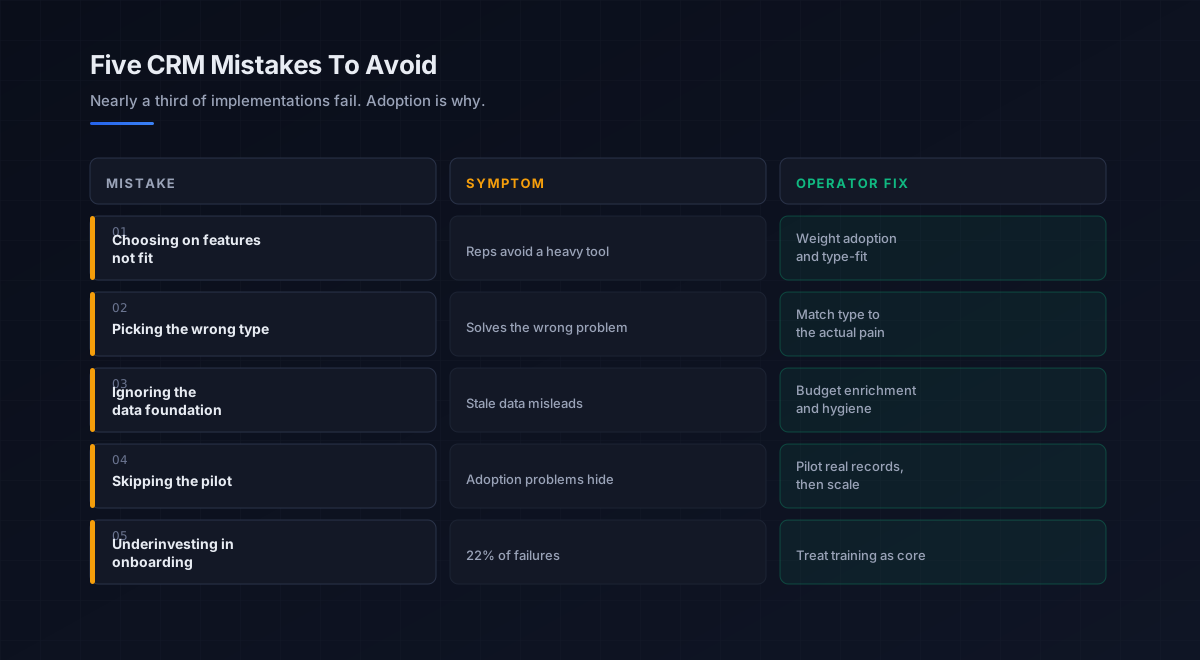
Choosing on features, not fit. The most powerful platform reps avoid is worse than a simple one they use. Weight adoption and type-fit above the capability matrix.
-
Picking the wrong type. An operational tool when you need analytics, or vice versa, solves the wrong problem. Match the type to the actual pain first.
-
Ignoring the data foundation. A CRM on decayed data bounces and misleads. Budget for enrichment and hygiene, since 34 percent of failures trace to bad data.
-
Skipping the pilot. Committing without testing on real records hides adoption problems until rollout. Pilot a sample, validate outcomes, then scale.
-
Underinvesting in onboarding. Insufficient training causes 22 percent of failures. Treat change management and training as core, not optional.
An eight-step framework for buying CRM software
This is the order we work through with the teams we work with when they choose a CRM. Run it before buying anything.
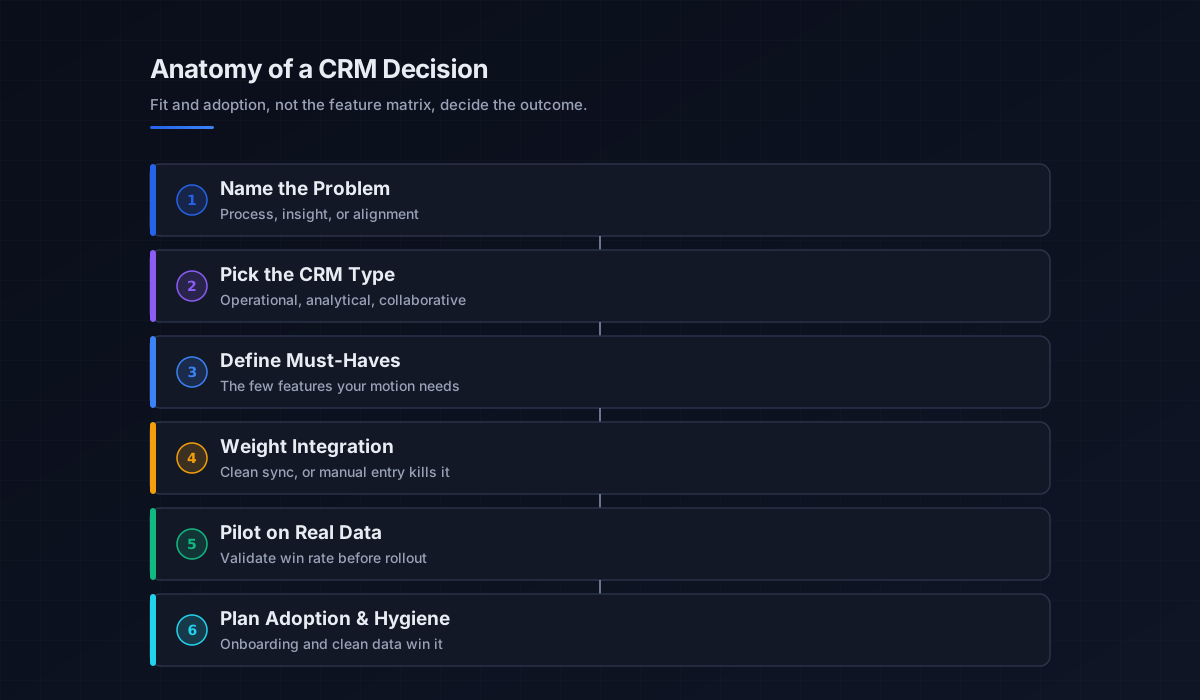
- Name the problem. Decide whether your pain is process, insight, or alignment, since that points to the CRM type.
- Pick the type. Operational to automate and scale, analytical for clearer decisions, collaborative to unify teams.
- Define must-have capabilities. List the few features your motion actually needs, not every feature available.
- Weight integration depth. Confirm clean sync with your engagement, enrichment, and calendar, since manual entry kills adoption.
- Right-size to scale. Favor focused simplicity for small teams; reserve enterprise platforms for teams with ops resources.
- Model total cost. Include seats plus the paid tiers and onboarding fees that unlock real functionality.
- Pilot on real data. Migrate a sample, run a small team against live deals, and validate win rate and forecast accuracy.
- Plan adoption and data hygiene. Budget onboarding and a data-quality process before rollout, then review monthly and iterate.
How CRM software fits the broader stack
CRM software is the system of record at the center of the outbound stack. Each connected layer has a deeper guide.
- The shortlist. Platforms by camp and the closest comparison, in best CRM for sales and Pipedrive vs HubSpot.
- The engagement layer. What writes activity back to the CRM, in sales engagement platforms and sales cadence.
- The data layer. The contacts the CRM stores and must keep clean, in b2b data providers and data enrichment tools.
- The email channel. Outreach logged to the record, in cold email software and the cold email pillar.
- The phone channel. Calls logged to the record, in the cold calling pillar.
- Intent. Signals that prioritize records, in sales intelligence tools.
- The AI layer. AI that enriches and updates the CRM, in best AI sales tools.
- Strategy. The motion the CRM supports, in outbound sales.
That is the map. The data layer supplies and maintains the contacts, the engagement layer runs the outreach and logs it, and the CRM holds the single source of truth for pipeline and forecasting, only as valuable as how cleanly the rest of the stack writes to it and how reliably your team keeps it current.
Frequently asked questions
What is CRM software?
What are the three types of CRM?
Why do CRM implementations fail?
How do I choose the right CRM software?
Is CRM software worth it for a small business?
What is the ROI of CRM software?
How is CRM software different from a sales engagement platform?
The bottom line
CRM software in 2026 is the system of record at the center of the revenue stack, and the gap between the teams that get 8-to-1 returns and the third whose implementations fail is almost never the tool. It is adoption and data. The strongest results come from choosing the right type for your problem, operational to automate, analytical for insight, collaborative to unify, then weighting rep adoption and clean data above the feature matrix, piloting on real records, and investing in onboarding.
If you take one rule from this pillar, make it this: an unused CRM is worse than no CRM. The most capable platform produces nothing if reps revert to spreadsheets, and the surest path into the failed third is to optimize features while ignoring the adoption and data foundation. Name your problem, match the type, weight integration and simplicity, pilot before you commit, and feed the system clean data, and the CRM becomes what it is supposed to be: the single trusted view of your pipeline that every other tool writes to.
Get the operator playbook in your inbox. The Outbound Game publishes one operator-grade breakdown a week on B2B outbound sales, tactics, tooling, and ops. No fluff, no vendor talking points. Subscribe and get the next one when it ships.
More on CRM
The Best CRM for Small Business in 2026, Compared Fully
The best CRM for small business in 2026, compared by fit. HubSpot, Zoho, Pipedrive, and Freshsales on free tiers, real pricing, and what teams adopt.
CRM Automation in 2026: A Full Operator Field Guide
CRM automation in 2026: the four jobs worth automating inside your CRM, the rule that keeps it from scaling chaos, and how to turn admin into revenue.
Salesforce vs HubSpot in 2026: A Full Operator Verdict
Salesforce vs HubSpot in 2026, compared by job. The customization ecosystem vs the all-in-one platform: real pricing, the 3x cost gap, and which fits.