Salesforce vs HubSpot in 2026: A Full Operator Verdict
Salesforce vs HubSpot in 2026, compared by job. The customization ecosystem vs the all-in-one platform: real pricing, the 3x cost gap, and which fits.
The honest answer to Salesforce vs HubSpot in 2026 is that this is not a feature contest but a structural choice between consolidation and customization, and picking the wrong side can cost a mid-market team three times more than it should. HubSpot (see HubSpot) is the all-in-one platform: CRM, marketing, sales, and service share a single database, marketing automation is included in every tier, it is famously easy to use, and it starts free with paid plans from around 15 to 20 dollars a seat. Salesforce (see Salesforce) is the modular customization ecosystem: you buy separate clouds, layer on a vast AppExchange and AI agents, and gain near-unlimited configurability, but you pay for it in price, complexity, and the consultant fees a real implementation requires. They both call themselves a CRM, but they are built for different organizations at different stages.
That distinction decides the budget too. A 50-person team on Salesforce Enterprise pays nearly three times what the same team pays on HubSpot Professional, and that is before adding Salesforce Marketing Cloud or Pardot, which start around 1,250 dollars a month on top. Salesforce Enterprise now sits around 159 to 165 dollars a user, Unlimited around 318, with Agentforce AI add-ons from 125 dollars a user, while HubSpot bundles the marketing tools Salesforce charges separately for. So the operator’s question is not which platform has more features, since Salesforce wins that on paper, but which fits your size, your need for customization, and your tolerance for cost and complexity. This guide approaches the CRM comparison the way an operator actually decides: by stage, structure, and total cost.
This is a head-to-head inside the crm software cluster, which covers the category at the pillar level, with best crm for sales on the wider field and the closest sibling comparison in pipedrive vs hubspot. Whichever you pick is the system of record the rest of your outbound sales motion and B2B prospecting activity logs to.
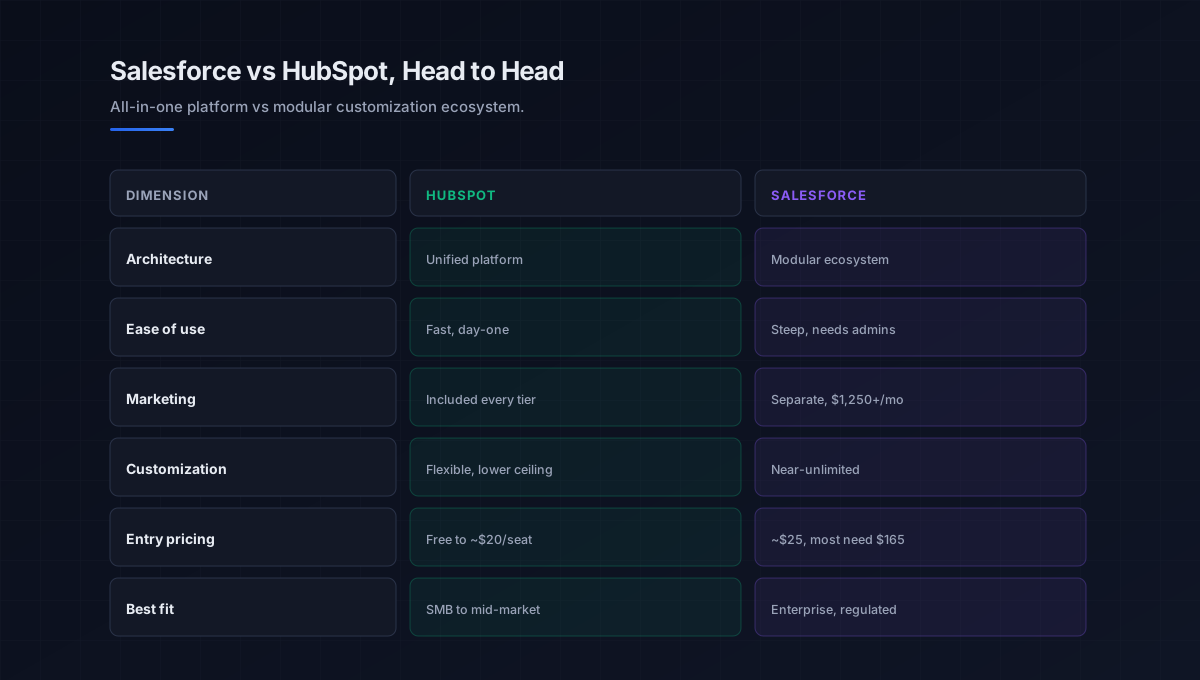
Salesforce vs HubSpot: where the two genuinely differ
They both store contacts, manage pipeline, and report on deals, so focus on the dimensions where they diverge structurally, because that is what should settle the choice.
Architecture: unified platform versus modular ecosystem
This is the foundational difference. HubSpot is one unified platform where sales, marketing, and service data flow together in a single model without integration overhead, so a lead captured by marketing is instantly visible to sales. Salesforce is a modular ecosystem where you buy Sales Cloud, Marketing Cloud, Service Cloud, and others as separate products that must be configured and connected. HubSpot trades ceiling for cohesion; Salesforce trades cohesion for near-unlimited configurability. For most mid-market teams the unified model is easier to operate; for complex enterprises the modular depth is the point.
Ease of use and time to value
This is HubSpot’s clearest edge. It is designed for fast deployment and adoption, an intuitive interface, drag-and-drop pipelines, and AI features that work on day one rather than after a six-month consulting project. Salesforce is more powerful but steeper, often requiring administrators, consultants, and training to realize its potential. A team that wants to be productive this quarter leans HubSpot; a team with the resources to invest in a bespoke build leans Salesforce.
Customization and the ecosystem
This is Salesforce’s clearest edge. Its configurability is near-unlimited, with granular field-level permissions, complex record visibility, advanced forecasting, and the largest third-party app ecosystem in the AppExchange, plus Agentforce AI agents. HubSpot is flexible and increasingly capable but has a lower ceiling for deeply complex or regulated use cases. For straightforward B2B pipelines HubSpot is more than sufficient; for long enterprise cycles with many stakeholders and approval stages, Salesforce has the edge.
Pricing and total cost
This is the starkest practical difference. On CRM pricing, HubSpot starts free, with paid seats from around 15 to 20 dollars and marketing tools included in every tier. Salesforce starts around 25 dollars but most businesses need Enterprise at roughly 159 to 165 dollars a user, with marketing as a separate 1,250-plus dollar purchase and implementation, administration, and app costs on top. The result is the widely cited gap: a 50-seat team pays roughly 3x on Salesforce Enterprise versus HubSpot Professional. Sticker price understates it, since Salesforce’s true cost of ownership includes the consultants its power demands.
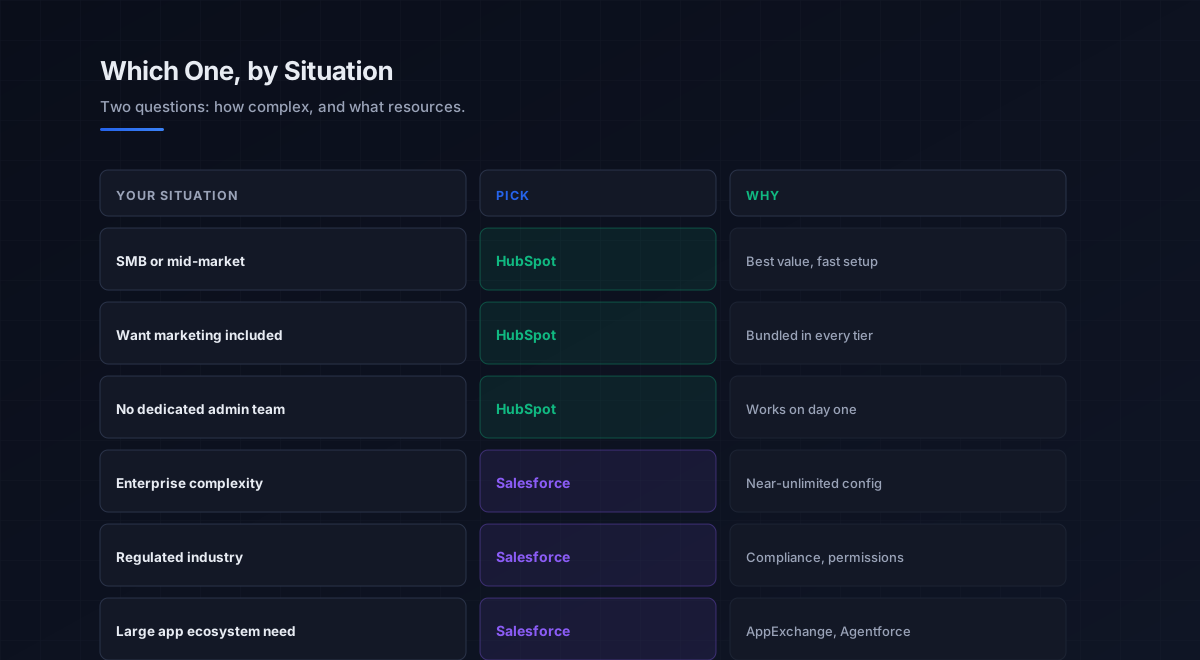
The decision in two questions
Because they serve different organizations, the cleanest way through the hubspot vs salesforce choice is two questions: how complex are your requirements, and what are your resources. The answers resolve it faster than any feature grid.
If you are an SMB or mid-market team that values ease of use, wants marketing, sales, and service in one platform, needs fast time to value, and does not have a dedicated admin team, choose HubSpot. The unified model, included marketing, free starting tier, and quick deployment make it the best fit and the best value for the majority of growing companies, and its lower total cost of ownership is decisive below enterprise scale. If you are an enterprise with complex or regulated requirements, need deep customization, field-level permissions, advanced forecasting, and a large app ecosystem, and have the RevOps and budget to run it, choose Salesforce. Its configurability and ecosystem are unmatched at that scale, and economies of scale make a bespoke implementation genuinely cost-effective for very large organizations.
There is a common hybrid worth naming: many organizations run HubSpot for marketing and feed qualified leads into Salesforce for sales and compliance, integrating the two natively or through middleware. That is valid at scale, but it means paying for and maintaining both, so it only makes sense when each platform is doing the job it is best at. Choosing the right system of record in the first place is what the crm software pillar and the best crm for sales guide are for, and the all-in-one-versus-engagement angle lives in hubspot vs salesloft.
What this means for most teams
If you are choosing between these two and you are not a complex, regulated, or genuinely enterprise organization, HubSpot is usually the right call, because it gives you a unified CRM with marketing included at a fraction of Salesforce’s total cost and without the consulting overhead. But the more important point holds for either choice: the CRM is the system of record, and its value depends entirely on adoption and the quality of the data inside it.
A CRM only delivers if reps actually use it and the records stay clean, since CRM users are far more likely to hit targets, but only when the data is accurate and the team adopts the tool. That is why the contacts that populate it come from the b2b data providers and data enrichment tools layers, and why a decayed list undermines either platform regardless of features. The outreach logged against those records still depends on clean email deliverability and sender reputation, the sequences run through cold email software and the sales cadence, and the engagement layer that sits on top is covered in sales engagement platforms. The CRM records the motion; the data and adoption beneath it are what make it pay.
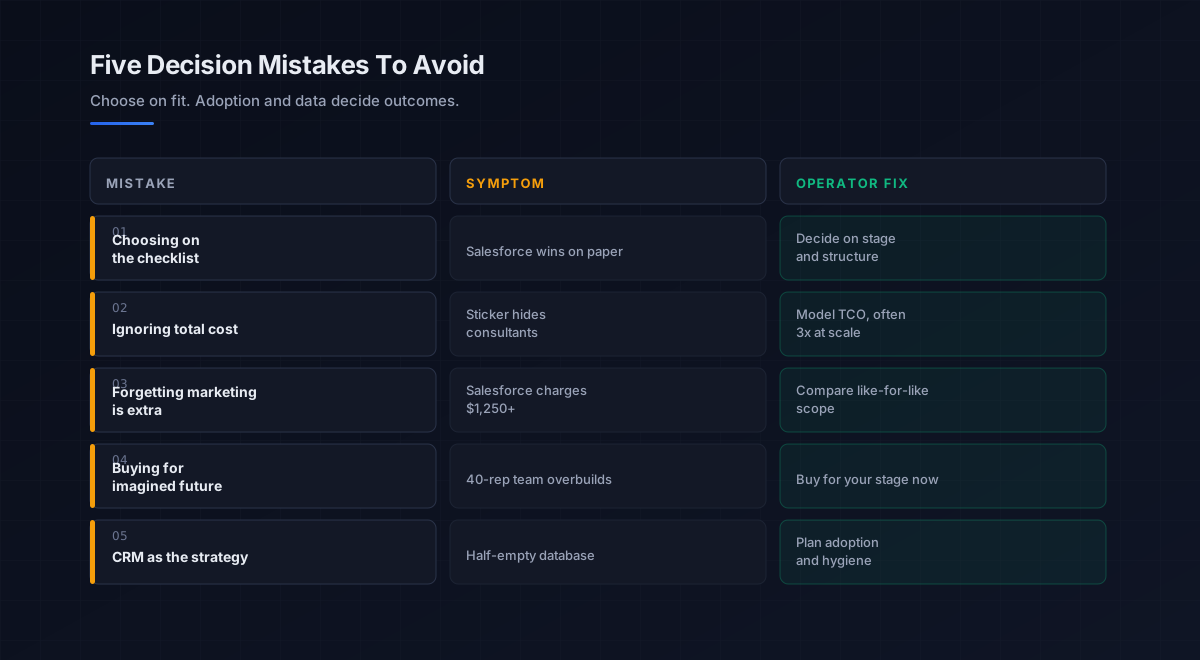
Five mistakes teams make choosing between them
What we see most often is the same handful of errors in this specific decision.
-
Choosing on the feature checklist. Salesforce wins on paper but may be overkill. Decide on stage and structure, not the longest spec sheet.
-
Ignoring total cost of ownership. Salesforce’s sticker price hides consultants, admins, and add-ons. Model the full cost, often 3x HubSpot at mid-market.
-
Forgetting marketing is separate on Salesforce. HubSpot bundles marketing; Salesforce charges 1,250-plus dollars more. Compare like-for-like scope.
-
Buying for the future you imagine. A 40-person team rarely needs enterprise customization. Buy for your stage now, not the org you might become.
-
Treating the CRM as the strategy. Neither platform fixes poor adoption or dirty data. Plan for adoption and data hygiene before the rollout.
An eight-step framework for the decision
This is the order we work through with the teams we work with on this specific choice. Run it before signing anything.
- Name your stage. Decide whether you are SMB, mid-market, or genuine enterprise, the first factor that points the choice.
- Gauge complexity. Assess whether you need deep customization, regulated compliance, and field-level permissions, or a straightforward pipeline.
- Audit your resources. Confirm whether you have admins and RevOps to run Salesforce, or need a tool that works without them.
- Scope marketing needs. Decide whether you need marketing in the same platform, where HubSpot includes it and Salesforce charges separately.
- Model total cost. Compare HubSpot all-in against Salesforce plus implementation, admin, marketing, and apps at your seat count.
- Consider the hybrid. For large orgs, weigh HubSpot for marketing feeding Salesforce for sales and compliance.
- Plan adoption. Decide how you will drive usage and keep data clean, since both fail without it.
- Pilot, then commit. Trial HubSpot’s free tier or a scoped Salesforce build, measure adoption, then roll out.
How this choice fits the broader stack
Whichever platform you pick, it is the system of record the motion logs to. Each connected layer has a deeper guide.
- The category. Choosing a CRM in depth, in the crm software pillar.
- The wider field. The best CRMs by use case, in best crm for sales.
- The sibling comparison. A simpler head-to-head, in pipedrive vs hubspot.
- The engagement layer. What sits on top of the CRM, in sales engagement platforms and hubspot vs salesloft.
- The data layer. What populates the CRM, in b2b data providers and data enrichment tools.
- The channels. What logs activity to it, in cold email software and sales cadence.
- Automation. What runs on top, in sales automation.
- Strategy. The motion the CRM records, in outbound sales.
That is the map. The data layer populates the CRM, the channels log activity to it, the engagement layer runs on top, and adoption keeps it alive, with the platform only as valuable as the data and usage beneath it.
Frequently asked questions
Is Salesforce or HubSpot better in 2026?
What is the main difference between Salesforce and HubSpot?
How much do Salesforce and HubSpot cost in 2026?
Which CRM is better for a small business?
Why is Salesforce so much more expensive than HubSpot?
Can I use Salesforce and HubSpot together?
Does the CRM matter more than adoption and data quality?
The bottom line
Salesforce vs HubSpot in 2026 is not a contest of which has more features, since Salesforce wins that, but of which fits your stage, structure, and resources. HubSpot is the unified all-in-one platform, CRM plus marketing, sales, and service in one database, easy to use, fast to deploy, and starting free, the best value and fit for SMB and mid-market teams, especially those that want marketing included and lack a dedicated admin team. Salesforce is the modular customization ecosystem, near-unlimited configurability, the largest app marketplace, and enterprise-grade depth, worth its roughly 3x cost only for complex, regulated, or genuinely enterprise organizations with the resources to run it. Answer two questions, how complex are your requirements and what are your resources, and the Salesforce vs HubSpot choice resolves itself.
If you take one rule from this comparison, make it this: choose on fit, not the feature checklist, and never forget that the CRM only pays off if it gets adopted and the data stays clean. Model the total cost of ownership rather than the sticker price, since Salesforce’s true cost includes the consultants its power demands, and weigh the marketing tools HubSpot bundles and Salesforce charges separately for. Pick HubSpot for consolidation and value or Salesforce for customization and scale, then put your real effort into adoption and data hygiene, because the most powerful CRM in the world is just an expensive, empty database if your team will not use it.
Get the operator playbook in your inbox. The Outbound Game publishes one operator-grade breakdown a week on B2B outbound sales, tactics, tooling, and ops. No fluff, no vendor talking points. Subscribe and get the next one when it ships.
More on CRM
The Best CRM for Small Business in 2026, Compared Fully
The best CRM for small business in 2026, compared by fit. HubSpot, Zoho, Pipedrive, and Freshsales on free tiers, real pricing, and what teams adopt.
CRM Automation in 2026: A Full Operator Field Guide
CRM automation in 2026: the four jobs worth automating inside your CRM, the rule that keeps it from scaling chaos, and how to turn admin into revenue.
CRM Software in 2026: A Full Operator Buying Guide
CRM software in 2026, explained for B2B teams: the types, how to choose, why adoption beats features, and the data foundation that makes any CRM work.