The Best Data Enrichment Tools in 2026, Compared Fully
The best data enrichment tools in 2026, compared by layer and accuracy. An operator guide to contact data, waterfall enrichment, and what you actually pay.
The best data enrichment tools in 2026 are not the ones with the biggest database; they are the ones that keep your records accurate as the data underneath them rots. And it rots fast. B2B contact data decays at roughly 2.1 percent a month, which means nearly a quarter of your database goes stale every year and half of it is wrong after two years of neglect. The old model, buy a database, export a CSV, upload to your CRM, is broken precisely because it treats enrichment as a one-time event when it is actually a maintenance problem. The tool that matters is the one that refreshes continuously and matches your specific segments, not the one with the largest headline record count.
The second thing most buyers miss is that “enrichment” is not one job. It is three layers solving different problems, and the reason teams spend 50,000 dollars a year and still have reps toggling between six tabs is that they bought one tool to do all three. Contact enrichment fills in emails and phones. Prospecting enrichment, usually waterfall, finds and verifies contacts across many providers. Account intelligence enriches the company record with revenue, tech stack, funding, and signals. Sorting tools by which layer they actually serve is the whole buying decision.
This is the foundational guide of the data layer that every other channel depends on. It is what feeds the sales prospecting workflow, the verified numbers behind cold calling, and the contact data that LinkedIn Sales Navigator deliberately withholds. Get this layer right and every downstream channel improves at once.
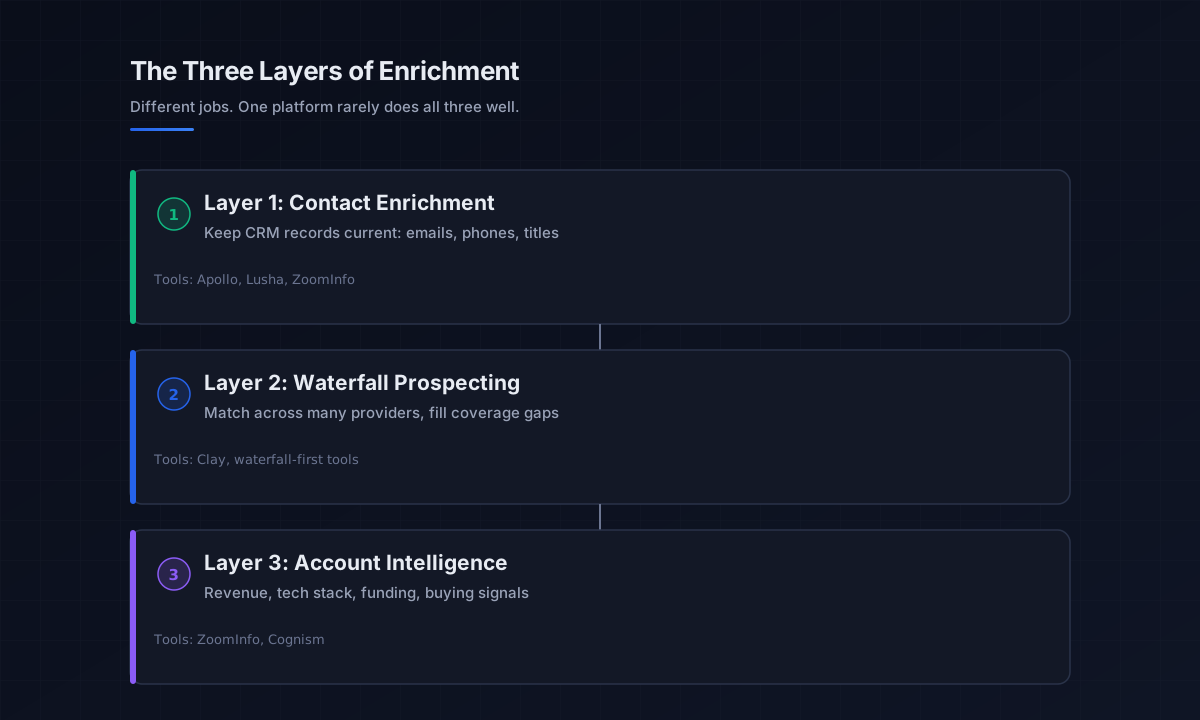
The three layers of data enrichment
Understanding the layers is what stops you from overpaying for the wrong tool. Each solves a distinct problem, and most teams need a deliberate combination rather than one platform pretending to cover all three.
Layer 1: Contact enrichment
This is the foundation, keeping CRM records current with correct job titles, emails, and phone numbers. For smaller teams, Apollo and Lusha work well and price transparently; for mid-market and enterprise, ZoomInfo and Cognism bring larger databases and deeper firmographics. This layer is where contact data enrichment lives, and because data decays monthly, the value is in the refresh cadence as much as the initial fill.
Layer 2: Prospecting and waterfall enrichment
This is where outbound teams get the most leverage, because no single provider covers every segment equally. Waterfall enrichment queries a primary provider first, then falls back to secondary providers for the records that did not match, which lifts match rates well above any one source. Clay pioneered this approach, orchestrating 75 to 100-plus providers behind the scenes, and waterfall-first tools chain 15-plus providers automatically to push email accuracy toward the high 90s. This is the layer that turns a filtered list into a reachable one.
Layer 3: Account intelligence
This enriches the company record itself, revenue, employee count, technographic stack, funding history, and recent news, and monitors what is happening at target accounts. ZoomInfo and Cognism are strongest here because their databases are large enough to cover most segments and they sync to CRM automatically. This is the layer with the largest enrichment gap at most teams, and the one that turns a contact into context for a relevant message.
The leading data enrichment tools by fit
With the layers clear, here are the tools teams actually reach for, grouped by who they fit. Pricing is current for 2026 and noted where it shapes the decision.
For all-in-one prospecting plus enrichment, Apollo combines a contact database, waterfall enrichment, sequencing, and a dialer, with a free tier and paid plans from around 49 dollars a user (the 149-dollar Organization tier adds 6,000 monthly credits). Its transparent pricing is a major advantage, though contact accuracy sits near 80 percent against ZoomInfo’s 85, so it trades some depth for breadth and value. For technical RevOps teams wanting maximum flexibility, Clay offers unmatched waterfall control across 100-plus providers from around 149 dollars a month, but it burns credits per step, has unpredictable costs, and usually needs a dedicated RevOps engineer or a Clay partner to configure.
For enterprise breadth, ZoomInfo brings the largest proprietary database (320 million-plus records), deep firmographics, buyer intent, and org charts, starting around 15,000 dollars a year, though it reports 15 percent-plus bounce rates and locks you into annual auto-renewal. For phone-verified direct dials specifically, Cognism and Lusha lead on phone match rate, which matters most for the cold calling channel. The honest summary from teams that test on their own lists: every tool claims 95-percent accuracy and few deliver it on your data, so the right b2b data enrichment tool depends on your vertical and should be tested before you commit.
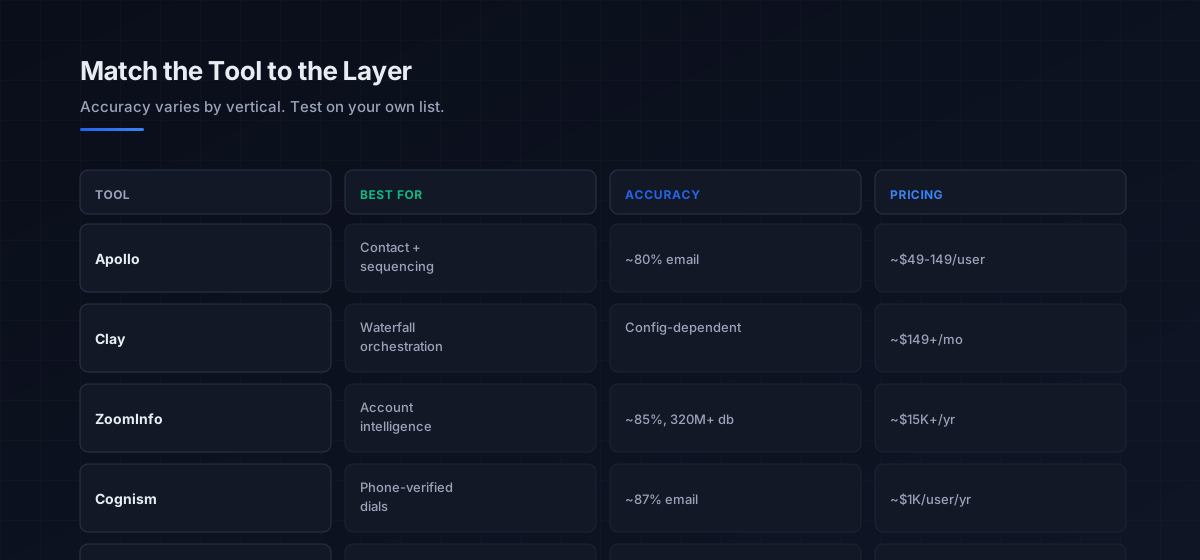
Waterfall vs single-provider enrichment
The most important architectural choice in sales data enrichment is whether to rely on one provider or chain several. Single-provider enrichment is simpler and cheaper to reason about, and for a team selling into one well-covered segment it can be enough. The catch is coverage gaps: every database has segments and geographies it covers poorly, and a single provider leaves those records unenriched.
Waterfall enrichment solves the gap by querying providers in sequence, primary first, then fallbacks for the misses, so you are not locked into one vendor’s blind spots. It reliably lifts match and accuracy rates, and for serious B2B prospecting the best waterfall setups reach the high-90s on email accuracy by chaining 15-plus sources. The tradeoff is cost and complexity: failed lookups still consume credits, so budget 20 to 30 percent over your estimate, and a flexible orchestrator like Clay needs technical configuration to perform. The rule of thumb: single-provider for a narrow, well-covered segment; waterfall the moment your ICP spans verticals or regions where coverage varies.
How enrichment connects to the outbound stack
Enrichment is the data foundation under every channel, and its value only shows up when the enriched records flow into outreach. The verified emails feed the sales prospecting workflow and the email sequences behind it, kept inbox-safe per email deliverability practice; the phone-verified direct dials decide connect rates on the cold calling channel, where a stale list produces the 200-dials-per-meeting problem; and because LinkedIn Sales Navigator finds the right people but withholds their emails and export, an enrichment layer is exactly what turns a Sales Navigator list into a multichannel-ready one for your LinkedIn automation tools.
This is the through-line across the whole site: targeting quality and data quality are different layers, and enrichment owns the second. The platforms blur because some, like Apollo, bundle enrichment with sequencing, while others, like Clay, specialize in orchestration only. Match the tool to the layer you are missing, sync it to your CRM so records stay fresh automatically, and the same enriched data improves email, phone, and LinkedIn at once.
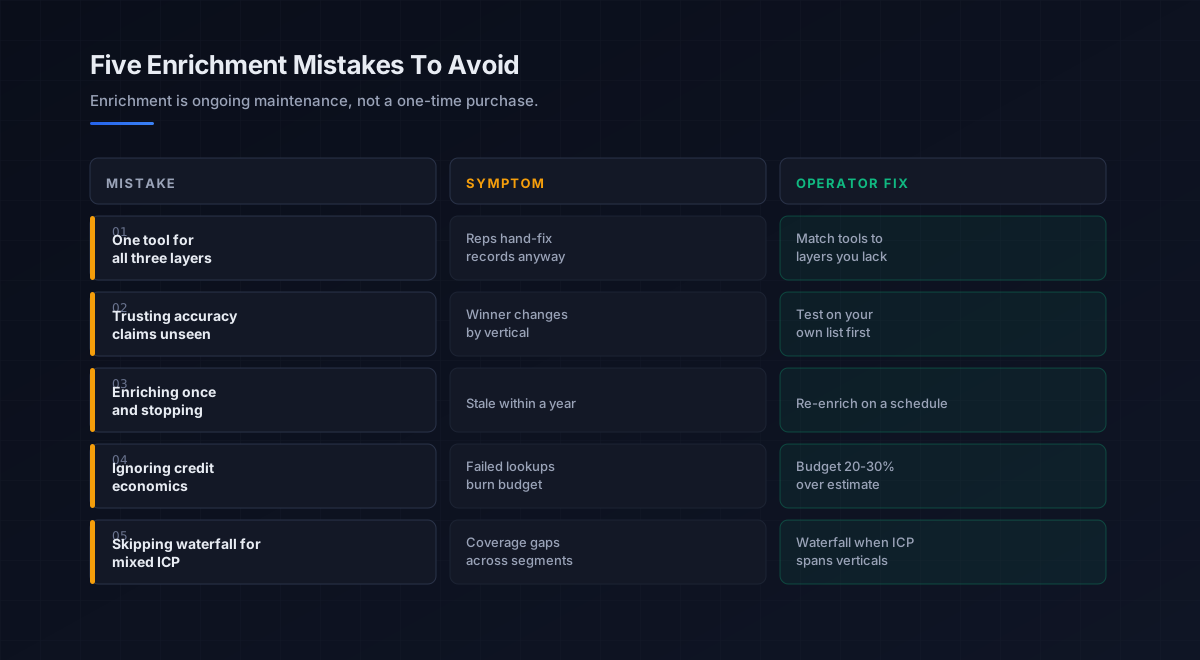
Five mistakes teams make with data enrichment tools
What we see most often is the same handful of errors that waste enrichment budget.
-
Buying one tool for all three layers. Contact, prospecting, and account intelligence are different jobs. One platform rarely does all three well, so match tools to the layers you actually lack.
-
Trusting accuracy claims unseen. Every vendor claims 95-percent accuracy; few hit it on your list. Test providers on your own records before committing, because the winner changes by vertical.
-
Enriching once and stopping. Data decays about 2.1 percent a month, so a one-time enrichment is stale within a year. Re-enrich on a schedule, monthly for high-value accounts.
-
Ignoring credit economics. Failed lookups still burn credits and plans differ on rollover and expiry. Budget 20 to 30 percent over your estimate and read the credit rules before signing.
-
Skipping waterfall for a mixed ICP. A single provider leaves coverage gaps across verticals and regions. If your ICP spans segments, waterfall enrichment lifts match rates a single source cannot.
An eight-step framework for choosing data enrichment tools
This is the order we work through with the teams we work with when they build an enrichment stack. Run it before buying anything.
- Map the three layers. Decide which of contact, prospecting, and account intelligence you actually need, and which you already cover.
- Test on your own list. Run the same sample list through finalists and measure accuracy on your data, not their claims.
- Match tool to layer. Contact data from Apollo or Lusha, enterprise breadth from ZoomInfo or Cognism, waterfall orchestration from Clay.
- Decide single vs waterfall. Single-provider for one well-covered segment, waterfall the moment your ICP spans verticals or regions.
- Prioritize phone data where it matters. For a calling motion, weight phone-verified match rate, where Cognism and Lusha lead.
- Model the credit economics. Account for failed-lookup costs and rollover rules, and budget 20 to 30 percent over estimate.
- Sync to CRM. Choose tools with automated CRM sync so records refresh without manual export.
- Set a re-enrichment cadence. Monthly for high-value accounts, quarterly minimum for the rest, because data decays continuously.
How data enrichment fits the broader stack
Enrichment is the data layer beneath every outbound channel. Each connects to a deeper guide.
- Prospecting. The workflow enrichment feeds, in best AI tools for sales prospecting.
- The phone channel. Where verified direct dials decide connect rates, in the cold calling pillar.
- LinkedIn targeting. Filling the email gap Sales Navigator leaves, in LinkedIn Sales Navigator.
- LinkedIn execution. Feeding enriched lists to automation, in LinkedIn automation tools.
- The wider AI stack. All six categories of sales AI in best AI sales tools.
- Strategy. The motion the data serves, in outbound sales.
- AI agents. Where enrichment meets automation, in the AI SDR pillar.
- Email coordination. Keeping the email channel clean, on email deliverability and sender reputation.
That is the map. Enrichment supplies verified, current contact and account data; prospecting routes it into sequences; and the calling, email, and LinkedIn channels turn it into booked meetings, all of them only as good as the data underneath.
Frequently asked questions
What are the best data enrichment tools in 2026?
What is waterfall enrichment?
How much do data enrichment tools cost?
How often should I re-enrich my data?
Which data enrichment tool has the highest accuracy?
Do I need data enrichment if I have Sales Navigator?
What is the difference between contact and account enrichment?
The bottom line
The best data enrichment tools in 2026 are the ones that match the layer you are missing and keep your data current as it decays. Sort the field by job, contact enrichment from Apollo or Lusha, enterprise breadth and account intelligence from ZoomInfo or Cognism, waterfall orchestration from Clay, and phone-verified dials from Cognism or Lusha, rather than buying one platform to do everything. Then test on your own list, because accuracy claims mean nothing until measured on your data.
If you take one rule from this guide, make it this: enrichment is ongoing maintenance, not a one-time purchase. Data decays about 2 percent a month, no single provider wins every vertical, and the teams that win re-enrich on a schedule and waterfall across providers when their ICP spans segments. Get the data layer right and every channel downstream, email, phone, and LinkedIn, improves at the same time.
Get the operator playbook in your inbox. The Outbound Game publishes one operator-grade breakdown a week on B2B outbound sales, tactics, tooling, and ops. No fluff, no vendor talking points. Subscribe and get the next one when it ships.
More on Data Providers
Apollo vs Cognism in 2026: Which Data Platform to Buy
Apollo vs Cognism compared for 2026: real pricing, EMEA versus US coverage, phone verified mobiles, GDPR posture, and which platform fits your motion.
Apollo vs ZoomInfo in 2026: A Full Operator Verdict
Apollo vs ZoomInfo compared on independent 2026 benchmarks: real pricing, email and phone data accuracy, the new AI agents, and which one to buy.
The Best Data Enrichment Tools in 2026, Compared Fully
The best data enrichment tools in 2026, compared by fit. Apollo, ZoomInfo, Clay, and Cognism on accuracy, waterfall vs single-source, and real pricing.