Apollo vs Cognism in 2026: Which Data Platform to Buy
Apollo vs Cognism compared for 2026: real pricing, EMEA versus US coverage, phone verified mobiles, GDPR posture, and which platform fits your motion.
The apollo vs cognism decision is really a question about your buyers: where they live and which channel reaches them. Apollo is the all in one, self serve platform: more than 275 million contacts bolted to sequences and a dialer, a genuine free tier with 10,000 emails a month, and paid seats from 49 to 119 dollars. Cognism is the compliance first data specialist: a 440 million plus contact database that is deepest in Europe, human phone verified mobile numbers under the Diamond Data label, and annual contracts that typically land between 15,000 and 35,000 dollars. Same category on paper, different products in practice, which is why cognism vs apollo searches produce so much confident, contradictory advice.
Here is the 30 second version. If your market is North American, your motion is email first, and your budget lives under 10,000 dollars a year, Apollo is the sensible default and you can test it today without talking to anyone. If your revenue depends on European conversations, your reps live on the phone, and procurement asks hard questions about lawful basis and do not call screening, Cognism earns its premium on connect rates and gdpr compliance alone. And if you are a global team at real scale, the honest 2026 answer is increasingly both, split by region, or a waterfall that queries several sources per record.
This head to head deliberately covers different ground from our apollo vs zoominfo verdict, which settles the American enterprise question. It sits in the data cluster beside the b2b data providers pillar and the sales intelligence tools roundup, and it feeds the build process in how to build a b2b prospect list. If b2b data is the next line item in your budget, this is the decision, without either vendor’s gloss.
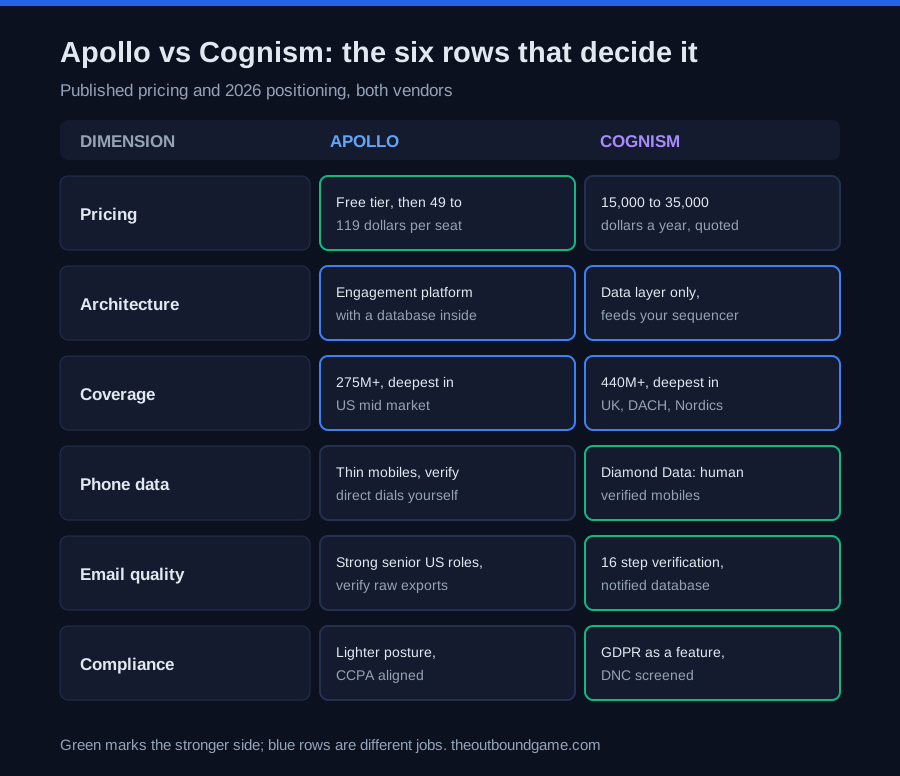
What each platform actually is in 2026
Apollo is not really a database company anymore. It is an engagement platform with a database underneath: sequences with A/B testing, a dialer with local presence, meeting scheduling, deal stages, and a Chrome extension that works inside LinkedIn, Gmail, and Salesforce, all on one bill. Its data is broadest in the North American mid market, where email match rates run 85 to 95 percent on senior roles at established companies. The honest caveats live at the edges: mobile and direct dial coverage is materially thinner than the specialists, community reports on G2 flag elevated bounce rates on raw exports, and EMEA coverage lags, which is why verification before sending is not optional with Apollo output.
Cognism is the opposite architecture by design: a data layer that refuses to be a sequencer. The UK headquartered platform pushes verified records into whatever engagement stack you already run, Outreach, Salesloft, HubSpot, or Apollo itself, and concentrates the entire product on data quality. Two assets carry the premium. Diamond Data means mobile numbers a human researcher actually dialed and confirmed before they entered the database, which is why European connect rates on Cognism mobiles consistently beat standard database pulls. And the compliance posture treats gdpr compliance as a product feature rather than a checkbox: notified databases, do not call screening across markets, and the paperwork that shortens EU procurement from months to weeks in regulated industries.
Apollo pricing vs cognism pricing: transparent seats against opaque contracts
Apollo pricing is public and famously accessible. The free tier is genuinely usable, then Basic at 49, Professional at 79, and Organization at 119 dollars per user per month with a three seat minimum, discounted on annual billing. The number to watch is seat multiplication: five seats on Professional is under 5,000 dollars a year, but 25 seats reaches roughly 23,700, which quietly approaches specialist territory without specialist data. Credits meter exports and enrichment, and heavy usage burns them faster than teams expect.
Cognism pricing is a sales conversation. Contracts are annual, typically landing between 15,000 and 35,000 dollars a year depending on seats and data access, with Diamond Data sometimes carrying its own premium, and community reporting on G2 puts monthly equivalents around 1,500 to 5,000 dollars. You are not paying for features; Apollo has more of those. You are paying for verified mobiles your reps can actually connect on, European depth no American database matches, and legal peace of mind that has a measurable procurement value in regulated markets.
The comparison that matters is not sticker against sticker but cost per connected conversation in your market. A UK or DACH calling team routinely finds Cognism cheaper per conversation despite the contract, while a US email team finds Apollo cheaper by an order of magnitude for the same pipeline.
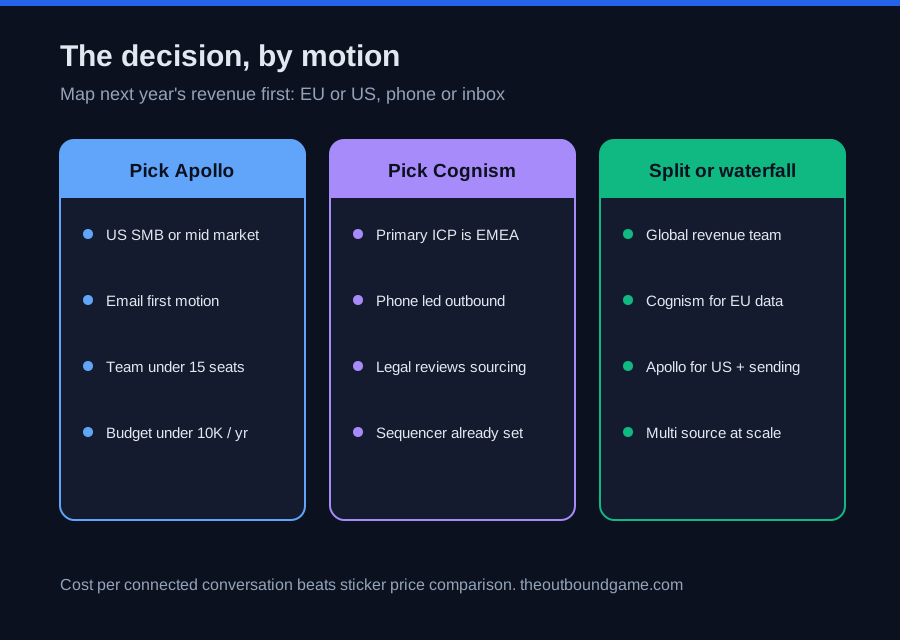
The apollo vs cognism decision, by motion
Pick Apollo if your buyers are US based SMB or mid market, the motion is email led, the team is under roughly 15 seats, and you want prospecting, sequencing, and dialing on one bill you can start today. This is the widest lane, and the free tier means the evaluation costs nothing but an afternoon against your own ICP.
Pick Cognism if your primary ICP is EMEA, your reps run phone led outbound where verified mobiles decide connect rates, your legal or data protection team reviews sourcing in detail, and you already run a sequencer you like. Two or more of those and the premium usually justifies itself before the contactability lift is even counted.
Pick the split stack or the waterfall when you are global or past a single source. The standard 2026 pattern at international teams runs Cognism as the data layer for Europe and Apollo as the data layer for the US plus the engagement layer for both, synced through the CRM. And for enrichment heavy workflows, routing records through multiple providers via the approach in our clay vs instantly and data enrichment tools breakdowns often beats either vendor alone on accuracy per dollar.
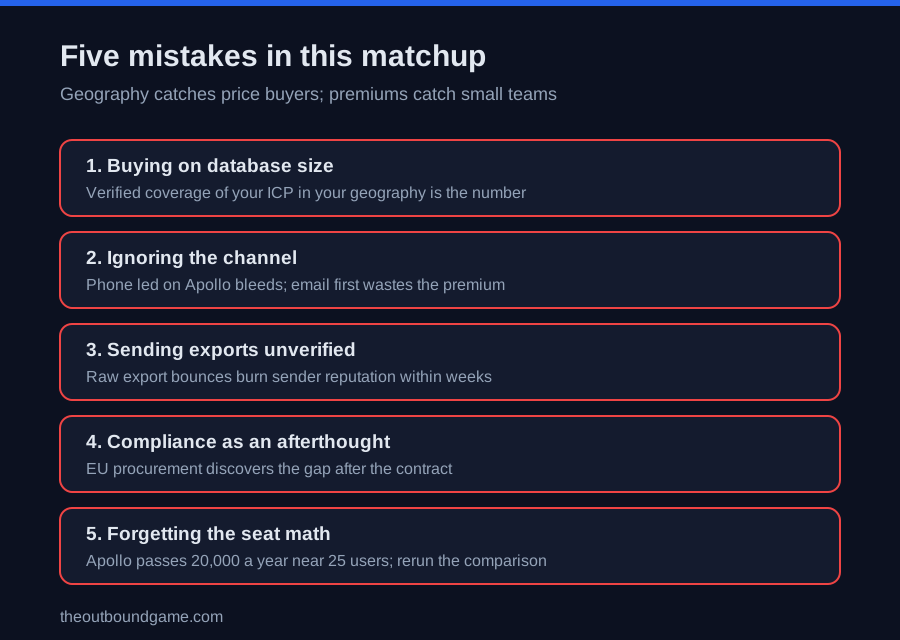
Five mistakes buyers make in this matchup
-
Buying on database size. Apollo’s 275 million and Cognism’s 440 million are marketing totals. The only number that matters is verified coverage of your ICP in your geography, which both platforms let you test before paying.
-
Ignoring the channel. Email first motions waste Cognism’s phone verification premium; phone led motions bleed on Apollo’s thin mobile coverage. The channel decides more of this comparison than any feature list.
-
Sending Apollo exports unverified. Community reported bounce rates on raw exports are high enough to damage sender reputation within weeks. A verification pass before every campaign is the cost of Apollo’s price advantage.
-
Underweighting compliance until procurement. For regulated European buyers, Cognism’s notified database and do not call screening shorten legal review dramatically. Discovering this after choosing Apollo means re platforming mid quarter.
-
Forgetting the seat math. Apollo’s per seat model crosses 20,000 dollars a year near 25 users, and at that spend the specialist comparison deserves a rerun rather than an auto renewal.
An eight step evaluation that settles it on your own data
-
Write the geography and channel split. What share of next year’s pipeline is EU versus US, phone versus email. This one page decides most of the comparison.
-
Pull the same 300 record sample from both. Apollo’s free tier and a Cognism trial, same ICP filters, same day.
-
Verify the emails independently. Run both exports through a third party verifier and compare deliverable rates on your list, not on claims, because email deliverability is where data quality becomes real money.
-
Score the phones where it matters. If calling drives revenue, dial 50 numbers from each sample and log connects. Diamond Data either proves itself here or it does not.
-
Price the true annual cost. Apollo at realistic seats plus credits; Cognism’s quote plus any Diamond premium. Then divide by projected connected conversations, not records.
-
Run the compliance screen. If you sell into the EU, put both vendors’ documentation in front of whoever owns data protection before you sign anything.
-
Test the workflow end to end. One list, one sequence or call block, through your real stack, because integration friction is what reps live with daily.
-
Decide, then verify forever. Whichever wins, all b2b data decays at roughly 22 percent a year, so verification before every send and the hygiene regime from how to build a b2b prospect list protect the investment.
How this choice fits the broader outbound stack
-
The data platform is the supply layer of the b2b outbound sales system, and every downstream metric inherits its accuracy.
-
The wider vendor landscape lives in the b2b data providers pillar, where the American enterprise question gets its own verdict.
-
Coverage gaps on either platform close through data enrichment tools, the waterfall layer that patches single source weaknesses.
-
Signals that turn records into timing live in sales intelligence tools, a layer Cognism increasingly bundles.
-
Phone led motions pair the data with the best cold calling software, where verified mobiles become booked meetings.
-
Email led motions route through cold email software, where Apollo’s bundled sequencer competes with the specialists.
-
Deliverability discipline from why cold emails go to spam protects whichever database you send from.
-
And niche, seniority sensitive segments still lean on linkedin sales navigator, the freshest title data either platform enriches against.
FAQ
Frequently asked questions
Which is better, Apollo or Cognism?
Is Cognism more expensive than Apollo?
What is Cognism Diamond Data?
Is Apollo GDPR compliant?
Is Apollo's data accurate enough for cold email?
Can I use Apollo and Cognism together?
Does Cognism include a sequencer or dialer?
The bottom line
The apollo vs cognism verdict follows the map. Apollo is the right default for US centric, email first teams that want one affordable platform and the discipline to verify its exports. Cognism is the right premium for European, phone led, and regulated motions, where human verified mobiles and real gdpr compliance convert directly into conversations and closed procurement. Global teams split the stack, mature teams waterfall past both, and everyone lives with the same decay clock, so verification and hygiene protect whichever contract you sign. Buy for where your buyers are, not for whose database sounds bigger.
Want more tested breakdowns like this? We publish one honest teardown of outbound tools, tactics, and playbooks each week. Join the newsletter.
More on Data Providers
Apollo vs ZoomInfo in 2026: A Full Operator Verdict
Apollo vs ZoomInfo compared on independent 2026 benchmarks: real pricing, email and phone data accuracy, the new AI agents, and which one to buy.
The Best Data Enrichment Tools in 2026, Compared Fully
The best data enrichment tools in 2026, compared by fit. Apollo, ZoomInfo, Clay, and Cognism on accuracy, waterfall vs single-source, and real pricing.
The Best B2B Data Providers in 2026: An Operator Guide
The best B2B data providers in 2026, compared on accuracy not database size. An operator guide to coverage, compliance, and the real pricing.