Clay vs Instantly in 2026: The Right Stack, Not a Winner
Clay vs Instantly compared for 2026: what each layer actually does, real stack costs, which one to buy first, and when the pair beats either alone.
The clay vs instantly question trips up more buyers than any other matchup in outbound, and the reason is simple: it is not a matchup. Clay builds and enriches your list. Instantly sends cold email to that list at scale. They solve opposite halves of the same problem, they integrate natively, and the most common configuration in serious 2026 outbound stacks is both, with Clay producing the enriched list and Instantly carrying it to the inbox. Asking which one is better only makes sense once you know which half you are missing.
Search instantly vs clay or the reverse and the results mostly argue about a rivalry that does not exist. So this comparison answers the questions that actually matter. What does each layer do, and what does it refuse to do? What do they really cost in 2026, after Clay’s March pricing overhaul and once Instantly’s separate mailbox costs are counted? Which one should a team buy first when the budget only covers one? And when does the famous Clay plus Instantly pairing genuinely beat either tool alone, rather than just costing more?
This piece sits in our cold email cluster beside the cold email pillar, the neutral instantly vs smartlead sender head to head, and our data enrichment tools guide, and it applies the assembly line from how to personalize cold emails at scale to a concrete tool decision. If your b2b outbound budget has room for one subscription this quarter, this is the honest way to spend it.
What Clay actually is
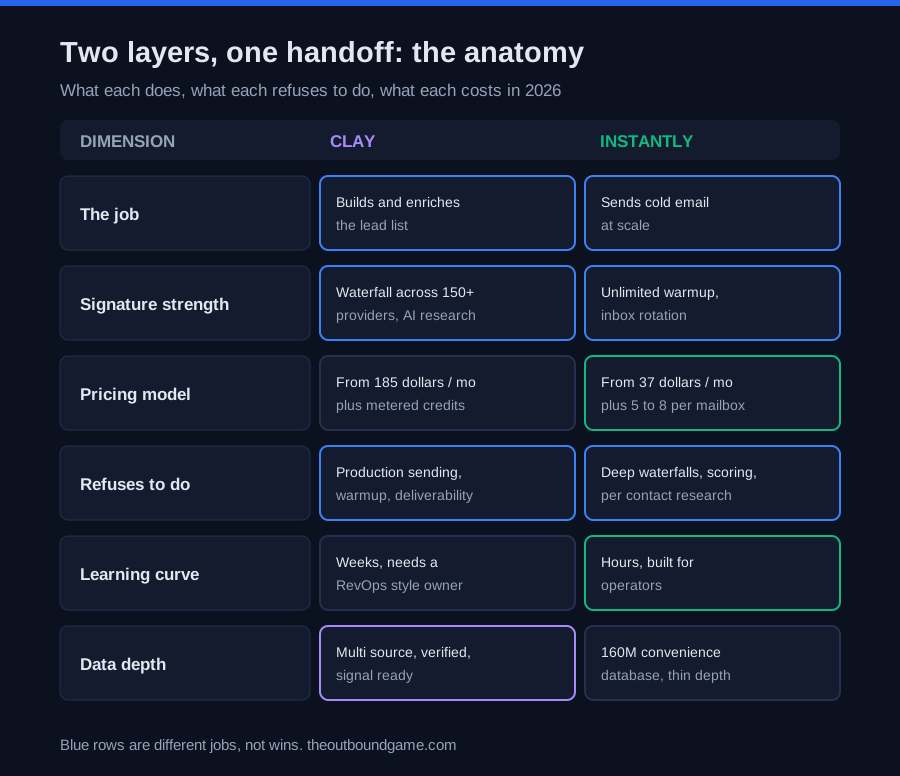
Clay is a data enrichment and orchestration platform that behaves like a spreadsheet crossed with a no code automation canvas. Each row is a company or a person; each column can call one of 150 plus data providers, run an AI research agent, or hit any API. Its signature move is waterfall enrichment: if provider A cannot find an email, it tries B, then C, keeping the first verified hit, which lifts email match rates by 15 to 25 percentage points over any single source. Claygent, its AI research layer, scrapes sites and writes researched personalization inputs per row. In short, Clay manufactures the precise, enriched, signal rich list that the personalization ladder demands.
What Clay refuses to be is a sender. It has a basic native sequencer, but it does not warm mailboxes, rotate inboxes, or manage deliverability, and teams that try to run production cold email sending out of Clay alone hit the wall fast. The other honest caveats: it prices in credits across two currencies, data credits for marketplace lookups and actions for platform work, so waterfall runs burn multiple credits per row and demo cheap lists get expensive at production volume; and the learning curve is real, measured in weeks, which is why Clay rewards teams with a RevOps or GTM engineering owner and punishes teams without one.
What Instantly actually is
Instantly is a cold email sending platform, and everything about it serves one goal: volume outreach that still lands in the inbox. Unlimited mailbox warmup on paid plans, inbox rotation across as many sending accounts as you connect, sequence management with A/B testing, reply detection, and a unified inbox for managing conversations across accounts. For agencies and lean teams sending real volume, its per account economics are the best in the category, which is exactly the ground it defends in our instantly vs smartlead breakdown.
Instantly has grown edges into Clay’s territory, a lead database of roughly 160 million contacts and an AI agent layer, but the depth is not comparable: you cannot run a waterfall across multiple premium providers inside Instantly, layer per contact AI research, or encode custom scoring before a lead earns a sequence. Its data is a convenience layer, not a data strategy. And like every major sender, it assumes you bring your own mailboxes, which cost roughly 5 to 8 dollars per inbox per month on top of the subscription.
The 2026 pricing, with the parts the pricing pages skip
Clay pricing changed materially in March 2026: the old three tier structure collapsed into two self serve plans, Launch from about 185 dollars a month and Growth from about 495 on annual billing, plus Enterprise, while marketplace data costs dropped 50 to 90 percent across most providers. There is a free tier with 100 data credits for testing. The number to budget is not the plan price but plan plus realistic credit consumption on your volume, because every waterfall step and AI call meters.
Instantly pricing starts around 37 dollars a month, with the Hypergrowth tier near 97, and looks cheap until you add the infrastructure it assumes: a team sending 500 emails a day needs a dozen or more mailboxes at 5 to 8 dollars each, plus a data source. Realistic all in stack costs in 2026 run about 60 to 110 dollars a month for a solo founder and 200 to 350 for a mid size operation, which is still exceptional value against per seat enterprise tooling.
The combined stack, Clay feeding Instantly, therefore starts around 250 to 300 dollars a month at the entry tiers and scales with credits and mailboxes. That is the price of running the full assembly line: enriched, verified, signal based lists sent through rotation with warmup.
The clay vs instantly decision, by bottleneck
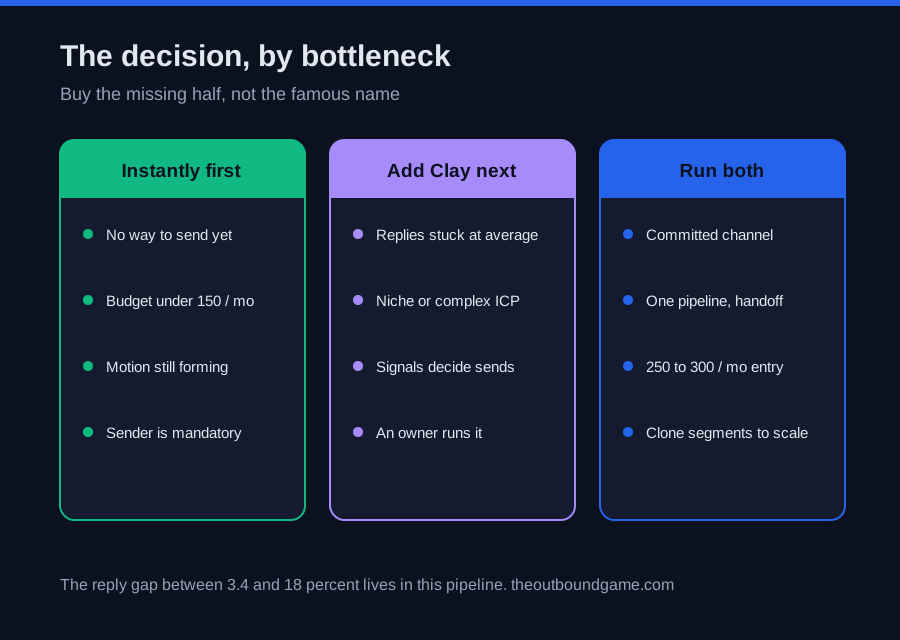
Buy Instantly first if you can only buy one and you have no way to send. A sender is non negotiable: without warmup, rotation, and deliverability tooling, no list quality survives contact with the inbox. Pair it with a modest data source and the discipline from our cold email templates library, and you have a working motion at under 150 dollars a month.
Buy Clay first, or next, when personalization and data quality become the bottleneck: reply rates stuck at average despite clean sending, an ICP too niche for single source databases, or a motion that needs signals and scoring before anyone earns a send. This is the point where waterfall enrichment and AI research pay for themselves, and it usually arrives after the sending layer works, not before.
Buy both when outbound is a committed channel and someone owns the system. Clay plus Instantly is the standard serious stack of 2026 for a reason: the enrichment layer decides relevance, the sending layer decides arrival, and the benchmark gap between 3.4 percent average replies and the 15 to 25 percent signal driven tier lives in exactly that pipeline. Teams that want one simpler tool instead of two should read our apollo vs zoominfo verdict, because an all in one platform is the honest third answer for small teams.
Five mistakes buyers make in the clay vs instantly matchup
-
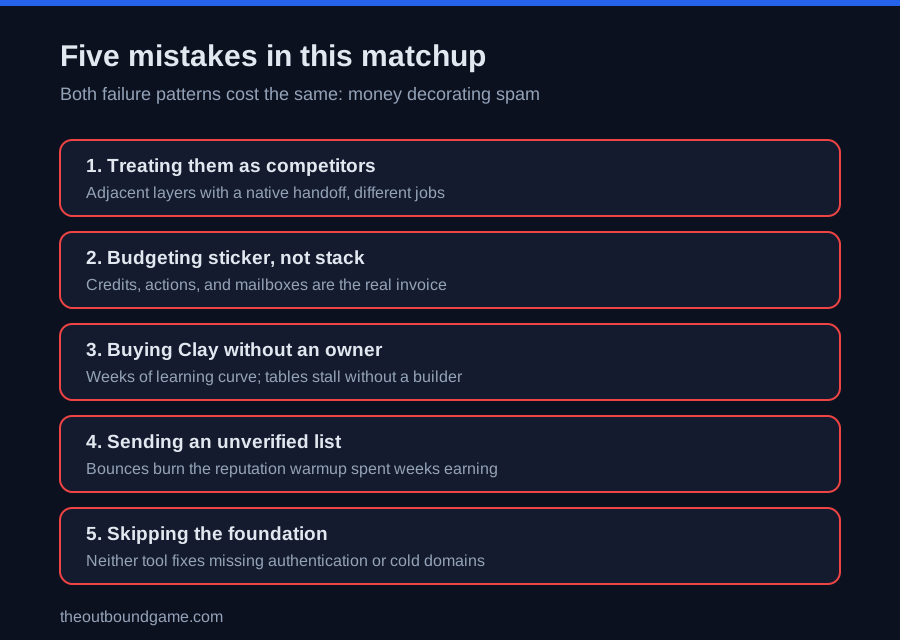
Treating them as competitors. They are adjacent layers with a native handoff. Comparing Clay’s sending to Instantly’s enrichment judges each tool at the job it refuses to do.
-
Budgeting the sticker, not the stack. Clay meters credits and actions; Instantly assumes separately purchased mailboxes. Price your real monthly volume through both before deciding, and check operator reviews on G2 for the cost surprises.
-
Buying Clay without an owner. The platform rewards weeks of learning and a builder mindset. Without a RevOps or GTM engineering owner, teams build two tables and stall while credits idle.
-
Feeding Instantly an unverified list. Sending infrastructure amplifies list quality in both directions, and bounces burn the sender reputation that warmup spent weeks building. Verification is not optional at volume.
-
Skipping the deliverability foundation entirely. Neither tool fixes missing authentication or cold domains. The deliverability fundamentals come before either subscription earns its fee, and the vendors themselves, per clay.com and instantly.ai, assume that groundwork is done.
An eight step way to run the pair properly
-
Fix the foundation. Dedicated sending domains, SPF, DKIM, DMARC, warmed mailboxes. Nothing downstream matters until this is done.
-
Stand up the sender. Connect mailboxes to Instantly, run warmup for two to three weeks, and cap daily volume per inbox at safe levels.
-
Define one segment in Clay. 50 to 200 accounts sharing a persona and a live situation, exactly as the personalization system prescribes.
-
Build the waterfall. Two or three providers per critical field, verification on every email, and a signal column that disqualifies accounts without a why now.
-
Add the research layer. Claygent or AI columns fill the two or three template slots with verifiable facts, not adjectives.
-
Push the handoff. Export the enriched segment into an Instantly campaign through the native integration, mapping the researched fields to template variables.
-
Send small, read replies, iterate. First 50 sends get human review; the template gets fixed, not the individual drafts.
-
Scale by cloning segments, not raising volume. The economics of both tools reward more precise segments over bigger blasts, and so do the reply benchmarks.
How the pair fits the broader outbound stack
-
Both layers serve the b2b outbound sales system, and the pipeline is only as strong as the motion it automates.
-
Clay’s marketplace draws on the b2b data providers landscape, so provider choice inside the waterfall still matters.
-
The wider category context lives in our data enrichment tools guide, where Clay’s rivals make their case.
-
Buying signals that decide who earns a send come from sales intelligence tools, feeding Clay’s scoring columns.
-
Instantly competes inside the cold email software category, where sender choice is its own decision.
-
Sequencing discipline follows the sales cadence playbook once the handoff lands in a campaign.
-
The autonomous version of this whole pipeline is what the best ai sdr tools sell, agents running enrichment to send end to end.
-
And the copy the pipeline delivers is still governed by cold email subject lines, where the open is won before the pitch is read.
FAQ
Frequently asked questions
Is Clay better than Instantly?
Can Clay send cold emails?
Can Instantly replace Clay for enrichment?
How much does Clay cost in 2026?
How much does Instantly really cost?
Which should I buy first, Clay or Instantly?
Do Clay and Instantly integrate?
The bottom line
The clay vs instantly verdict is that the question is malformed and the answer is an architecture. Instantly is the sending layer: warmup, rotation, and the best per account economics in cold email sending. Clay is the intelligence layer: waterfall enrichment, research, and scoring that decide who deserves an email and what it should say. Buy the sender first if you must choose, add the data layer when relevance becomes the bottleneck, run the pair as one pipeline when outbound is a committed channel, and never let either subscription substitute for the deliverability foundation both of them assume.
Want more tested breakdowns like this? We publish one honest teardown of outbound tools, tactics, and playbooks each week. Join the newsletter.
More on Cold Email
Cold Email Call to Action: What Converts in 2026 (Data)
Cold email call to action data for 2026: why interest CTAs win cold, when specific time asks take over, and the ladder that escalates across a sequence.
How to Respond to Cold Email Replies (2026 Playbook)
How to respond to cold email replies in 2026: the six reply lanes, the speed windows that decide conversion, and the plays that turn replies into meetings.
How to Follow Up on Cold Emails in 2026 (What to Send)
How to follow up on cold emails in 2026: the day by day map, what each touch should say, breakup emails that earn replies, and when to stop.