How to Personalize Cold Emails at Scale in 2026: The System
How to personalize cold emails at scale in 2026: the signal driven system behind 18 percent reply rates, the four levels, and the tools that run it.
Learning how to personalize cold emails at scale is the single highest leverage skill left in outbound, and the 2026 numbers make the case bluntly. Average cold email reply rates sit around 3.4 percent. Campaigns with advanced personalization reach 18 percent against roughly 9 for basic templates, signal driven campaigns run 15 to 25 percent, and using multiple custom fields beyond a first name lifts replies by up to 142 percent. Meanwhile only about 5 percent of senders personalize every message they send. The gap between average and elite has never been wider, and it is not a writing gap.
That is the reframe this guide is built on: personalization at scale is a data problem, not a writing problem. Nobody can hand write 500 relevant emails a day, and nobody needs to. What elite teams do instead is build an assembly line: segment tightly, collect buying signals, enrich and verify every record, write one strong template per segment with researched variable slots, and let automation fill those slots with verified facts. The writing happens once. The relevance happens at scale.
This is a hands on companion to our cold email pillar and it deliberately covers the layer our cold email templates library and cold email subject lines guide leave open: the system that makes a template feel hand written to every recipient. If your b2b prospecting is stuck at average reply rates, the ladder below is the way out.
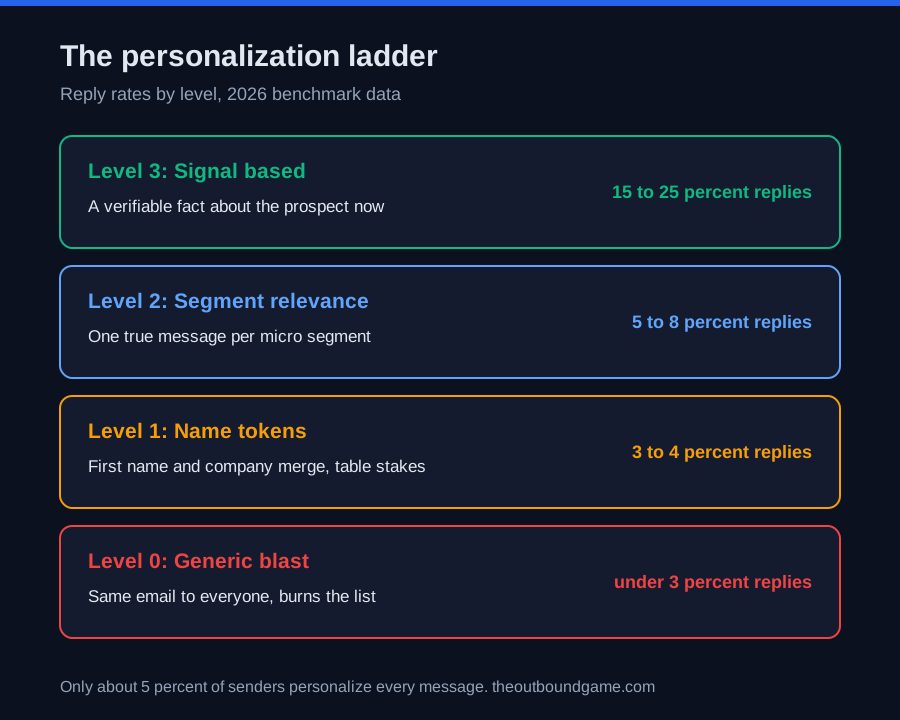
The personalization ladder: four levels, four very different results
Level zero is the generic blast. Same email to everyone, no tokens, no relevance. In 2026 this earns reply rates well under 3 percent, trains spam filters against your domain, and burns lists faster than it books meetings.
Level one is token personalization: first name, company name, maybe a title, mail merged into a template. Two important things are true about it. It is mandatory, because personalized subject lines alone lift open rates from about 15 to about 21 percent. And it is not personalization, because every prospect has seen ten thousand emails that know their name. Level one is table stakes wearing a costume.
Level two is segment relevance. You split the list by persona and situation, then write a different email for each micro segment: one message for a VP of Sales at a hiring SaaS company, another for a founder doing their own outbound. No per prospect research yet, but every claim in the email is true for everyone receiving it. Done well, this alone reaches 5 to 8 percent replies, and it is where the Belkins data showing small targeted campaigns at 5.8 percent against 2.1 for big blasts starts making sense.
Level three is signal based cold email personalization: each message references a specific, verifiable fact about the prospect right now. A funding round, a hiring spike, a new leadership hire, a product launch, a tech stack change, a post they wrote on LinkedIn. This is the 15 to 25 percent tier, and it is the level this system is designed to hit without hand writing anything.
The engine room: signals, enrichment, and one template per segment
Signals answer the question every cold email must answer: why you, why now. The reliable 2026 sources are funding announcements, job postings and hiring surges, executive changes, product launches, technology adoption, and content activity. Teams pipe these from sales intelligence tools and enrichment platforms into their sending stack, so every record arrives with a reason attached.
Enrichment turns a name into a dossier. A waterfall through data enrichment tools checks multiple sources per field and keeps the first verified answer, which matters because verified lists earn roughly twice the reply rate of unverified ones and because personalization built on a wrong fact is worse than no personalization at all. The b2b data providers layer decides what your emails can truthfully say.
Then the template. One per segment, under 80 words, one call to action, with two or three variable slots reserved for researched facts: the opening line references the signal, the middle sentence ties your offer to their situation, and everything else stays fixed. Write the slot values as plain language placeholders in square brackets while drafting, like [funding signal] or [first name], and let the system fill them from enriched data. AI drafting helps here, and our ai cold email guide covers it, but the model is the least important part: elite teams report automation handling about 80 percent of research and sequencing while humans own positioning and message strategy.
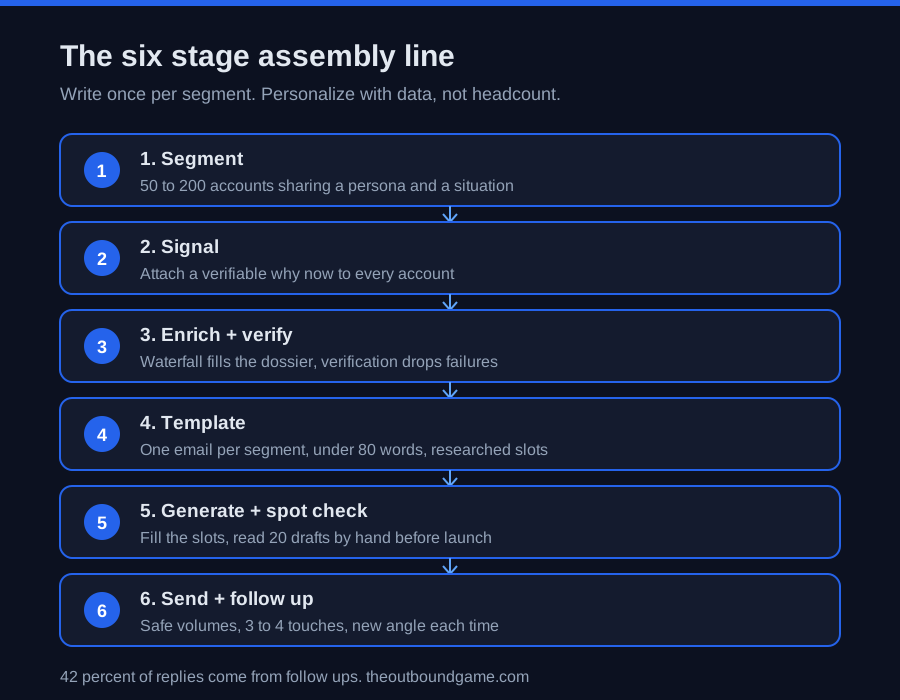
The six stage assembly line
Stage one, segment. Cut the TAM into micro segments of 50 to 200 accounts that share a persona and a situation, because the data says small targeted campaigns nearly triple the reply rate of large blasts.
Stage two, signal. Attach a why now to every account: funding, hiring, launch, leadership change, stack change. Accounts without a signal wait in nurture; they have not earned a send.
Stage three, enrich and verify. Waterfall enrichment fills the dossier, verification confirms the address, and anything unverified is excluded before it can bounce.
Stage four, template. One email per segment, under 80 words, single call to action, two or three researched slots. This is where cold email software earns its keep by merging enriched fields cleanly.
Stage five, generate and spot check. Fill the slots for the whole segment, then read 20 drafts by hand before launch. Hallucinated or misapplied facts are caught here, not by prospects.
Stage six, send and follow up inside safe volumes, because 42 percent of replies come from follow ups and nearly half of senders never send one. The sales cadence layer turns one good email into a sequence.
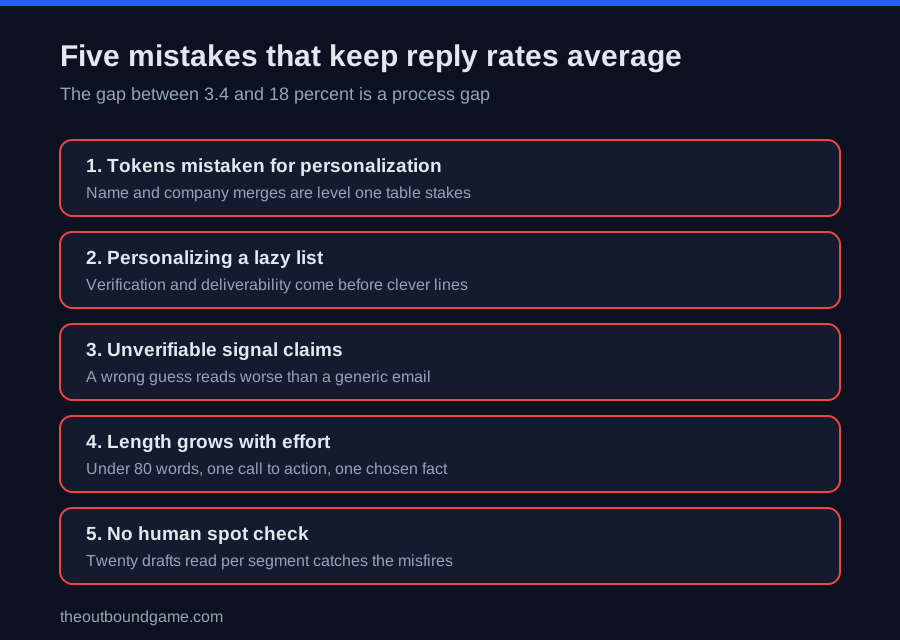
Five mistakes that keep reply rates average
-
Confusing tokens with personalization. A first name and company merge is level one. Prospects reply to relevance, and relevance starts at the segment level, not the token level.
-
Personalizing on top of a lazy list. Brilliant opening lines to the wrong people, or to unverified addresses, produce bounces and silence. The list and the deliverability foundation come first; check tool reviews on G2 after the process is fixed.
-
Referencing signals you cannot verify. Guessing that a company is hiring or growing, and being wrong, reads worse than a generic email. Every personalized claim needs a verifiable source in the dossier.
-
Letting length grow with effort. Research tempts people into long emails, but under 80 words with one call to action keeps winning. Spend the research on choosing the one fact that matters, not on listing all of them.
-
Skipping the human spot check. Automation misfires quietly: wrong pronoun, stale funding round, a signal applied to the wrong subsidiary. Twenty drafts read by a human before each segment launches is the cheapest insurance in outbound.
An eight step build you can run this week
-
Pick one segment of 50 to 100 accounts that share a persona and a live situation. Resist starting bigger; the data rewards small.
-
Define the two or three signals that matter for that segment, and attach one to every account, with a source link in the record.
-
Run the waterfall. Enrich every field you plan to reference, verify every address, and drop what fails. Expect to lose 10 to 20 percent of the list; that is the system working.
-
Write the one template. Under 80 words, single call to action, opening line built around the signal slot. Steal structure, not sentences, from the cold email templates library.
-
Fill and spot check. Generate the personalized cold emails for the whole segment and read 20 by hand. Fix the template, not the individual drafts, when something misfires.
-
Send inside safe volumes from warmed mailboxes, staying under the limits your infrastructure supports.
-
Follow up three to four times, each touch adding a new angle on the same signal rather than repeating the ask.
-
Measure replies per segment, then clone the winner. Segments beating 8 percent get scaled and adjacent lookalikes built; segments under 4 percent get a new signal or a new message, never just more volume.
How personalization at scale fits the broader outbound stack
-
It sits on the b2b outbound sales system, and it amplifies whatever targeting discipline already exists there.
-
Its raw material is bought at the b2b data providers layer, where coverage of your ICP decides what can be personalized at all.
-
Its verified facts come from data enrichment tools, the waterfall that separates true relevance from confident guessing.
-
Its why now signals live in sales intelligence tools, the layer that turns records into moments.
-
Its delivery mechanics run through cold email software, which merges fields, rotates mailboxes, and paces sends.
-
Its sequencing follows the sales cadence playbook, where follow ups earn their 42 percent of replies.
-
Its automation ceiling is the subject of our best ai sdr tools ranking, where agents run this exact assembly line autonomously.
-
And its first impression is still decided by cold email subject lines, where personalization lifts opens by half.
FAQ
Frequently asked questions
How do you personalize cold emails at scale?
Does personalization actually improve reply rates?
What counts as real personalization in 2026?
What are the best buying signals for cold email?
How long should a personalized cold email be?
Can AI personalize cold emails without sounding generic?
How many emails can you personalize per day this way?
The bottom line
How to personalize cold emails at scale comes down to one reframe and one machine. The reframe: it is a data problem, so the work happens in segmentation, signals, and verification before a single line is written. The machine: six stages that turn one well written template per segment into hundreds of individually relevant messages, spot checked by a human and sent inside safe volumes. The benchmark gap is sitting there in the data, 3.4 percent for the average sender against 15 to 25 for signal driven campaigns, and the difference is not talent. It is the assembly line, and you can build the first segment of it this week.
Want more tested breakdowns like this? We publish one honest teardown of outbound tools, tactics, and playbooks each week. Join the newsletter.
More on Cold Email
Cold Email Call to Action: What Converts in 2026 (Data)
Cold email call to action data for 2026: why interest CTAs win cold, when specific time asks take over, and the ladder that escalates across a sequence.
How to Respond to Cold Email Replies (2026 Playbook)
How to respond to cold email replies in 2026: the six reply lanes, the speed windows that decide conversion, and the plays that turn replies into meetings.
How to Follow Up on Cold Emails in 2026 (What to Send)
How to follow up on cold emails in 2026: the day by day map, what each touch should say, breakup emails that earn replies, and when to stop.