AI Cold Email in 2026: A Full Operator Field Guide
AI cold email in 2026 for B2B teams: where AI genuinely lifts reply rates, the signal-based shift, the spam-filter trap, and what truly works.
AI cold email in 2026 is table stakes, every team has the tools, but most use them for exactly the wrong job, and that is why their reply rates keep falling. The average cold email reply rate now sits around 3.43 percent, while top campaigns clear 10 percent or higher, and the gap between those two numbers is almost never copywriting. It is targeting and deliverability. Most teams point AI at writing more emails faster, which floods inboxes with generic, AI-sounding messages that smarter spam filters increasingly flag on sight. The teams that win point AI at a different job entirely: research and timing, detecting the signal that makes an email relevant and sending it at the moment it matters.
That distinction is the whole subject of this guide. AI genuinely lifts reply rates, studies put the gain at 20 to 50 percent, but only when it is used to personalize on real signals and only when the underlying data is accurate. The fundamental shift in 2026 is from firmographic personalization (company size, industry, title) to signal-based personalization (a funding round, a job change, a pricing-page visit), and signal-based outreach outperforms firmographic by three to five times on reply rate. So the operator’s job is not to generate more email with AI; it is to use AI for the research and timing that B2B prospecting cannot scale by hand, on a clean list and a deliverable domain, because the bottleneck was never the words.
This is a discipline guide inside the ai sales tools cluster, applied to the cold email channel. It sits on top of the cold email pillar and the cold email software that runs the sends, and like every channel it only works on a foundation of email deliverability and verified data.
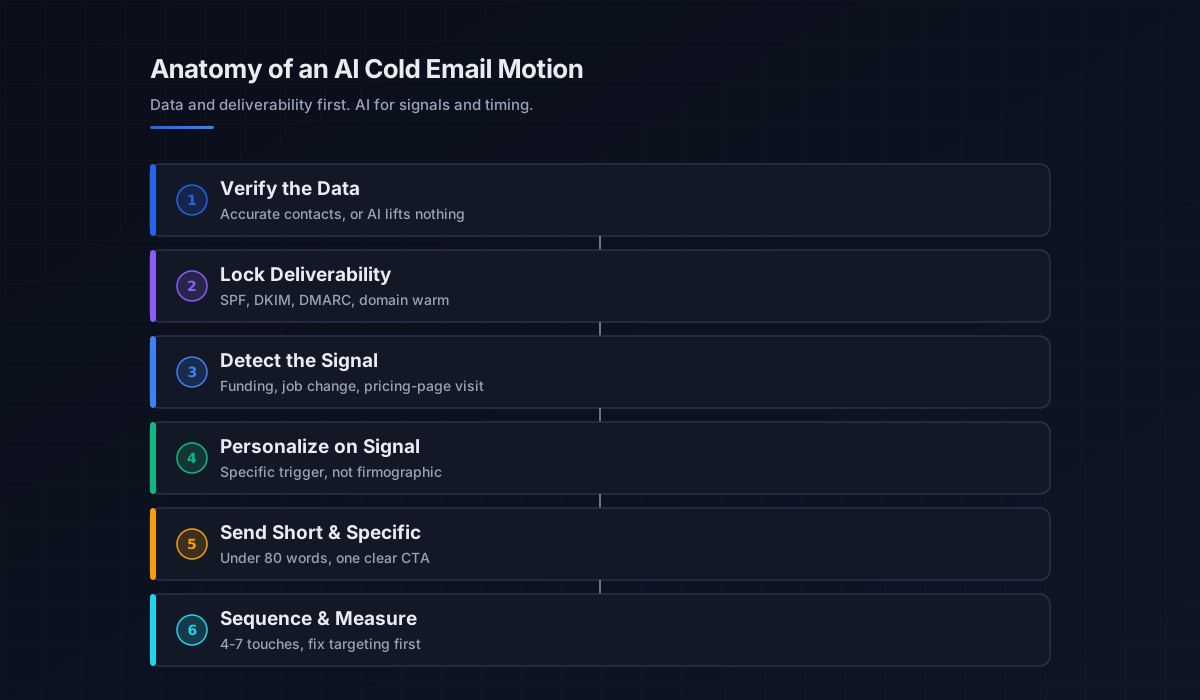
Where AI genuinely helps in cold email
The reason most AI cold email underperforms is that it is aimed at the wrong task. AI is not a copywriter that rescues a weak motion; it is a research-and-timing engine that scales the work humans cannot. Three jobs are where it earns its keep.
First, signal detection. AI monitors many sources, funding announcements, job changes, hiring patterns, technology adoption, website visits, and surfaces the trigger that makes an account worth contacting now. This is the highest-value job, because timing is most of relevance. Second, ai email personalization at scale: once a signal is found, AI drafts a message grounded in that specific context, so a prospect who visited your pricing page gets a different email than one who just raised a Series B. Third, operational leverage: AI handles list research, reply categorization, and A/B test analysis, the work that consumes SDR hours without needing human judgment. Industry data suggests AI agents now handle roughly 80 percent of the research and sequencing work, freeing people for positioning and conversations.
What AI does not do is make a generic email good. A firmographic mail-merge (“I see you are a VP of Sales at a 200-person SaaS company”) is not personalization in 2026; it is basic targeting that buyers and filters both ignore.
The signal-based shift
The single most important change in cold email is the move from firmographic to signal-based personalization, and it is where AI creates real advantage. Firmographic personalization references what a company is; signal-based personalization references what just happened. The difference in results is large: signal-based outreach outperforms firmographic by three to five times on reply rate, and trigger-event targeting delivers roughly 2.3 times higher replies than untriggered sends.
The mechanism is timing, not cleverness. Signal-based sequencing does not change what you send so much as when and why you send it: emailing someone who visited your pricing page yesterday is a fundamentally different act than emailing a cold name on a random Tuesday. AI is what makes this scale, since no human can monitor hundreds of accounts for dozens of trigger types in real time. Hyper-targeted lists built on signals have been shown to outperform mass blasts by around 2.76 times. The lesson is consistent across every dataset: precision beats volume, and AI’s job is to find the precision, not to manufacture more volume.
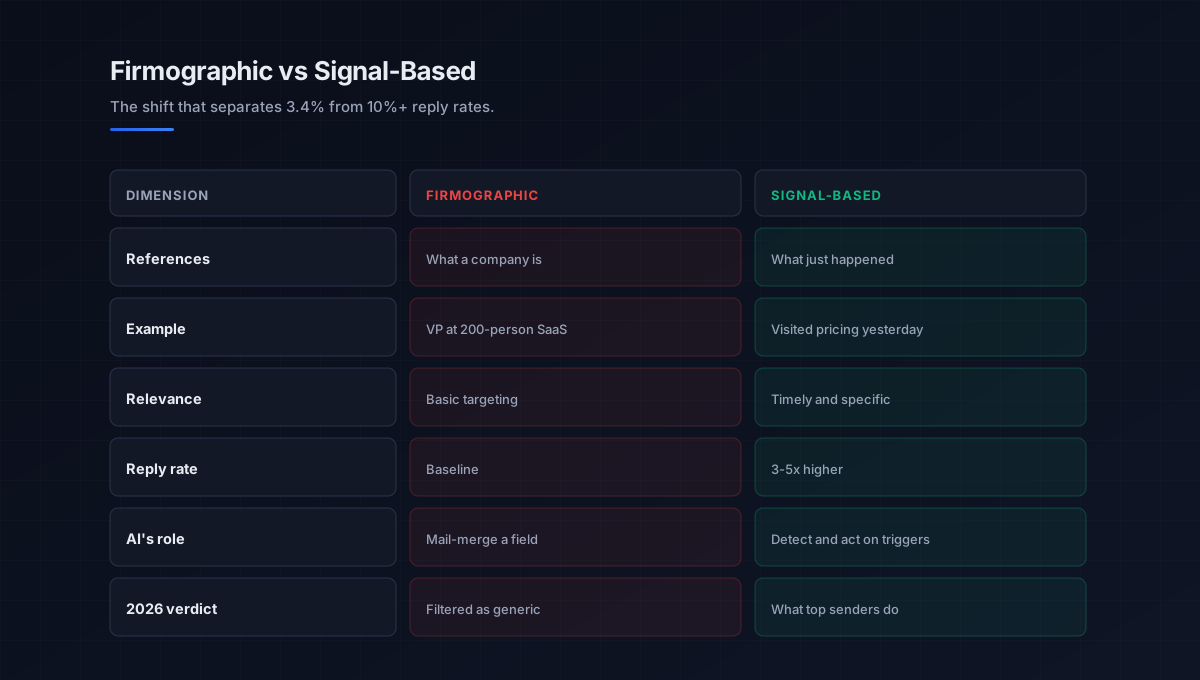
Using AI without triggering spam filters
The paradox here is that the same technology making outreach easier is also making it easier to detect. Email providers now use AI to evaluate message structure, flagging the generic phrasing and patterns that suggest mass automated sending, so AI used carelessly actively hurts deliverability. Staying out of spam is therefore part of using AI well, not a separate concern.
The defenses are practical. Keep emails short (elite senders run under 80 words) with a single clear call to action, since long, hedged, AI-padded copy reads as automated. Vary the message genuinely rather than spinning one template, because near-duplicate sends are a detectable pattern. Ground every email in a real signal so it does not read as generic. And protect the technical foundation regardless of how good the AI is: authenticate with SPF, DKIM, and DMARC, keep the spam-complaint rate under the roughly 0.1 percent Gmail threshold, and maintain list hygiene, since cold email deliverability is what decides whether any of the AI work is ever seen. The discipline here lives in the email deliverability and sender reputation guides, and the channel mechanics in the cold email pillar.
How AI cold email fits the motion
AI in cold outreach is a layer that amplifies the motion, and like every layer in this stack, its value depends on what sits beneath it. The first principle is that AI improves reply rates only on accurate data: a perfectly personalized message to a wrong or dead address is worse than wasted, since it harms the sender reputation future campaigns depend on. So the data layer comes first, the verified contacts from the b2b data providers and data enrichment tools layers, and the intent signals from the sales intelligence tools layer that AI turns into timely, relevant outreach.
On that foundation, AI does its work inside the channel rather than replacing it. It drafts and times the messages that the cold email software sends, sequences them within the sales cadence (where the optimal length is now four to seven emails and the first touch captures most replies), and logs activity to the CRM software. The same AI personalization extends to other channels too, including video prospecting and LinkedIn outreach, and the broader toolset is covered in best AI sales tools. AI is the research-and-timing engine on top of the motion, never a substitute for the data and deliverability beneath it.
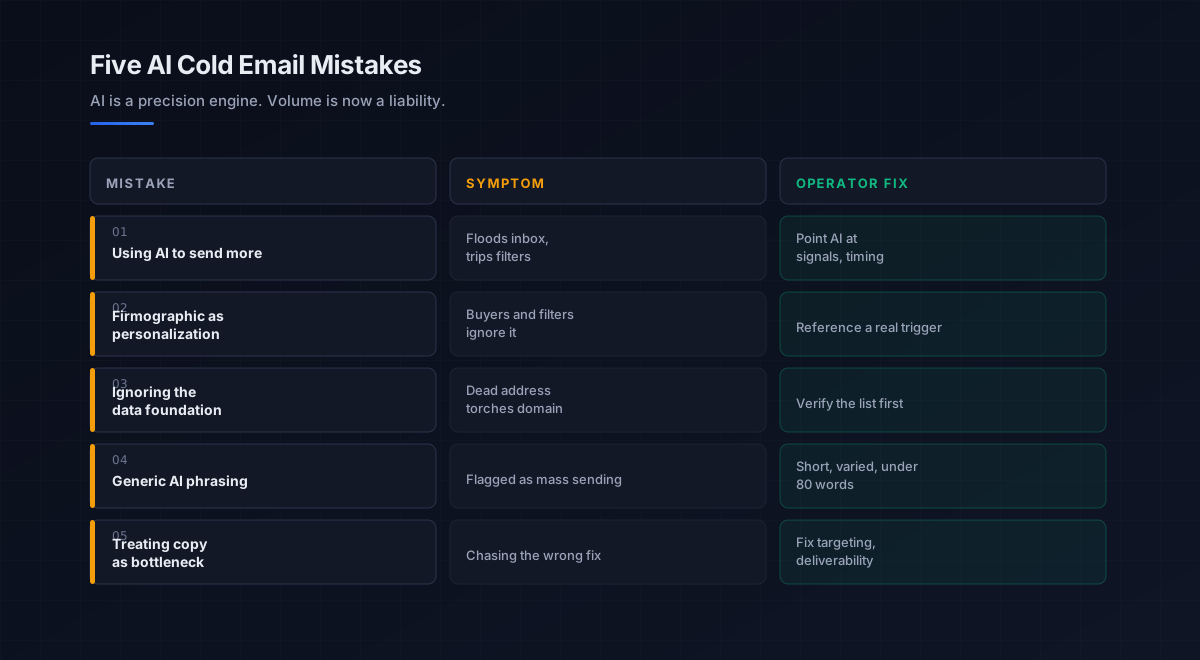
Five mistakes teams make with AI cold email
What we see most often is the same handful of errors that turn AI from an advantage into a liability.
-
Using AI to send more, not better. Generating volume floods inboxes and trips spam filters. Point AI at signal research and timing, not at producing more email.
-
Firmographic dressed as personalization. “VP at a 200-person SaaS company” is targeting, not personalization. Use AI to reference a real signal, not a company attribute.
-
Ignoring the data foundation. AI lifts replies only on accurate data. A perfect email to a dead address torches your domain. Verify the list first.
-
Generic AI phrasing. Filters flag AI-sounding patterns. Keep emails short, varied, and specific, under 80 words with one call to action.
-
Treating copy as the bottleneck. The gap to a 10 percent reply rate is targeting and deliverability, not wording. Fix those before A/B testing subject lines.
An eight-step framework for AI cold email
This is the order we build an AI cold email motion in, for our own outreach and for the teams we work with. Run it top to bottom.
- Verify the data first. Confirm enriched, verified contacts, since AI improves replies only on accurate data and bad addresses harm reputation.
- Lock down deliverability. Authenticate with SPF, DKIM, and DMARC, warm the domain, and keep spam complaints under about 0.1 percent.
- Point AI at signals. Use AI to detect funding rounds, job changes, and intent triggers, the timing that makes outreach relevant.
- Personalize on the signal. Have AI draft a message grounded in the specific trigger, not a firmographic attribute.
- Keep it short and specific. Under 80 words, one clear call to action, genuinely varied rather than spun from one template.
- Sequence the touches. Use a four-to-seven email cadence, since the first touch captures most replies and follow-ups capture the rest.
- Automate the operations. Let AI handle reply categorization, list research, and test analysis, the work that needs no human judgment.
- Measure and iterate. Track reply and spam rates, fix targeting and deliverability before copy, and refine the signals that work.
How AI cold email fits the broader stack
This layer amplifies the channel within the outbound stack. Each connected layer has a deeper guide.
- The AI toolset. The broader set of AI sales tools, in best AI sales tools.
- The email channel. The channel AI amplifies, in the cold email pillar and cold email software.
- The data layer. Verified contacts AI personalizes from, in b2b data providers and data enrichment tools.
- Intent. The signals AI acts on, in sales intelligence tools.
- The cadence. How AI-drafted touches are sequenced, in sales cadence and sales engagement platforms.
- Other channels. AI personalization beyond email, in video prospecting and LinkedIn outreach.
- The system of record. Where activity logs, in CRM software.
- Strategy. The motion AI amplifies, in outbound sales.
That is the map. The data layer supplies verified contacts, intent supplies the signals, deliverability earns the inbox, and AI is the research-and-timing engine that makes each touch relevant, only as effective as the accurate data and deliverable domain beneath it.
Frequently asked questions
Does AI actually improve cold email reply rates?
What is signal-based personalization?
Will AI-generated cold emails land in spam?
What is a good reply rate for AI cold email in 2026?
Can AI replace SDRs for cold email?
Why are my AI cold emails not getting replies?
Does the AI matter more than my data and deliverability?
The bottom line
AI cold email in 2026 is not about writing more emails faster; it is about pointing AI at the job it does uniquely well, research and timing, on a foundation of verified data and clean deliverability. The average reply rate sits near 3.43 percent while top campaigns clear 10 percent, and that gap is targeting and deliverability, not copywriting. The real shift is from firmographic to signal-based personalization, which outperforms it three to five times, and AI is what makes detecting and acting on those signals scale. Used that way, AI lifts reply rates 20 to 50 percent. Used to manufacture generic volume, it trips the very spam filters that now read message structure with AI of their own.
If you take one rule from this guide, make it this: AI is a precision engine, not a volume engine. The teams that win use it to find the signal and time the touch, on a verified list and a warm domain, while the teams that lose use it to send more of what already stopped working. Verify the data, lock down deliverability, point AI at signals rather than at output, keep every email short and specific, and let precision do the work, because the bottleneck was never your copy. It was whether the right person, at the right moment, ever saw it.
Get the operator playbook in your inbox. The Outbound Game publishes one operator-grade breakdown a week on B2B outbound sales, tactics, tooling, and ops. No fluff, no vendor talking points. Subscribe and get the next one when it ships.
More on AI Sales Tools
AI SDR vs Human SDR in 2026: The Real Cost and Results
AI SDR vs human SDR in 2026: the loaded cost math, real pipeline numbers, where agents win, where reps win, and the hybrid model that beats both.
The Best AI SDR Tools in 2026: An Operator Field Guide
The best AI SDR tools in 2026, ranked honestly: real pricing from 250 to 5,000 dollars a month, what the agents actually do, and who should skip them.
Do AI SDRs Actually Work in 2026? The Honest Numbers
Do AI SDRs actually work in 2026? The honest numbers: churn rates, reply benchmarks, where agents deliver real pipeline, and where they burn budget.