AI SDR vs Human SDR in 2026: The Real Cost and Results
AI SDR vs human SDR in 2026: the loaded cost math, real pipeline numbers, where agents win, where reps win, and the hybrid model that beats both.
The ai sdr vs human sdr debate is usually argued with the wrong numbers. Vendors compare an agent subscription against a rep salary and declare a 70 percent saving. Sales leaders compare a bad quarter of agent replies against a good rep and declare the robots useless. Both comparisons are broken, because the honest unit is not cost per seat, it is cost per meeting held, and on that metric neither side wins everywhere.
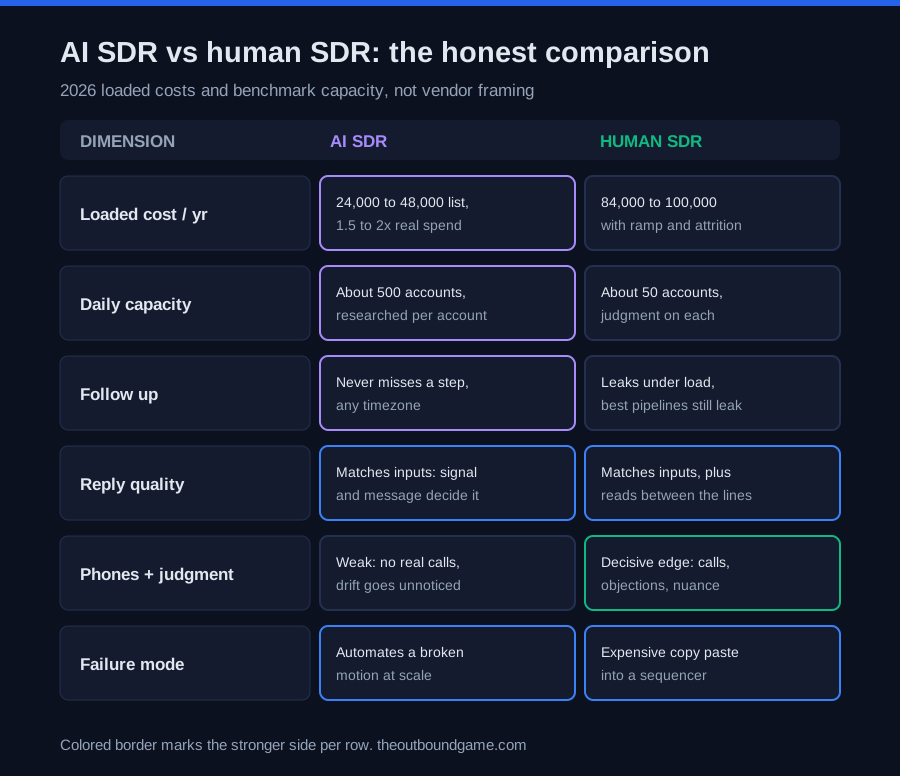
Here is the 30 second version with 2026 numbers. A fully loaded sales development representative costs roughly 84,000 to 100,000 dollars a year once salary, on target earnings, recruiting, ramp, and management time are counted. An autonomous agent seat lists at roughly 24,000 to 48,000 a year, and real spend runs 1.5 to 2 times sticker once data, verification, and sending infrastructure are added. The agent works ten times more accounts per day. The rep converts judgment, phones, and relationships in ways no agent matches. And the teams that stopped arguing and combined them report 2.8 times more pipeline than either model alone.
This head to head sits inside our AI cluster next to the ai sdr explainer and our ranking of the best ai sdr tools, and it assumes the fundamentals from the b2b outbound sales pillar. If you own a pipeline number and are deciding between a hire and an agent for your b2b prospecting motion, this is the math and the decision, without the vendor gloss.
The cost math, done honestly
Start with the human sdr, fully loaded. Base salary plus on target earnings typically lands between 65,000 and 85,000 dollars in most markets. Add recruiting fees, three to four months of ramp at partial productivity, tooling seats, and the slice of a manager’s time every rep consumes, and the credible all in figure is 84,000 to 100,000 dollars per productive year. Attrition makes it worse: SDR tenure averages under two years, so the ramp tax recurs.
Now the agent. Autonomous platforms list from about 250 dollars a month at the entry tier to 5,000 for enterprise digital workers, so a serious deployment runs 24,000 to 48,000 dollars a year at list. The sticker is the floor, not the invoice. The agent consumes verified contact data, mailboxes, warmup, and monitoring, and budget analyses of the category consistently show real spend at 1.5 to 2 times the advertised price, with roughly 40 percent of a sane budget going to data and 25 percent to sending infrastructure.
So on raw dollars, the agent wins, usually by half or more even after hidden costs. But raw dollars is the vendor’s framing. The number that survives a budget review is cost per meeting, and specifically cost per meeting held, because agents book fast and hollow when the message is untested. Divide each side’s true annual cost by held meetings that became opportunities, and the winner flips depending entirely on your motion.
Capacity, replies, and where the numbers actually come from
Capacity is the agent’s structural advantage. A rep meaningfully touches around 50 accounts a day; an agent manages 500 with per account research, sends at 3 a.m. in the prospect’s timezone, and never skips step four of the sales cadence. Follow up discipline alone, the place most human pipelines quietly leak, is worth real pipeline.
Reply quality is where the framing gets dishonest. The 2026 benchmark data puts average cold email reply rates around 3.4 percent, while deeply personalized, signal driven campaigns reach 18 percent. That five times gap does not belong to agents or to humans. It belongs to the signal and the message. An agent with rich signals and a proven message beats a bored rep blasting templates; a sharp rep beats an agent hallucinating personalization off thin data. The sender is not the variable. The inputs are.
Where humans stay decisively ahead: phone conversations, multithreading real relationships, reading between the lines of a lukewarm reply, navigating complex or regulated deals, and the extra mile outreach no sequence contains. Where agents stay decisively ahead: volume, consistency, speed to lead, and cost floor. The 2026 market data says roughly 22 percent of teams have fully replaced their SDRs with ai sales agents, which means 78 percent have not, and the churn on agent tools, running 50 to 70 percent annually, is concentrated in teams that automated an unproven motion.
The decision, by motion
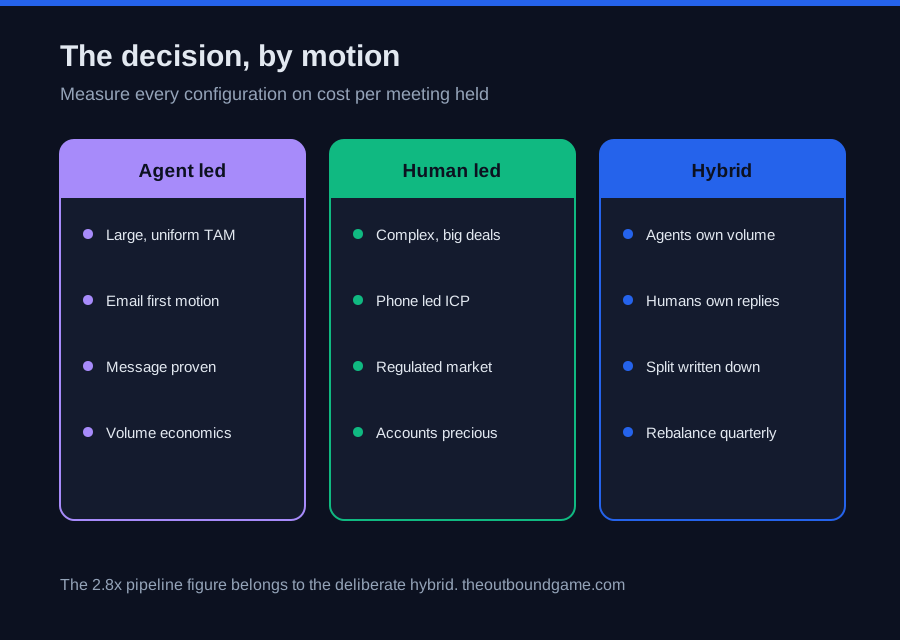
Choose the agent led model when your TAM is large and fairly uniform, the motion is email first, the message is already proven, and the economics are volume economics. This is where a 900 to 2,000 dollar a month agent genuinely replaces the first hire, and where copilot tiers inside platforms like the ones in our best ai sdr tools ranking let one operator run what used to take three reps.
Choose the human led model when deals are complex, regulated, or relationship driven, when your ICP answers phones more than email, and when every account is precious enough that a hallucinated claim costs real money. A small, senior team with agent copilots for research outproduces a big junior floor here.
Choose the hybrid deliberately, not as a compromise. Define the split: agents source, research, draft, send, and chase; humans approve new sequences, take every warm reply, and work the phones. Measure both sides on the same two numbers, cost per meeting held and opportunities created, and rebalance quarterly. This is the configuration behind the 2.8 times pipeline figure, and it is also the cheapest insurance against betting the quarter on either extreme.
Five mistakes teams make in this decision
-
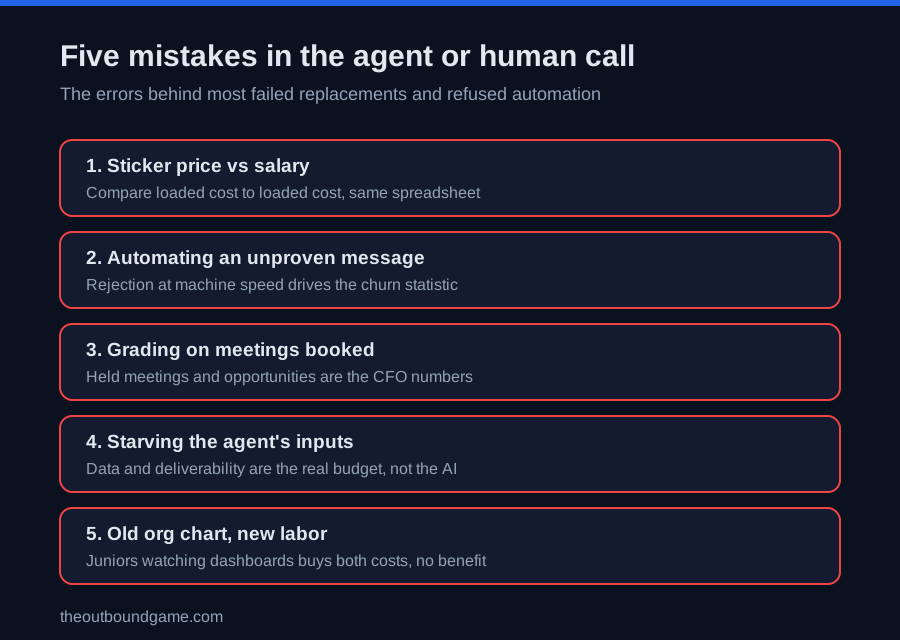
Comparing agent sticker price to rep salary. The honest comparison is loaded cost to loaded cost: recruiting, ramp, and management on one side, data, sending, and operation on the other. Half the gap disappears, and the decision gets clearer, not murkier.
-
Replacing reps before the message is proven. An agent amplifies whatever it is given. Automating an untested pitch produces rejection at machine speed, and it is the single biggest driver of the category’s churn.
-
Judging both sides on meetings booked. Booked is the easiest number to inflate and the vendor’s favorite. Held meetings and opportunities created are the numbers a CFO accepts, and they frequently reverse the ranking.
-
Starving the agent’s inputs. Teams cut the rep, buy the agent, then skimp on the data and sender reputation work the agent depends on. The agent is a minority of the real budget; treat data accuracy and deliverability as the main line items.
-
Keeping the org chart after changing the labor. If agents take the volume work, the humans left should be senior enough to own judgment. Pairing an autonomous agent with a junior rep who just watches dashboards buys the costs of both models and the benefits of neither.
An eight step framework for making the call
-
Write down the motion. Email led or phone led, uniform TAM or complex accounts, proven message or experiment. Most of the decision falls out of this page.
-
Compute both loaded costs. Rep at 84,000 to 100,000 dollars with ramp and attrition; agent at 1.5 to 2 times sticker with data and sending. Same spreadsheet, same year.
-
Set the metric before the pilot. Cost per meeting held and opportunities created. Agree on it with finance in advance so the result cannot be argued later.
-
Prove the message with humans first. Small list, manual or copilot assisted sends, iterate until replies validate the pitch. Cheap at this scale, ruinous to skip.
-
Fix the foundation before any agent sends. Dedicated domains, SPF, DKIM, DMARC, warmed mailboxes, safe volumes, per the deliverability fundamentals. This work benefits humans and agents identically.
-
Pilot the agent on a fenced segment. Sixty to ninety days, one segment, human review of drafts in week one, warm replies routed to a person from day one.
-
Compare on the agreed metric, then rebalance. Check vendor churn signals on G2 before contracts, and let your own cost per held meeting decide the mix, not the demo.
-
Re run the math twice a year. Agent capability and pricing are moving fast in 2026. The right answer this quarter is a setting, not a settlement.
How this decision fits the broader outbound stack
-
Both models sit on the same b2b outbound sales system, and neither fixes a broken motion underneath it.
-
Agent output quality is decided in the data layer, which is why the b2b data providers choice matters more after automation, not less.
-
Coverage and personalization inputs come from data enrichment tools, the waterfall layer that feeds either sender verified contacts.
-
Signals that lift replies five times live in sales intelligence tools, and they lift humans and agents alike.
-
The sending machinery is still a sales engagement platform problem, whichever intelligence sits on top.
-
Handoffs between agent and human survive only if CRM automation keeps ownership and history clean.
-
The budget case follows the same discipline as sales automation ROI: loaded costs, incremental results, payback in months.
-
And the message both senders deliver is still built at the cold email layer, where copy quality outweighs sender identity.
FAQ
Frequently asked questions
Is an AI SDR cheaper than a human SDR?
Can an AI SDR fully replace a human SDR?
Do AI SDRs book worse meetings than humans?
What is the hybrid SDR model?
Why do so many teams churn off AI SDR tools?
How many accounts can an AI SDR work versus a human?
What should I measure in an AI SDR pilot?
The bottom line
The ai sdr vs human sdr fight has a boring winner: the team that stops treating it as a fight. Agents own volume at a cost floor no salary matches; humans own judgment, phones, and relationships no model matches; and the pipeline data belongs to the hybrid that assigns each side its lane and measures both on cost per meeting held. Do the loaded math honestly, prove the message before you automate it, and re run the numbers twice a year, because in 2026 this decision is a dial you tune, not a door you walk through once.
Want more tested breakdowns like this? We publish one honest teardown of outbound tools, tactics, and playbooks each week. Join the newsletter.
More on AI Sales Tools
The Best AI SDR Tools in 2026: An Operator Field Guide
The best AI SDR tools in 2026, ranked honestly: real pricing from 250 to 5,000 dollars a month, what the agents actually do, and who should skip them.
Do AI SDRs Actually Work in 2026? The Honest Numbers
Do AI SDRs actually work in 2026? The honest numbers: churn rates, reply benchmarks, where agents deliver real pipeline, and where they burn budget.
AI Cold Email in 2026: A Full Operator Field Guide
AI cold email in 2026 for B2B teams: where AI genuinely lifts reply rates, the signal-based shift, the spam-filter trap, and what truly works.