Cold Calling in 2026, An Operator-Grade Playbook Guide
Cold calling still books pipeline in 2026 when run on data and structure, not volume. An operator playbook on targeting, cadence, scripts, and metrics.
Cold calling is not dead in 2026, and the data is blunt about it: the average success rate actually rose year over year from 2.3 to 2.7 percent, over half of B2B leads still originate from cold outreach, and 57 percent of C-level executives say they prefer the phone over any other channel. The headline most articles miss is not whether the channel works. It is the size of the gap inside it. Top-performing teams book meetings at 11.3 percent, roughly four times the average, and that gap is not talent or charisma. It is targeting, data quality, and structured persistence.
That is the entire thesis of this playbook. Cold calling rewards preparation more than personality. The sobering version of the same fact: reps need an average of 209 calls to secure one appointment when working bad data, but teams with clean, well-targeted lists collapse that ratio dramatically. The phone is not the problem. The list and the structure behind it are.
This is the pillar reference for everything we publish on the phone channel. We will cover whether it still works, the anatomy of a call that books, the cadence that actually connects, the metrics that diagnose problems, the five mistakes that quietly kill call programs, and an eight-step build sequence. It sits alongside the broader outbound sales motion and connects to the sales prospecting work that feeds it the right numbers to dial. For the email side of a coordinated cadence, our sister publication covers cold email in depth.
Does cold calling still work in 2026?
Yes, and the evidence is stronger than the “cold calling is dead” crowd admits. Over 50 percent of B2B leads still originate from cold outreach, and the phone remains the channel senior buyers prefer: 57 percent of C-level and VP buyers favor a call, against 51 percent of directors and 47 percent of managers. The more senior and complex the deal, the more the phone earns its place, which is why cold calling persists for high-value B2B even as digital channels multiply.
The channel survives for three reasons. It reaches decision-makers other channels cannot, it creates a real-time conversation that email cannot, and it works best stacked with email and LinkedIn rather than competing with them. The teams winning on the phone in 2026 are not the ones dialing the most. They are the ones dialing the right numbers, at the right time, with structure.
The gap between average and great
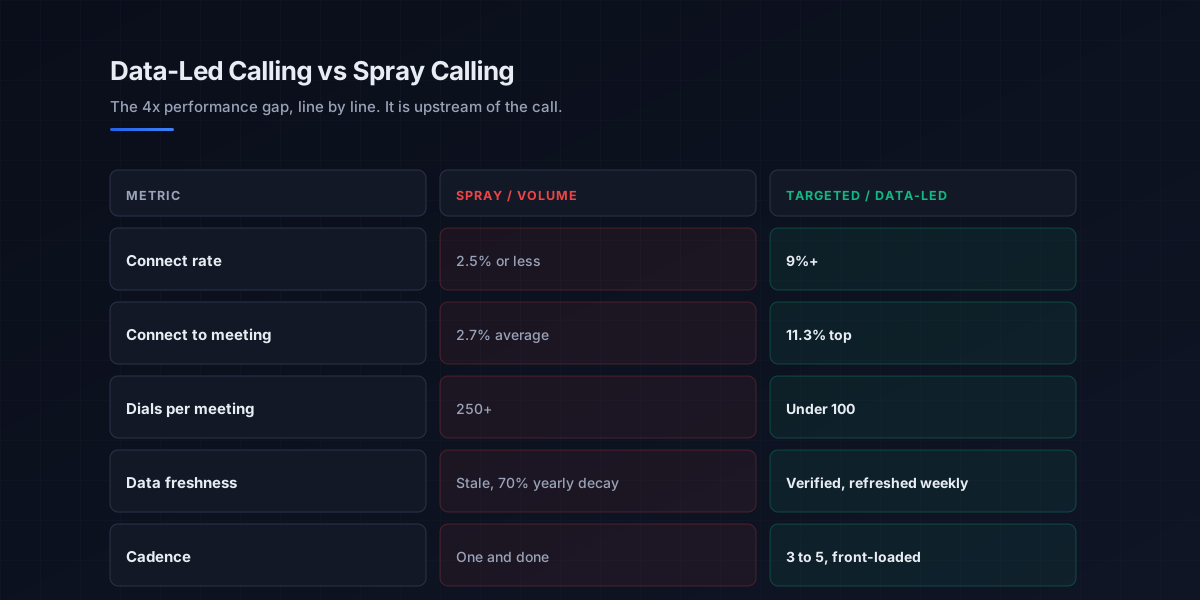
The single most useful cold calling statistic is the spread. Average teams book meetings on 2.7 percent of conversations; top teams hit 11.3 percent. Connect rates tell the same story, from 2.5 percent for weak programs to 9 percent and up for strong ones. Most articles on this topic treat the average as a ceiling. It is a floor. The 4x gap is closeable, and closing it is what this playbook is about.
Why most calling underperforms
Reps lose more than a quarter of their calling time to bad contact data before they even dial. B2B data decays at roughly 2.1 percent per month, so a list refreshed every six weeks is already 3 percent dead on arrival, and a list left for a year is mostly fiction. This is why the highest-leverage improvement to a calling program is almost never the script. It is the data feeding it.
The anatomy of a cold call that books
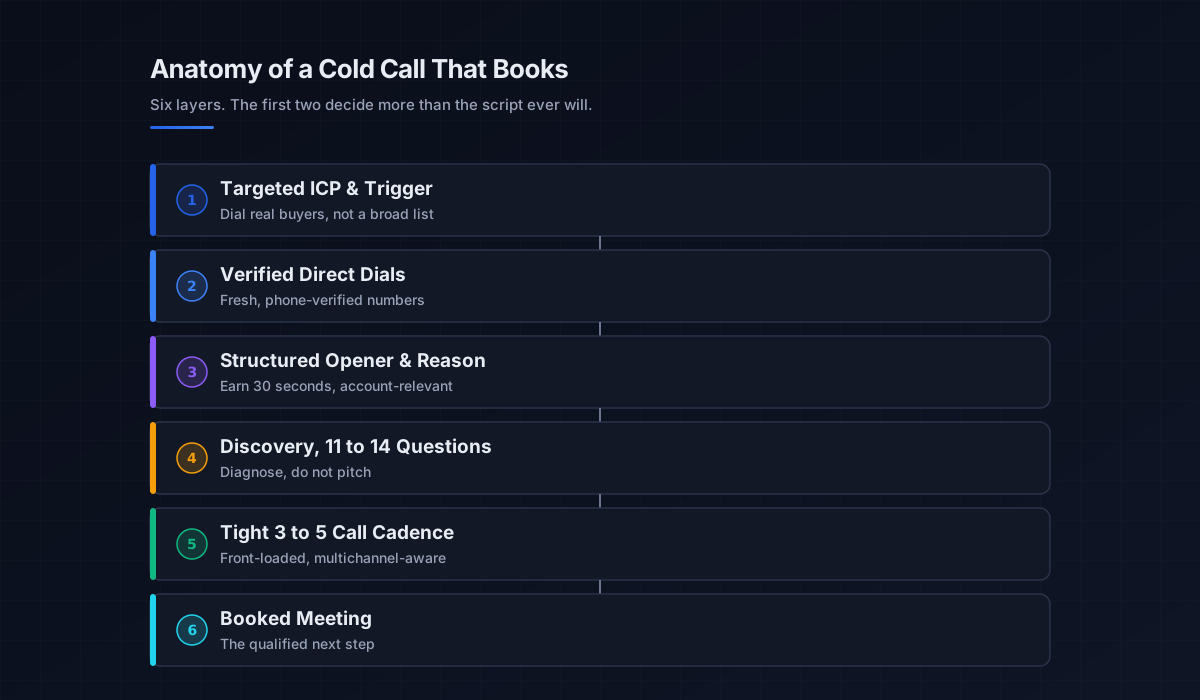
A cold call that converts is not improvisation. It is a structure with room for a human inside it. The cold calling tips that matter most are structural, not verbal tricks. A good cold call script, the strongest b2b cold calling follows a recognizable shape, and reps who internalize it outperform reps who wing it, every time.
The opener
You have seconds. The opener’s only job is to earn the next thirty seconds, not to pitch. A pattern-interrupt opener that acknowledges the cold nature of the call and asks for permission outperforms a scripted pitch. One widely cited finding: opening with “How have you been?” lifts success rates several times over, because it pattern-matches to a familiar contact and buys conversational room.
The reason for the call
Immediately follow with a specific, account-relevant reason you are calling them, not a generic value prop. This is where prospecting quality shows up on the phone: a reason anchored to a real trigger (a funding round, a hire, a tech change) converts far better than “I wanted to introduce our solution.” The research before the dial is the call.
Discovery over pitching
Top reps ask 11 to 14 questions per call and talk less than they listen. The call is diagnosis, not demonstration. The goal of a first cold call is almost never to close; it is to earn a qualified next step, a meeting, by understanding enough of the prospect’s situation to show the conversation is worth continuing.
The close to a next step
Successful cold calls average around 93 seconds, which tells you the win is a crisp, specific ask for a defined next step, not a long pitch. Book the meeting, confirm the time, and get off the phone. Quality of conversation beats length every time.
The cadence that actually connects
Persistence is not optional, and the data sets the exact shape of it. It takes an average of three call attempts to connect with a prospect, and by the third call 93 percent of all the conversations you will ever have with that prospect have already happened. Over 98 percent occur by the fifth call, which means calling a sixth or seventh time is mostly wasted effort better spent on a fresh prospect. The cadence is therefore tight and front-loaded: three to five attempts, spaced across days, then move on.
Timing matters as much as frequency. Wednesday shows the highest pickup rates, and late afternoon, roughly 4 to 5 PM, consistently outperforms late morning. A callback has about a 27 percent chance of reaching the prospect, so leaving a short, specific voicemail that prompts a return call is worth the seconds it takes.
The deeper point on cadence is that the phone should not work alone. Cold calling techniques that win in 2026 coordinate the call with email and LinkedIn: a LinkedIn view before the first dial, an email after a voicemail (kept deliverable per sender reputation best practice), each touch aware of the others. The phone is one instrument in a multichannel sequence, and the teams that treat it that way connect far more often than single-channel callers. The mechanics of coordinating those channels live in the broader outbound sales playbook.
The metrics that actually diagnose calling
Vanity metrics hide problems on the phone the same way they do in email. The diagnostic set is short and specific. Dial-to-connect rate tells you whether your data and timing are working, weak programs sit at 2.5 percent, strong ones at 9 percent and up. Connect-to-meeting rate tells you whether your conversation and targeting connect, the 2.7 percent average versus 11.3 percent for top teams. Hold rate, the share of connected calls that stay on the line, runs from 50 percent for weak openers to 80 percent for strong ones. Dials per meeting is the bottom-line efficiency number, from 250-plus for poor programs to under 100 for great ones.
The mistake we see most in reporting is mixing denominators. A manager quotes a 4.8 percent success rate, the dashboard shows 1 percent, and both are “right” because one measures conversation-to-meeting and the other measures dial-to-meeting. Pick consistent definitions and report them per rep, per list, per segment. A blended number hides the segment converting at 9 percent and the one at 1 percent, and tells you to do nothing. That single discipline of granular reporting is what lets you cut the dead segment and pour dials into the live one, which improves your cold calling success rate more than any script change.
Cold calling and the data underneath it
Everything on the phone traces back to the list. The reason top teams hit four times the average is not that their reps are four times better talkers. It is that they dial verified, well-targeted, freshly-enriched numbers while average teams burn a quarter of their time on dead data. This is why the calling channel cannot be separated from the sales prospecting layer that feeds it.
Phone-verified direct dials matter specifically. A list of switchboard numbers and outdated mobiles produces the 209-calls-per-meeting nightmare; a list of verified direct dials with a 30 percent pickup rate produces the opposite. Tools like Apollo bundle dialing with contact data, and dedicated data providers specialize in phone-verified mobiles for high-connect calling. The investment that moves a calling program is almost always upstream of the call: better data, tighter targeting, fresher numbers. Spend there before spending on call coaching.
Five mistakes that quietly kill calling programs
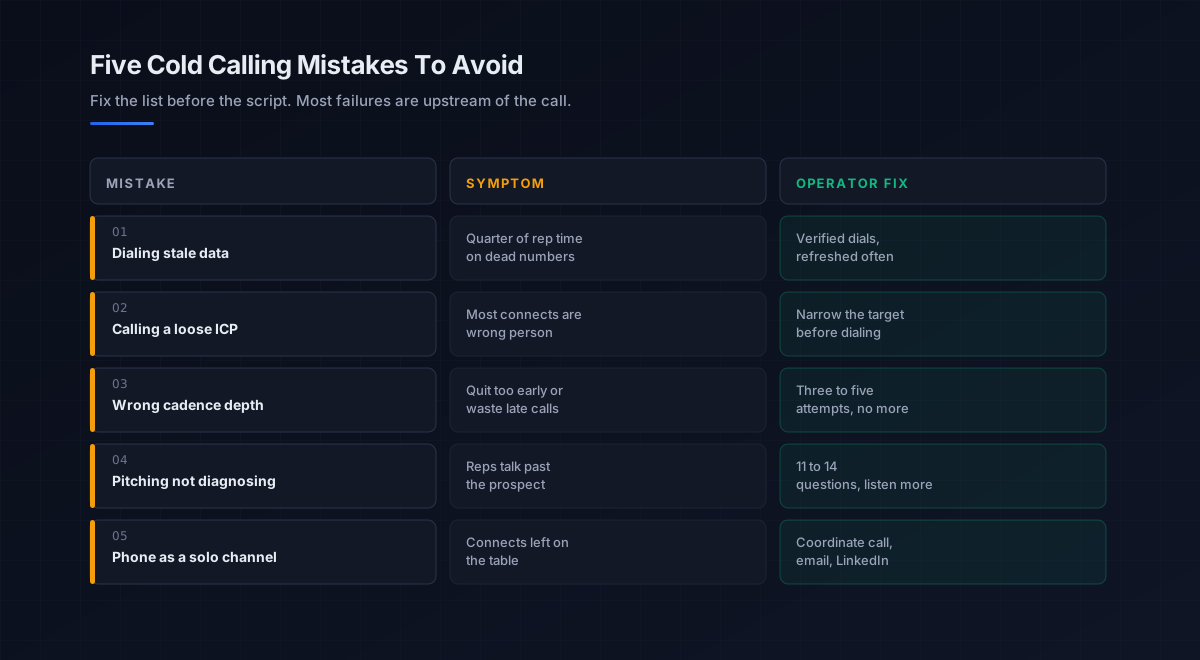
What we see most often is not one fatal error. It is five common ones, each shaving points off connect and conversion until the whole program looks broken.
-
Dialing stale data. The single most expensive mistake. Reps lose over a quarter of their time to wrong numbers. The fix is verified, freshly-enriched direct dials, refreshed often, because data decays about 2 percent a month.
-
Calling a loose ICP. Dialing a broad list means most conversations are with the wrong person. The fix is to narrow the target ruthlessly before the first dial, so every connect is with a real potential buyer.
-
Giving up too early or too late. Stopping after one call forfeits most conversations; calling a seventh time wastes effort, since 98 percent of conversations happen by the fifth call. The fix is a disciplined three-to-five attempt cadence.
-
Pitching instead of diagnosing. Reps who pitch on the first call talk past the prospect. The fix is discovery: 11 to 14 questions, listen more than you talk, aim for a next step not a close.
-
Treating the phone as a solo channel. Calling in isolation from email and LinkedIn leaves connects on the table. The fix is a coordinated multichannel cadence where the call is one aware touch among several.
The eight-step cold calling build sequence
This is the order we build a calling motion in, for our own outbound and for the teams we work with. Run it top to bottom.
- Define a tight ICP. Firmographics, technographics, and a trigger that signals readiness. Every dial should be a real potential buyer.
- Source verified direct dials. Pull phone-verified numbers for that ICP and check the data is fresh, because stale numbers cap everything downstream.
- Write a structured opener and reason. Build a pattern-interrupt opener and an account-relevant reason for the call, with room for a human conversation.
- Prepare a discovery question bank. Have 11 to 14 questions ready so reps diagnose rather than pitch.
- Set a tight cadence. Three to five attempts, front-loaded across days, with Wednesday and late-afternoon windows prioritized.
- Coordinate with email and LinkedIn. Wire the call into a multichannel sequence so each touch is aware of the others.
- Instrument the real metrics. Track dial-to-connect, connect-to-meeting, hold rate, and dials per meeting, per rep and per list.
- Read the data and reallocate. Cut the dead segments, double down on the live ones, and refresh the data before fixing scripts.
How cold calling fits the broader stack
The phone is one channel in a larger outbound system, and it only performs when the layers around it are deliberate. Each connects to a deeper guide.
- Strategy and targeting. The ICP the calls run against, in outbound sales.
- Prospecting and data. The verified numbers that feed the dialer, in best AI tools for sales prospecting.
- Data enrichment. Keeping phone data fresh, in data enrichment tools.
- AI in calling. Automated and AI-assisted dialing, in AI cold calling.
- The tool landscape. The wider sales AI stack in best AI sales tools.
- Multichannel coordination. Stacking calls with email, on email deliverability.
- Engagement. Working the cadence in sales engagement platforms.
- AI agents. Where calling meets autonomous outreach, in the AI SDR pillar.
That is the map. Prospecting finds and verifies the numbers, the call earns the conversation, the cadence creates the connection, and multichannel coordination turns a dial into a booked meeting.
Frequently asked questions
Is cold calling still effective in 2026?
What is a good cold calling success rate?
How many times should you call a prospect?
What is the best time to make cold calls?
What should a cold call script include?
Why is my cold calling not working?
Is cold calling better than cold email?
The bottom line
Cold calling in 2026 rewards data and structure over volume and charisma. The channel is not dead; the average success rate rose, senior buyers still prefer the phone, and top teams book meetings at four times the average. That gap is closeable, and it closes upstream of the call: tight ICP, verified direct dials, fresh data, then a structured opener, a disciplined three-to-five attempt cadence, and a coordinated multichannel sequence around it.
If you take one rule from this playbook, make it this: fix the list before you fix the script. Reps lose more time to bad numbers than to weak openers, and a mediocre call on a clean, well-targeted list beats a brilliant one on a stale list every time. Get the data right and the phone still books pipeline like little else in B2B.
Get the operator playbook in your inbox. The Outbound Game publishes one operator-grade breakdown a week on B2B outbound sales, tactics, tooling, and ops. No fluff, no vendor talking points. Subscribe and get the next one when it ships.
More on Cold Calling
Why Cold Calling Still Works in 2026 (The Real Data)
Why cold calling still works in 2026: the data behind the 2.7 percent average, the connect rate levers, who still answers, and when the phone wins.
Orum vs Nooks in 2026: A Full Operator Field Guide
Orum vs Nooks in 2026, compared by job. The high-volume dialer vs the coaching salesfloor: real pricing, the data caveat, and which one fits your team.
AI Cold Calling in 2026: Tools, Modes, and New Rules
AI cold calling in 2026 splits into voice agents, assisted dialers, and call intelligence. An operator guide to the tools, dialer modes, and new FCC rules.