Orum vs Nooks in 2026: A Full Operator Field Guide
Orum vs Nooks in 2026, compared by job. The high-volume dialer vs the coaching salesfloor: real pricing, the data caveat, and which one fits your team.
The honest answer to Orum vs Nooks in 2026 is that they are closer than the marketing suggests, both are AI parallel dialers that place several calls at once and connect the first answered one to a rep, but they optimize for different things, and that is what should decide the choice. Orum is the established high-volume heavyweight, built for raw dial volume and efficiency at a lower entry price. Nooks is the challenger that pioneered the virtual salesfloor and leans hard into the coaching layer, AI battle cards, live listen, AI scorecards, and training bots, at a higher price and with a stronger user review track record. On the core dialer mechanics they are remarkably similar; the real separation shows up in coaching, analytics, and category breadth.
That distinction decides the fit, and so does budget. Verified user reports put Orum’s entry around 9,000 dollars a year against Nooks at roughly 25,000 dollars a year (about 4,000 to 5,000 dollars a user), so the question is not which dials faster, since both support up to five parallel lines on their core tiers, but whether you are paying for pure volume or for a coaching-and-culture layer on top of it. This guide compares them the way an operator running B2B prospecting actually decides: by job, team, and the one input that matters more than either platform.
This is a head-to-head inside the cold calling cluster, which covers the discipline at the pillar level, with best cold calling software on the wider field and best ai dialer on the dialer category specifically. Either tool only works on top of verified data and a sound sales cadence.
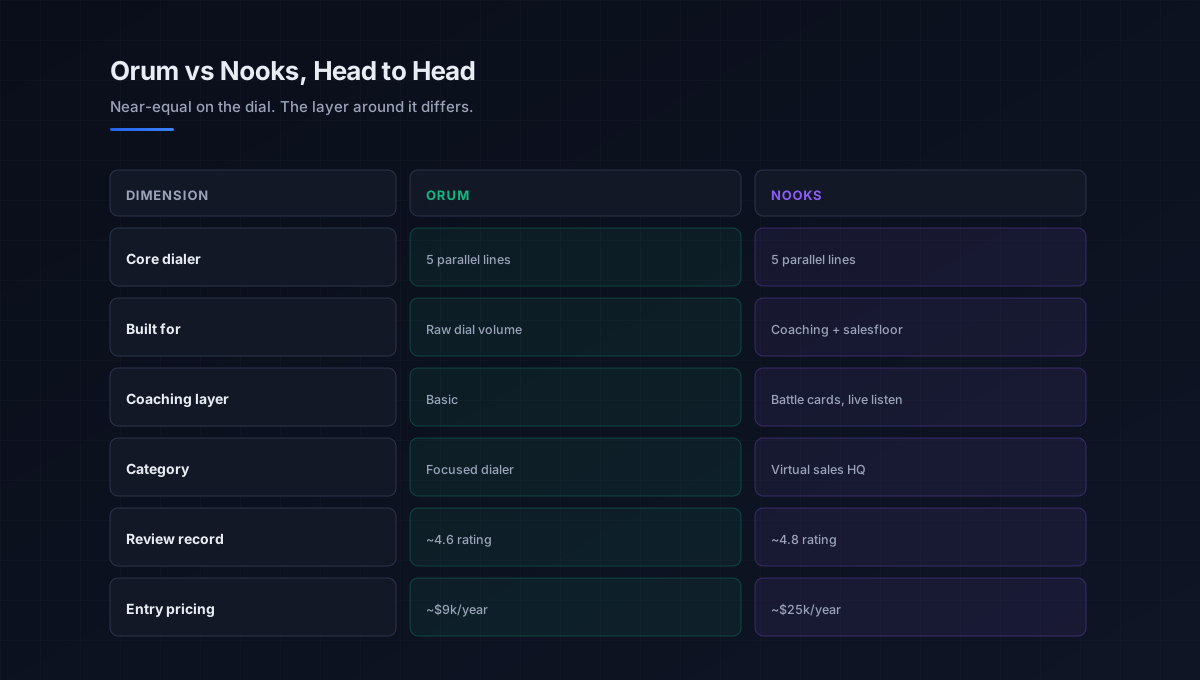
Orum vs Nooks: where the two genuinely differ
Both place parallel calls and connect the first pickup to a rep, so focus on the dimensions where they actually diverge, because that is what should settle the choice.
Core dialing
On the fundamentals they are close. Both are AI parallel dialers supporting up to five lines on their core tiers (Nooks AI Dialer and Orum Launch), both place several calls simultaneously and route the first answered call to a rep while dropping the rest, minimizing wait time between conversations. Both include the dialer basics, voicemail drop, call workflows, and integrations into the CRM and sales tools your team already runs. If raw dialing efficiency is all you need, they are near-equivalent, and the cheaper one wins.
Coaching and the salesfloor
This is where Nooks separates. It pioneered the virtual salesfloor concept and leans hardest into the coaching layer: AI battle cards, live listen for managers, AI scorecards, and training bots, designed to recreate an in-office, collaborative environment and develop reps at scale. Orum offers a virtual salesfloor workflow too, but its strength is dialing rather than coaching. For a manager who will actually use live listen and scorecards, Nooks’s depth justifies its premium; for a team that just wants to dial, that layer is paying for capability you will not use.
Analytics, breadth, and track record
Nooks positions itself as a virtual sales headquarters rather than a pure dialer, with broader analytics and a wider feature set, and carries a stronger user review record (around 4.8 versus 4.6 across a large review base on G2). Orum is the more focused, well-established dialing platform with robust analytics and integrations. The trade-off is real: Nooks’s breadth can feel cluttered to a rep who wants to dial and nothing else, while Orum’s focus can feel thin to a team that wants culture and coaching in one workspace.
Pricing
The economics are the clearest separator. Orum’s entry sits around 9,000 dollars a year, while Nooks runs closer to 25,000 dollars a year (roughly 4,000 to 5,000 dollars a user), though neither publishes public list pricing and both quote based on team size. So Orum is the lower entry point for pure cold calling, while Nooks charges a premium for the coaching and salesfloor layer. The dialing capability is similar; you are largely paying for what surrounds it.
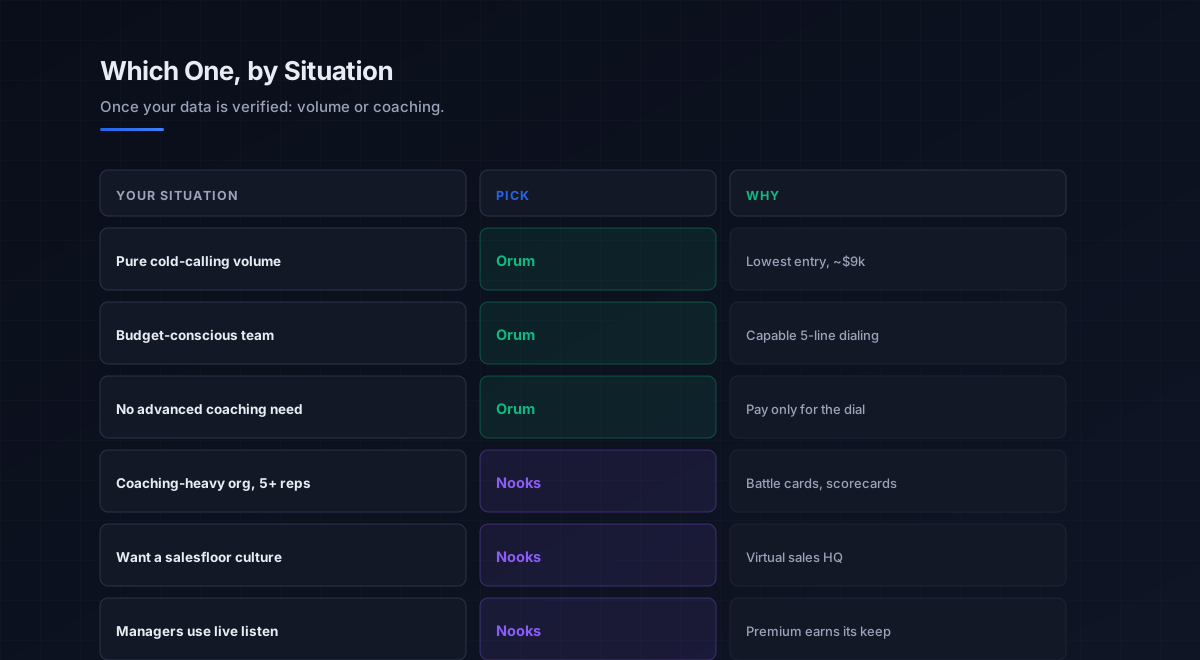
The decision in one question
Because the dialing is similar, the cleanest way through the nooks vs orum choice (once your data is verified) is a single question: are you buying raw dialing volume or a coaching-and-culture layer. The answer resolves it faster than any feature grid.
If you are running a pure, high-volume cold-calling operation, want the lowest entry point, and do not need advanced coaching, choose Orum. Its Launch tier gets the job done for smaller and budget-conscious teams at roughly 9,000 dollars a year, and the dialing is every bit as capable as the premium option. If you are a coaching-heavy organization with five or more reps, have the budget for 25,000 dollars-plus a year, and have managers who will actually use live listen, AI scorecards, and the virtual salesfloor, choose Nooks. The collaboration and coaching features justify the premium, and the stronger review track record reflects the experience.
There is no real third path between them on dialing alone, since the core capability is so close; the premium is for everything around the dial. The deeper mechanics of the dialer category live in the best ai dialer guide, and the broader field of calling tools in best cold calling software, while the discipline of calling itself sits in the cold calling and ai cold calling guides.
The input that beats both platforms
If you take nothing else from this comparison, take this: the dialer is the last decision, not the first, because a parallel dialer is a multiplier on your phone data, and a multiplier on bad data is worse than no multiplier at all. Dialing through a list of disconnected and wrong numbers at five lines at once does not just waste the seat cost, it actively burns your caller reputation, so the good numbers on the list start going to voicemail too. The best parallel dialer in the world cannot save a campaign built on stale data.
That is why the verified contact data comes first, from the b2b data providers and data enrichment tools layers, where accurate mobile numbers and a tight, well-targeted list do more for connect rates than any platform switch. The same logic that governs email applies here: just as email deliverability decides whether a message is seen, phone data quality decides whether a dial connects. And calling is one channel in a motion, so it works best sequenced with the cold email software and the sales cadence that surround it, with activity logged to the CRM software. Verify the data, then pick the dialer; the order matters more than the brand.
Five mistakes teams make choosing between them
What we see most often is the same handful of errors in this specific decision.
-
Ignoring the phone data. A dialer amplifies whatever you feed it. Verify your mobile numbers before you sign either contract, since no dialer fixes bad data.
-
Overpaying for unused coaching. If managers will not use live listen and scorecards, Nooks’s premium is wasted. Match the spend to how you actually coach.
-
Buying volume when you need culture. A pure dialer can feel thin to a team that wants a salesfloor. If collaboration matters, weight Nooks’s breadth.
-
Comparing on dial speed. Both run five parallel lines; speed is near-equal. Decide on coaching, analytics, and price, not raw dialing.
-
Treating the platform as the strategy. Neither fixes a thin list or a vague ICP. Fix targeting and data first, then let the dialer amplify it.

An eight-step framework for the decision
This is the order we work through with the teams we work with on this specific choice. Run it before signing anything.
- Verify the phone data. Confirm your mobile numbers are accurate, since a dialer amplifies whatever you feed it, good or bad.
- Tighten the list. Narrow to a well-targeted, high-intent list, since precision beats raw volume on connect rate.
- Name the job. Decide whether you are buying pure dialing volume or a coaching-and-culture layer.
- Size the team. Smaller, budget-conscious teams lean Orum; coaching-heavy orgs of five-plus lean Nooks.
- Audit your coaching. Confirm whether managers will actually use live listen and AI scorecards before paying for them.
- Model the real cost. Compare Orum’s roughly 9,000 dollars entry against Nooks at 25,000-plus, against how you will use each.
- Confirm CRM fit. Check integration with Salesforce, HubSpot, and your sequencer, where both are strong.
- Trial both, then commit. Run a real calling sample through each, measure connect and conversation rates, then choose.
How this choice fits the broader stack
Whichever platform you pick, it is a channel layer that amplifies the calling motion. Each connected layer has a deeper guide.
- The discipline. Why and how cold calling works, in the cold calling pillar.
- The category. The AI dialer space in depth, in best ai dialer.
- The wider field. All the calling tools by job, in best cold calling software.
- AI calling. How AI changes the call, in ai cold calling.
- The data layer. The numbers both dialers run on, in b2b data providers and data enrichment tools.
- The cadence. How calls sequence with other touches, in sales cadence and cold email software.
- The system of record. Where call activity logs, in CRM software.
- Strategy. The motion calling amplifies, in outbound sales.
That is the map. The data layer supplies verified numbers, the dialer amplifies the calling, the cadence sequences it among other touches, and the CRM records it, with the dialer only as effective as the phone data beneath it.
Frequently asked questions
Is Orum or Nooks better in 2026?
What is the main difference between Orum and Nooks?
How much do Orum and Nooks cost in 2026?
Which is better for a small or budget-conscious team?
Does a parallel dialer fix low connect rates?
Why is Nooks more expensive than Orum?
Does the dialer matter more than my phone data?
The bottom line
Orum vs Nooks in 2026 is not a contest of which dials faster, since both run up to five parallel lines with near-identical core mechanics, but of what you are buying around the dial. Orum is the focused, high-volume dialer at a lower entry point (around 9,000 dollars a year), the right call for pure cold-calling operations and budget-conscious teams. Nooks is the virtual salesfloor pioneer that leans hard into coaching, battle cards, live listen, scorecards, at roughly 25,000 dollars a year with a stronger review record, the right call for coaching-heavy orgs of five-plus reps whose managers will use those tools. Decide whether you are buying volume or coaching, and the Orum vs Nooks choice resolves itself.
If you take one rule from this comparison, make it this: the dialer is the last decision, not the first, because a parallel dialer only amplifies the phone data you feed it. Verify your mobile numbers and tighten your list before you sign either contract, since no dialer fixes bad data, and dialing dead numbers at five lines at once burns the caller reputation your good numbers depend on. Clean the inputs first, then pick Orum for volume or Nooks for coaching, because you will save more money fixing your list than you will ever save choosing between two dialers that, on the dial itself, are nearly the same.
Get the operator playbook in your inbox. The Outbound Game publishes one operator-grade breakdown a week on B2B outbound sales, tactics, tooling, and ops. No fluff, no vendor talking points. Subscribe and get the next one when it ships.
More on Cold Calling
Why Cold Calling Still Works in 2026 (The Real Data)
Why cold calling still works in 2026: the data behind the 2.7 percent average, the connect rate levers, who still answers, and when the phone wins.
AI Cold Calling in 2026: Tools, Modes, and New Rules
AI cold calling in 2026 splits into voice agents, assisted dialers, and call intelligence. An operator guide to the tools, dialer modes, and new FCC rules.
The Best AI Dialer in 2026: Modes, Tools, Tradeoffs
The best AI dialer in 2026 depends on dialer mode and data quality, not brand. An operator guide to power, parallel, and predictive dialers.