The Best AI Dialer in 2026: Modes, Tools, Tradeoffs
The best AI dialer in 2026 depends on dialer mode and data quality, not brand. An operator guide to power, parallel, and predictive dialers.
The best AI dialer in 2026 is not the one with the most lines or the loudest AI claims; it is the one whose dialing mode matches your deal size and call volume, fed by verified mobile data. That second half is where most buying goes wrong. Teams chase parallel dialing at 250 dollars a seat to lift connect rates, then discover the uncomfortable truth the vendors bury: parallel dialers increase your dial count, not your connect rate. One RevOps team ran 40,000 dials across 8 reps in two weeks and landed a 2.1 percent connect rate, because nearly half the numbers were dead. The dialer was never the problem.
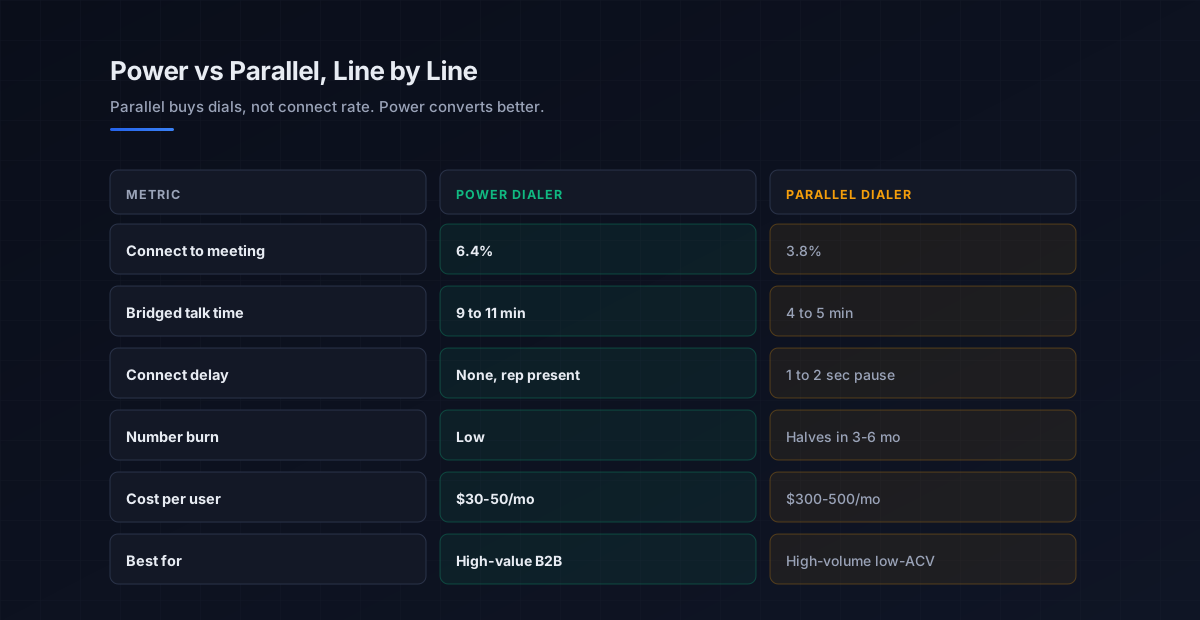
The single most important number in this category comes from a parallel-dialer vendor’s own published analysis: power dialing converts connects to meetings at roughly 6.4 percent, while parallel dialing converts at 3.8 percent. Parallel buys you more conversations of lower quality, with bridged talk time dropping from 9 to 11 minutes down to 4 to 5, because that 1 to 2 second pause before a rep is connected quietly kills conversations. So the question is rarely which ai dialer is best in the abstract. It is which mode fits your motion, and whether your data is good enough for any of them to matter.
This is the dialer-selection layer of the cold calling pillar, a companion to the broader best cold calling software comparison and the AI cold calling product breakdown. It assumes you have done the sales prospecting work to source verified numbers, because that, more than any dialer, decides your results.
What “AI dialer” actually means
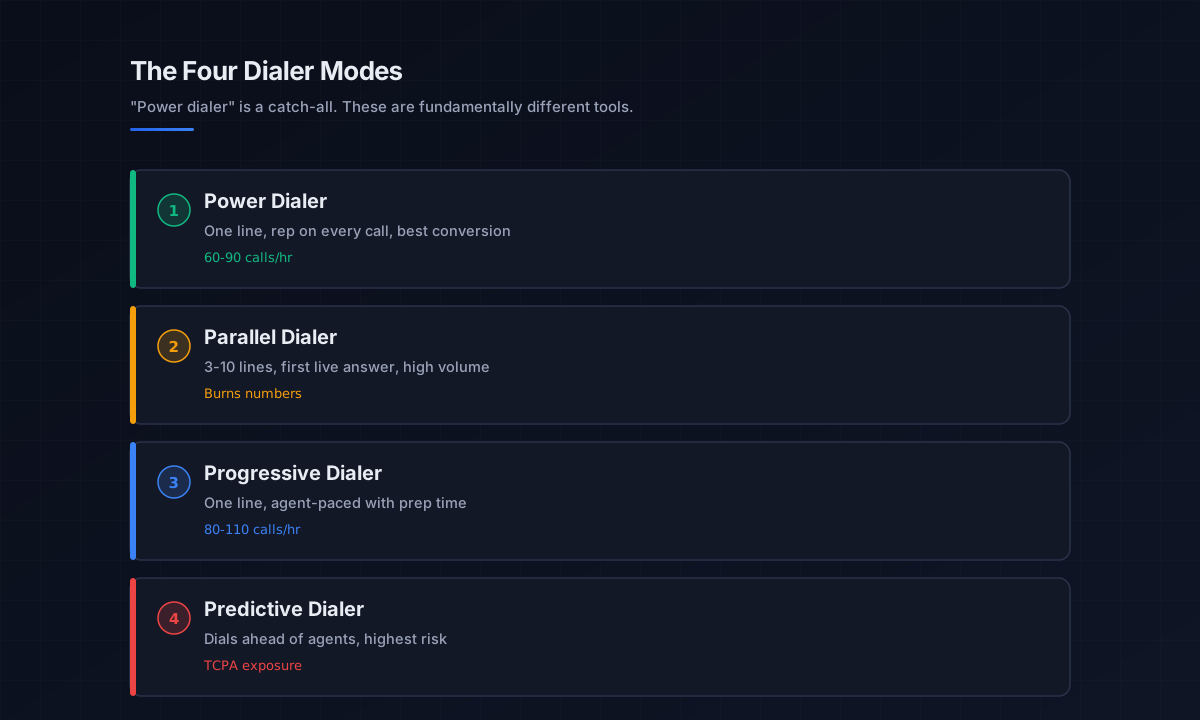
Most tools labeled “AI dialer” are not especially intelligent; they are auto-dialers with voicemail detection bolted on. Real AI in a dialer means predictive number selection, live conversation intelligence, and coaching, not just skipping answering machines. Before comparing brands, get the dialer-mode taxonomy straight, because the term “power dialer” has become a marketing catch-all that hides fundamentally different products.
Power dialer
A power dialer calls one number at a time, advancing automatically as each call ends, keeping a rep on every live connection. It runs roughly 60 to 90 calls an hour and suits controlled pacing and high-value conversations. Crucially, it converts connects to meetings at the highest rate, because the rep is present from the first second with no bridging delay. A basic power dialer runs 30 to 50 dollars per user per month.
Parallel dialer
A parallel dialer calls several numbers at once, typically 3 to 10 lines, and connects the rep to the first live answer while dropping the rest. It maximizes raw conversation volume for high-volume, low-pickup motions. The tradeoffs are real: a 1 to 2 second connect delay that depresses conversion, and number burn, teams adopting parallel dialers typically see connect rates cut in half within 3 to 6 months as carriers flag the patterns. An ai power dialer with parallel lines and AI features can hit 300 to 500 dollars per user per month.
Progressive and predictive dialers
A progressive dialer is agent-paced single-line dialing with prep time between calls, good for mid-volume work. A predictive dialer uses algorithms to dial ahead of agent availability, maximizing agent talk time but carrying the highest compliance risk, since abandoned calls from over-dialing can trigger TCPA problems. A predictive dialer belongs in high-volume contact-center motions, rarely in considered B2B outbound.
The best AI dialer options and who they fit
With the modes clear, here are the best AI dialer options teams actually reach for, grouped by what they do best. Pricing is noted where it is public; several vendors require a sales call.
For high-volume parallel dialing, Orum is the default for SDR and BDR teams that need scale, offering up to 10 lines, AI number selection trained on 200 million-plus calls, and AI coaching on higher tiers. It does not publish pricing, but teams report roughly 250 dollars per user for entry and 400 to 500-plus for the top tier, with a multi-seat minimum, so it fits teams of five-plus reps with a real outbound budget. Nooks is the comparable alternative, pairing parallel dialing with a virtual sales floor and AI prospect research, and carries one of the highest G2 ratings in the category.
For controlled power dialing, PhoneBurner is the standout, and notably resists the parallel trend on purpose with its “responsible communications” positioning and ARMOR caller-ID protection, the philosophy being that one focused call at a time produces better conversations. WAVV and PowerDialer.ai serve budget-conscious and solo reps with flat pricing and no steep seat minimums. For teams that want the dialer inside their existing data and sequencing stack, Apollo’s built-in dialer is convenient at moderate volume, and pairing it with a sequencer like Smartlead coordinates the phone with email in one motion, with the email side kept deliverable per sender reputation practice.
Power vs parallel: the tradeoff most buyers miss
The marketing pushes parallel dialing as the obvious upgrade, but the conversion math complicates that. Power dialing’s 6.4 percent connect-to-meeting rate against parallel’s 3.8 percent means parallel needs to generate far more conversations just to break even on booked meetings, and each of those conversations is shorter and lower quality because of the bridging delay. For high-value, considered B2B sales, that quality gap usually outweighs the volume gain.
Parallel earns its place in a specific scenario: high-volume, low-ACV motions where conversation quantity genuinely matters more than depth, the team is large enough to justify the spend, and the data is clean enough that number burn is managed through aggressive caller-ID rotation. Outside that, the simpler power dialer wins on conversion, stability, and cost. The honest rule is that more dials do not fix bad connect rates; better data does, and the dialer mode is a secondary decision made after the data is right.
This is also where “AI” in a sales dialer earns or loses its premium. AI number selection and connect-rate prediction are genuinely useful when trained on enough call data, Orum’s is trained on 200 million-plus calls, but they optimize the dialing of whatever numbers you supply. They cannot manufacture connect rate from a stale list. Pay the AI premium only once the data underneath is verified, because AI applied to bad data just wastes money faster.
Five mistakes teams make choosing the best AI dialer
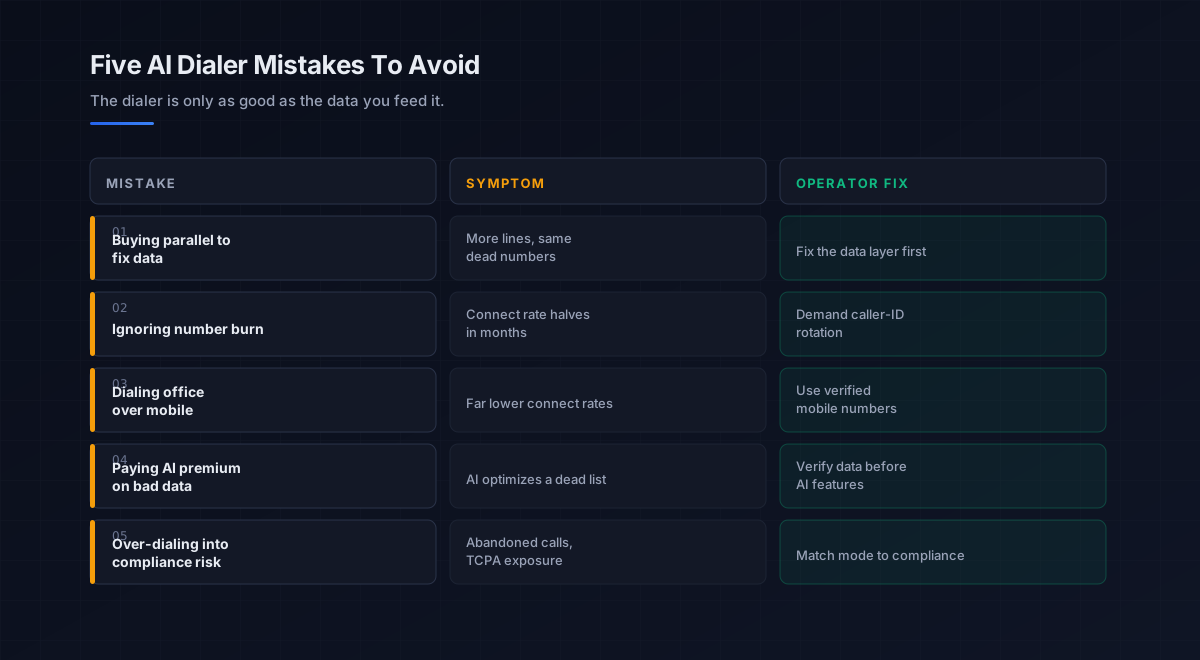
What we see most often is the same handful of errors that turn a dialer purchase into burned numbers and wasted budget.
-
Buying parallel to fix a data problem. More lines do not raise connect rate; verified numbers do. Fix the data layer before paying for parallel dialing.
-
Ignoring number burn. Parallel dialers can halve connect rates within months as carriers flag patterns. Demand caller-ID rotation and reputation management, or expect degradation.
-
Dialing office lines over mobiles. Mobile numbers connect 61 percent more often than office lines. The number type matters more than the dialer brand.
-
Paying the AI premium on bad data. AI number selection optimizes the list you give it; it cannot rescue dead numbers. Verify data before buying AI features.
-
Over-dialing into compliance risk. Predictive dialers maximize talk time but abandoned calls can trigger TCPA problems. Match the dialer mode to your compliance tolerance, not just throughput.
An eight-step framework for choosing the best AI dialer
This is the order we work through with the teams we work with when they pick a dialer. Run it before buying anything.
- Fix the data layer first. Source verified mobile direct dials. This decides connect rate more than any dialer feature.
- Check your deal size and team size. Under 15,000 dollars ACV and under ten reps usually means a power dialer, not parallel.
- Pick the mode by volume and value. Power for high-value controlled pacing, parallel only for high-volume low-ACV at scale.
- Weigh the conversion tradeoff. Remember power converts connects to meetings at roughly 6.4 percent versus parallel’s 3.8 percent before chasing line count.
- Demand caller-ID protection. For any parallel mode, confirm local-presence rotation and reputation management to fight number burn.
- Judge the AI honestly. Pay the AI premium only when the number selection is trained on real scale and your data is already clean.
- Mind compliance. Avoid predictive over-dialing unless you have the compliance tooling and tolerance for it.
- Compare on cost per meeting. Judge finalists on cost per booked meeting, factoring conversion and talk-time quality, not dials per hour.
How the AI dialer fits the broader stack
The dialer is one tool in the phone channel, which is one channel of outbound. Each connects to a deeper guide.
- The calling fundamentals. Technique, cadence, and metrics in the cold calling pillar.
- The full software comparison. All cold calling tools by team in best cold calling software.
- AI calling product types. Voice agents, assisted dialers, and FCC rules in AI cold calling.
- Prospecting and data. The verified mobile numbers that decide connect rate, in best AI tools for sales prospecting.
- Data enrichment. Keeping phone data fresh and accurate, in data enrichment tools.
- The wider AI stack. All six categories of sales AI in best AI sales tools.
- Strategy. The motion the dialing serves, in outbound sales.
- Multichannel. Stacking calls with email, on email deliverability and sender reputation.
That is the map. Verified data sets the connect rate, the dialer mode sets the conversion and pace, caller-ID protection keeps the numbers alive, and cost per meeting tells you whether the AI premium was worth paying.
Frequently asked questions
What is the best AI dialer in 2026?
Is a parallel dialer better than a power dialer?
Do parallel dialers improve connect rates?
How much does an AI dialer cost?
What makes a dialer an AI dialer?
Why is my connect rate so low even with an AI dialer?
Should a small team buy a parallel dialer?
The bottom line
The best AI dialer in 2026 is the one whose mode fits your motion, fed by verified mobile data. Power dialing wins on connect-to-meeting conversion and stability for high-value B2B; parallel dialing earns its premium only at high volume with a big team and managed number reputation; predictive dialing belongs in contact centers with the compliance tooling to match. Orum and Nooks lead parallel, PhoneBurner leads power, and budget tools cover solo reps, but the brand matters less than the mode and the data behind it.
If you take one rule from this guide, make it this: more dials do not fix bad connect rates, better data does. Verify your mobile numbers, pick the simplest dialer mode that fits your volume, protect your caller ID, and pay the AI premium only once the data underneath is clean. Get that order right and the dialer becomes a connect-rate machine instead of an expensive way to burn numbers.
Get the operator playbook in your inbox. The Outbound Game publishes one operator-grade breakdown a week on B2B outbound sales, tactics, tooling, and ops. No fluff, no vendor talking points. Subscribe and get the next one when it ships.
More on Cold Calling
Why Cold Calling Still Works in 2026 (The Real Data)
Why cold calling still works in 2026: the data behind the 2.7 percent average, the connect rate levers, who still answers, and when the phone wins.
Orum vs Nooks in 2026: A Full Operator Field Guide
Orum vs Nooks in 2026, compared by job. The high-volume dialer vs the coaching salesfloor: real pricing, the data caveat, and which one fits your team.
AI Cold Calling in 2026: Tools, Modes, and New Rules
AI cold calling in 2026 splits into voice agents, assisted dialers, and call intelligence. An operator guide to the tools, dialer modes, and new FCC rules.