The Best AI Tools for Sales Prospecting in 2026, Tested
The best AI tools for sales prospecting in 2026, ranked by what they find. An operator guide to intent signals, enrichment, and prospect prioritization.
The best AI tools for sales prospecting in 2026 do something the old databases never did: they tell you not just who exists, but who to contact right now and why. Prospecting used to mean pulling a static list and working it top to bottom. The modern version is dynamic prioritization, ranking accounts by fit signals like company size and industry against timing signals like funding rounds, hiring spikes, and website visits, so reps always work the hottest accounts first. That shift from list to live signal is the entire reason this category exists, and it is what separates a tool worth paying for from a glorified contact dump.
Most articles on this topic rank tools on database size and feature checklists. That misses the point. The job of prospecting AI is prioritization, not just discovery. Finding ten thousand contacts is easy and nearly worthless; surfacing the forty accounts showing real buying signals this week is the work that moves pipeline. So this guide ranks the best AI tools for sales prospecting by the quality of what they surface and how well they prioritize it, not by how many rows they can dump into a CSV.
This is the prospecting layer of the broader best AI sales tools landscape. It feeds the automation covered in best AI sales automation tools and the autonomous agents in the AI SDR pillar. Prospecting sets the ceiling; everything downstream can only be as good as the accounts you point it at.
What AI sales prospecting tools actually do
AI sales prospecting software sits at the very top of the funnel and does four jobs: account and contact discovery, data enrichment and verification, intent signal detection, and AI-driven scoring and list building. It feeds clean, prioritized data into your outreach and CRM systems. The “AI” is not marketing gloss here; it is the layer that ranks. Older tools gave you a filtered list and left the judgment to you. Modern AI prospecting tools learn from your closed deals to predict which leads convert, then hand you a prioritized feed instead of a flat export.
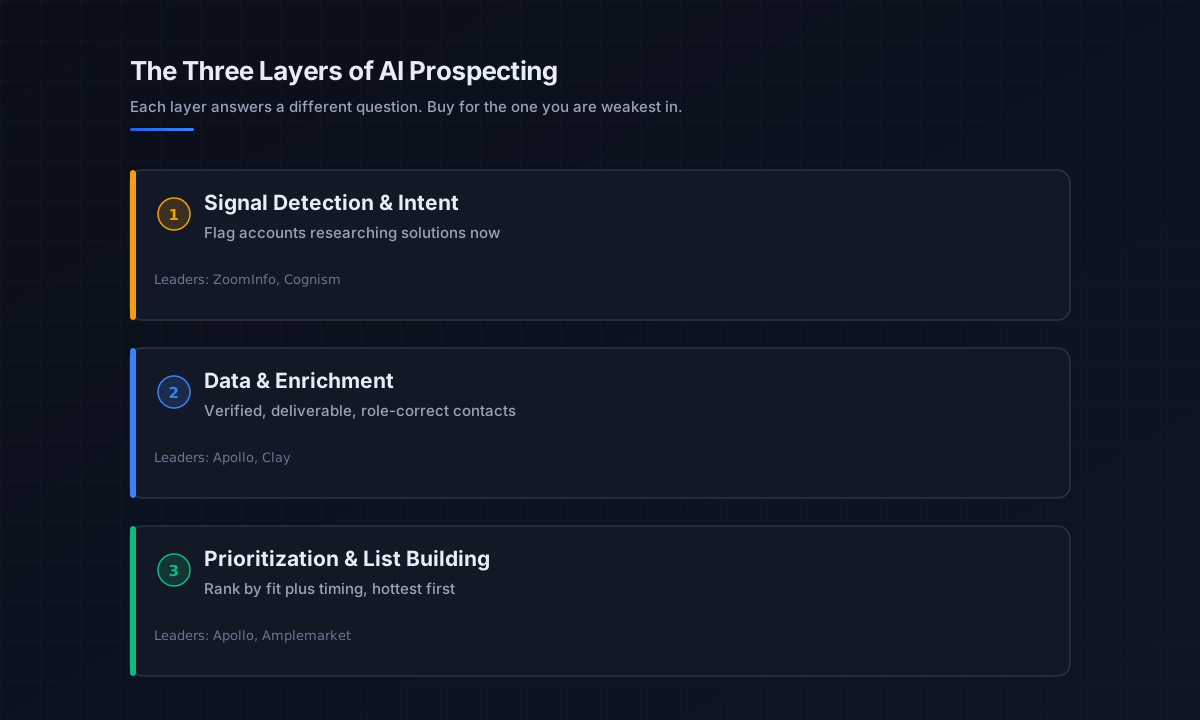
The capabilities split into three layers, and understanding the split is how you avoid overpaying for overlap.
Signal detection and intent data
This is the timing layer. The best AI sales prospecting tools track buying intent through first-party website visitor identification, third-party content consumption, search behavior, and engagement across channels. Intent data is what turns a static list into a live feed: it flags the accounts researching solutions like yours right now, the moment relevance is highest. ZoomInfo and Cognism lead on intent depth, with Cognism strong on funding alerts, champion tracking, and job-change signals. This layer answers “who is in-market this week.”
Data and enrichment
This is the accuracy layer. Discovery is only useful if the contact data is deliverable and role-correct. Apollo combines a large database with 65-plus filters and intent topics in one workflow, which is its clearest advantage for teams that want sourcing, enrichment, and execution without stitching tools together. Clay sits at the customizable end, aggregating 150-plus sources and running AI agents to research and enrich, then pushing clean data downstream. We go deeper on this layer in data enrichment tools.
Prioritization and list building
This is the judgment layer, and it is where AI earns its name. Scoring models combine fit signals (firmographics, technographics) with timing signals (intent spikes, website visits) to rank prospects, moving you from static lists worked top-to-bottom to dynamic feeds where you always contact the hottest account first. This is the layer most lead generation tools still do badly, and the one that separates a 2026 tool from a 2020 one.
How to choose: rank by signal quality, not database size
The evaluation that works mirrors the discipline behind the whole outbound sales motion: judge a prospecting tool by the quality of accounts it surfaces, not the size of its database. AI prospecting software lives or dies on this distinction. A tool with 200 million contacts and weak intent detection will bury your reps in volume. A tool with a smaller database and sharp signal detection hands them a short, hot list. The second always wins, because rep time is the scarce resource, not contact count.
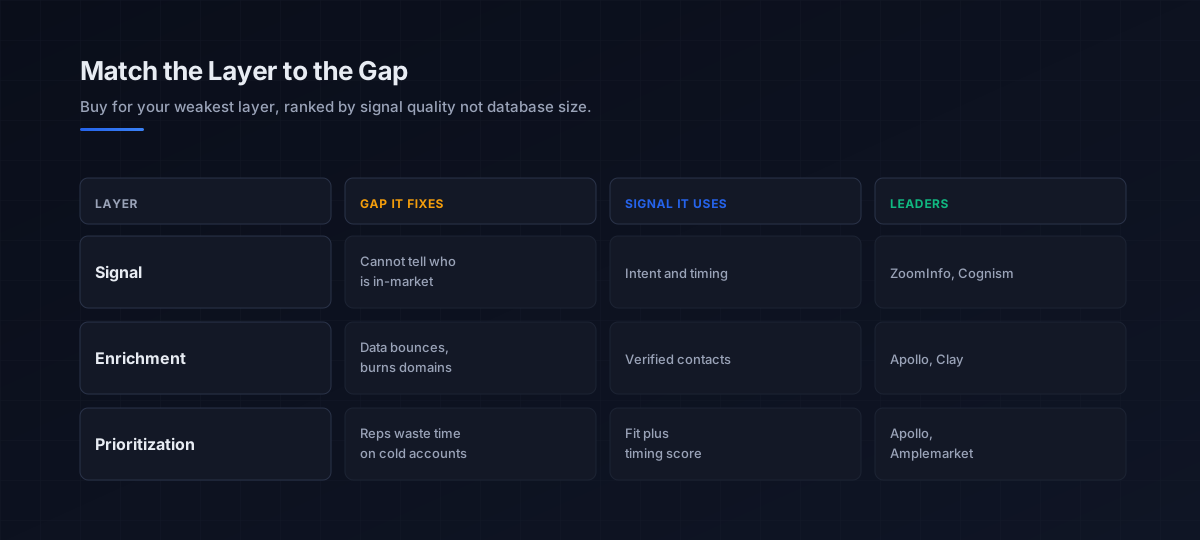
Match the layer to your gap. If your reps have plenty of names but waste time on cold accounts, you need the prioritization and intent layer. If your data bounces and burns domains, you need the enrichment layer first. If you cannot tell who is in-market, you need intent data. Buying a do-everything platform before you know your gap is how teams end up paying enterprise prices for features they never use.
The leading AI sales prospecting tools by layer
With the three layers clear, here are the tools that lead each and who each one fits. This is a layer guide, not a single ranking, because an intent-data platform and an enrichment engine solve different parts of the same job.
For all-in-one prospecting, Apollo is the default for teams that want discovery, enrichment, intent topics, and outreach in one frictionless workflow. Its embedded AI assistant builds prospect lists, researches, and scores from natural language, and its 65-plus filters plus intent topics make it the fastest path from ICP to working list for early and mid-market teams. Where it shows limits is the deepest data quality and the most customized enrichment, which is where Clay takes over.
For intent and signal depth, ZoomInfo and Cognism lead. ZoomInfo’s reasoning layer processes billions of data points daily to surface which accounts are ready and why, while Cognism is the operator favorite for accurate global data, phone-verified mobile numbers for cold calling, and intent signals like funding and job changes. Both run custom enterprise pricing, so they fit teams with budget and a defined motion rather than early-stage experimenters.
For customizable research automation, Clay is the GTM-engineering favorite, aggregating 150-plus sources and running AI agents to build deeply enriched prospect profiles, with the caveat that it has a real learning curve and rewards a technical owner. For consolidated signal-led prospecting, Amplemarket connects sourcing, intent, enrichment, and outreach in one platform with its Duo copilot tracking contact-level signals, which suits mid-market teams scaling outbound. Whatever you source, getting the resulting outreach delivered still depends on the groundwork in email deliverability.
Five mistakes teams make with prospecting tools
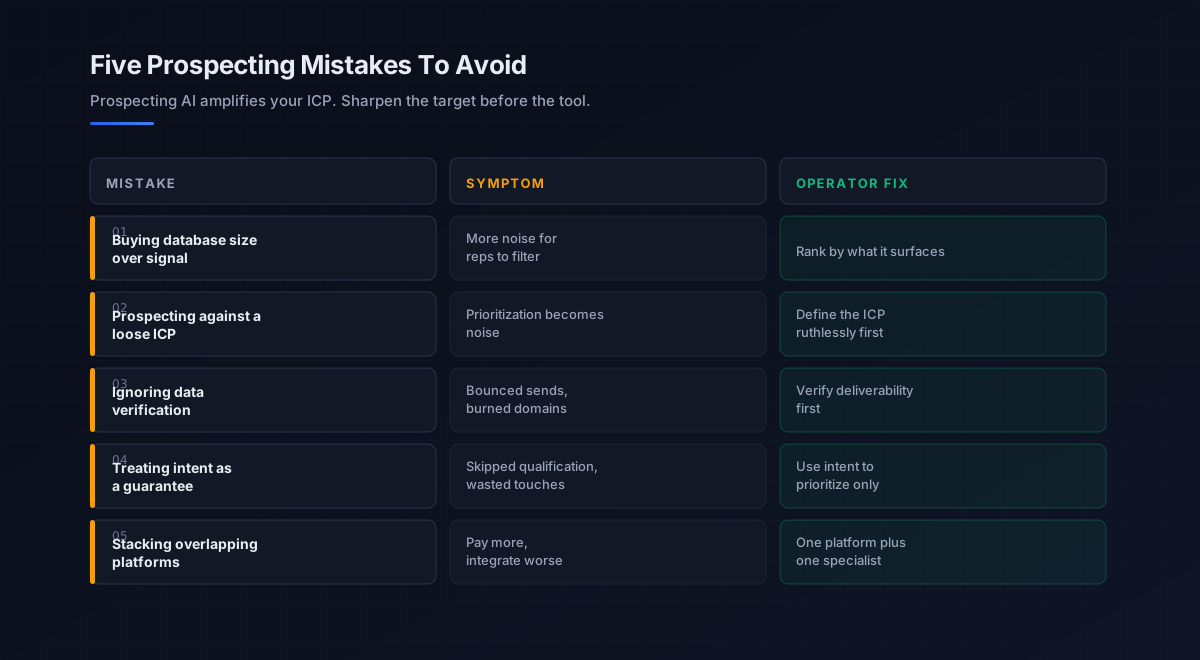
What we see most often is the same handful of errors that turn a prospecting investment into expensive list-building.
-
Buying database size over signal quality. A bigger contact count is not better prospecting. It is more noise for reps to filter. Rank tools by what they surface, not what they store.
-
Prospecting against a loose ICP. The tool ranks against the target you give it. A vague ICP produces vague prioritization no matter how good the intent engine is.
-
Ignoring data verification. Sourcing without verification means bounced sends and burned domains. Confirm the tool verifies deliverability before the data loads into a sender.
-
Treating intent data as a guarantee. Intent is a timing signal, not a buying commitment. It tells you when relevance is high, not that the account will convert. Use it to prioritize, not to skip qualification.
-
Stacking overlapping prospecting platforms. Running two databases plus a standalone intent tool plus an enrichment engine that all overlap costs more and integrates worse than one deliberate platform plus one specialist.
An eight-step framework for choosing a prospecting tool
This is the order we work through with the teams we work with when they pick prospecting software. Run it before buying anything.
- Define a ruthlessly tight ICP. Firmographics, technographics, and the trigger that signals readiness. The tool ranks against this, so sharpen it first.
- Identify your real gap. Discovery, enrichment, intent, or prioritization. Buy for the layer you are weakest in, not the most-hyped one.
- Weight signal quality over database size. Evaluate tools on the relevance of what they surface for your ICP, not their total contact count.
- Test data accuracy on your segment. Pull a sample for your actual ICP and check bounce rate and role-correctness before committing.
- Check intent-signal fit. Confirm the tool’s intent sources match how your buyers actually research, not just that it has “intent” as a feature.
- Verify CRM integration. Native, bi-directional sync with your CRM kills the fragmentation tax. Confirm it before buying, not after.
- Pilot on prioritization, not volume. Measure whether the prioritized feed books more meetings per hour, not whether it produces more contacts.
- Connect it to outreach deliberately. Once prospecting works, feed it into your sequencing layer rather than buying a third overlapping platform.
How prospecting fits the broader stack
Prospecting is the top of the funnel, and it sets the ceiling for everything below. Each layer connects to a deeper guide.
- Strategy and targeting. The ICP prospecting ranks against, in outbound sales.
- The full tool landscape. All six categories of sales AI in best AI sales tools.
- Data and enrichment. The accuracy layer beneath prospecting, in data enrichment tools.
- Task automation. Automating the research itself, in best AI sales automation tools.
- Autonomous agents. Where prospecting becomes agentic, in the AI SDR pillar and best AI SDR tools.
- Calling. Turning phone-verified prospects into conversations, in cold calling.
- Deliverability. Getting outreach to sourced prospects seen, on email deliverability and sender reputation.
- Engagement. Working the prioritized list, in sales engagement platforms.
That is the map. Prospecting finds and ranks the accounts, enrichment makes the data usable, deliverability gets the outreach seen, and the engagement layer turns the prioritized list into booked meetings.
Frequently asked questions
What are the best AI tools for sales prospecting in 2026?
What is AI sales prospecting?
How does AI improve sales prospecting?
What is intent data in prospecting?
How much do AI prospecting tools cost?
Should I buy the tool with the biggest database?
What is the difference between prospecting and sales engagement tools?
The bottom line
The best AI tools for sales prospecting in 2026 win on signal quality, not database size. The category shifted from static lists to live prioritization, ranking accounts by fit and timing so reps spend their hours on the prospects most likely to convert. Split the market by layer, signal detection, enrichment, and prioritization, identify your weakest layer, and rank tools by the quality of accounts they surface for your specific ICP.
If you take one rule from this guide, make it this: prospecting AI amplifies the quality of your ICP. Define the target ruthlessly first, and these tools become a precision instrument that hands reps a short, hot list. Skip that and even the best engine just builds a bigger pile of mediocre leads faster.
Get the operator playbook in your inbox. The Outbound Game publishes one operator-grade breakdown a week on AI in outbound, sales tech, and the tactics that actually book meetings. No vendor talking points. Subscribe and get the next one when it ships.
More on AI Sales Tools
AI SDR vs Human SDR in 2026: The Real Cost and Results
AI SDR vs human SDR in 2026: the loaded cost math, real pipeline numbers, where agents win, where reps win, and the hybrid model that beats both.
The Best AI SDR Tools in 2026: An Operator Field Guide
The best AI SDR tools in 2026, ranked honestly: real pricing from 250 to 5,000 dollars a month, what the agents actually do, and who should skip them.
Do AI SDRs Actually Work in 2026? The Honest Numbers
Do AI SDRs actually work in 2026? The honest numbers: churn rates, reply benchmarks, where agents deliver real pipeline, and where they burn budget.