LinkedIn Outreach in 2026: A B2B Operator Playbook
LinkedIn outreach in 2026 wins on relevance, not volume. An operator playbook on connection rates, InMail, signals, cadence, and the metrics.
LinkedIn outreach in 2026 is the highest-response cold channel in B2B, and also the one that punishes volume hardest. The numbers make the case on both sides. InMail response rates run 10 to 25 percent against cold email’s 1 to 5 percent, connection requests with a relevant note clear a 30 percent-plus acceptance rate, and LinkedIn drives an estimated 75 to 85 percent of all B2B social media leads. Yet the platform spent late 2025 tightening the screws: Open InMail sends were capped from roughly 800 a month to under 100 for many accounts, and connection limits are now reputation-based rather than fixed. The channel rewards relevance and quietly throttles anyone who treats it like a volume machine.
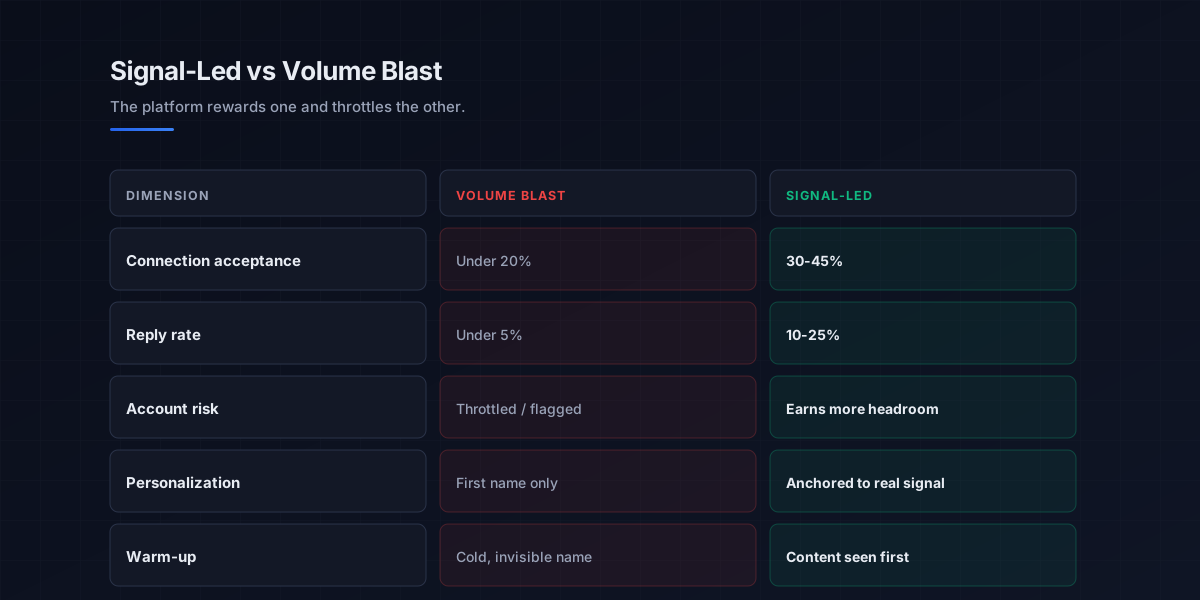
That tension is the entire subject of this playbook. The old motion, load a CSV, fire 500 generic connection requests, wait for meetings, is dead, and LinkedIn’s safety algorithms now flag exactly that behavior. What replaced it is a signal-anchored, relevance-first LinkedIn outreach strategy, often warmed by content before the first message ever lands. Generic outreach typically achieves under 5 percent; signal-driven, personalized outreach targets 15 to 25 percent InMail response and 30 percent-plus connection acceptance. The gap between those two worlds is the whole game.
This is the pillar reference for everything we publish on the platform. It sits alongside the broader outbound sales motion and the cold calling channel, and pairs naturally with email (kept deliverable per email deliverability practice), since the strongest programs run LinkedIn, email, and phone as one coordinated sequence rather than separate silos. Done well, it is social selling in its most measurable form.
Does LinkedIn outreach still work in 2026?
Yes, and the response data is decisively in its favor. A good linkedin outreach reply rate falls between 10 and 25 percent, with top performers hitting 30 to 50 percent through personalized, multi-touch sequences, numbers cold email cannot approach. LinkedIn InMail is roughly 2.6 to 5 times more effective at generating replies than cold email, and it takes about 100 cold emails to produce the replies of 4 to 10 well-crafted InMails. For high-value B2B where contract values clear 10,000 dollars, that efficiency more than justifies the higher cost per message.
The platform earns this because of trust and intent. Half of B2B buyers use LinkedIn as a source when making purchasing decisions, and leads from it often arrive with familiarity and positive intent. The catch is that response rates vary sharply by industry: recruiting and staffing lead at 18 to 25 percent, while SaaS and technology sit near the bottom around 4.8 percent because of inbox saturation. Know your vertical’s baseline before you judge a campaign.
The 2026 constraints that changed everything
Two structural changes reshaped the channel. First, the InMail cap: LinkedIn began limiting Open InMail in late 2025, cutting the practical ceiling from around 800 a month to under 100 for many accounts, with Sales Navigator Advanced and Recruiter plans least affected. Second, reputation-based connection limits replaced the old fixed weekly number, so accounts that send relevant, accepted requests earn more headroom while spammy accounts get throttled or flagged. Both changes push the same direction: relevance up, volume down.
The anatomy of a LinkedIn outreach system
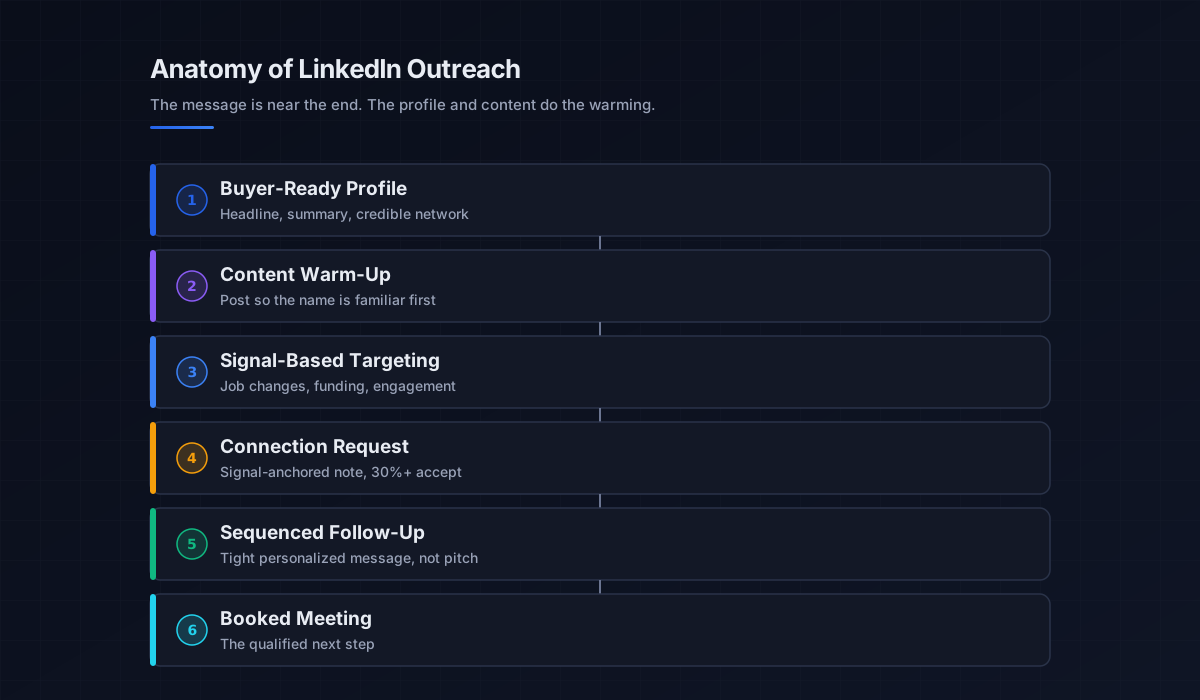
A working LinkedIn motion is not a message template; it is a system with the message near the end of it. The strongest b2b linkedin programs build from the profile outward, because every prospect checks the sender before replying.
A buyer-ready profile
Before any outreach, the profile has to sell. A strong headline, a summary framed around how you help clients rather than your job title, and a credible network are prerequisites, because buyers check the profile before they reply. An unoptimized profile caps response rates no matter how good the message is. This is the cheapest, highest-leverage fix in the whole system.
Content as warm-up
This is the piece most outreach misses. The highest-converting outreach is not cold; it is warm, and the best way to warm a list at scale is content. When a prospect has seen your thought-leadership posts in their feed, your message arrives from a familiar name rather than a stranger, which is why a content-first approach lifts response so sharply. B2B influence on LinkedIn is now a multi-billion-dollar category precisely because attention warms pipeline.
Signal-based targeting
Static lists are dead. Use LinkedIn Sales Navigator to build dynamic lists around real signals: job changes (job changers are about 3 times more likely to respond), funding, hiring, leadership moves, and engagement with your content. A message that references what the prospect actually did is the relevance lift that moves results above the generic baseline.
The message and cadence
Connection requests for relationships you build over time; InMail for time-sensitive, signal-tied outreach where you need a reply this week. Keep messages tight, InMails under about 400 characters get a measurable boost, and personalize beyond the first name. Real personalization means the message could only have been sent to this one person.
Connection requests vs InMail: when to use each
These are two different instruments, and using the wrong one wastes the channel’s strengths. A linkedin connection request is the relationship-builder. With a personalized note referencing a specific signal or shared context, it clears 30 percent-plus acceptance, and once accepted you can message freely without spending credits. It suits prospects you want to nurture over weeks, and it is the backbone of most B2B LinkedIn motions because it is free and compounding.
LinkedIn InMail is the time-sensitive instrument. It reaches people you are not connected to, costs roughly 1.60 dollars per message against cold email’s pennies, and is now capped tightly, so it is a precision tool, not a volume one. Reserve InMail for VIPs who did not accept a connection, or to multi-thread into an account where you already have engagement, or when a signal demands a reply this week. The rule of thumb: connection requests to build relationships over time, InMail for time-sensitive outreach tied to a specific event.
Timing sharpens both. Replies cluster on Tuesdays and Thursdays, with Tuesday mornings the strongest window, while weekends underperform. Monday carries a risk of weekend-backlog bulk-archiving. These are small edges, but on a channel this reputation-sensitive, small edges compound.
The metrics that actually diagnose LinkedIn outreach
The diagnostic set is short and specific. Connection acceptance rate is the first gate: 30 to 45 percent is the 2026 benchmark, and below 20 percent signals a targeting or profile problem to fix before scaling volume. Message reply rate, replies divided by outbound messages, tells you whether the message and targeting connect, with 10 to 25 percent solid and 30 percent-plus elite. Positive reply rate, the share that are genuine interest rather than declines, is the number that actually maps to pipeline.
The mistake we see most in reporting is reading acceptance and reply as one number. A high acceptance rate with a low reply rate means your note is good but your follow-up message is weak; a low acceptance rate means the targeting or profile is off before the message even matters. Separate them and you know exactly which layer to fix. As on every channel, report per segment and per sender rather than blending, because a blended rate hides the segment doing 30 percent and the one doing 4 percent.
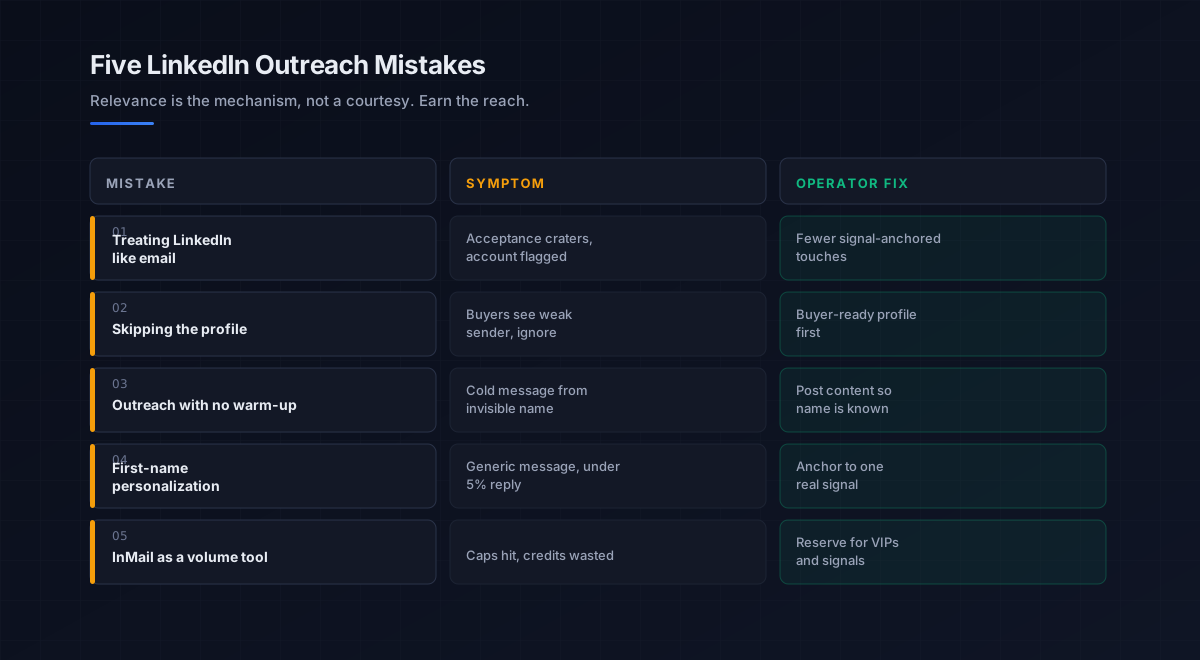
Five mistakes that quietly kill LinkedIn outreach
What we see most often is the same handful of errors that get accounts throttled and campaigns ignored.
-
Treating LinkedIn like an email blast. Mass generic connection requests crater acceptance and trigger restrictions. The fix is fewer, signal-anchored touches that respect reputation-based limits.
-
Skipping the profile. Buyers check the sender before replying, so an unoptimized profile caps response no matter the message. The fix is a buyer-ready headline, summary, and network first.
-
Outreach with no warm-up. Cold messages from an invisible name underperform. The fix is consistent content so prospects recognize you before the message lands.
-
Confusing personalization with a first name. “Hi Sarah, I help companies improve sales efficiency” is generic. The fix is a message that could only have been sent to that one person, anchored to a real signal.
-
Using InMail as a volume tool. With sends capped and credits costly, blasting InMail wastes the precision instrument. The fix is reserving InMail for VIPs and time-sensitive, signal-tied outreach.
The eight-step LinkedIn outreach build sequence
This is the order we build a LinkedIn motion in, for our own outreach and for the teams we work with. Run it top to bottom.
- Optimize the profile first. Headline, client-focused summary, and a credible network. Buyers check before they reply.
- Start publishing content. Post consistently so prospects see your name before you message them. Carousels and documents engage best.
- Build signal-based lists. Use Sales Navigator to target job changers, funded companies, and people engaging with your content, not a static CSV.
- Write a signal-anchored connection note. Reference something specific and real. Aim for 30 percent-plus acceptance.
- Sequence the follow-up. After acceptance, send a tight, personalized message that earns a reply, not a pitch.
- Reserve InMail for precision. Use it for VIPs and time-sensitive, signal-tied outreach, never for volume.
- Coordinate with email and phone. Run LinkedIn as one channel in a multichannel cadence, each touch aware of the others.
- Read acceptance and reply separately. Diagnose targeting and profile via acceptance, message quality via reply, and fix the weak layer before scaling.
How LinkedIn outreach fits the broader stack
LinkedIn is one channel in a larger outbound system, strongest when coordinated rather than siloed. Each layer connects to a deeper guide.
- Strategy and targeting. The ICP the outreach runs against, in outbound sales.
- Sales Navigator. The targeting engine behind signal-based lists, in LinkedIn Sales Navigator.
- Prospecting and data. Finding and enriching the right people, in best AI tools for sales prospecting.
- The phone channel. Stacking calls with LinkedIn, in the cold calling pillar.
- The wider AI stack. AI tools that assist outreach, in best AI sales tools.
- AI agents. Where social outreach meets automation, in the AI SDR pillar.
- Email coordination. Stacking LinkedIn with email, on email deliverability.
- Reputation. Keeping the email side of the cadence clean, on sender reputation.
That is the map. The profile and content warm the prospect, signals tell you who to reach and why, the connection request and InMail open the conversation, and multichannel coordination turns a reply into a booked meeting. Multichannel outreach across email, LinkedIn, and phone has been shown to lift results dramatically over any single channel, and LinkedIn is the trust layer that makes the others land.
Frequently asked questions
Does LinkedIn outreach still work in 2026?
What is a good LinkedIn connection acceptance rate?
What is a good LinkedIn reply rate?
Should I use connection requests or InMail?
How many LinkedIn connection requests can I send?
Is LinkedIn outreach better than cold email?
How do I personalize LinkedIn outreach at scale?
The bottom line
LinkedIn outreach in 2026 is the highest-response cold channel in B2B, but only for teams who run it on relevance rather than volume. The platform tightened InMail caps and moved to reputation-based connection limits precisely to reward personalized, signal-anchored outreach and punish mass blasting. Build from the profile outward, warm prospects with content, target on real signals, use connection requests to build relationships and InMail as a precision tool, and read acceptance and reply rates separately to know which layer to fix.
If you take one rule from this pillar, make it this: relevance is the mechanism, not a courtesy. LinkedIn’s algorithm uses it to decide how much reach you get, so the sharper and more signal-anchored your outreach, the more the platform rewards you. Run it as a volume channel and it throttles you; run it as a relevance channel and it outperforms every other cold motion in B2B.
Get the operator playbook in your inbox. The Outbound Game publishes one operator-grade breakdown a week on B2B outbound sales, tactics, tooling, and ops. No fluff, no vendor talking points. Subscribe and get the next one when it ships.
More on LinkedIn Outreach
Dripify vs Expandi in 2026: A Full Operator Verdict
Dripify vs Expandi in 2026, compared by job. The affordable all-rounder vs the premium safety play: real pricing, the ban risk, and which one fits.
LinkedIn Sales Navigator vs Premium in 2026, Compared
LinkedIn Sales Navigator vs Premium in 2026, compared by job. The prospecting workspace vs the networking upgrade: real pricing and which one fits.
The Best LinkedIn Automation Tools in 2026, Ranked
The best LinkedIn automation tools in 2026, ranked by safety not features. An operator guide to cloud vs extension architecture and ban risk.