The Best AI Sales Tools in 2026, Tested by Category
The best AI sales tools in 2026, sorted by what they fix. An operator breakdown of prospecting, outreach, conversation, and forecasting tools.
The best AI sales tools in 2026 are not a single ranked list, and any article that hands you one is selling you something. Sales AI splits into distinct categories that solve completely different problems, and a platform that is excellent for prospecting is irrelevant to a team whose real bottleneck is forecast accuracy. The right question is never which tool is best overall. It is which tool is best for the specific stage of your sales motion that is leaking pipeline.
Here is the framing most articles on this topic miss. AI sales software falls into roughly six categories: account intelligence and prospecting, data enrichment, sales engagement, conversation intelligence, forecasting, and the autonomous AI SDR. The single most common buying mistake is investing in outreach automation before solving the intelligence gap underneath it. Teams that start with the research and data layer see materially better returns, because every downstream tool performs better when it is fed accurate, timely data. Automate a broken process and you scale the breakage.
This guide to the best AI sales tools breaks the market down by what each category actually fixes, names the tools that lead each one, and gives you an evaluation framework so you can match a tool to your bottleneck instead of to a listicle’s ranking. Where a category deserves its own deep dive, like the autonomous agents in best AI SDR tools or the automation layer in best AI sales automation tools, we link out to it.
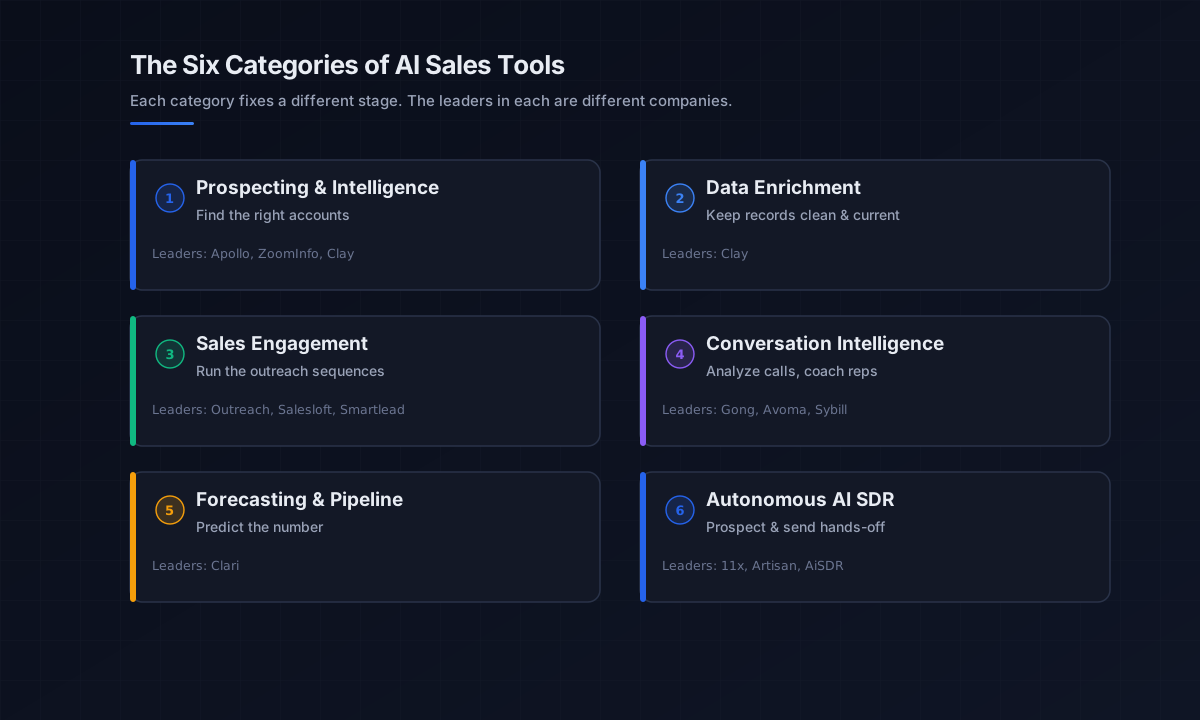
The six categories of the best AI sales tools
Before any tool name, you need the map. The most reliable way to understand the AI sales tools market is to break it into the stage of the sales motion each category serves, because the leaders in each are different companies, and a platform chosen for the wrong use case underdelivers regardless of its reputation.
Account intelligence and prospecting
These tools find the right accounts and tell you why they are worth contacting. They layer intent signals, firmographic and technographic filters, and account research on top of a contact database. This is the least crowded and highest-leverage layer, because everything downstream depends on contacting the right accounts in the first place. Apollo leads the budget-to-mid market here with a large built-in database plus sequencing, while ZoomInfo and Clay sit at the higher end for data depth and configurable enrichment respectively. These are the AI prospecting tools that decide the ceiling on everything else.
Data enrichment
Closely related but distinct, enrichment tools keep your records complete, current, and verified. Clay is the standout, offering a configurable pipeline that triggers enrichment on a signal, routes records into your stack, and maintains data quality without a dedicated data engineer. The tradeoff is a real learning curve, teams without a technical RevOps operator tend to underuse it. We cover this layer in depth in data enrichment tools.
Sales engagement
These run the multi-step outreach: sequences, send-time optimization, and follow-up across email and other channels. Outreach and Salesloft are the incumbents, increasingly broadened into full revenue platforms. For cold-email-first teams, lighter sequencers like Smartlead deliver the core sending engine at a fraction of the cost. The full landscape is in sales engagement platforms.
Conversation intelligence
This category records, transcribes, and analyzes sales calls to surface objections, competitor mentions, and the talking points that correlate with closed deals. Gong is the best known, with Avoma and Sybill strong in the mid-market. This is an AE and coaching tool, not a prospecting tool, which is exactly why category clarity matters.
Forecasting and pipeline
Tools like Clari apply AI to deal health scoring, stage-duration tracking, and revenue prediction, helping managers spot at-risk deals early. This is a sales-leader purchase, bought to answer “will we hit the number,” not “who do I email next.”
Autonomous AI SDR
The newest category: agents that prospect, write, send, and follow up with minimal human input. We cover the reality of this category, and why the fully autonomous version largely failed to replace human teams in 2026, in the AI SDR pillar and the head-to-head in best AI SDR tools.
How to choose: match the tool to the bottleneck
The evaluation that works is embarrassingly simple and almost nobody does it. Identify the single stage where your pipeline leaks most, then buy only in that category. A team with great data but poor call execution needs conversation intelligence, not another prospecting tool. A team drowning in manual research needs an AI sales assistant or prospecting layer, not a forecasting platform.
The reason this matters financially: these tools are not cheap, and stacking them by reputation rather than need is how sales orgs end up paying for five overlapping platforms that each solve 20 percent of a problem. Buy for the bottleneck, prove the ROI, then expand.
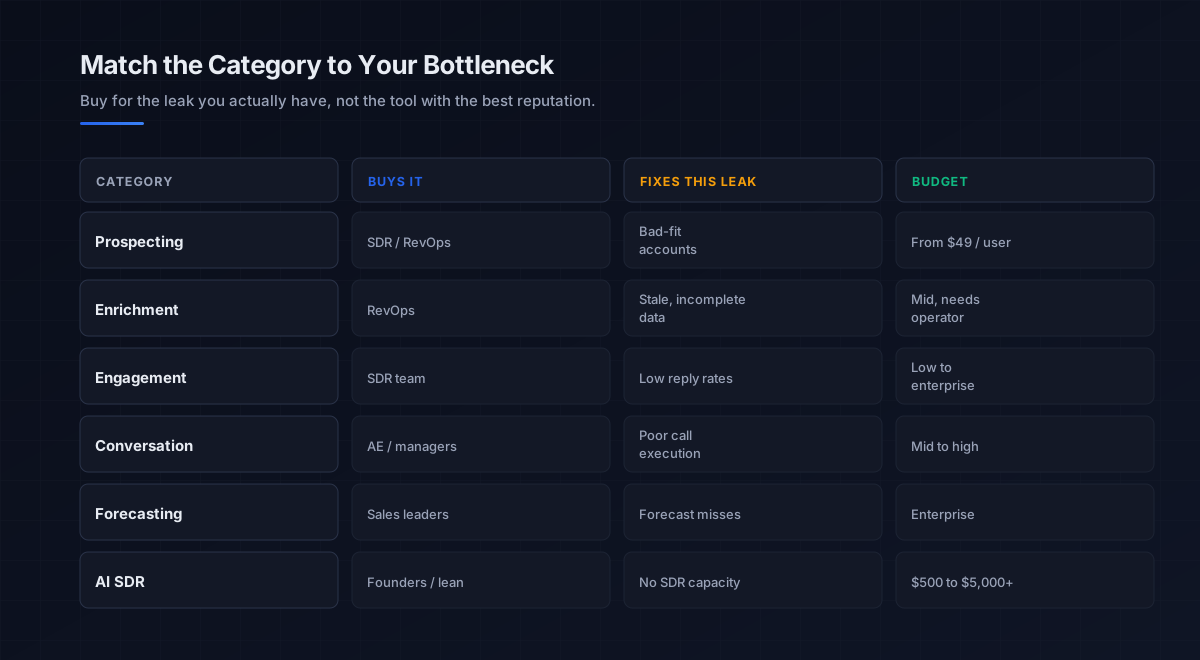
The leading AI sales tools by category
With the map in place, here are the best AI sales tools that lead each category and who each one is for. This is a category guide, not a single ranking, because ranking tools that solve different problems against each other is meaningless.
For account intelligence and prospecting, Apollo is the default starting point for most teams: a large contact database, built-in sequencing, and a price that starts low enough to prove value before committing. ZoomInfo is the enterprise choice when data depth and an integrated intelligence layer justify a much larger spend. For configurable enrichment that feeds the rest of your stack, Clay is the operator favorite, provided you have someone technical to run it.
For sales engagement and outreach, the choice splits by team type. Larger orgs standardize on Outreach or Salesloft for workflow depth and reporting. Cold-outbound-first teams running lean often get more value from Smartlead, which delivers the sending engine, rotation, and deliverability features that matter for volume outreach without the enterprise price tag. For getting those messages into the inbox, the technical groundwork lives on our sister publication in email deliverability.
For conversation intelligence, Gong is the category leader and priced like it; Avoma and Sybill are the value alternatives for teams that want call analysis and coaching without enterprise commitment. For forecasting, Clari owns the high end. For autonomous outreach, see the dedicated AI SDR breakdown rather than treating it as a general sales tool.
Five mistakes buyers make choosing AI sales tools
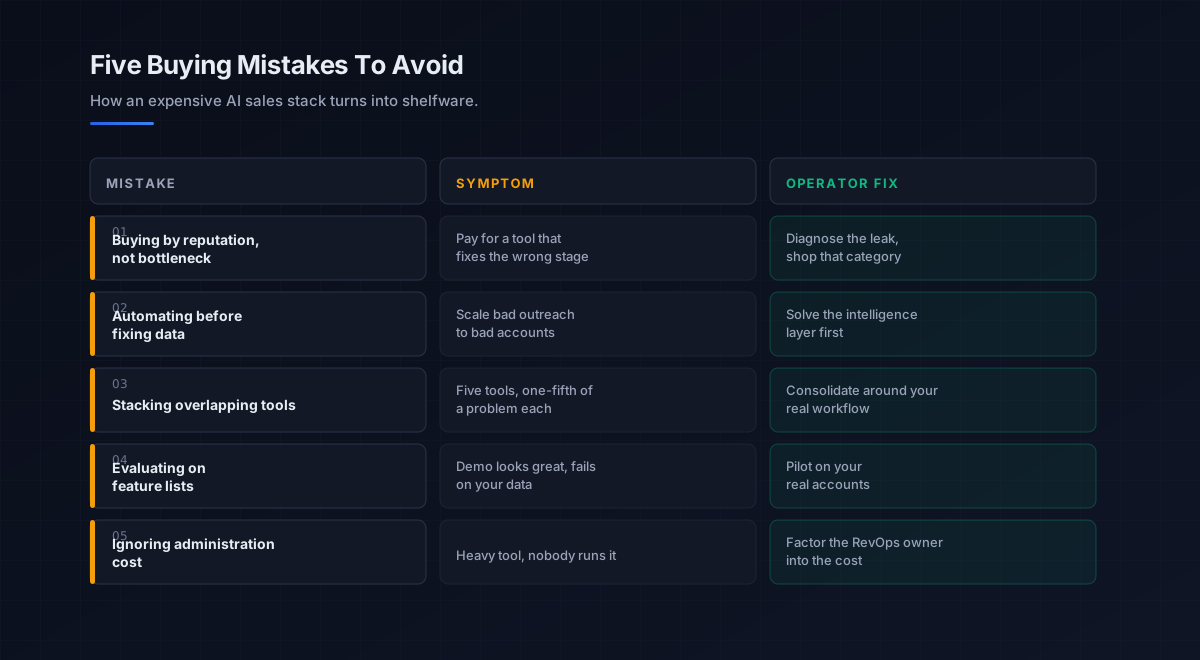
What we see most often is teams making the same handful of errors that turn an expensive stack into shelfware.
-
Buying by reputation, not bottleneck. Gong is excellent and useless if your problem is lead quality, not call execution. Diagnose the leak first, then shop the matching category.
-
Automating before fixing the data. The most expensive mistake in the category. Automation on bad data scales bad outreach. Solve the intelligence layer first.
-
Stacking overlapping tools. Five platforms that each solve a fifth of a problem cost more and integrate worse than two chosen deliberately. Consolidate around your actual workflow.
-
Evaluating on feature lists, not your accounts. Demos are staged. Run a pilot against your real accounts and judge on operational impact, not the vendor’s scenario.
-
Ignoring the administration cost. Heavier platforms need a dedicated RevOps owner. Lighter tools can be run part-time. Factor the human cost of running the tool into the total.
An eight-step framework for choosing the best AI sales tools
This is the order we work through with the teams we work with when they are building or rationalizing a sales AI stack. Run it before you book a single demo.
- Map your sales motion stage by stage. Prospect, research, outreach, call, close, forecast. You cannot fix a leak you have not located.
- Find the single biggest leak. Where does the most pipeline die: bad-fit accounts, low reply rates, poor call execution, or forecast misses.
- Shop only that category first. Resist the urge to solve everything at once. One category, one purchase.
- Audit your data before any automation tool. If the data layer is weak, that is the first purchase regardless of what hurts most downstream.
- Shortlist on fit, not fame. Match tools to your team size, motion, and the administration capacity you actually have.
- Pilot on real accounts. Run a defined test against your own pipeline, not the demo environment, and measure operational impact.
- Prove ROI before expanding. Confirm the first tool moved a real metric before adding a second category.
- Consolidate, do not accumulate. Revisit the stack quarterly and cut overlap. The best stack is the smallest one that covers your motion.
How AI sales tools fit the broader stack
These tools are one part of a larger outbound system, and they work best when the layers around them are deliberate. Each connects to a deeper guide.
- Strategy and targeting. The ICP every AI tool executes against, in outbound sales.
- Data and enrichment. The intelligence layer that sets the ceiling, in data enrichment tools.
- Prospecting AI. Research-stage tools in best AI tools for sales prospecting.
- Automation. The workflow layer in best AI sales automation tools.
- Autonomous agents. The AI SDR reality in the AI SDR pillar and best AI SDR tools.
- Engagement. Sequencing platforms in sales engagement platforms.
- Deliverability. Getting messages seen, on email deliverability and sender reputation.
- Calling. The phone side in AI cold calling.
That is the map. Intelligence and data set the ceiling, engagement and automation scale what is worth scaling, conversation intelligence and forecasting improve execution and visibility, and the autonomous layer sits on top only once the foundation is solid.
Frequently asked questions
What are the best AI sales tools in 2026?
What are the categories of AI sales tools?
What is the most common mistake when buying AI sales software?
What is the difference between an AI sales assistant and an AI SDR?
How much do AI sales tools cost?
Do AI sales tools need a dedicated administrator?
Should I buy one all-in-one AI sales platform or several specialized tools?
The bottom line
The best AI sales tools in 2026 are the ones that fix your specific bottleneck, not the ones at the top of a generic list. Map your sales motion, find the single biggest leak, and buy in that category first, starting with data and intelligence before automation. That sequence is the difference between a stack that compounds and a stack that becomes expensive shelfware.
If you take one rule from this guide, make it intelligence before automation. Fix what you target and what data you target it with, then scale outreach on a foundation worth scaling. Do that and the best AI sales tools earn their cost. Skip it and you are paying a premium to do the wrong thing faster.
Get the operator playbook in your inbox. The Outbound Game publishes one operator-grade breakdown a week on AI in outbound, sales tech, and the tactics that actually book meetings. No vendor talking points. Subscribe and get the next one when it ships.
More on AI Sales Tools
AI SDR vs Human SDR in 2026: The Real Cost and Results
AI SDR vs human SDR in 2026: the loaded cost math, real pipeline numbers, where agents win, where reps win, and the hybrid model that beats both.
The Best AI SDR Tools in 2026: An Operator Field Guide
The best AI SDR tools in 2026, ranked honestly: real pricing from 250 to 5,000 dollars a month, what the agents actually do, and who should skip them.
Do AI SDRs Actually Work in 2026? The Honest Numbers
Do AI SDRs actually work in 2026? The honest numbers: churn rates, reply benchmarks, where agents deliver real pipeline, and where they burn budget.