AI Cold Calling in 2026: Tools, Modes, and New Rules
AI cold calling in 2026 splits into voice agents, assisted dialers, and call intelligence. An operator guide to the tools, dialer modes, and new FCC rules.
AI cold calling in 2026 is three different products wearing one name, and most buying mistakes start with not knowing which one you are shopping for. Autonomous voice agents make calls with no human on the line. AI-assisted dialers keep a rep on every call and layer coaching and parallel dialing on top. Conversation intelligence tools sit after the call and analyze it. They solve different problems, cost wildly different amounts, and carry very different compliance risk. Lumping them together, which nearly every “best AI cold calling software” list does, is how teams buy a voice agent when they needed a better dialer and clean data.
The most important number in the category cuts against the autonomous hype: benchmark data across 500 companies shows hybrid approaches, a human rep plus AI assist, convert about 45 percent higher than either AI-only or human-only calling. The AI that wins in 2026 makes a human rep faster and more consistent, it does not replace them. For context, a human appointment setter costs 18 to 35 dollars an hour while an autonomous agent handles a call for 10 to 20 cents, so the pull toward full automation is real, but the conversion math and the new rules push most teams toward the hybrid middle.
This is the AI layer of the cold calling pillar, and it inherits the pillar’s first law: the dialer is only as good as the data you feed it. Before any of these tools help, the sales prospecting layer has to supply verified numbers, because no amount of AI rescues a list of dead lines.
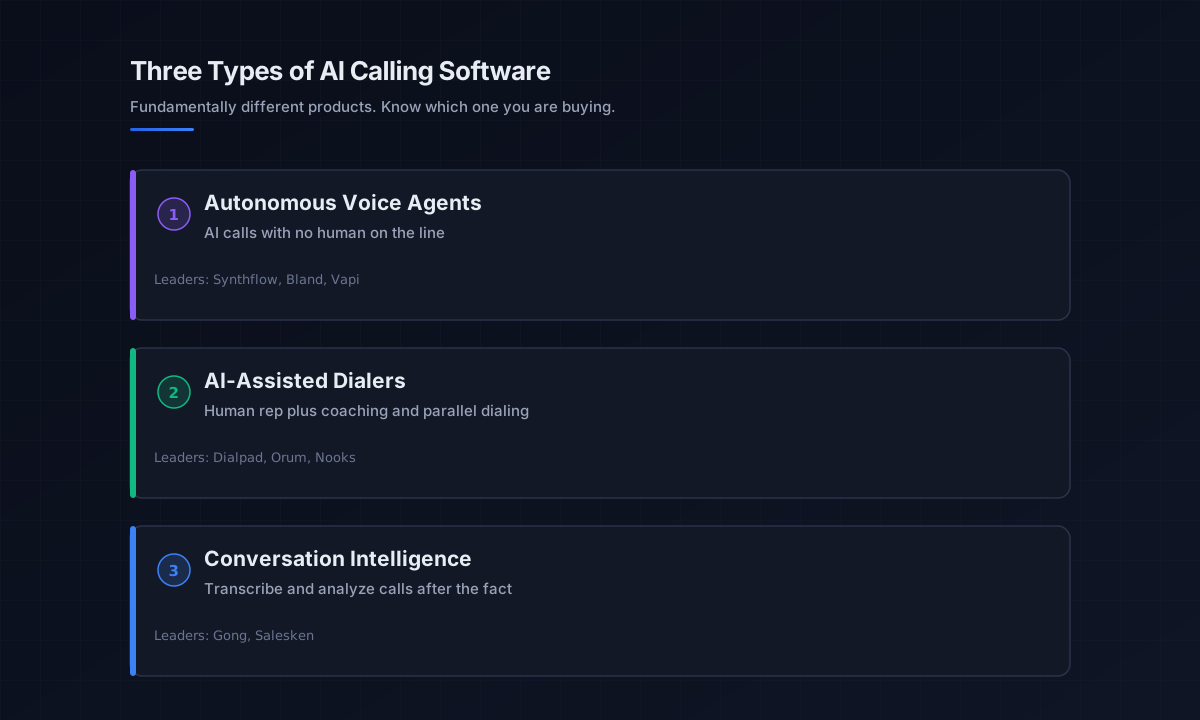
The three types of AI cold calling software
Understanding the split is the entire buying decision. Each type is a different product solving a different bottleneck.
Autonomous AI voice agents
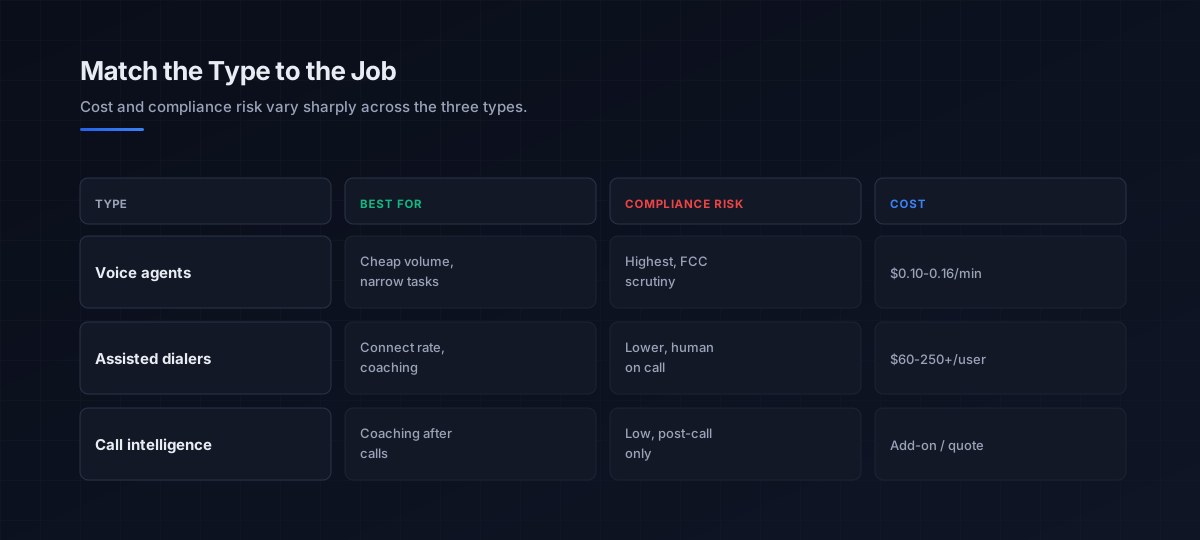
These make calls with no human on the line. The AI voice agents qualify the lead and book the meeting on their own. Tools like Synthflow, Bland AI, and Vapi lead here, with per-minute pricing around 10 to 16 cents that makes them dramatically cheaper than human callers at volume. They get the most hype and, critically, the most regulatory scrutiny, because an AI-generated voice calling a purchased list is exactly what the new 2026 rules target. They fit narrow, high-consent use cases far better than broad cold outreach.
AI-assisted dialers
These keep a human rep on every call and layer in real-time coaching, parallel dialing, post-call summaries, and smart number rotation. This is the ai dialer category most teams actually need, and where the market is heading. An AI sales dialer in this mode keeps the rep in control while the AI removes the friction around the call. Dialpad, Orum, Nooks, and Regie.ai lead. Because a human is on every call, compliance is simpler and reps still build real relationships, which is why benchmark data puts this hybrid model 45 percent ahead of the alternatives. For teams under 50 reps, this is almost always the right starting point.
Conversation intelligence
These sit after the call. Tools like Gong and Salesken transcribe, summarize, score sentiment, and surface coaching insights from recorded calls. They do not dial; they make the calls you already make more useful. They pair with either of the above rather than competing with them, and they earn their place once you have call volume worth analyzing.
Dialer modes, and what you actually pay for
Inside the assisted-dialer world, the mode matters as much as the brand, and pricing tracks the mode closely. Most “AI dialers” are really auto-dialers with voicemail detection bolted on; real AI in a dialer means conversation intelligence, real-time coaching, and predictive number selection, not just skipping answering machines.
A power dialer calls one number at a time, advancing automatically through a list, best for high-value B2B where you want a steady pace and zero dropped calls. A basic power dialer runs 30 to 50 dollars per user per month. A parallel dialer calls multiple numbers at once, typically 3 to 10 lines, and connects the rep to the first live answer, skipping voicemails; it is built for high-volume calling where pickup rates are low, and with AI features it can hit 300 to 500 dollars per user per month. A predictive dialer dials ahead of agent availability and carries the highest compliance risk, since abandoned calls from over-dialing can trigger TCPA problems. The AI-assisted layer, sentiment detection, live coaching prompts, smart number rotation, sits on top of any of these modes.
The real pricing trap is that almost every cold calling software puts AI on its homepage and very few include it at the base price. Dialpad Sell starts around 60 dollars per user with live coaching and post-call summaries included; Apollo’s dialer is convenient if you already live in Apollo but locks the US dialer behind its Professional plan and consumes credits per talk minute. Premium parallel dialers like Orum start well above 200 dollars per user. Read the plan, not the homepage.
The 2026 compliance shift you cannot ignore
This is the layer most articles skip, and it is now the most consequential. The FCC’s One-to-One Consent Rule, effective January 27, 2026, fundamentally changed automated and AI-assisted calling. Every seller now needs separate, explicit consent from each prospect before making an AI-assisted or automated call. The old model of buying lead lists where prospects “consented to hear from vendors” is no longer legal for automated or AI-assisted calling. Your cold calling software’s compliance tooling has to track consent at the individual level, not the list level.
The second regulatory-adjacent problem is caller-ID reputation. Every carrier network actively identifies high-frequency numbers and labels them “Spam Likely,” which quietly kills connect rates. Serious AI cold calling software in 2026 has to manage caller ID actively: rotating local-presence numbers, detecting flag risk before it happens, and remediating labels before they destroy your pickup rate. A tool that dials hard without managing reputation will burn its own numbers within days.
The practical takeaway is that the autonomous-agent path is narrower than the marketing suggests. A human on every call keeps compliance simpler, because the FCC’s evolving stance on AI-generated voices and the individual-consent requirement both bear most heavily on fully automated calling. This is another reason the hybrid model is winning: it sidesteps the sharpest edges of the new rules while still capturing most of the AI efficiency.
How to choose AI cold calling software
Match the tool to the specific bottleneck, do not apply AI uniformly. Connect-rate problems need spam prevention and parallel dialing. Coaching problems need real-time AI on assisted calls. Follow-up execution problems point toward more autonomous agents for narrow tasks. And data problems, the most common of all, need contact verification before any dialer enters the picture, because a 200-dollar-per-rep dialer pointed at dead numbers is pure waste.
The sequence mirrors the cold calling pillar: fix the data first, then pick the dialing mode that fits your volume and deal value, then layer AI where it removes a real constraint. Most teams under 50 reps need a better dialer and better data far more than they need a voice agent, and the assisted-dialer plus verified-data combination outperforms any single tool alone. The best outbound teams also pair the dialer with email and social sequences rather than running the phone in isolation, the coordination covered across the broader outbound sales motion and, on the email side, email deliverability.
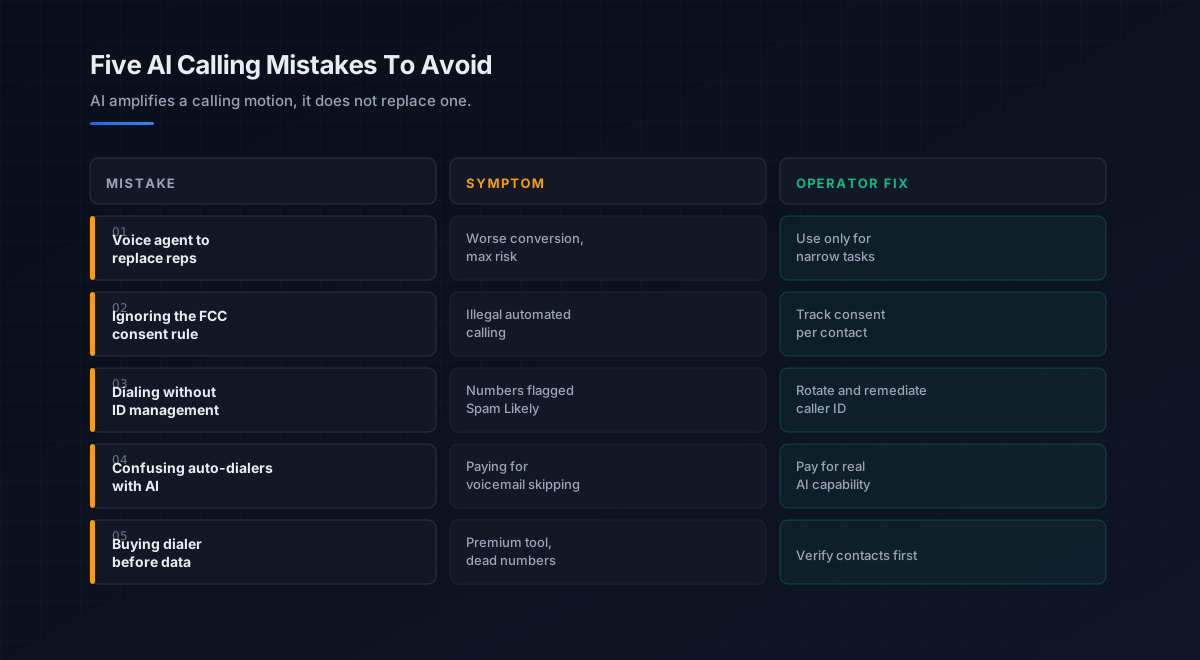
Five mistakes teams make with AI cold calling
What we see most often is the same handful of errors that turn an AI calling investment into burned numbers and compliance exposure.
-
Buying a voice agent to replace reps. Autonomous AI converts worse than human-plus-AI and draws the most regulatory risk. Use it for narrow high-consent tasks, not broad cold volume.
-
Ignoring the FCC consent rule. Calling a purchased list with AI-assisted or automated dialing is now illegal without individual consent. Confirm your tool tracks consent per contact, not per list.
-
Dialing without caller-ID management. Carriers flag high-frequency numbers “Spam Likely” fast. A dialer that does not rotate local presence and remediate flags will torch its own connect rate.
-
Confusing auto-dialers with AI. Most “AI dialers” just skip voicemails. Real AI means coaching, sentiment, and predictive number selection. Pay for capability, not the homepage label.
-
Buying the dialer before fixing the data. A premium parallel dialer pointed at dead numbers wastes the spend. Verify contacts first; the dialer is only as good as the list.
An eight-step framework for adopting AI cold calling
This is the order we work through with the teams we work with when they add AI to a calling motion. Run it before buying anything.
- Verify the data first. Source consented, phone-verified direct dials. Nothing downstream works on dead or non-consented numbers.
- Confirm individual-level consent tracking. Under the 2026 FCC rule, your tooling must record consent per contact for any AI-assisted or automated dialing.
- Identify the real bottleneck. Connect rate, coaching, follow-up, or data. Buy AI for that constraint, not uniformly.
- Default to the hybrid model. Human rep plus an AI-assisted dialer. It converts about 45 percent higher than AI-only or human-only.
- Pick the dialing mode by volume. Power dialer for high-value steady pace, parallel dialer for high-volume low-pickup calling.
- Demand caller-ID management. Confirm the tool rotates local presence and remediates “Spam Likely” flags before connect rates suffer.
- Add conversation intelligence once you have volume. Layer transcription and coaching analysis on calls worth reviewing.
- Reserve autonomous agents for narrow tasks. Use voice agents only for repeatable, high-consent call types, never to scale cold volume past the rules.
How AI cold calling fits the broader stack
AI calling is one layer of the phone channel, which is one channel of outbound. Each connects to a deeper guide.
- The calling fundamentals. Technique, cadence, and metrics in the cold calling pillar.
- Prospecting and data. The verified, consented numbers that feed any dialer, in best AI tools for sales prospecting.
- Data enrichment. Keeping phone data fresh and accurate, in data enrichment tools.
- The wider AI stack. All six categories of sales AI in best AI sales tools.
- Automation. Where calling automation fits the task layer, in best AI sales automation tools.
- AI agents. The autonomous end of the spectrum, in the AI SDR pillar and best AI SDR tools.
- Strategy. The motion the calling serves, in outbound sales.
- Multichannel. Stacking calls with email, on email deliverability and sender reputation.
That is the map. Prospecting supplies the consented numbers, the assisted dialer connects the human faster, AI handles the coaching and the admin, and conversation intelligence makes every call sharper than the last.
Frequently asked questions
What is AI cold calling?
Does AI cold calling work better than human calling?
Is AI cold calling legal in 2026?
What is the difference between a power dialer and a parallel dialer?
How much does AI cold calling software cost?
Are AI voice agents worth it for cold calling?
Why are my calls showing as Spam Likely?
The bottom line
AI cold calling in 2026 is three products, not one, and the winning choice for most teams is the least hyped: an AI-assisted dialer with a human on every call, pointed at verified, consented data. That hybrid converts about 45 percent better than autonomous agents, sidesteps the sharpest edges of the new FCC consent rule, and keeps your numbers off the Spam Likely list when paired with active caller-ID management. Match the tool to your real bottleneck, and verify the data before you spend a dollar on dialing technology.
If you take one rule from this guide, make it this: AI amplifies a calling motion, it does not replace one. Fix the data and the consent first, put a human on the call, and let the AI make that human faster. Reach for autonomous voice agents only at the narrow edges where consent is explicit and the call is repeatable, never as a shortcut around the rules or the work.
Get the operator playbook in your inbox. The Outbound Game publishes one operator-grade breakdown a week on B2B outbound sales, tactics, tooling, and ops. No fluff, no vendor talking points. Subscribe and get the next one when it ships.
More on Cold Calling
Why Cold Calling Still Works in 2026 (The Real Data)
Why cold calling still works in 2026: the data behind the 2.7 percent average, the connect rate levers, who still answers, and when the phone wins.
Orum vs Nooks in 2026: A Full Operator Field Guide
Orum vs Nooks in 2026, compared by job. The high-volume dialer vs the coaching salesfloor: real pricing, the data caveat, and which one fits your team.
The Best AI Dialer in 2026: Modes, Tools, Tradeoffs
The best AI dialer in 2026 depends on dialer mode and data quality, not brand. An operator guide to power, parallel, and predictive dialers.