The Best AI SDR Tools in 2026: An Operator Field Guide
The best AI SDR tools in 2026, ranked honestly: real pricing from 250 to 5,000 dollars a month, what the agents actually do, and who should skip them.
Every list of the best ai sdr tools published this year opens the same way: the robots are coming for the SDR job, buy an agent, book meetings while you sleep. The numbers behind the category tell a more useful story. Industry analysis puts annual churn on AI SDR tools at 50 to 70 percent, which means most buyers are not getting what the demo promised. At the same time, teams that use AI to augment human reps instead of replacing them report 2.8 times more pipeline. Both facts are true at once, and the difference between them is buying the right tier for your motion.
That is what this guide sorts out. The market has split into three layers that get lumped together in every roundup: fully autonomous agents that claim the whole sales development job, copilots that speed up a human rep, and the data plus sending infrastructure both of them stand on. Prices run from 49 dollars a month at the entry of the copilot tier to 5,000 a month for an enterprise digital worker, and the sticker is never the invoice, because data, warmup, and sending typically push real spend to 1.5 to 2 times the advertised price.
This is the pillar for our AI cluster, and it deliberately covers different ground than our guide to the best AI tools for sales prospecting, which handles the research and list building layer. It also assumes the foundations covered in sales engagement platforms and the b2b outbound sales pillar, because an agent inherits whatever stack you give it. If you run b2b prospecting on a real budget and need to know which tier to buy, or whether to buy at all, this is the honest map.
What an AI SDR actually is, and what just wears the badge
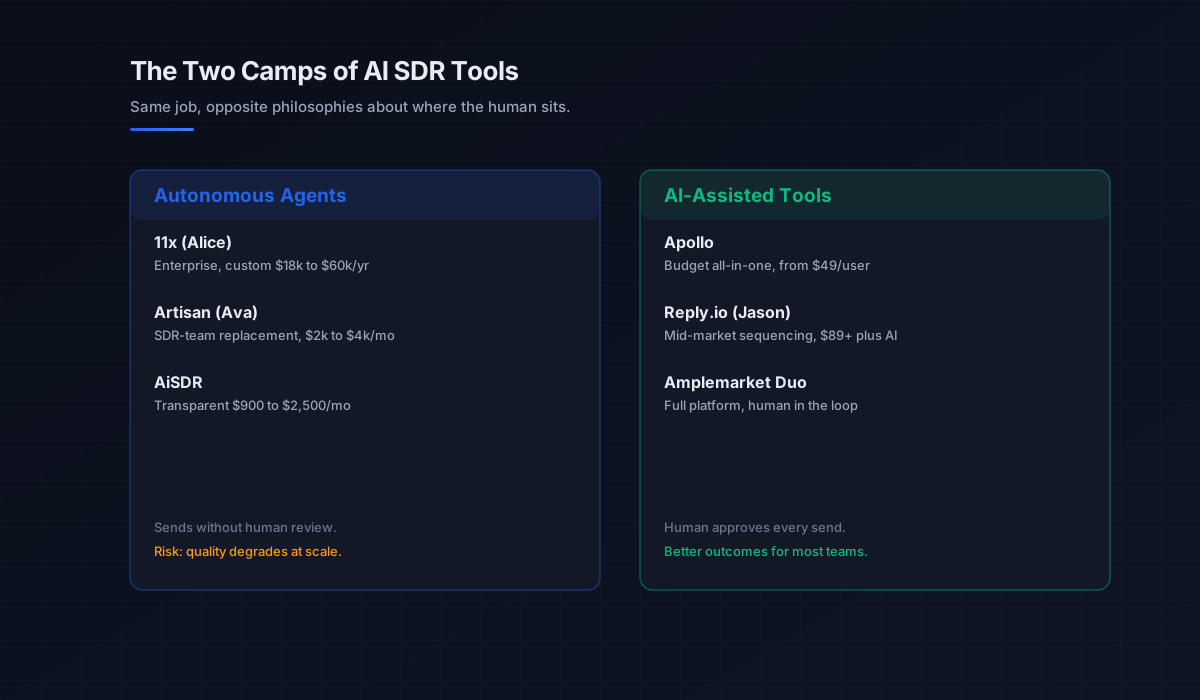
A true AI SDR is an autonomous agent that does the job end to end: it sources leads from live signals like funding rounds, job changes, and hiring spikes, researches each account, writes and sends personalized outreach across channels, qualifies the replies, and books the meeting on a calendar. The human sets the ICP and the guardrails, then reviews dashboards.
Most products wearing the AI SDR label are not that. They are sequencers with a drafting model bolted on: useful, often worth the money, but a fundamentally different purchase. The tell is autonomous sourcing. If you still build the list and the sequence yourself and the AI writes first drafts, you bought ai sdr software in the copilot sense, and you should pay copilot prices for it. Naming the tier correctly before comparing vendors saves you from the single most expensive mistake in this category, which is paying autonomous prices for assisted work.
The 2026 landscape in three tiers
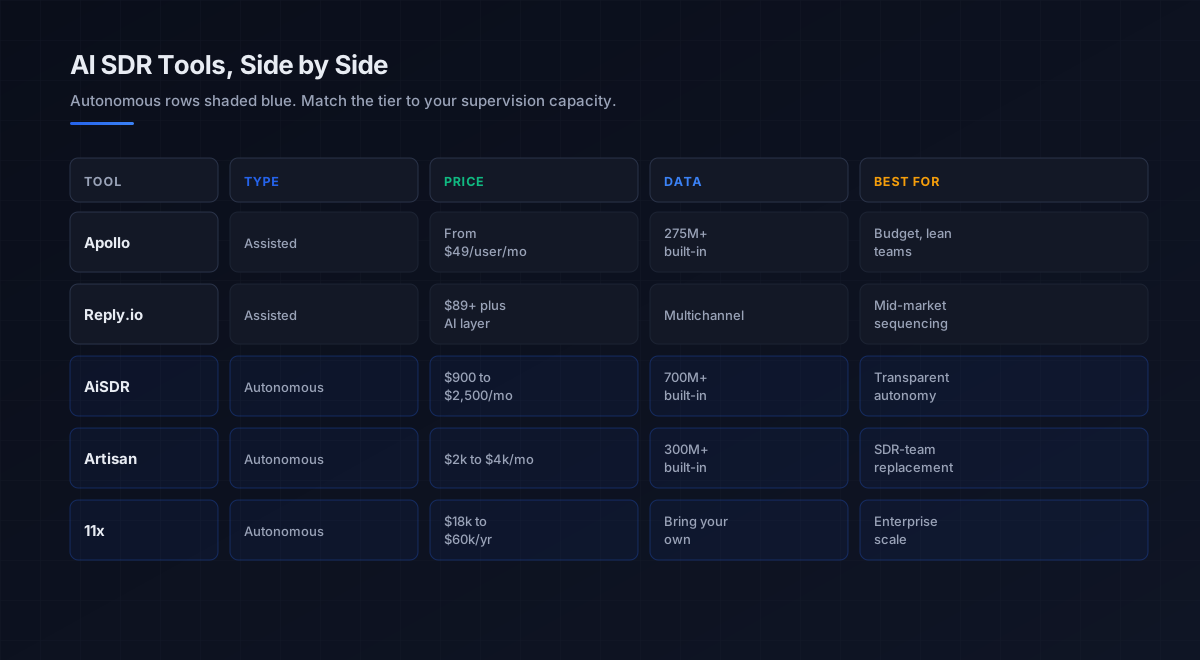
Here is how the best ai sdr tools split in 2026. The autonomous tier is where the digital worker pitch lives. 11x is the enterprise flagship, pairing its email and LinkedIn agent Alice with Julian, a phone agent, on unpublished contracts that reportedly run 3,750 to 5,000 dollars a month. Artisan sells Ava with onboarding speed and published pricing that now starts at 250 dollars a month at the entry tier. AiSDR is the transparency play at 900 dollars a month for 1,200 messages on quarterly billing with no annual lock. Salesforge’s Agent Frank starts around 499 to 599 dollars a month and runs in autopilot or copilot mode on top of genuinely strong sending infrastructure. Jazon by Lyzr targets regulated industries with configurable, even on premise deployment, from an open source tier to an enterprise plan near 1,999 dollars a month. Regie.ai sits between tiers at roughly 2,495 a month, blending autonomous touches with rep workflows.
The copilot tier is where most teams should start. Reply.io’s Jason adds agent features to a mature multichannel sequencer from 59 dollars a month. Apollo folds an AI research agent into the platform we compared in our apollo vs zoominfo verdict, from 49 dollars a month with a free tier, which makes it the cheapest way to feel what agent assisted sales development actually changes day to day.
The infrastructure tier is not optional, whichever agent you pick. Signal and enrichment layers decide what the agent knows, and sending infrastructure decides whether its emails arrive. On the audits we run, this layer is where AI SDR deployments actually fail: the agent was fine, the data was stale, and the domain burned. Budget analyses of the category back this up, putting roughly 40 percent of a sane budget into data accuracy and 25 percent into sending infrastructure, with the AI itself a minority line item.
AI SDR pricing: the sticker is the floor
Run the ai sdr pricing math against the thing being replaced. A fully loaded human SDR costs roughly 84,000 to 100,000 dollars a year once salary, on target earnings, recruiting, ramp, and management time are counted. A single autonomous agent seat lands around 24,000 to 48,000 a year at list, so the raw comparison flatters the AI. But the advertised fee rarely includes the data, verification, mailboxes, and warmup the agent consumes, which is why real spend reliably runs 1.5 to 2 times sticker. An agent emailing unverified addresses burns credits and sender reputation simultaneously, paying twice for the same mistake.
The honest efficiency metric is cost per meeting held, not meetings booked. Autonomous agents book fast and hollow when the message is untested; reply quality follows message quality regardless of who sends it. The 2026 benchmark data makes the point: average cold email reply rates sit around 3.4 percent, while deeply personalized, signal driven campaigns reach 18 percent. The variable there is not the agent. It is the signal and the message the agent is given.
How to decide which of the best ai sdr tools fits your team
Start with a copilot if your message is unproven, your team is under ten reps, or your budget is under 1,000 dollars a month. Apollo or Reply.io tier tools let a human keep judgment while the AI removes the research and drafting drag, and the 2.8x pipeline stat belongs to exactly this hybrid pattern.
Go autonomous if you have a proven, repeatable motion, a large and fairly uniform TAM, and the volume math works: Artisan or AiSDR for mid market speed and transparent terms, Agent Frank if sending infrastructure is your priority, 11x if you are enterprise and need phone plus email in one worker, Jazon if you are in a regulated industry that needs custom deployment.
Skip the category for now if your pipeline problem is really a signal problem, your ICP responds to phones and relationships more than volume email, or you cannot yet staff someone to own the system. An agent is an amplifier. It amplifies whatever motion you already have, including a broken one.
Five mistakes buyers make with AI SDR tools
-
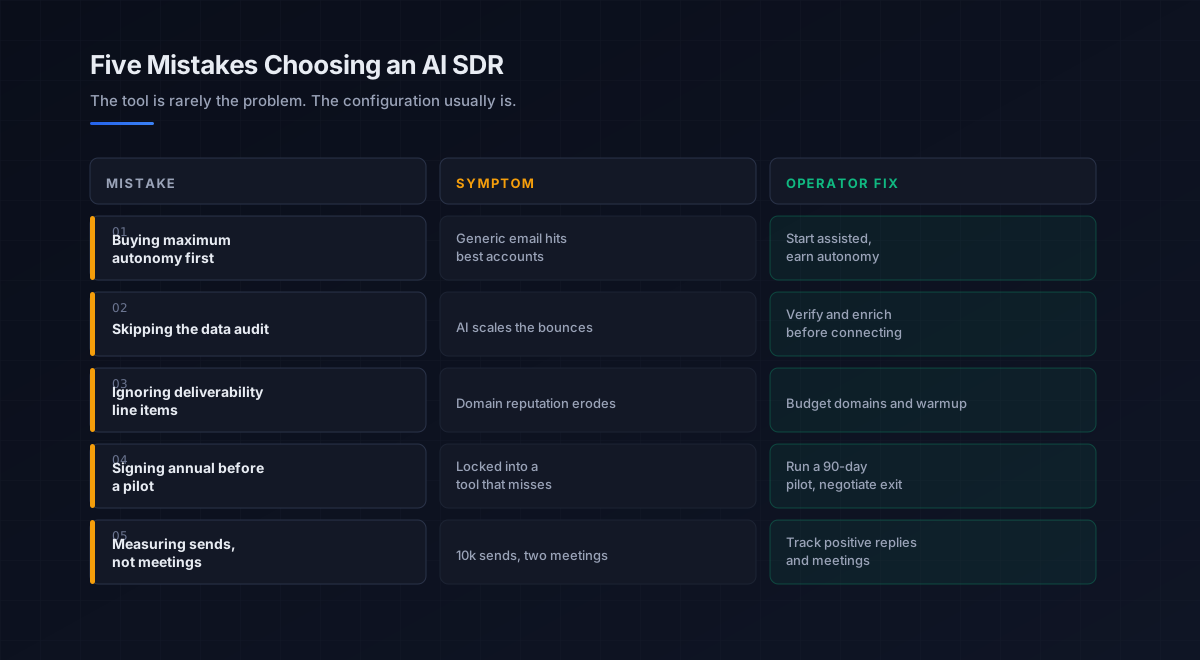
Comparing across tiers as if they compete. An autonomous agent and a 59 dollar copilot are different categories. Pick the tier first, then compare vendors inside it, or every price and claim will mislead you.
-
Buying on the scripted demo. Demos are rehearsed. Insist on the agent drafting three real emails for prospects pulled from your own CRM during the call, and judge those instead.
-
Skipping deliverability due diligence. If the vendor cannot show a bounce prevention layer and how sending stays inside safe volumes, walk away, because sender reputation is the asset an agent can destroy fastest.
-
Paying agent prices for a data problem. When coverage of your ICP is the bottleneck, the fix lives in the enrichment layer, not in a smarter writer sitting on top of thin data.
-
Measuring meetings booked instead of meetings held. Booked is the vendor’s favorite metric because agents inflate it easily. Held meetings, opportunities created, and closed won are the numbers that survive a budget review.
An eight step framework for adopting an AI SDR
-
Prove the message first. Run the offer manually or through a copilot until replies show the message works. Never hand an agent an untested pitch.
-
Name your tier honestly. Copilot, autonomous, or infrastructure gap. Write it down before any demo, and refuse to compare across tiers.
-
Fix the foundation. Dedicated sending domains, SPF, DKIM, DMARC, warmed mailboxes, safe daily volumes. The deliverability fundamentals come before any agent goes live.
-
Audit your data layer. Verify coverage and data accuracy on your actual ICP before connecting anything, because the agent can only personalize what the data supports.
-
Run a real pilot, not a demo. Sixty to ninety days, your list, your message, with reviews of the drafts the agent actually sends in week one.
-
Keep a human in the loop at the start. Approve sends on new sequences and route high interest replies to a person, then widen autonomy as trust builds.
-
Measure held meetings and pipeline. Check reviews on G2 for churn signals before you sign, then hold your own pilot to opportunities created, not activity.
-
Scale what works, kill what does not. Agents are subscriptions, not hires. If the pilot misses, the exit should cost you a quarter, not a year, which is why contract terms belong in the evaluation.
How AI SDR tools fit the broader outbound stack
-
The agent sits on top of the b2b outbound sales system and inherits every strength and defect in it.
-
Its knowledge comes from the data layer, which is why our b2b data providers comparison matters more after you buy an agent, not less.
-
Coverage gaps are closed by data enrichment tools, the waterfall layer that feeds agents verified contacts.
-
Signals become targeting inside sales intelligence tools, the difference between spray and precision for any ai sales agents you deploy.
-
Sequencing and sending mechanics still live in sales engagement platforms, the tier most AI SDR products actually descend from.
-
Replies and handoffs only survive if CRM automation keeps records clean while the agent writes to them.
-
The wider automation case is the same one we made for sales automation ROI: count the full cost, credit only incremental results.
-
And the message itself is still won or lost at the cold email software layer, where copy discipline beats model quality.
FAQ
Frequently asked questions
What is an AI SDR?
What are the best AI SDR tools in 2026?
How much does an AI SDR cost?
Do AI SDRs actually work?
Will AI SDRs replace human SDRs?
Is an AI SDR cheaper than hiring an SDR?
What should I check before buying AI SDR software?
The bottom line
The best ai sdr tools in 2026 are real, and so is the churn behind the hype. The autonomous tier rewards teams with a proven message, uniform TAM, and disciplined infrastructure, and punishes everyone else at scale. The copilot tier is the sane default, the hybrid model owns the pipeline numbers, and the infrastructure layer underneath decides more outcomes than the agent on top. Buy the tier that matches your motion, spend on data and deliverability before intelligence, and measure meetings held. The rule has not changed since outbound began: automation amplifies whatever you already are.
Want more tested breakdowns like this? We publish one honest teardown of outbound tools, tactics, and playbooks each week. Join the newsletter.
More on AI Sales Tools
AI SDR vs Human SDR in 2026: The Real Cost and Results
AI SDR vs human SDR in 2026: the loaded cost math, real pipeline numbers, where agents win, where reps win, and the hybrid model that beats both.
Do AI SDRs Actually Work in 2026? The Honest Numbers
Do AI SDRs actually work in 2026? The honest numbers: churn rates, reply benchmarks, where agents deliver real pipeline, and where they burn budget.
AI Cold Email in 2026: A Full Operator Field Guide
AI cold email in 2026 for B2B teams: where AI genuinely lifts reply rates, the signal-based shift, the spam-filter trap, and what truly works.