The Best AI Sales Automation Tools in 2026, Tested
The best AI sales automation tools in 2026, split by what they automate. An operator guide to sequencing, enrichment, and workflow automation tools.
The best AI sales automation tools in 2026 automate the repetitive task layer of selling, prospecting research, outreach sequencing, follow-up timing, data entry, lead routing, and CRM updates, so reps spend their hours on conversations instead of busywork. The number that justifies the category is blunt: reps spend only about 28 percent of their time actually selling, with the rest lost to admin. Automation is the lever that reclaims the other 72 percent, and the tools that do it well are now genuinely good. The ones that do it badly just help you do the wrong thing faster.
That last point is the whole game, and most articles on this topic miss it. AI sales automation is a force multiplier, not a sales team replacement. Point it at a tight list with clean infrastructure and it compounds; point it at a broken process and it scales the breakage. So the right question is never which tool automates the most. It is which tool automates the specific bottleneck eating your reps’ time, without amplifying a problem upstream of it.
This guide splits the market by what each tool actually automates, names the leaders in each lane, and gives you a framework to match a tool to your bottleneck. It sits inside the broader best AI sales tools landscape and alongside the autonomous agents covered in the AI SDR pillar, so if you are not yet sure automation is your real gap, start with those.
What AI sales automation actually means
AI sales automation software uses machine learning to handle the repetitive, time-consuming parts of the sales process: lead generation, email outreach, follow-up sequences, lead scoring, enrichment, and data entry. The “AI” part matters, because it separates modern tools from the rules-based automation of the last decade. Old automation executed rigid if-then playbooks you configured by hand. AI-powered automation learns from engagement data, adapts timing and messaging in real time, and surfaces next-best actions rather than just firing pre-set rules.
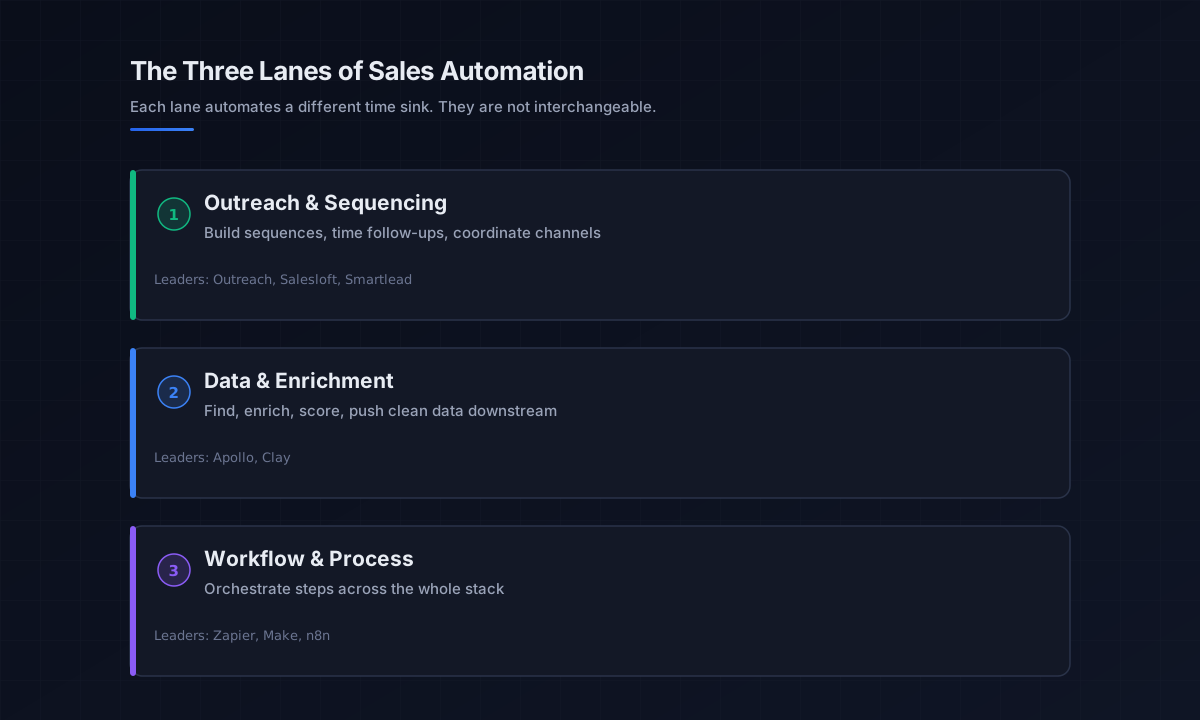
The category divides into three lanes that solve different problems, and conflating them is the most common buying mistake.
Outreach and sequencing automation
This automates the multi-step outreach itself: building sequences, timing follow-ups, optimizing send times, and coordinating touches across email, phone, and LinkedIn. Outreach and Salesloft are the enterprise incumbents; for cold-outbound-first teams, lighter tools like Smartlead deliver the sending engine, rotation, and follow-up automation without the enterprise price. This is the most visible lane and the one teams reach for first, often too soon.
Data and enrichment automation
This automates the research and data layer: finding contacts, enriching records, scoring leads, and pushing clean data into outreach tools and the CRM. Apollo bundles this with sequencing in one frictionless workflow, which is its clearest advantage over stacks that run a data tool, a sequencer, and a CRM separately. Clay sits at the customizable end, aggregating 150+ sources and running AI agents to research and enrich, then automating the flow of clean data downstream. We go deeper on this lane in data enrichment tools.
Workflow and process automation
This is the connective tissue, the sales automation software that orchestrates the rest: platforms like Zapier, Make, and n8n that orchestrate multi-step workflows across your whole stack, triggering enrichment on a signal, routing a reply to the right rep, updating CRM fields automatically. Zapier suits simple high-volume connections, Make gives a visual canvas for multi-step scenarios, and n8n offers deep customization and self-hosting for complex personalized sequences. This lane is where a technical RevOps operator turns a collection of tools into a single automated motion.
How to choose: automate the bottleneck, not everything
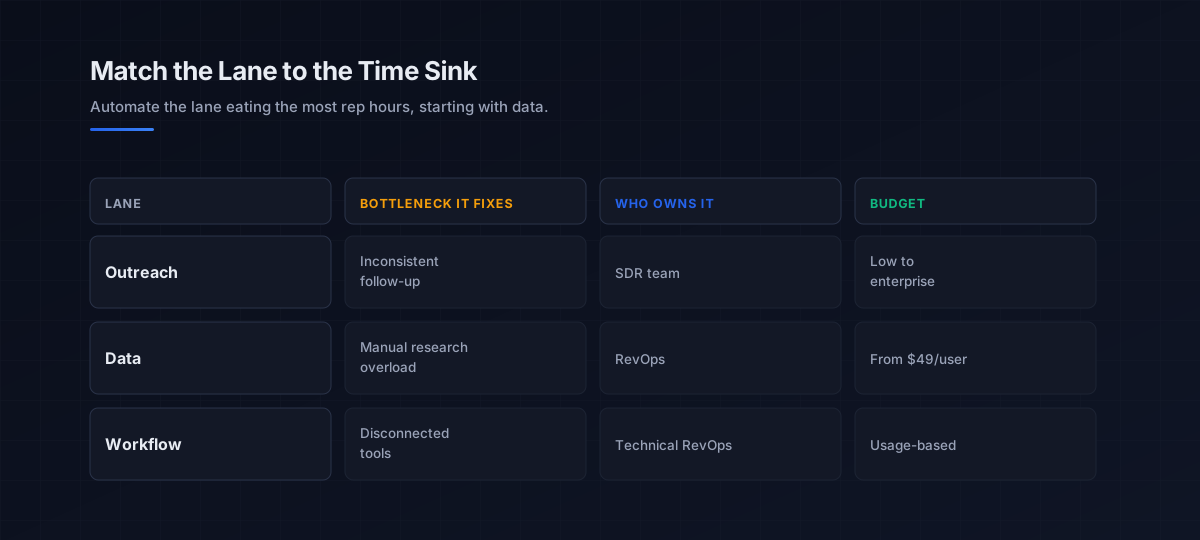
The evaluation that works is the same discipline that governs the whole outbound sales motion: find the single stage eating the most rep time, and automate that lane first. A team drowning in manual research needs data and enrichment automation, not another sequencer. A team with clean data but inconsistent follow-up needs sequencing automation. A team running five disconnected tools needs workflow automation to stitch them together before adding anything new.
Buying across all three lanes at once is how sales orgs end up paying for overlapping platforms that each automate a fraction of the process and integrate poorly. Automate the bottleneck, prove the time savings, then expand to the next lane.
The leading AI sales automation tools by lane
With the three lanes clear, here are the best AI sales automation tools that lead each lane and who each one fits. This is a lane guide, not a single ranking, because a sequencer and a workflow orchestrator are not competing for the same job.
For outreach and sequencing, larger orgs standardize on Outreach or Salesloft for workflow depth, multichannel sequencing, and reporting. Cold-outbound-first and leaner teams get more value from Smartlead, which automates sending, inbox rotation, and follow-up at a fraction of enterprise cost. Getting those automated sends into the inbox depends on the technical groundwork covered on our sister publication in email deliverability, automation without deliverability just scales spam.
For data and enrichment automation, Apollo is the default for teams that want list-to-outreach in one tool, a large database, AI writing assistance, and a built-in dialer without stitching three products together. Clay is the operator favorite for customizable enrichment that feeds the rest of the stack, with the caveat that it has a real learning curve and credit-budgeting overhead, so it rewards a technical owner.
For workflow and process automation, Zapier wins on breadth of integrations for simple connections, Make on its visual multi-step canvas, and n8n on deep customization and self-hosting for teams that need full control. These are not sales tools per se; they are the orchestration layer that makes your sales tools act as one system.
Five mistakes teams make with sales automation tools
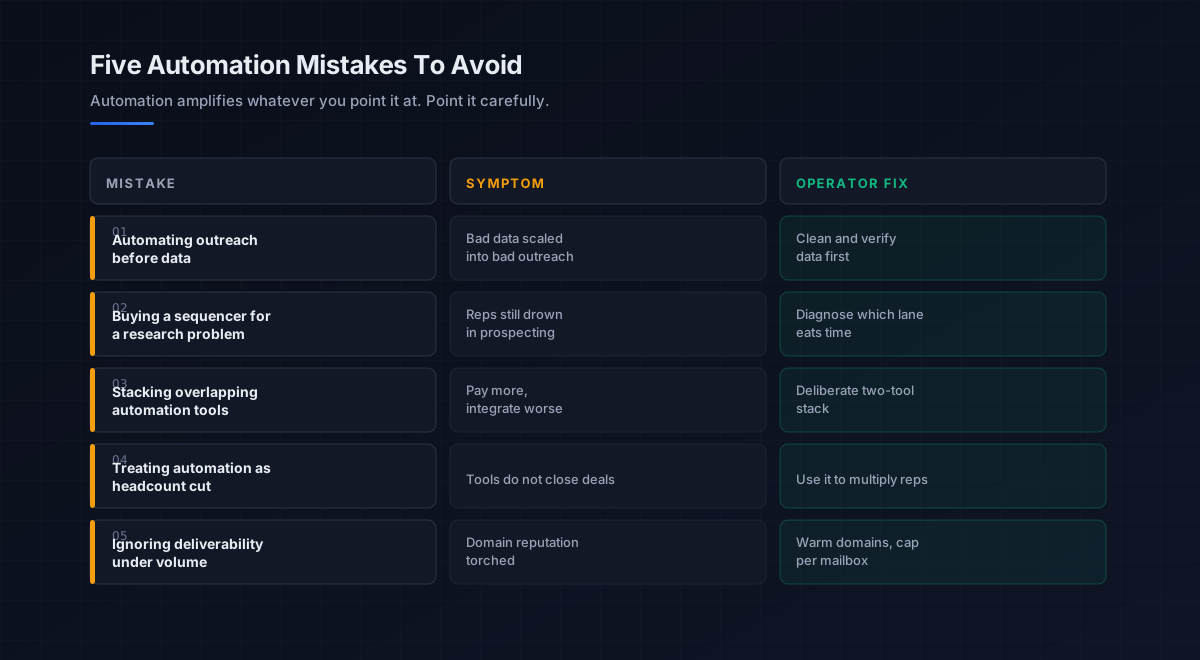
What we see most often is the same handful of errors that turn an automation investment into a reputation problem or expensive shelfware.
-
Automating outreach before fixing data. The single most damaging mistake. Automation amplifies bad data into bad outreach at scale. Clean and verify the data lane first.
-
Buying a sequencer when the bottleneck is research. Teams reach for the visible outreach lane when their reps are actually drowning in manual prospecting. Diagnose which lane eats the time before buying.
-
Stacking overlapping automation tools. Running a sequencer, a separate enrichment tool, and a workflow platform that all partially overlap costs more and integrates worse than a deliberate two-tool stack.
-
Treating automation as headcount replacement. Automation is a force multiplier for reps, not a substitute for them. Teams that fire SDRs and expect the tools to close deals are consistently disappointed.
-
Ignoring deliverability under automated sending. Turning up automated send volume without warmed domains and sane per-mailbox limits torches sender reputation faster than manual sending ever could.
An eight-step framework for adopting sales automation
This is the order we work through with the teams we work with when they automate a sales motion. Run it before buying anything.
- Map where rep time actually goes. Research, outreach, follow-up, data entry, admin. You cannot automate the right thing until you know what eats the hours.
- Find the single biggest time sink. That lane, research, sequencing, or workflow, is your first purchase, not the most-hyped one.
- Clean the data lane first regardless. If data is weak, automate that before any outreach tool, because outreach automation amplifies data quality.
- Shortlist within one lane. Match tools to your team size, technical capacity, and the lane you identified, not to general reputation.
- Check the deliverability handling. For any outreach automation, confirm how it manages domains, warmup, and sending limits before scaling volume.
- Pilot on a real segment. Run the automation on one tight segment and measure time reclaimed and reply quality, not just activity volume.
- Prove the time savings before expanding. Confirm the first lane actually freed rep hours and held reply quality before automating the next.
- Add the workflow layer to connect, not to accumulate. Once two lanes work, use a workflow tool to stitch them into one motion rather than buying a third point solution.
How sales automation fits the broader stack
Automation is one layer of a larger system, and it only compounds when the layers around it are deliberate. Each connects to a deeper guide.
- Strategy and targeting. The ICP automation executes against, in outbound sales.
- The full tool landscape. All six categories of sales AI in best AI sales tools.
- Data and enrichment. The lane that sets the ceiling, in data enrichment tools.
- Prospecting AI. Research-stage automation in best AI tools for sales prospecting.
- Autonomous agents. Where automation becomes agentic, in the AI SDR pillar and best AI SDR tools.
- Engagement platforms. The sequencing lane in sales engagement platforms.
- Deliverability. Getting automated mail seen, on email deliverability and sender reputation.
- Calling. Automated dialing in AI cold calling.
That is the map. Data automation sets the ceiling, outreach automation scales what is worth scaling, workflow automation connects the lanes into one motion, and a human stays on the judgment that decides what to automate in the first place.
Frequently asked questions
What are the best AI sales automation tools in 2026?
What is AI sales automation?
Can AI sales automation replace SDRs?
What is the difference between sales automation and an AI SDR?
How much do AI sales automation tools cost?
What should I automate first in sales?
Does sales automation hurt email deliverability?
The bottom line
The best AI sales automation tools in 2026 reclaim the 72 percent of rep time that selling does not currently get, but only when pointed at a clean, well-targeted process. Split the market by lane, outreach, data, and workflow, find the one eating the most of your reps’ hours, and automate it first, starting with data before outreach. That sequence is the difference between automation that compounds and automation that scales your worst habits.
If you take one rule from this guide, make it this: automation amplifies whatever it is pointed at. Fix the target and the data before you scale the sending, and these tools earn their cost many times over. Skip that and you have simply bought a faster way to do the wrong thing.
Get the operator playbook in your inbox. The Outbound Game publishes one operator-grade breakdown a week on AI in outbound, sales tech, and the tactics that actually book meetings. No vendor talking points. Subscribe and get the next one when it ships.
More on AI Sales Tools
AI SDR vs Human SDR in 2026: The Real Cost and Results
AI SDR vs human SDR in 2026: the loaded cost math, real pipeline numbers, where agents win, where reps win, and the hybrid model that beats both.
The Best AI SDR Tools in 2026: An Operator Field Guide
The best AI SDR tools in 2026, ranked honestly: real pricing from 250 to 5,000 dollars a month, what the agents actually do, and who should skip them.
Do AI SDRs Actually Work in 2026? The Honest Numbers
Do AI SDRs actually work in 2026? The honest numbers: churn rates, reply benchmarks, where agents deliver real pipeline, and where they burn budget.