Sales Cadence in 2026: A Day-by-Day Operator Guide
How to build a sales cadence that books meetings in 2026, day by day. An operator guide to spacing, channels, touch jobs, and the metrics that matter.
A sales cadence is a countdown clock, not just a list of emails and calls, and the timing data makes that literal. Deals closed within 50 days of first contact carry roughly a 47 percent win rate; after 50 days, that number craters toward 20 percent. So the structure and spacing of your touches is not a stylistic choice, it is the difference between a deal that closes and one that drifts. Build the sequence right and you compound attention over a tight window; build it wrong, with daily spam-pattern touches or gaps that let the prospect forget you, and the clock runs out before the conversation starts.
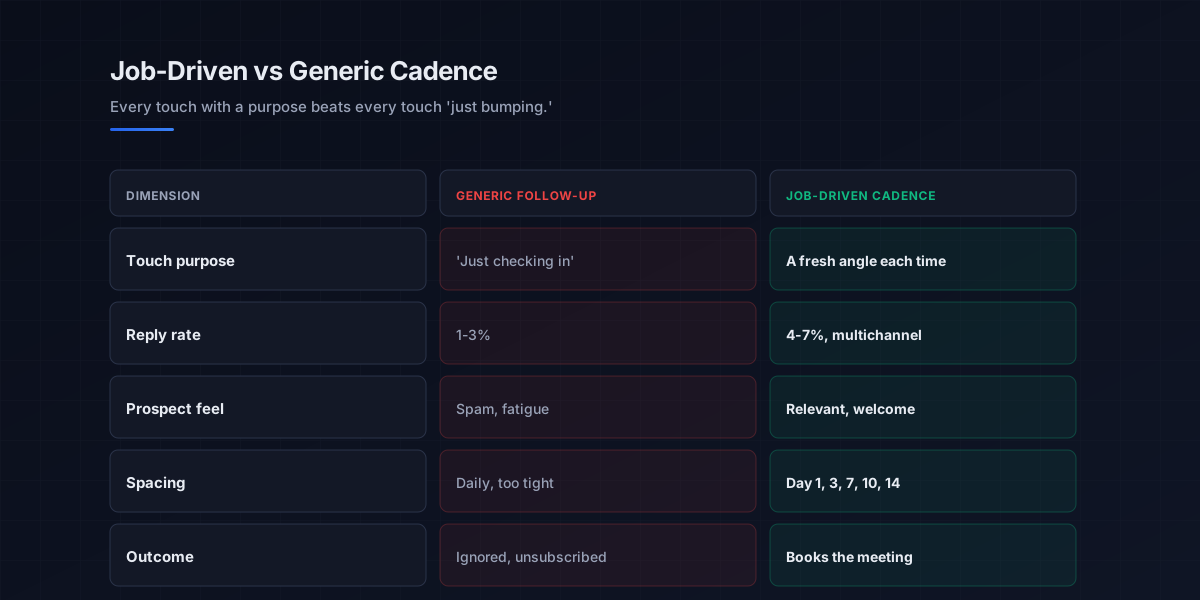
The good news is that the shape of a winning cadence is well-documented in 2026, and it is not complicated. Multi-touch, multichannel sequences convert at 4 to 7 percent, roughly two to three times higher than single-channel outreach, and the best of them run 7 to 12 touches across email, phone, and social over two to three weeks, which is the backbone of modern B2B prospecting. What separates the cadences that book meetings from the ones that get ignored is not touch count, it is that every touch has a job, the spacing mirrors natural business rhythms, and the data underneath actually reaches a real person. This guide gives you the day-by-day structure and the principles behind it.
This is the cadence mechanics layer of the sales engagement pillar, which covers the broader discipline, and it is executed through the tools in sales engagement platforms. It coordinates the cold email, cold calling, and LinkedIn outreach channels into one timed sequence, and like all of them it only works on verified data sent from a deliverable domain.
The cadence framework: duration, touches, spacing
Before the day-by-day, fix the shape, because the framework is what makes a sequence repeatable rather than improvised. Three parameters define it.
Duration and touch count
Run 7 to 12 touches over roughly two to three weeks, 17 to 21 days is the sweet spot for most B2B motions. This is enough persistence to break through, since the first email captures only about 58 percent of replies and follow-ups capture the remaining 42 percent, without crossing into the harassment that spikes spam complaints and unsubscribes. Fewer than seven touches leaves replies on the table; more than twelve usually erodes goodwill faster than it adds responses.
Spacing that mirrors business rhythms
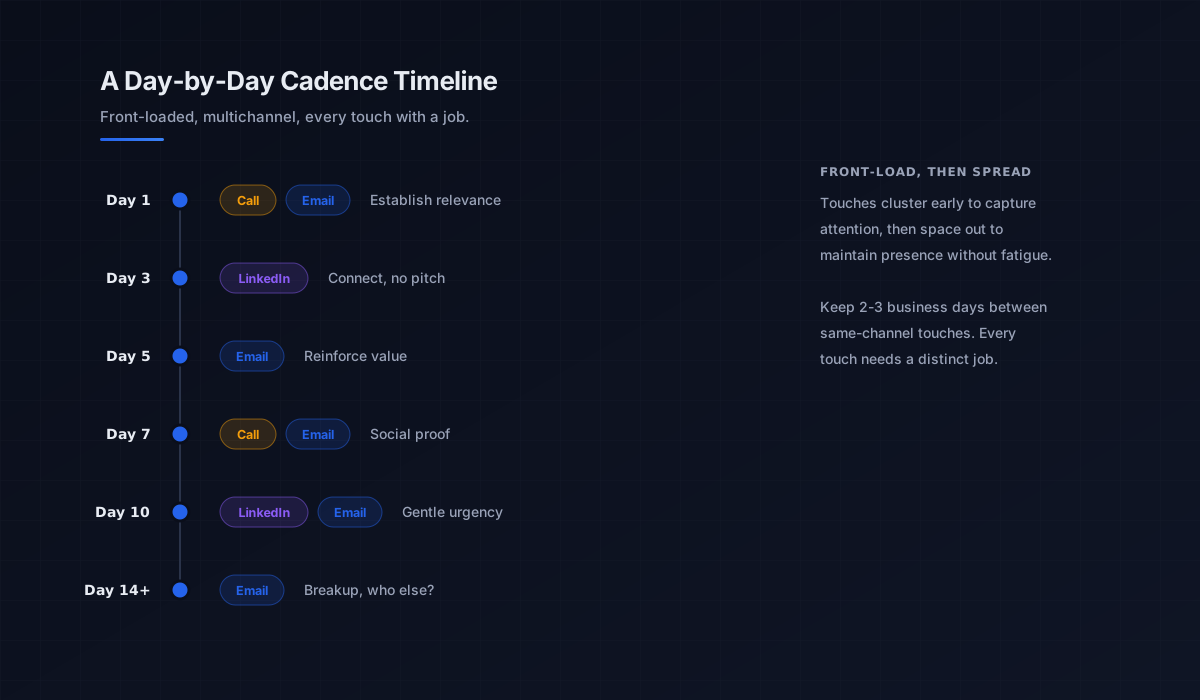
Daily outreach signals desperation and trips spam filters. The proven pattern front-loads then spreads: touch 1 on day 1, touch 2 on day 3, touch 3 on day 7, touch 4 on day 10, touch 5 on day 14, then every 4 to 7 days after the first two weeks. Touches cluster early to capture attention while you are top of mind, then space out to maintain presence without fatigue. Keep at least two to three business days between same-channel touches.
Channel mix
A single channel run harder is not a cadence. Interleave email, phone, and social so the prospect encounters you in more than one place, which is exactly what drives the multichannel lift. The call-then-email pairing on the same day consistently outperforms either alone, since it gives the prospect two ways to engage with one effort. The exact mix flexes by persona, executives often prefer calls, younger buyers social, but the principle holds: coordinated multichannel beats any single channel.
Every touch needs a job
This is the principle that separates cadences that work from cadences that annoy. A “just checking in” or “bumping this to the top of your inbox” message wastes the touch and trains the prospect to ignore you. Every touch in a high-performing outreach cadence answers one of three questions: what changed, what proof is new, or what easier next step can I offer now. Build the sequence so each message earns its place with a fresh angle.
A reliable progression of jobs across the sequence: the first touch establishes relevance, referencing something specific about their company, role, or a trigger event, and asks about a pain point rather than for a meeting. Touches two and three reinforce the value proposition, showing how you have helped similar companies. Touches four and five provide social proof, a case study or customer result matched to their industry. Later touches create gentle urgency around a market trend or timing, and the final touch offers an easy next step or a graceful breakup. Each email takes a different angle; none simply resends the last with “following up” bolted on the front.
A day-by-day sales cadence template
Here is a practical 7-touch baseline over 10 business days that works consistently for mid-market and up. Treat it as a sales cadence template to adapt by segment, not a fixed script. Note that day 1 carries two touches, the email and the call are separate actions with separate goals.
Day 1, morning: Call. Goal is a live conversation; if no answer, leave a brief value-anchored voicemail. Day 1, later: Email establishing relevance, referencing a trigger or specific observation and asking about a pain point, continuous with any voicemail.
Day 3: LinkedIn connection request with a short, no-pitch note referencing shared context.
Day 5: Second email reinforcing the value proposition, a different angle from day 1, showing how you helped a similar company.
Day 7: Call plus a same-day email, the highest-intent pairing, offering social proof matched to their industry.
Day 10: LinkedIn engagement on their content or a value-add message, then a short email creating gentle urgency around timing.
Day 14 and beyond: Spacing widens to every 4 to 7 days, ending with the breakup email that asks who else owns the area, which consistently outperforms other final touches.
This sdr cadence is a starting point. Segment it: lighter and faster for high-velocity SMB, longer and more multi-threaded for enterprise with its larger buying committee. The copy for each touch draws on the cold email templates and cold email subject lines guides.
Timing and segmentation discipline
Two disciplines separate a good framework from a high-performing one. First, timing within the day: Tuesday through Thursday, mid-morning in the prospect’s local time zone, remains the reliable window for the initial email and first follow-up, while Monday mornings and Friday afternoons underperform. Even strong copy underperforms when touches land in low-attention windows or stack too tightly.
Second, segmentation. The single biggest sales sequence mistake is running one cadence for everyone. A 15-person startup and a 2,000-person enterprise are different motions and deserve different sequences, different durations, channel mixes, and value propositions. Segment by deal size and persona before you build, since executives, practitioners, and procurement respond to different channels and language. A multichannel cadence tuned to the segment converts far better than a generic one blasted at everyone, which connects to the targeting in sales intelligence tools.
How the cadence depends on data and deliverability
The cadence is the last layer, not the first, and skipping the two beneath it is why most sequences underperform. The data layer comes first: a connect rate below 5 percent or a bounce rate near 28 percent means the contacts are stale, and no cadence mechanics fix wrong numbers and dead inboxes, which is why the b2b data providers and data enrichment tools layers gate everything. Deliverability comes second: an email cadence from an unauthenticated or cold domain lands in spam regardless of spacing, so the discipline in email deliverability, sender reputation, and a low spam complaint rate decides whether the email touches arrive at all.
Get those right and the cadence multiplies them; get them wrong and the most elegant day-by-day sequence just burns the domain faster. The phone side has its own foundation, local presence dialing and clean caller ID, since a flagged or out-of-area number tanks answer rates no matter how well-timed the call step, covered in the cold calling pillar. The cadence is the execution arm of the broader outbound sales motion, and it only ever performs as well as the foundation beneath it.
Five mistakes that break a sales cadence
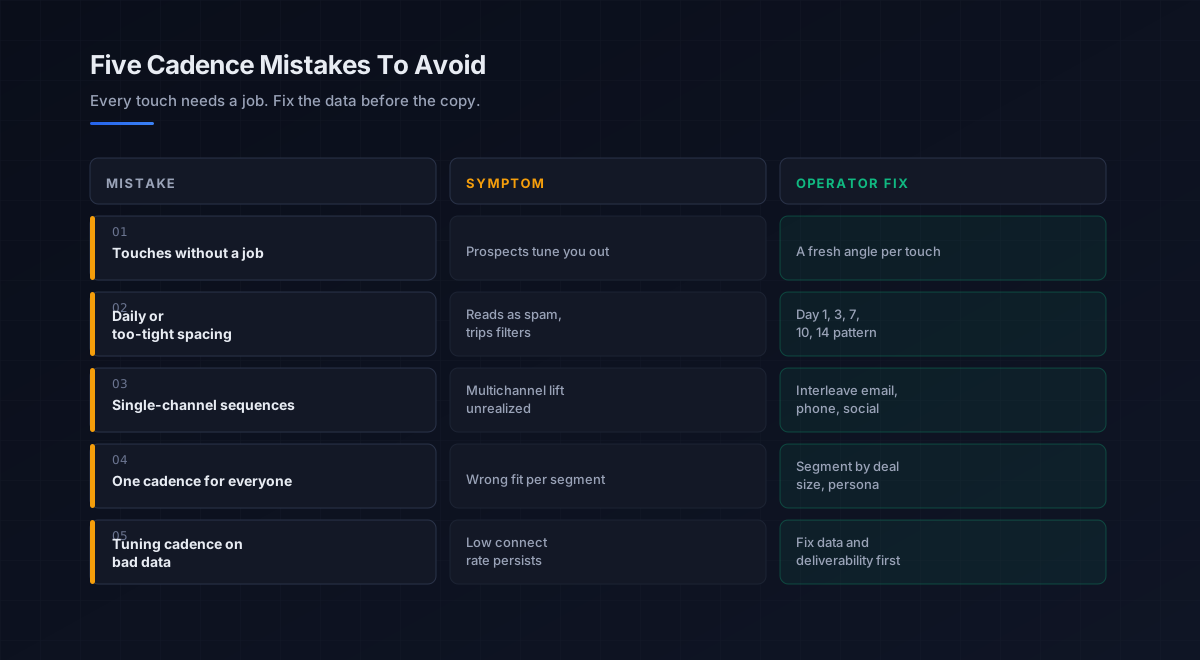
What we see most often is the same handful of errors that turn a structured sequence back into noise.
-
Touches without a job. “Just checking in” wastes the touch and trains prospects to ignore you. Give every touch a fresh angle: what changed, what proof is new, what easier next step.
-
Daily or too-tight spacing. Five-plus touches in a week reads as spam and trips filters. Use the day 1, 3, 7, 10, 14 pattern with two to three business days between same-channel touches.
-
Single-channel sequences. Email-only or call-only leaves the multichannel lift unrealized. Interleave email, phone, and social, and pair calls with same-day emails.
-
One cadence for everyone. A startup and an enterprise need different sequences. Segment by deal size and persona before building.
-
Tuning the cadence on bad data. A low connect rate is a data problem, not a copy one. Fix data and deliverability before polishing the sequence.
An eight-step framework for building a sales cadence
This is the order we build a cadence in, for our own outreach and for the teams we work with. Run it top to bottom.
- Verify the data first. Confirm a healthy connect rate, 8 to 12 percent, and low bounce, since stale contacts sink any sequence.
- Lock down deliverability. Authenticate and warm domains, and clean caller ID with local presence, so touches actually arrive.
- Segment by deal size and persona. Build distinct cadences rather than one generic sequence for everyone.
- Set duration and touch count. Plan 7 to 12 touches over 17 to 21 days, adjusting by segment.
- Map the spacing. Front-load then spread: day 1, 3, 7, 10, 14, then every 4 to 7 days, with gaps between same-channel touches.
- Give every touch a job. Assign each touch a distinct angle, relevance, value, proof, urgency, easy next step, never a generic bump.
- Interleave channels. Coordinate email, phone, and social, pairing calls with same-day emails for the highest intent.
- Measure and refine. Track reply and meeting rates by touch and channel, test one variable at a time, and iterate quarterly.
How sales cadence fits the broader stack
The cadence is the executable core of sales engagement, sitting on the channels and the data beneath them. Each connected layer has a deeper guide.
- The discipline. The broader practice the cadence executes, in sales engagement.
- The platforms. The tools that run the cadence, in sales engagement platforms.
- The email channel. Copy and deliverability, in cold email templates and the cold email pillar.
- The phone channel. Call steps and connect rates, in the cold calling pillar.
- LinkedIn. Social touches in the sequence, in LinkedIn outreach.
- The data layer. Verified contacts that connect, in b2b data providers and data enrichment tools.
- Intent. Timing and prioritizing touches, in sales intelligence tools.
- Strategy. The motion the cadence serves, in outbound sales.
That is the map. The data supplies contacts that connect, deliverability earns the inbox, the cadence sequences and spaces the touches so each has a job, and the platform executes and tracks it, each only as effective as the foundation beneath.
Frequently asked questions
What is a sales cadence?
How many touches should a sales cadence have?
What is the best spacing between cadence touches?
What should each touch in a cadence say?
How is a sales cadence different from a sales sequence?
Why is my sales cadence not booking meetings?
What is the best time to send cadence touches?
The bottom line
A sales cadence in 2026 is a countdown clock: deals closed within 50 days win at 47 percent against 20 percent after, so the structure and spacing of your touches decide outcomes as much as the copy. The proven shape is 7 to 12 multichannel touches over 17 to 21 days, front-loaded then spread (day 1, 3, 7, 10, 14, then every 4 to 7 days), with email, phone, and social interleaved, every touch carrying a distinct job, and the whole thing segmented by deal size and persona.
If you take one rule from this guide, make it this: fix the foundation before you tune the sequence. A cadence run on a list connecting below 5 percent is doomed no matter how elegant the spacing, while a well-spaced, job-driven, multichannel sequence on verified data and a deliverable domain converts at multiples of a single-channel blast. Get the data and deliverability right, give every touch a purpose, respect the timing, and the cadence does what it is built to do, book the meeting before the clock runs out.
Get the operator playbook in your inbox. The Outbound Game publishes one operator-grade breakdown a week on B2B outbound sales, tactics, tooling, and ops. No fluff, no vendor talking points. Subscribe and get the next one when it ships.
More on Sales Engagement
Apollo vs Outreach in 2026: A Full Operator Verdict
Apollo vs Outreach in 2026, compared by job. The all-in-one database vs the enterprise engine: real pricing, the 2x cost gap, and which one fits.
HubSpot vs Salesloft in 2026: A Full Operator Guide
HubSpot vs Salesloft in 2026, compared by job. The all-in-one CRM platform vs the engagement-only layer: real pricing and which one fits your team.
Outreach vs Salesloft in 2026: An Operator Comparison
Outreach vs Salesloft in 2026, compared honestly. The 90% they share, and the 10% that decides it: pricing, implementation, CRM fit, and AI.