Sales Engagement in 2026: A Full Operator Playbook
Sales engagement in 2026 is the minimum viable outbound motion. An operator playbook on multichannel cadence, the framework, the stack, and the metrics.
Sales engagement in 2026 is no longer an optimization you layer on top of outbound; it is the minimum viable outbound motion. The numbers force the point. B2B buyers now use an average of ten interaction channels, up from five in 2016, buying committees have grown to roughly seven decision-makers for mid-market deals, and some teams report needing a thousand or more touchpoints per sourced opportunity, up from a few hundred a few years ago. Against that backdrop, the old B2B prospecting playbook, blast a list, make some calls, hope for the best, simply does not survive, and 84 percent of reps missed quota last year running some version of it.
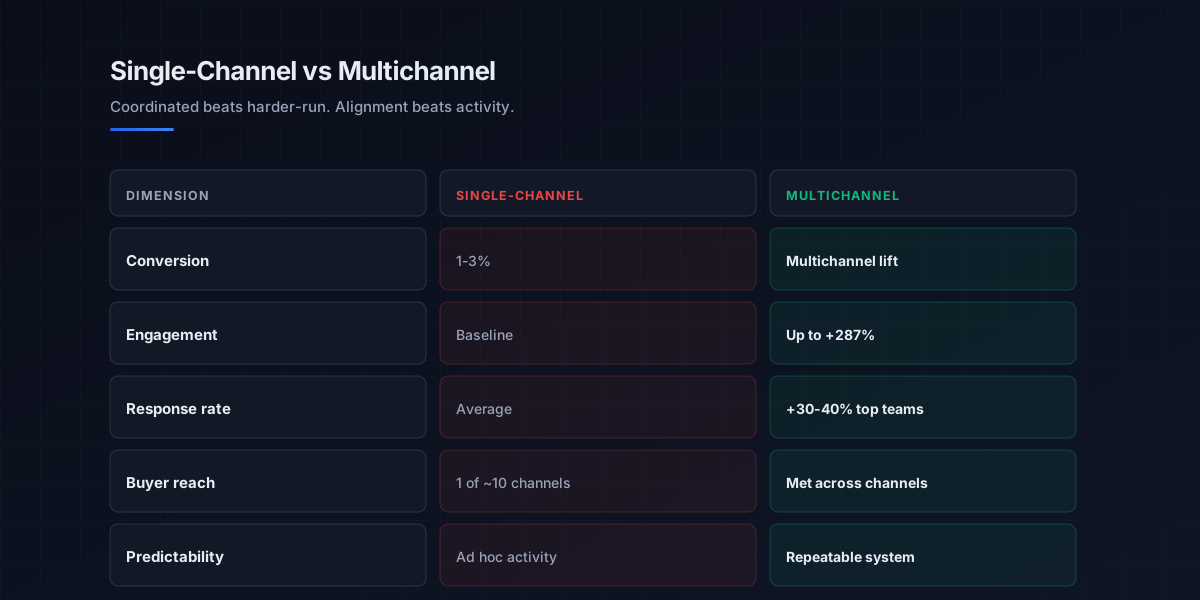
The discipline that replaces it is structured, multichannel, and measured. The discipline is the practice of orchestrating every touchpoint, email, phone, LinkedIn, into one coordinated sequence, tracked and refined as a system rather than a pile of disconnected activities. The payoff is large and well-documented: structured multi-touch outreach sees up to 287 percent higher engagement than single-channel approaches, and top-performing teams running it see 30 to 40 percent higher response rates. Single-channel campaigns, by contrast, convert at just 1 to 3 percent. The lift is real, but it only shows up when the motion is built as a system.
This is the pillar reference for the sales engagement layer, the discipline that the sales engagement platforms execute and that comparisons like Outreach vs Salesloft help you tool. It orchestrates the cold email, cold calling, and LinkedIn outreach channels into a single cadence, and like all of them it depends on clean data and deliverability before any of it works.
What sales engagement actually is
Before the framework, fix the definition, because the term gets used loosely. It is the systematic coordination of buyer touchpoints across channels, designed to engage a prospect over time while minimizing fatigue. It is a discipline, not a tool, though it is executed through tools.
It is multichannel by definition
A single-channel motion is not engagement, it is just emailing, or just calling. The discipline is the deliberate mix of email, phone, social, and sometimes video, sequenced so each touch reinforces the others. With buyers spread across ten channels, meeting them on only one leaves most of the engagement on the table, which is why single-channel converts at 1 to 3 percent while coordinated multichannel outreach multiplies it.
It is structured, not ad hoc
The defining word is cadence: a planned rhythm of touches over a set window, the same logic applied to every prospect in a segment, rather than reps improvising. A well-built sales sequence is what makes the motion measurable and repeatable, and it is what separates a predictable revenue engine from a pile of disconnected activity.
It is measured and refined
The discipline treats outreach like a science: every touch is tracked, attributed, and used to refine the next sequence. The teams that win do not just look at meetings booked; they dig into which email, which call script, which value proposition drove engagement, and iterate. That feedback loop, run continuously, is the difference between a cadence that improves and one that decays.
The multichannel cadence framework
The core of any sales engagement strategy is the sales cadence, and the 2026 data converges on a clear shape. Build from this and adapt to your segment.
Duration and touch count
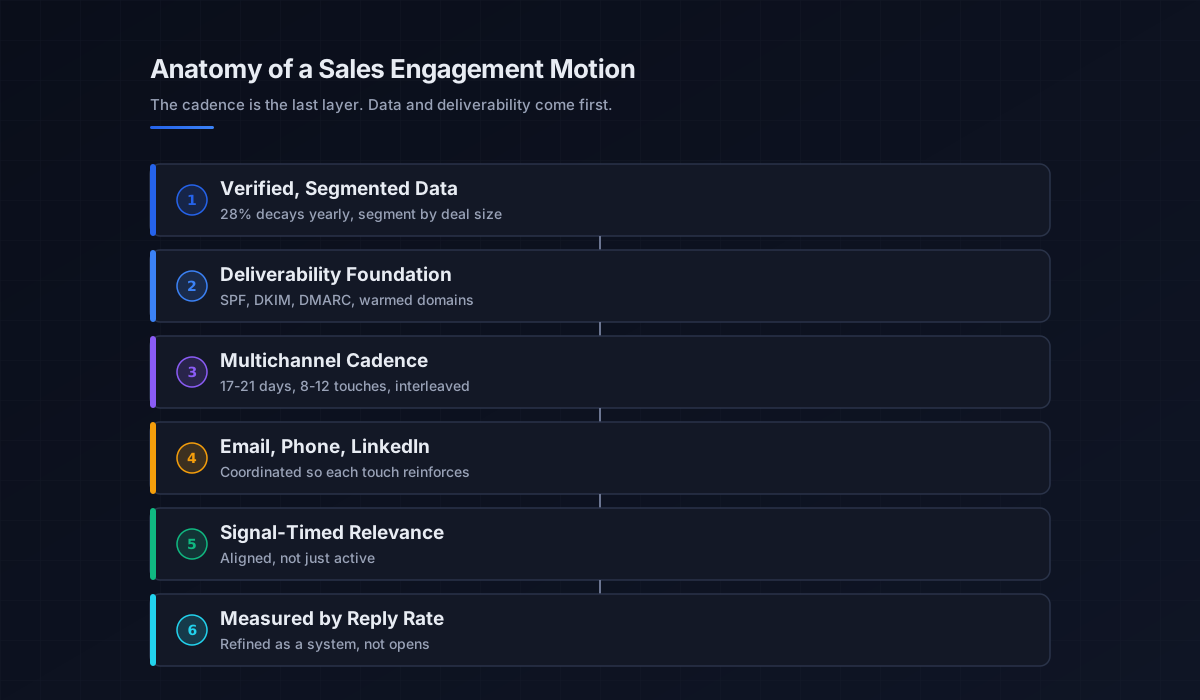
A cadence running 17 to 21 days with 8 to 12 touches hits the sweet spot for most B2B motions, enough persistence to break through without crossing into harassment. This matters because the first email captures only about 58 percent of replies; the remaining 42 percent require follow-ups to materialize, so stopping early forfeits nearly half your pipeline. But there is a ceiling, and past it each extra touch erodes goodwill faster than it adds replies.
Channel mix
The sequence interleaves channels rather than stacking one. A representative rhythm spreads email, phone, and LinkedIn touches across the window so the prospect encounters you in more than one place, which is what drives the multichannel lift. The exact mix depends on where your buyers actually are, but the principle is fixed: more than one channel, coordinated, beats any single channel run harder.
Segmentation by deal size
The single biggest framework mistake is running the same sequence for a 15-person startup and a 2,000-person enterprise. They are different motions and deserve different cadences, lighter and faster for high-velocity SMB, longer and more multi-threaded for enterprise with its seven-person buying committee. Segment the cadence by deal size before anything else.
The foundation the motion depends on
The most important thing to understand about sales engagement is that the cadence is the last layer, not the first. Two foundations have to be right before the sequence matters at all, and skipping them is why most cadences underperform.
First, data quality. Roughly 28 percent of B2B contact data decays annually, so a list even six months old is partly dead on arrival, and a cadence built on it dies before it starts. Verified, well-segmented data is the precondition, which is why the b2b data providers and data enrichment tools layers sit underneath the entire motion. Second, deliverability. Google and Microsoft made SPF, DKIM, and DMARC table stakes, and email from unauthenticated domains is filtered or rejected before a human sees the subject line, so the discipline in email deliverability and sender reputation gates everything the email channel does.
Get those two right and the cadence multiplies them; get them wrong and no amount of multichannel sophistication helps. This is the through-line of the whole site: the engagement layer is only as strong as the data and deliverability beneath it.
The tools that execute the discipline
The discipline is one thing, but at scale it runs on tooling, because coordinating 8 to 12 touches across three channels for hundreds of prospects by hand does not work. A sales engagement platform is the orchestration layer: it builds and runs the multichannel sequences, tracks every touch, surfaces the next action, and syncs to the CRM. The platform landscape, enterprise execution tools, all-in-one platforms, and outbound-focused tools, is covered in depth in the sales engagement platforms guide, and the enterprise head-to-head in Outreach vs Salesloft.
The key principle is that the tool serves the motion, not the reverse. An all-in-one like Apollo bundles data with sequencing for high-velocity teams, while enterprise platforms expect a separate data layer and the email channel still leans on dedicated infrastructure like Smartlead for deliverability at volume. Pick the platform that matches your sales motion and segment, feed it clean data, and let it execute the cadence you designed rather than designing your cadence around its defaults.
Five mistakes that break the motion
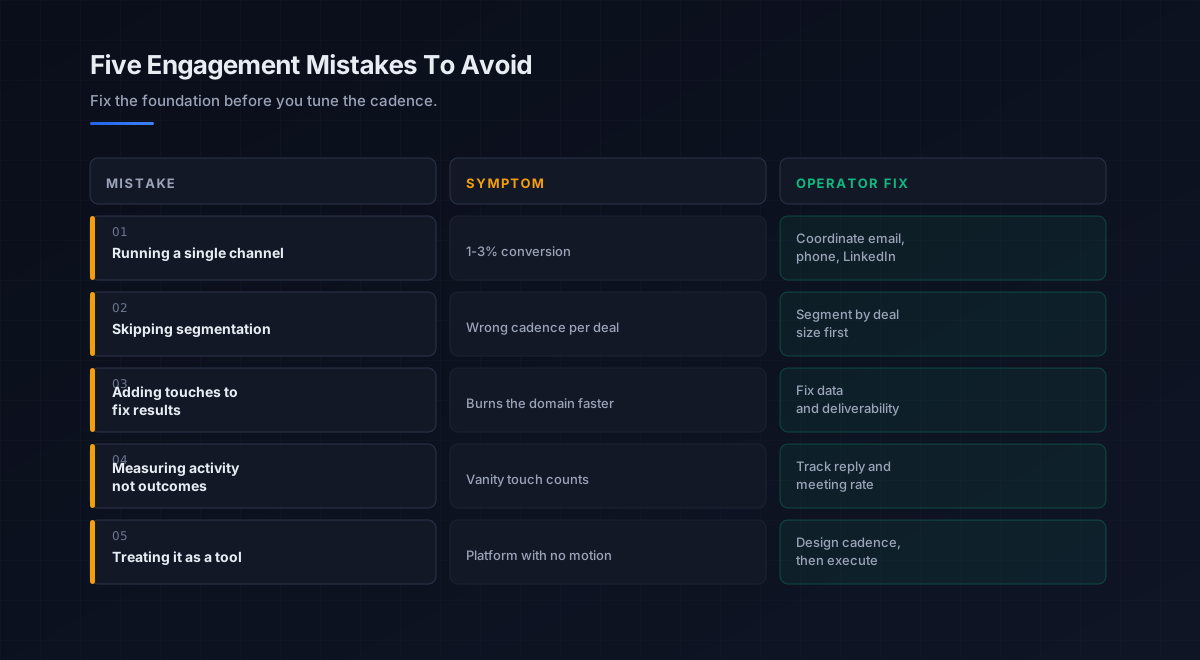
What we see most often is the same handful of errors that turn a coordinated motion back into a disconnected one.
-
Running a single channel. Email-only or call-only converts at 1 to 3 percent. Coordinate at least email, phone, and LinkedIn into one sequence for the multichannel lift.
-
Skipping segmentation. One cadence for startups and enterprises wastes everyone’s time. Segment by deal size before building the sequence.
-
Adding touches to fix weak results. A broken cadence is usually a foundation problem. Fix data and deliverability before extending the sequence.
-
Measuring activity, not outcomes. Touch counts and opens are vanity. Track reply rate, positive reply rate, and meetings, and attribute them to specific touches.
-
Treating it as a tool, not a discipline. Buying a platform does not create a motion. Design the cadence and measurement first, then let the tool execute it.
An eight-step framework for building sales engagement
This is the order we build a sales engagement motion in, for our own outreach and for the teams we work with. Run it top to bottom.
- Verify and segment the data. Start with clean, well-segmented contacts, since 28 percent decay annually and a stale list sinks any cadence.
- Lock down deliverability. Authenticate and warm sending domains, since unauthenticated email never reaches the inbox to engage anyone.
- Segment cadences by deal size. Build lighter, faster sequences for SMB and longer, multi-threaded ones for enterprise committees.
- Design the multichannel cadence. Plan a 17-to-21-day, 8-to-12-touch sequence interleaving email, phone, and LinkedIn.
- Anchor each touch on relevance. Use intent signals to time and personalize, so the cadence feels aligned, not just active.
- Choose a platform that fits the motion. Match the sales engagement platform to your segment and stack, then let it execute the design.
- Measure reply and meeting rates. Track positive reply rate and meetings against benchmarks, attributing results to specific touches.
- Review and refine on a cadence. Run a quarterly review, test one variable at a time, and iterate the sequence as a system.
How sales engagement fits the broader stack
This is the orchestration discipline of outbound, sitting on top of every channel and the data beneath them. Each connected layer has a deeper guide.
- The platforms. The tools that execute the cadence, in sales engagement platforms and Outreach vs Salesloft.
- The data layer. Clean, segmented contacts, in b2b data providers and data enrichment tools.
- The email channel. Deliverability-first sending, in cold email software and the cold email pillar.
- The phone channel. Calls inside the cadence, in the cold calling pillar.
- LinkedIn. Social touches in the sequence, in LinkedIn outreach.
- Intent. Which accounts to prioritize and when, in sales intelligence tools.
- Deliverability. Keeping sequenced email in the inbox, on email deliverability.
- Strategy. The motion engagement executes, in outbound sales.
That is the map. The data layer supplies who and why, intelligence prioritizes and times, the engagement discipline coordinates the touches across channels into one cadence, and the platform executes and tracks it, each only as effective as the foundation beneath.
Frequently asked questions
What is sales engagement?
What is the difference between sales engagement and a sales engagement platform?
How long should a sales cadence be?
Does multichannel sales engagement actually work better?
What metrics matter most in sales engagement?
Why is my sales cadence not working?
How do I build a sales engagement strategy from scratch?
The bottom line
In 2026 this is the minimum viable outbound motion, not an optional optimization. Buyers spread across ten channels, buying committees of seven, and rising touch requirements mean the single-channel blast converts at 1 to 3 percent while coordinated multichannel cadences see up to 287 percent higher engagement. The durable framework is a 17-to-21-day, 8-to-12-touch sequence across email, phone, and LinkedIn, segmented by deal size, measured by reply rate rather than the open rate Apple broke, and refined as a system.
If you take one rule from this pillar, make it this: fix the foundation before you tune the cadence. A struggling sequence is almost always a data or deliverability problem wearing a copy problem’s clothes, and adding touches to a broken foundation just burns domains faster. Verify the data, authenticate the domains, segment the cadence, coordinate the channels, and measure what maps to pipeline. Alignment beats activity, and the engagement layer only ever multiplies the foundation beneath it.
Get the operator playbook in your inbox. The Outbound Game publishes one operator-grade breakdown a week on B2B outbound sales, tactics, tooling, and ops. No fluff, no vendor talking points. Subscribe and get the next one when it ships.
More on Sales Engagement
Apollo vs Outreach in 2026: A Full Operator Verdict
Apollo vs Outreach in 2026, compared by job. The all-in-one database vs the enterprise engine: real pricing, the 2x cost gap, and which one fits.
HubSpot vs Salesloft in 2026: A Full Operator Guide
HubSpot vs Salesloft in 2026, compared by job. The all-in-one CRM platform vs the engagement-only layer: real pricing and which one fits your team.
Outreach vs Salesloft in 2026: An Operator Comparison
Outreach vs Salesloft in 2026, compared honestly. The 90% they share, and the 10% that decides it: pricing, implementation, CRM fit, and AI.