Video Prospecting in 2026: A Full Operator Playbook
Video prospecting in 2026, explained for B2B teams: why it lifts reply rates 3-5x, manual vs AI-personalized, the 90-second rule, and what actually works.
Video prospecting is the practice of using short, personalized video instead of plain text to open and advance B2B conversations, and in 2026 the numbers behind it are hard to ignore. Cold email reply rates have cratered to an industry average around 3.43 percent, while sales teams using personalized video are seeing reply rates between 10 and 30 percent, a 3 to 5x improvement over text-only outreach. The mechanism is well understood: a video signals genuine effort in a way a template never can, which activates a reciprocity instinct in the viewer, and it lets you show rather than tell. When a prospect can see you reference their website or their role on camera, the message reads as made-for-them, not blasted to a list.
That said, video is not a magic trick that rescues a broken motion. The lift is real, but it is conditional: it depends on the video being short, specific, and genuinely personalized, and on the same foundation every channel needs, clean data and a deliverable domain. A generic talking-head clip blasted to a stale list underperforms a good text email. So the operator’s job is to understand where video earns its outsized reply rate, choose the right production approach for the team’s scale, and treat it as one disciplined layer of the outreach motion rather than a gimmick bolted on top.
This is the pillar reference for the video prospecting cluster. It is a channel that rides on top of the cold email and LinkedIn outreach motions, slots into the broader sales cadence, and like every channel it only performs on verified contacts from the b2b data providers layer sent from a domain with clean email deliverability.
Why video prospecting works
The reason video outperforms text is not novelty, it is psychology and proof. Three forces compound.
First, effort signaling. Recording a video, or generating a genuinely personalized one, shows the prospect you did your homework, and that perceived effort triggers social reciprocity in a way a merge-tagged template cannot. Second, the format itself: a prospect is more likely to watch a 60-second video than read a 300-word email, and video email generates 3 to 5x higher click-through rates than text-only in B2B. Third, trust: seeing a real human reference something specific builds credibility faster than any line of copy.
The benchmark data backs this from multiple independent angles. Vidyard’s analysis of nearly a million videos found over a third of teams using video report higher win rates, 28 percent see increased pipeline, and 27 percent cite shorter deal cycles. One documented B2B team went from a 4 percent to a 20 percent reply rate after switching to video. The pattern is consistent: a sales video does not just get opened, it changes the quality of the conversation that follows.
Manual vs AI-personalized video
There are two approaches to video prospecting in 2026, and choosing the right one for your team’s scale is the first real decision. They are not equivalent, and the trade-off is effort versus authenticity.
Manual, on-camera video
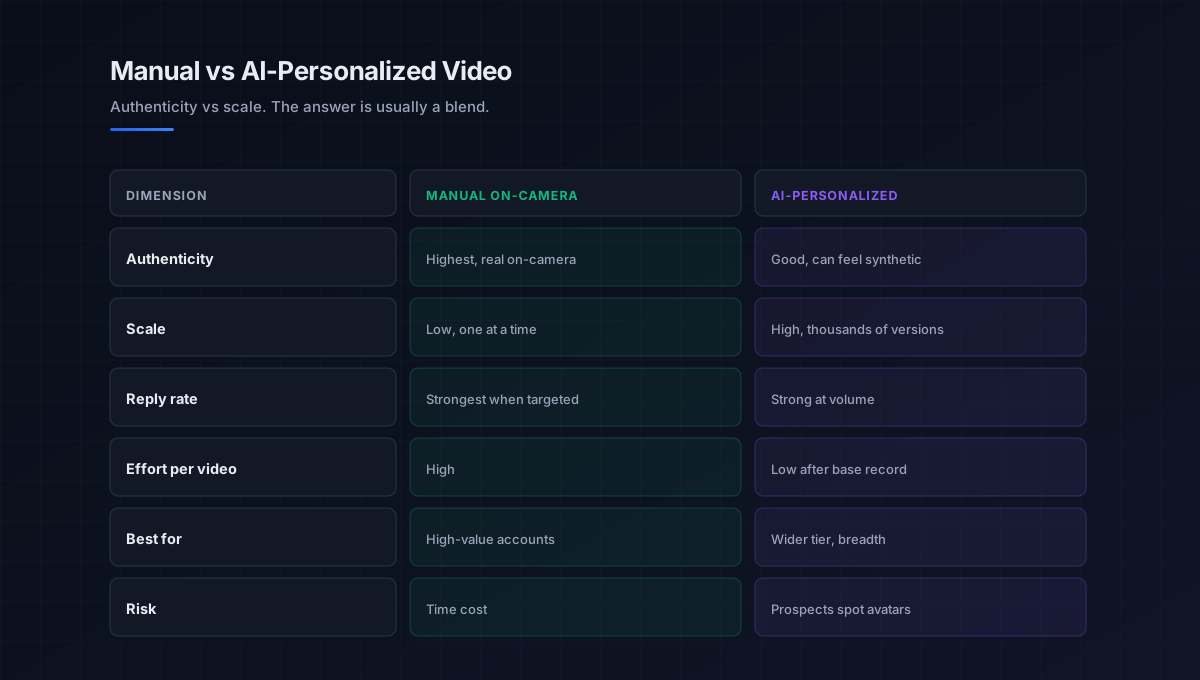
You record each video individually: open a screen recorder, pull up the prospect’s LinkedIn or website, and deliver a short pitch while referencing what is on screen. This is the most authentic form of personalized video, the prospect sees a real person who clearly looked them up, and it consistently produces the highest reply rates. The cost is time: recording a unique video for every prospect does not scale beyond a modest daily volume, which makes it ideal for high-value accounts and relationship-driven roles rather than top-of-funnel blasts.
AI-personalized video at scale
Here you record one base video and let software generate many personalized versions, inserting the prospect’s name, company, or a dynamic background so each feels individual. This scales video outreach to volumes manual recording never could. The trade-off is authenticity: prospects can often tell a fully synthetic AI-avatar video from a real person, so on-camera reps with AI-driven personalization of the surrounding details tend to outperform fully synthetic avatars. The right answer is usually a blend: manual for your highest-value targets, AI-assisted personalization for the wider tier.
What makes a prospecting video work
The format rewards discipline, and a handful of rules separate the videos that get watched from the ones that get closed in three seconds.
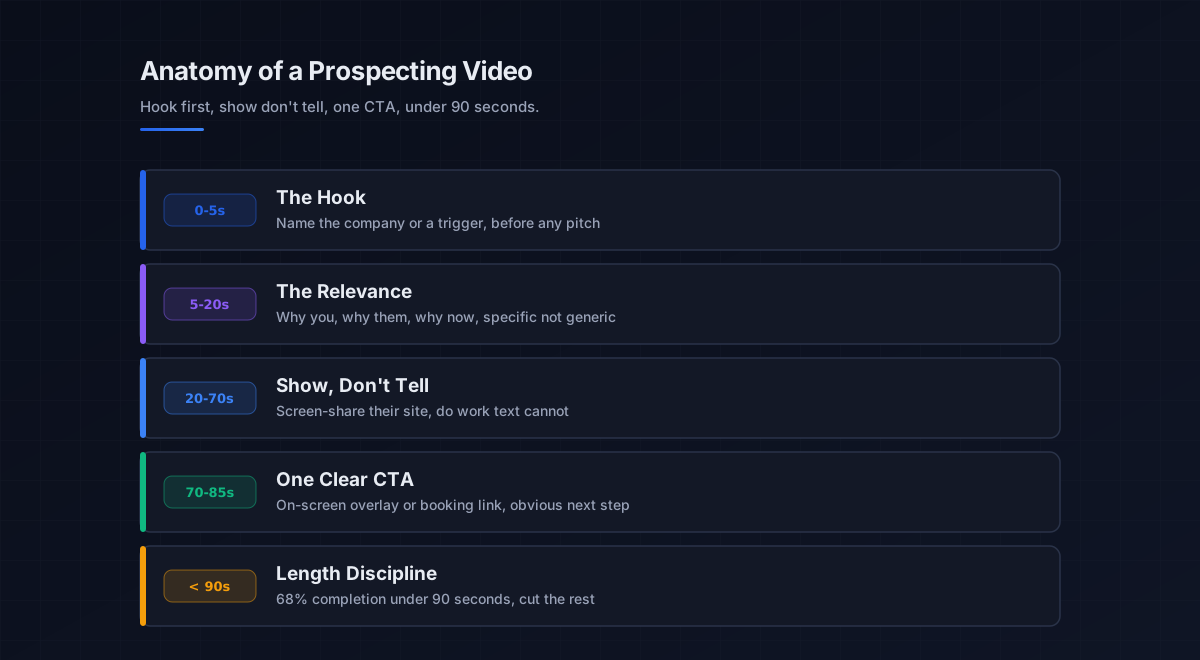
Keep it short. Cold outreach videos should run 45 to 90 seconds; follow-ups after a prior conversation can stretch to 60 to 120. Videos under 90 seconds hit roughly 68 percent completion rates, and completion falls off a cliff past that, so length discipline is not optional. Lead with something specific in the first few seconds, the prospect’s name, company, or a trigger event, so the video cannot be mistaken for a mass send, and put the personalized hook before any pitch. Show, do not just talk: screen-share their website or a relevant page so the video does work a text email cannot. Close with one clear call to action, ideally an on-screen overlay or a booking link, so the next step is obvious. And use a compelling thumbnail and a video-aware subject line in the video email itself, since the email still has to earn the click before the video can do its job.
These rules apply whether the video is manual or AI-assisted. A personalized video that is too long, buries the specific reference, or ends without a clear next step underperforms regardless of how it was produced.
How video fits the outreach motion
Video prospecting is a channel and a layer, not a standalone strategy, and it performs only when the layers beneath it are sound. The data layer comes first: the contacts come from the b2b data providers and data enrichment tools layers, and a video sent to a wrong or dead address is wasted effort no matter how good it is. Deliverability comes next: when video is embedded in or linked from an email, that email still has to reach the inbox, so the discipline in email deliverability and sender reputation gates whether the video is ever seen.
On top of that foundation, video slots into the existing channels rather than replacing them. It is most often a high-impact touch inside a cold email sequence or a LinkedIn outreach message, where LinkedIn video DMs see reply rates above 20 percent, and it is sequenced like any other touch within the sales cadence, typically reserved for higher-value prospects or a standout follow-up rather than every step. The activity logs back to your CRM software like any other touch, and the AI personalization tools sit alongside the rest of the stack covered in best AI sales tools. Video is the amplifier on the motion, not the motion itself.
Five mistakes that kill video prospecting
What we see most often is the same handful of errors that turn a high-reply channel back into noise.
-
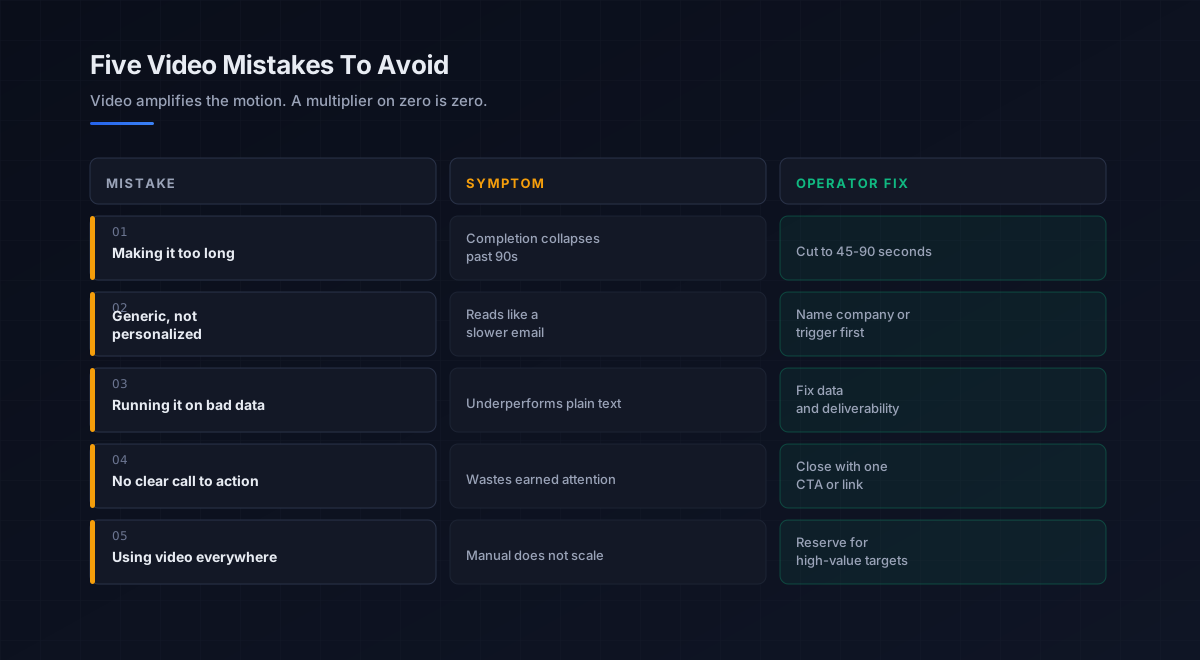
Making it too long. Past 90 seconds, completion collapses. Keep cold videos to 45 to 90 seconds and put the hook first.
-
Generic, not personalized. A talking-head clip with no specific reference is just a slower email. Name the company or a trigger in the first few seconds.
-
Running it on bad data. Video amplifies the motion beneath it. On a stale list and a cold domain, it underperforms text. Fix data and deliverability first.
-
No clear call to action. A great video that ends without an obvious next step wastes the attention it earned. Close with one CTA or a booking link.
-
Using video everywhere. Manual video does not scale to every touch. Reserve it for high-value accounts and standout follow-ups, and use AI personalization for breadth.
An eight-step framework for video prospecting
This is the order we build a video motion in, for our own outreach and for the teams we work with. Run it top to bottom.
- Verify the data first. Confirm enriched, verified contacts, since a video to a dead address is wasted no matter how good it is.
- Lock down deliverability. Send from a warm, authenticated domain so the email carrying the video reaches the inbox.
- Choose the approach. Manual on-camera for high-value targets, AI-personalized for scale, usually a blend of both.
- Script the hook first. Open with a specific reference to the prospect in the first few seconds, before any pitch.
- Keep it under 90 seconds. Respect the completion cliff; cut everything that is not the hook, the value, and the ask.
- Show, do not just tell. Screen-share their site or a relevant page so the video does work text cannot.
- Close with one clear CTA. Use an on-screen overlay or booking link so the next step is unmistakable.
- Sequence and measure. Place video at high-impact points in the cadence, track completion and reply rate, and iterate.
How video prospecting fits the broader stack
Video prospecting is a channel layer that amplifies the outreach motion. Each connected layer has a deeper guide.
- The email channel. Where video most often lives, in cold email software and the cold email pillar.
- LinkedIn. Video DMs and social touches, in LinkedIn outreach.
- The cadence. How video is sequenced among other touches, in sales cadence and sales engagement platforms.
- The data layer. Verified contacts the video reaches, in b2b data providers and data enrichment tools.
- The AI layer. Personalization at scale, in best AI sales tools.
- The system of record. Where video activity logs, in CRM software.
- Intent. Prioritizing who gets a high-effort video, in sales intelligence tools.
- Strategy. The motion video amplifies, in outbound sales.
That is the map. The data layer supplies verified contacts, deliverability earns the inbox, the cadence sequences the touches, and video is the high-effort amplifier placed where it counts, only ever as effective as the foundation beneath it.
Frequently asked questions
What is video prospecting?
Does video prospecting actually improve reply rates?
How long should a prospecting video be?
What is the difference between manual and AI video prospecting?
When should I use video instead of a normal email?
Why is my video prospecting not working?
What tools are used for video prospecting?
The bottom line
Video prospecting in 2026 is the most reliable B2B prospecting channel for earning attention that text no longer can: against a cold email baseline near 3.43 percent, personalized video drives reply rates of 10 to 30 percent because it signals real effort and lets you show rather than tell. But the lift is conditional, not automatic. It comes from videos that are short, under 90 seconds, specific in the first few seconds, and closed with one clear call to action, produced manually for high-value targets and with AI personalization for scale.
If you take one rule from this pillar, make it this: video is a multiplier, and a multiplier on zero is still zero. The teams that win with it get the foundation right first, verified data and a deliverable domain, then place high-effort video at the points in the cadence where it counts, rather than blasting generic clips and hoping the format saves them. Fix the fundamentals, keep it short and specific, sequence it deliberately, and video does what it genuinely does well: turn a channel everyone is fatigued by into conversations that actually start.
Get the operator playbook in your inbox. The Outbound Game publishes one operator-grade breakdown a week on B2B outbound sales, tactics, tooling, and ops. No fluff, no vendor talking points. Subscribe and get the next one when it ships.
More on Video Prospecting
The Best Video Prospecting Tools in 2026, Compared
The best video prospecting tools in 2026, compared by fit. Sendspark, Vidyard, Hippo Video, BombBomb, and Loom matched to motion and real pricing.
Sendspark vs Vidyard in 2026: A Full Operator Guide
Sendspark vs Vidyard in 2026, compared by job. AI personalization at scale vs the all-rounder: real pricing, integrations, and which one fits your team.
Video Prospecting Best Practices: A 2026 Field Guide
Video prospecting best practices for 2026: ideal length, the personalization that drives 25-30% reply rates, and where to place video in the sequence.