Video Prospecting Best Practices: A 2026 Field Guide
Video prospecting best practices for 2026: ideal length, the personalization that drives 25-30% reply rates, and where to place video in the sequence.
Video prospecting best practices in 2026 come down to a single idea most teams miss: the lift comes from personalization and placement, not from the camera itself. Sending a video instead of text does not, on its own, rescue a weak message, what moves the numbers is a short, specifically personalized video, shown to the right prospect, embedded in the right place in the sequence. Done that way, the results are not marginal: video reply rates average 25 to 30 percent against the 3.43 percent benchmark for cold email, a 7 to 9x gap that shows up consistently across industries and company sizes. Done generically, video is just a slower way to get ignored.
That framing matters because the medium is now easy and the discipline is what separates results. AI tools can turn one recording into thousands of personalized versions, so the bottleneck is no longer production, it is judgment: how long the video should be, what to personalize, which prospects deserve a bespoke recording, and where the video belongs in the cadence. This guide lays out the practices that actually drive replies, the ideal length, the personalization that earns the click, the sequence placement that compounds, and the effort-tiering that keeps it efficient, along with the mistakes that quietly waste the channel. Treat these video prospecting best practices as a checklist for B2B prospecting, not a pep talk about “doing more video.”
This is a practical guide inside the video prospecting cluster, which covers the channel at the pillar level, with best video prospecting tools on the tooling and the head-to-heads in vidyard vs loom and sendspark vs vidyard. It works best sequenced with your sales cadence and the rest of the outbound sales motion.
Video prospecting best practices: keep it short
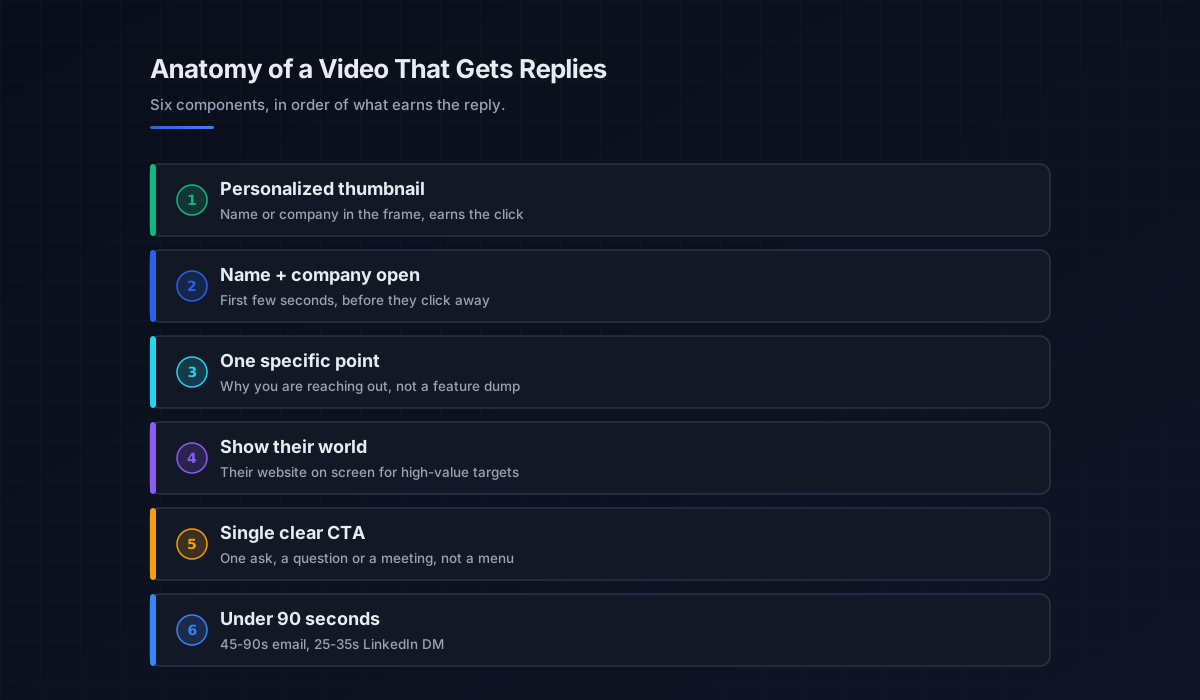
The first practice is ruthless brevity, because completion rate drives reply rate and attention drops sharply with length. The consistent guidance across the data is 30 to 90 seconds, tuned to the channel: 45 to 90 seconds for an email video (the classic video email format), and a tighter 25 to 35 seconds for a LinkedIn DM video, where attention is shorter. Anything past 60 to 90 seconds sees a marked drop in completion and replies, so length is not a stylistic choice but a performance lever.
The structure inside that window matters as much as the duration. Open with the prospect’s name and a specific reference to their company in the first few seconds, before they can click away; make one clear point about why you are reaching out; and close with a single, specific call to action, a question or a meeting ask, not a menu of options. A tight 45-second video that says one relevant thing outperforms a rambling two-minute pitch every time, because you are earning attention by the second and the only way to keep it is to be brief and specific.
Personalize what the prospect can see
The single biggest lift in video prospecting comes from visible personalization, the prospect seeing their own name or company in the video thumbnail and the first frame. That is what earns the click in a crowded inbox: a thumbnail showing their company website or their name signals the video was made for them, not blasted to a list, and that signal is most of the battle. Generic video lifts reply rates modestly, around 20 to 30 percent over text, but named, contextual personalization is what produces the headline 25 to 30 percent reply numbers.
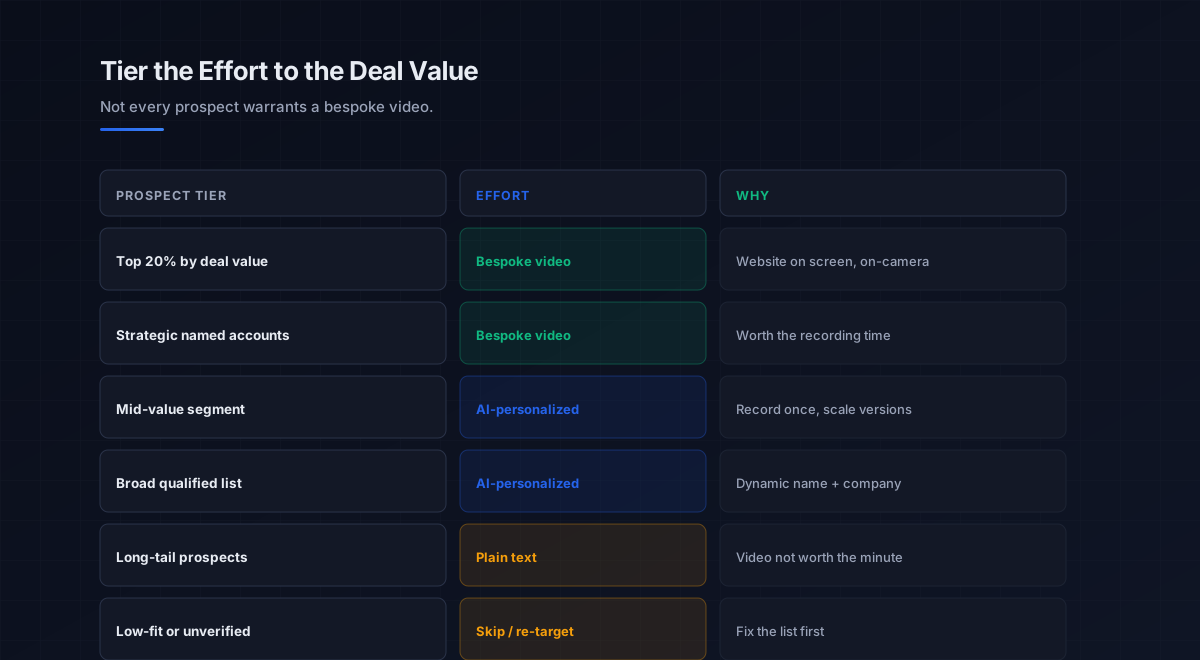
Personalization runs on a spectrum, and matching it to effort is its own skill. At minimum, use a dynamic thumbnail with the prospect’s name or company. Better, reference something concrete in the script, their role, a recent company event, a specific pain in their segment. Best, for high-value targets, record a genuinely bespoke video that shows their actual website on screen. AI personalization tools now let you record once and generate thousands of versions with dynamic names and visuals, which scales the minimum and middle tiers, but on-camera authenticity still beats fully synthetic avatars for sales, because prospects can tell the difference. The contacts and context that make personalization possible come from your b2b data providers and data enrichment tools layers.
Video prospecting best practices for sequence placement
A prospecting video is not a one-off gimmick at the top of the funnel; the lift compounds when video is embedded across the whole sequence rather than fired once. The teams seeing the strongest results use video at multiple stages: a personalized intro on the first touch so the prospect notices the video was recorded for them, a short recap video after a discovery call or demo that restates their pain and sets next steps, and a re-engagement video late in the sales sequence to revive a stalled thread. Each placement does a different job, and together they lift reply rate at every stage instead of just the first.
The first-touch video earns the open and the initial reply; the post-call recap, a two-to-three-minute summary rather than a bullet-point email that gets ignored, accelerates the deal and shortens time to close; and the breakup or re-engagement video stands out precisely because the prospect has seen text from you already. This is why video belongs inside a designed cadence rather than bolted on: the channel rewards sequencing. The structure of that cadence, and where each touch lands, is covered in the sales cadence guide, and video pairs naturally with the email channel run through cold email software.
Why video is an amplifier, not a strategy
The most important practice is also the one most teams get backwards: video is a multiplier on the relevance of your message and the fit of your prospect, not a substitute for either. The reason a personalized video works is that it makes a relevant message feel human and unmissable, but if the message is not relevant or the prospect is not a fit, the video just makes the irrelevance more vivid. No amount of on-camera warmth rescues a pitch aimed at the wrong person, and a great video sent to a stale or mistargeted list underperforms a plain text email sent to the right one.
So the foundation comes first. The targeting that decides who receives the video comes from the b2b data providers and sales intelligence tools layers, since video amplifies fit and a precise ICP is what makes the personalization land. The message the video delivers is the same message discipline that governs the rest of outbound, a specific, prospect-centered point, not a feature dump. And because most video still arrives by email, deliverability decides whether the video is ever seen, so clean email deliverability and sender reputation matter as much here as anywhere. Get the prospect and the message right, and video multiplies them; get them wrong, and video multiplies nothing.
Five mistakes teams make with video prospecting
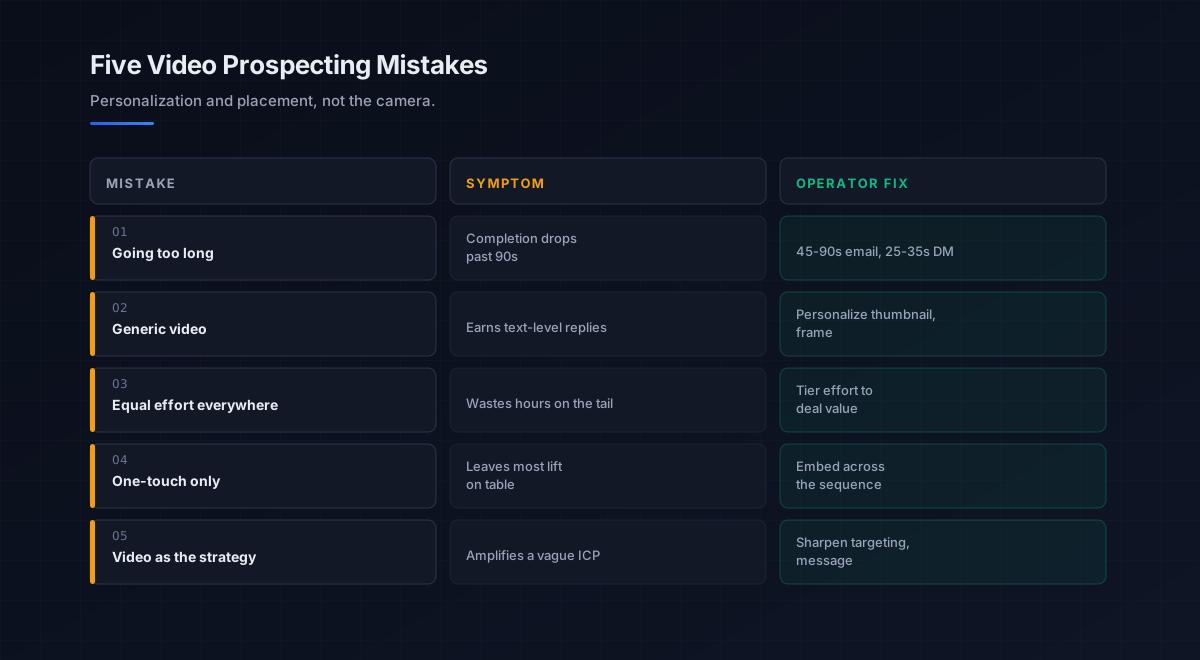
What we see most often is the same handful of errors that quietly waste the channel.
-
Going too long. Completion drops sharply past 60 to 90 seconds. Keep email video to 45 to 90 seconds and LinkedIn DM video to 25 to 35.
-
Generic, un-personalized video. A video that could go to anyone earns the reply rate of text. Personalize the thumbnail and the first frame with name or company.
-
Equal effort across every prospect. Bespoke video for the long tail wastes hours. Tier effort to deal value: custom for the top, AI-personalized for the middle, text for the rest.
-
One-touch only. Video fired once leaves most of the lift on the table. Embed it across the sequence, intro, post-call recap, re-engagement.
-
Treating video as the strategy. It amplifies a relevant message to a fit prospect; it does not fix a vague ICP. Sharpen targeting and message first.
An eight-step framework for video prospecting
This is the order we work through with the teams we work with when they build a video prospecting motion. Run it top to bottom.
- Sharpen the ICP. Confirm who should receive video, since the channel amplifies fit and wastes effort on the wrong list.
- Tier the prospects. Split your list by deal value: bespoke video for the top, AI-personalized for the middle, text for the tail.
- Script the one point. Write a single, specific, prospect-centered message per segment, not a feature list.
- Keep it short. Hold email video to 45 to 90 seconds and LinkedIn DM video to 25 to 35, opening with name and company.
- Personalize what is visible. Make the thumbnail and first frame show the prospect’s name or company to earn the click.
- Place it across the sequence. Use video on the first touch, the post-call recap, and the re-engagement, not once.
- Protect deliverability. Verify the list and warm the domain, since most video arrives by email and unseen video does nothing.
- Measure and refine. Track reply rate, watch-to-completion, and meeting-booked rate, and cut what does not convert.
How video prospecting fits the broader stack
Video is a channel layer that amplifies a relevant message. Each connected layer has a deeper guide.
- The channel. Why and how video prospecting works, in the video prospecting pillar.
- The tools. The platforms that record and send, in best video prospecting tools.
- The head-to-heads. Tool-level choices, in vidyard vs loom and sendspark vs vidyard.
- The targeting. Who receives the video, in b2b data providers and sales intelligence tools.
- The cadence. Where video lands in the sequence, in sales cadence.
- The email channel. What video pairs with, in cold email software.
- Deliverability. Whether the video is seen, in email deliverability.
- Strategy. The motion video amplifies, in outbound sales.
That is the map. The data layer decides who gets the video, the message decides whether it lands, the cadence decides where it compounds, and deliverability decides whether it is seen, with video only as effective as the targeting and message beneath it.
Frequently asked questions
How long should a prospecting video be?
What reply rate can video prospecting achieve?
What is the most important thing to personalize in a prospecting video?
Should I use AI to scale video prospecting?
Where should video go in a sales sequence?
Should every prospect get a video?
Does video prospecting replace cold email?
The bottom line
Video prospecting best practices in 2026 are a discipline, not a medium: the 25 to 30 percent reply rates that make video the highest-performing cold outreach format come from personalization and placement, not from the camera. Keep videos short, 45 to 90 seconds for email, 25 to 35 for LinkedIn, opening with the prospect’s name and company and closing with one specific ask. Personalize what the prospect can see, the thumbnail and first frame, since that signal earns the click. Tier your effort to deal value rather than spreading it evenly, and embed video across the sequence so the lift compounds at every stage instead of once.
If you take one rule from this guide, make it this: video amplifies a relevant message to a fit prospect, and it amplifies nothing if either is missing. Point it at a sharp ICP, say one specific, prospect-centered thing, personalize what is visible, place it where it compounds, and measure reply rate, watch-to-completion, and meetings booked rather than videos sent. Do that, and video is the highest-leverage channel in outbound; skip the discipline and record generic videos for everyone, and it becomes an elaborate, time-consuming way to get the same results as the text email you were already sending.
Get the operator playbook in your inbox. The Outbound Game publishes one operator-grade breakdown a week on B2B outbound sales, tactics, tooling, and ops. No fluff, no vendor talking points. Subscribe and get the next one when it ships.
More on Video Prospecting
The Best Video Prospecting Tools in 2026, Compared
The best video prospecting tools in 2026, compared by fit. Sendspark, Vidyard, Hippo Video, BombBomb, and Loom matched to motion and real pricing.
Sendspark vs Vidyard in 2026: A Full Operator Guide
Sendspark vs Vidyard in 2026, compared by job. AI personalization at scale vs the all-rounder: real pricing, integrations, and which one fits your team.
Video Prospecting in 2026: A Full Operator Playbook
Video prospecting in 2026, explained for B2B teams: why it lifts reply rates 3-5x, manual vs AI-personalized, the 90-second rule, and what actually works.