The Best Video Prospecting Tools in 2026, Compared
The best video prospecting tools in 2026, compared by fit. Sendspark, Vidyard, Hippo Video, BombBomb, and Loom matched to motion and real pricing.
The best video prospecting tools in 2026 are not the ones with the longest feature list; they are the ones that match how your team actually sells. The category looks crowded at first glance, with Sendspark, Vidyard, Hippo Video, BombBomb, Loom, and a dozen newer entrants all promising higher reply rates, but it sorts cleanly once you see that each leading tool is built around a different job. One is built for AI personalization at outbound scale, another for being the all-rounder with the most generous free tier, another for interactive video, another for relationship-driven verticals, and one is not really a prospecting tool at all. Choose by your motion and the decision gets simple.
That framing matters because the wrong tool wastes the entire reason you adopted video. The reply-rate lift from personalized video over text is real, often 3 to 5x, but it only materializes when the tool fits the workflow your reps already live in and sits on a sound data and deliverability foundation. In B2B prospecting, a high-volume SDR team needs personalization at scale, while a relationship-led advisor needs authentic one-to-one email; a solo founder needs quick recording without a setup tax. This guide compares the leading platforms the way an operator actually decides: by fit, then by price, with the foundation assumed.
This is a tool comparison inside the video prospecting cluster, which covers the discipline and the why behind the channel. Whichever platform you pick rides on top of your cold email and LinkedIn outreach motions, sequences into the sales cadence, and logs activity back to your CRM software.
How the best video prospecting tools sort by job
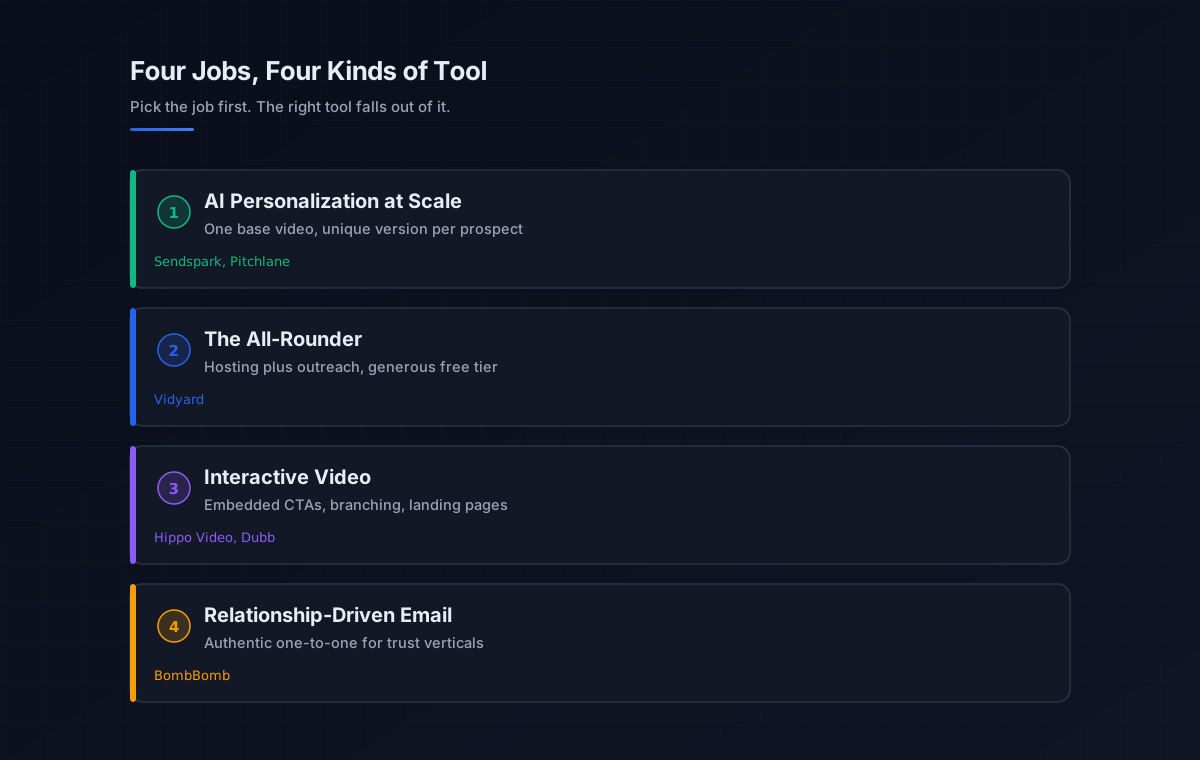
Before comparing specs, group the field by the job each tool is built around, because picking the wrong category is the most expensive mistake. The leading video prospecting software falls into four jobs.
AI personalization at scale
This is the SDR outbound job: record one base video, and software generates a unique personalized version for every prospect, inserting the name, company, or a dynamic background so each feels individual. Sendspark leads here, with AI voice cloning and dynamic backgrounds, plus native integrations with the sequencers SDR teams live in (Outreach, Salesloft, Apollo). This is the category to choose when high-volume video outreach is the goal and manual recording does not scale.
The all-rounder
When you need video hosting and outbound in one platform with room to grow, Vidyard is the strongest all-rounder. It has the most generous free tier in the category, deep CRM analytics, and full sales-engagement integrations on its paid plans, which makes it the safe default for teams that want one tool covering recording, hosting, and outreach.
Interactive video
If your strategy depends on engaging prospects beyond a simple play button, Hippo Video and Dubb lead on interactivity: embedded CTAs, branching paths, lead-capture forms, and video landing pages, often at a lower entry price. This is the fit when the video is a mini funnel, not just a message.
Relationship-driven email
For verticals where trust and personal relationships drive the sale, real estate, mortgage, insurance, advisory, BombBomb remains the standard for authentic one-to-one video email through Outlook and Gmail. It is not built for AI personalization at scale; it is built for genuine human relationship selling.
The leading tools by fit and price
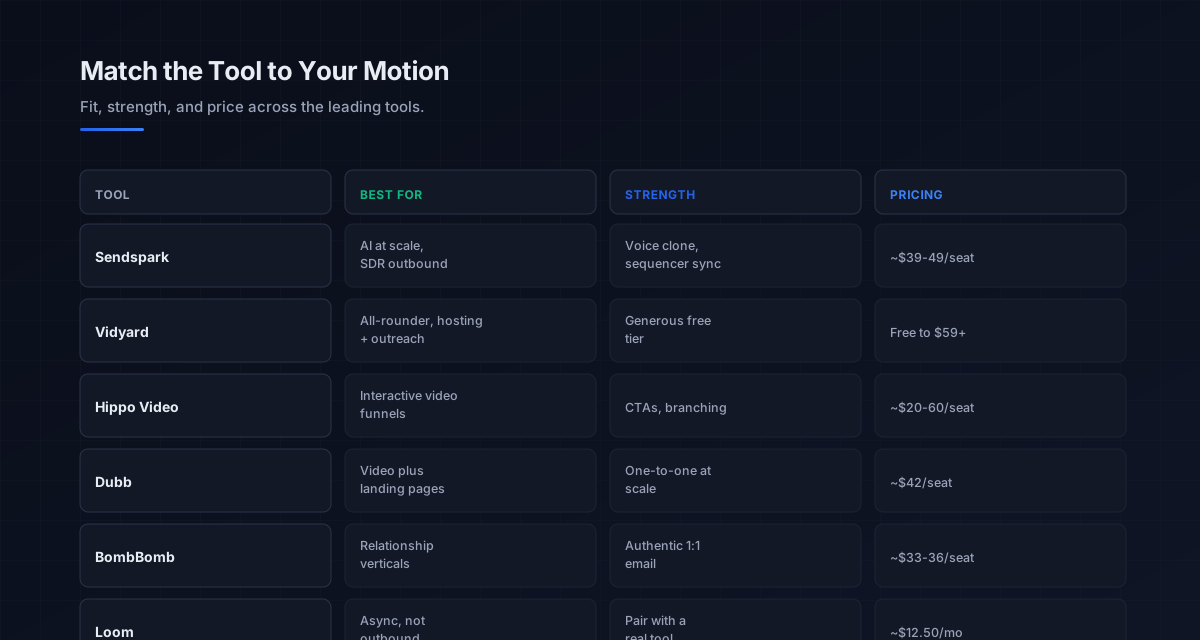
With the jobs clear, here is how the leading platforms compare, with current 2026 pricing. These are video email tools first, so weight the workflow fit above the feature count.
For AI personalization at scale, Sendspark is the outbound SDR pick, with strong G2 ratings, native HubSpot, Salesforce, Outreach, and Apollo sync, with solo plans around 39 to 49 dollars a seat. For the all-rounder, Vidyard offers a genuinely useful free tier (unlimited or 25 videos depending on plan, basic CRM), with paid plans from roughly 59 dollars a seat unlocking sales-engagement integrations and deeper analytics. For interactive video, Hippo Video runs about 20 to 60 dollars a seat with embedded CTAs and branching, and Dubb around 42 dollars with landing pages plus one-to-one sending. For relationship verticals, BombBomb starts near 33 to 36 dollars a seat (no free tier), purpose-built for trust-based email. Newer entrants like Pitchlane (from around 37 dollars, built to plug into Instantly or Smartlead) are worth watching for sequencer-native teams.
A note on Loom: it appears on many lists, but it is an async communication tool, not an outbound prospecting platform. It lacks AI personalization at scale, sales-engagement integrations, and CRM-native sequence sending. It is excellent for follow-up demos and internal communication, so pair it with a dedicated prospecting tool rather than using it as one.
Choosing the right tool for your team
The selection is a sequence, not a feature shootout. Start by naming the job: high-volume outbound points to AI personalization at scale, a need for one platform points to the all-rounder, an interactive funnel points to interactive video, and a trust-led vertical points to relationship email. That single decision narrows the field more than any feature comparison.
Then weight three things in order. First, integration depth with the sequencer and CRM your reps already use, since a tool that does not sync into the daily workflow dies from friction no matter how good its video is. Second, the free tier or trial, several leading tools (Vidyard, Loom, Hippo Video) let you test adoption before committing budget, which matters because video only works if reps actually use it. Third, per-recipient analytics, confirm the tool tracks who watched and where they dropped off, since that engagement data is what makes follow-up smart. Right-size to scale too: a solo rep or small team is often better served by a generous free tier than an enterprise platform that needs configuration. The closest head-to-heads, and the discipline behind the channel, live in the video prospecting pillar.
How the tool fits the outreach stack
Whichever platform you choose, it is one layer in a motion, and its value depends on the layers beneath it. The data layer comes first: the contacts come from the b2b data providers and data enrichment tools layers, and a personalized video sent to a wrong address is wasted no matter how good the tool. Deliverability comes next: when the video is embedded in or linked from an email, that email still has to reach the inbox, so the discipline in email deliverability and sender reputation decides whether the video is ever seen.
On that foundation, the video tool slots into the channels rather than replacing them. It plugs into the cold email software and sales engagement platforms that run the sequences, adds a high-impact touch to LinkedIn outreach, and logs activity back to the CRM software like any other touch. The AI personalization features sit alongside the rest of the stack in best AI sales tools. The tool is the last layer; the motion it amplifies is the outbound sales engine underneath.
Five mistakes teams make choosing a video prospecting tool
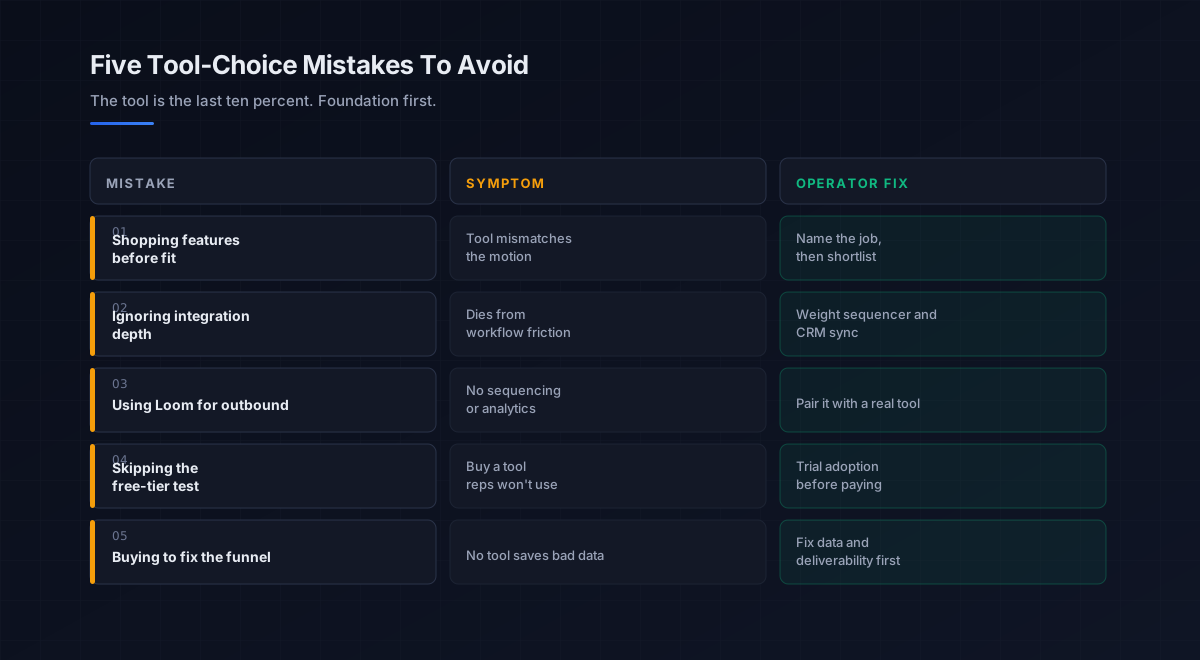
What we see most often is the same handful of errors that lead to an abandoned subscription.
-
Shopping features before fit. The longest spec sheet rarely matches your motion. Name the job first, scale, all-rounder, interactive, or relationship, then shortlist within it.
-
Ignoring integration depth. A tool that does not sync with your sequencer and CRM dies from friction. Weight native integration above standalone features.
-
Using Loom as a prospecting tool. Loom is async communication, not outbound. Pair it with a dedicated tool rather than expecting sequence sending and analytics it lacks.
-
Skipping the free-tier test. Several tools let you test adoption before paying. Skipping the trial risks buying a tool reps will not use.
-
Buying the tool to fix the funnel. No platform rescues a stale list and a cold domain. Fix data and deliverability first; the tool is the last ten percent.
An eight-step framework for choosing a video prospecting tool
This is the order we work through with the teams we work with when they pick a video tool. Run it before buying anything.
- Confirm the foundation. Verify clean data and a deliverable domain first, since no tool fixes those.
- Name the job. Decide whether you need scale, an all-rounder, interactivity, or relationship email.
- Shortlist within the job. Pick two or three tools built for that job rather than comparing the whole field.
- Weight integration depth. Confirm native sync with your sequencer and CRM, the daily workflow the reps use.
- Use the free tier. Test adoption on a trial or free plan where one exists before committing budget.
- Check the analytics. Confirm per-recipient tracking of who watched and where they dropped off.
- Right-size to scale. Favor a generous free tier for small teams; reserve enterprise platforms for teams with volume.
- Pilot, then commit. Run the finalist on real prospects, measure reply and completion rate, then roll out.
How video prospecting tools fit the broader stack
A video prospecting tool is a channel layer that amplifies the outreach motion. Each connected layer has a deeper guide.
- The discipline. Why and how video works, in the video prospecting pillar.
- The email channel. Where video most often lives, in cold email software and the cold email pillar.
- LinkedIn. Video DMs and social touches, in LinkedIn outreach.
- The cadence. How video is sequenced among touches, in sales cadence and sales engagement platforms.
- The data layer. Verified contacts the video reaches, in b2b data providers and data enrichment tools.
- The AI layer. Personalization at scale, in best AI sales tools.
- The system of record. Where video activity logs, in CRM software.
- Strategy. The motion video amplifies, in outbound sales.
That is the map. The data layer supplies verified contacts, deliverability earns the inbox, the cadence sequences the touches, and the video tool is the amplifier placed where it counts, only as effective as the foundation beneath it.
Frequently asked questions
What are the best video prospecting tools in 2026?
Which video prospecting tool is best for SDR teams?
Is there a free video prospecting tool?
How much do video prospecting tools cost?
Is Loom good for sales prospecting?
What is the difference between AI personalization and AI avatars?
Does the video tool matter more than the data behind it?
The bottom line
The best video prospecting tools in 2026 are the ones matched to how your team sells, not the ones with the longest feature list. The field sorts cleanly by job: Sendspark for AI personalization at outbound scale, Vidyard as the all-rounder with the strongest free tier, Hippo Video and Dubb for interactive video, BombBomb for relationship-driven verticals, and Loom as an async tool to pair with a real prospecting platform rather than replace one. Name the job, shortlist the best video prospecting tools within it, and weight integration with your sequencer and CRM above the spec sheet.
If you take one rule from this comparison, make it this: the tool is the last ten percent. The reply-rate lift video promises is real, but it only shows up on a sound foundation of verified data and a deliverable domain, and only when the tool fits the workflow reps already use. Decide the job, test on a free tier where one exists, weight the integration depth, and pick the platform your team will actually adopt, then let it amplify a motion that was already working.
Get the operator playbook in your inbox. The Outbound Game publishes one operator-grade breakdown a week on B2B outbound sales, tactics, tooling, and ops. No fluff, no vendor talking points. Subscribe and get the next one when it ships.
More on Video Prospecting
Sendspark vs Vidyard in 2026: A Full Operator Guide
Sendspark vs Vidyard in 2026, compared by job. AI personalization at scale vs the all-rounder: real pricing, integrations, and which one fits your team.
Video Prospecting in 2026: A Full Operator Playbook
Video prospecting in 2026, explained for B2B teams: why it lifts reply rates 3-5x, manual vs AI-personalized, the 90-second rule, and what actually works.
Video Prospecting Best Practices: A 2026 Field Guide
Video prospecting best practices for 2026: ideal length, the personalization that drives 25-30% reply rates, and where to place video in the sequence.