How to Follow Up on Cold Emails in 2026 (What to Send)
How to follow up on cold emails in 2026: the day by day map, what each touch should say, breakup emails that earn replies, and when to stop.
Learning how to follow up on cold emails is the highest return skill in outbound, because the math is lopsided and public: follow ups generate 42 to 70 percent of all replies depending on dataset, the first follow up alone produces about 26 percent of positive replies, and 60 percent of prospects respond only after the second nudge. Meanwhile 48 percent of senders never follow up at all, 44 percent quit after one attempt, and 92 percent are gone by touch four, exactly when 80 percent of deals still need a fifth touch. Persistence is not a personality trait in this channel. It is an arbitrage against everyone who quits early.
The craft question is what to actually send, because the follow ups that win are not reminders. The 2026 data is specific: a follow up referencing the original email while adding new context beats a just checking in bump by about 20 percent, introducing a fresh value angle adds another 15, proactively answering a common objection adds 18, and step two performs best when it reads like a reply in the original thread, worth roughly a 30 percent lift on its own. Even length is mapped: multi sentence follow ups book dramatically more meetings than one line bumps, per Gong’s analysis of 300,000 plus prospecting emails, while staying inside the 50 to 125 word budget.
This is the follow up craft layer of the cluster: the first touch is written in how to write a cold email, the multichannel rhythm lives in the sales cadence playbook, silence gets diagnosed in why cold emails get no replies, and the tiers that define success sit in the cold email benchmarks hub. Here we build the sequence itself: five touches, each with a job, a day, and a script logic.
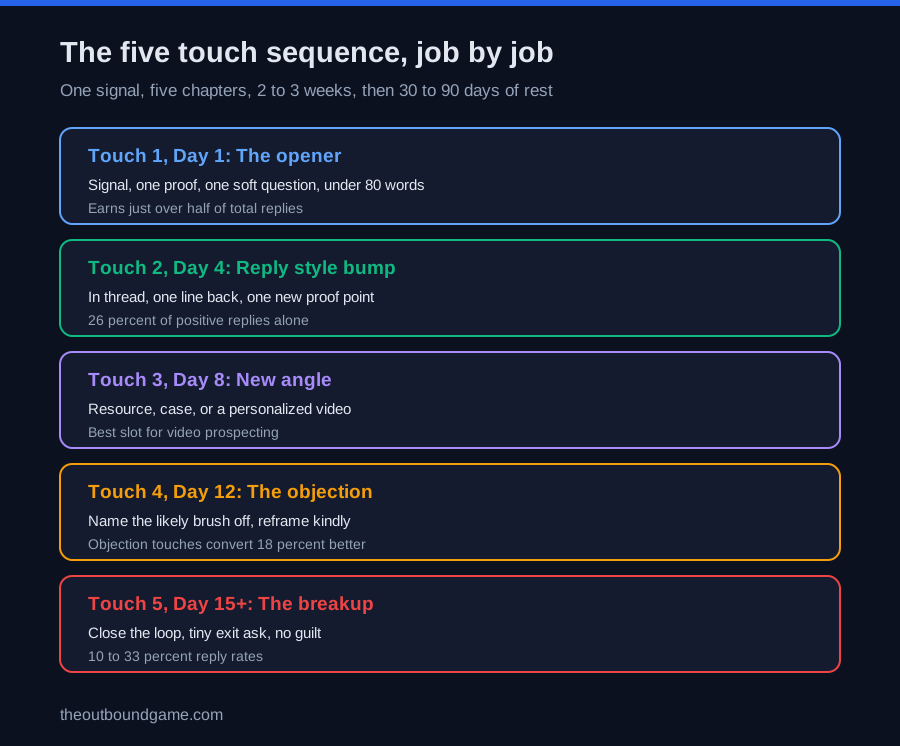
The five touch map: what each email is for
Touch one, day zero, is the opener: under 80 words, one verifiable fact about them, one soft interest question. Its job is to plant the signal and the ask, and in Instantly’s benchmark data it earns a bit over half of the sequence’s total replies, which means the sequence design decides the rest.
Touch two, day 3 or 4, is the reply style bump. Sent in the same thread, plain text, reading like a human continuing a conversation: a one line reference to the first note plus one new proof point, a metric or a peer example. This is the single most valuable follow up email after the opener, and the reply in thread format is the mechanic behind its roughly 30 percent edge over formal follow ups. Day 3 is the consensus gap; senior executives warrant 5 to 7 days.
Touch three, day 7 to 8, changes the angle, not the ask. A resource, a relevant case, a sharper take on the problem the signal implies. This is also the highest converting slot for a personalized video, per the video prospecting data, because by touch three a face and voice answer the who is this question text cannot.
Touch four, day 12 to 15, addresses the hidden objection. Whatever your market’s most common brush off is, too busy, already have a tool, no budget this quarter, this email names it kindly and reframes it in two sentences. Objection anticipating touchpoints convert about 18 percent better, and this is where they belong.
Touch five, day 15 to 21, is the breakup email, which gets its own section because it is the most misunderstood message in outbound. After it, the contact rests for 30 to 90 days before any fresh angle, and the account, not the person, stays in play, since committees hold six to ten people.
The breakup email: close the loop, keep the door
A breakup email politely announces the last attempt and offers one low friction way to respond, and it works startlingly well when the earlier touches carried value: reply rates run 10 to 33 percent, with HubSpot reporting 33 percent on theirs and the classic permission to close your file framing credited with far higher in famous cases. The mechanism is loss aversion plus courtesy, closure prompts the people who meant to reply, and 30 to 40 percent of breakup responses advance to scheduled calls, while most of the rest hand you intelligence: wrong contact, bad timing, budget locked, competitor in place.
Two rules keep it honorable, because this format has vocal critics and a real failure mode. First, never guilt trip: never heard back from you phrasing measurably reduces bookings, and resentful breakups get screenshotted, not answered. Second, keep the exit ask tiny, a feedback question or a multiple choice reply beats any calendar request, and asking why they did not connect outperforms asking to connect one last time. Written that way, the breakup is pipeline hygiene, not an ultimatum.
Timing: the send times and spacing that hold up
The cold email follow up spacing consensus across the 2026 datasets is graduated: 3 days to the first follow up, then 4 to 7 day gaps widening toward the breakup, with the whole sequence resolving in 2 to 3 weeks. The proven skeleton is day 1, day 4, day 8, day 15, and compressed timelines underperform it. For send times, Tuesday through Thursday mornings in the prospect’s local time zone dominate, with Tuesday between 9 and 10 AM the single best window in the largest 2026 analysis; Monday inboxes drown in backlog and Friday afternoons are mentally gone.
Two adaptive rules beat any fixed calendar. If tracking shows repeated opens or a link click without a reply, compress: follow up within 24 hours with a specific question, because interest is perishable. And respect the ceiling: a fourth rapid follow up correlates with measurably higher spam and unsubscribe rates in Snov.io’s 2026 analysis, which is why sequences cap at 4 to 7 total touchpoints with real gaps, and why aggressive cadences trade tomorrow’s deliverability for today’s bump, the exact failure chain mapped in why cold emails go to spam.
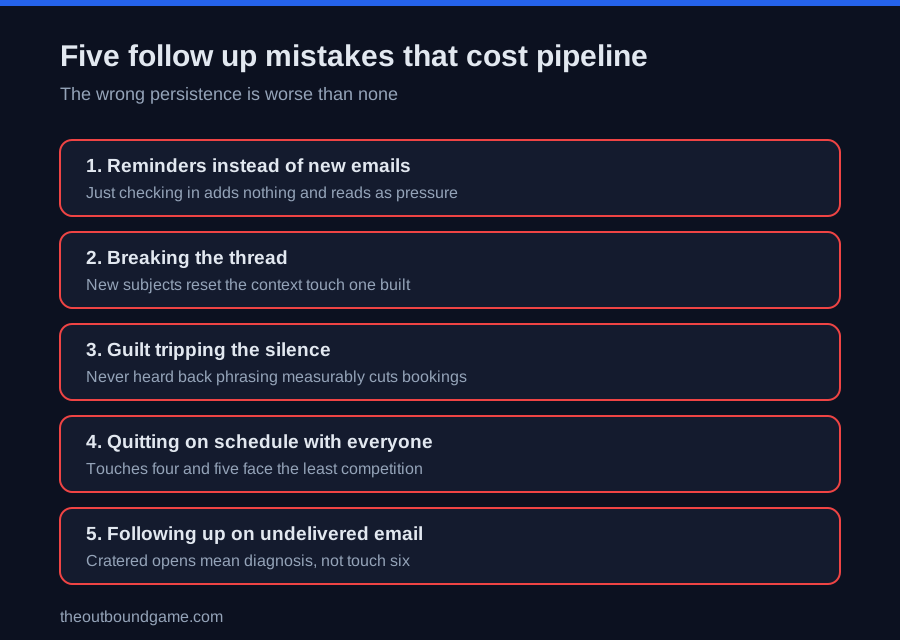
Five follow up mistakes that cost real pipeline
-
Sending reminders instead of new emails. Just checking in and bumping this add nothing and read as pressure. Every touch earns its send with a new fact, angle, or resource.
-
Breaking the thread. New subject lines reset the context you spent touch one building. Follow ups live as plain text replies in the original thread.
-
Guilt tripping the silence. Phrasing that scolds, never heard back, I know you are busy but, measurably reduces bookings and poisons the account for the future.
-
Quitting exactly on schedule with everyone else. With 92 percent of senders gone by touch four, touches four and five face the least competition in the entire inbox.
-
Following up on emails that never arrived. If opens cratered and bounces climbed, the sequence is not the problem. Run the no replies diagnosis before writing touch six.
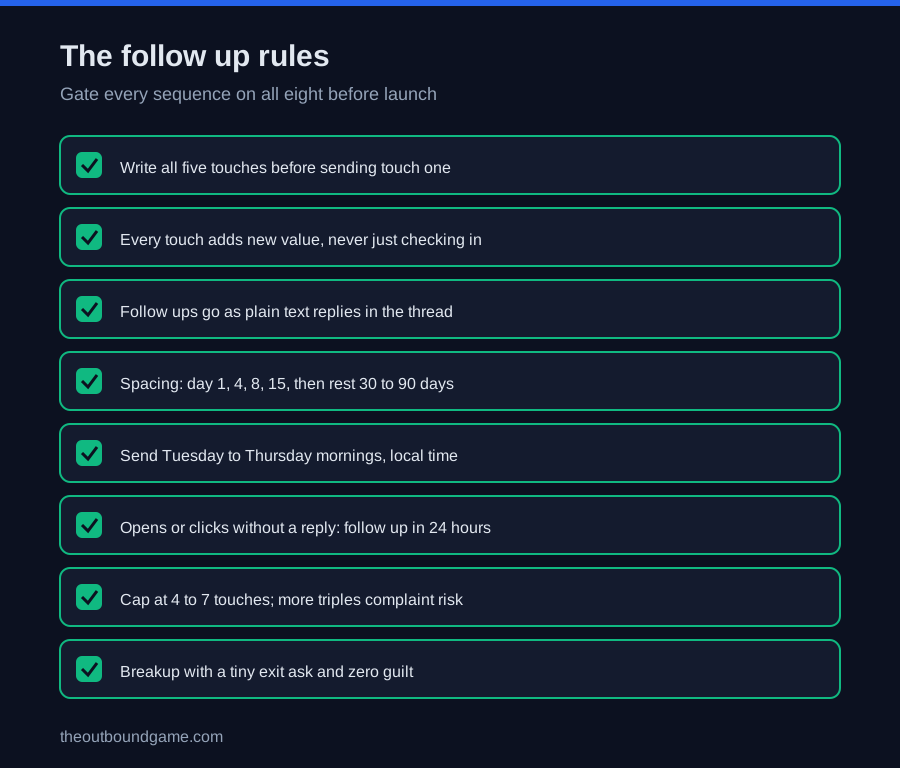
The eight step follow up build
-
Write all five touches before sending touch one. Sequences designed in advance stay value led; sequences improvised under silence turn needy.
-
Assign each touch one job. Bump with proof, new angle, objection, breakup. If two touches share a job, one of them is a reminder in disguise.
-
Anchor every email to the same signal. The why now from how to personalize cold emails at scale is the thread of the story; each touch adds a chapter, not a repeat.
-
Keep the budget. 50 to 125 words, several short sentences, one soft question, plain text, in thread. Steal skeletons from the cold email templates library.
-
Load the calendar. Day 1, 4, 8, 15, Tuesday to Thursday mornings local time, with your cold email software scheduling per time zone.
-
Wire the compression rule. Multiple opens or a click triggers a 24 hour follow up with a specific question, ahead of schedule.
-
End with a courteous breakup and a rest timer. Low friction exit ask, 30 to 90 days of quiet, then a fresh angle or a different committee member.
-
Measure replies by step. The step level reply curve, benchmarked against the cold email benchmarks tiers, tells you which touch to rewrite next quarter.
How follow up fits the broader outbound stack
-
It executes the persistence math of the whole b2b outbound sales system, where most deals need five plus touches.
-
Its multichannel big brother is the sales cadence playbook, where calls and LinkedIn interleave with the email spine.
-
Its first touch is engineered in how to write a cold email, the anatomy every later email inherits.
-
Its relevance engine is how to personalize cold emails at scale, one signal feeding five chapters.
-
Its failure modes are diagnosed in why cold emails get no replies, where the sequence that quit is killer four.
-
Its deliverability ceiling is set by why cold emails go to spam, which is why touch caps exist.
-
Its success tiers live in the cold email benchmarks hub, where follow ups claim their share of replies.
-
And its highest converting variation, the touch three video, is covered in video prospecting, where a face finishes what text started.
FAQ
Frequently asked questions
How do you follow up on a cold email?
How long should I wait before following up?
How many follow ups should I send on a cold email?
What should a follow up email say?
Do breakup emails work?
What are the best send times for follow ups?
When should I stop following up?
The bottom line
How to follow up on cold emails comes down to a sequence built like a story: five touches, each with its own job, anchored to one signal, spaced day 1, 4, 8, 15 on midweek mornings, ending in a breakup that closes the loop with grace. The math pays the diligent: nearly half the replies live in the follow ups, the first bump alone carries a quarter of the positive ones, and by touch four you are competing with the 8 percent of senders still standing. Write the whole sequence before the first send, add value every time you appear, and let everyone else keep donating their pipeline at touch two.
Want more tested breakdowns like this? We publish one honest teardown of outbound tools, tactics, and playbooks each week. Join the newsletter.
More on Cold Email
Cold Email Call to Action: What Converts in 2026 (Data)
Cold email call to action data for 2026: why interest CTAs win cold, when specific time asks take over, and the ladder that escalates across a sequence.
How to Respond to Cold Email Replies (2026 Playbook)
How to respond to cold email replies in 2026: the six reply lanes, the speed windows that decide conversion, and the plays that turn replies into meetings.
How to Write a Cold Email in 2026 (Line by Line Guide)
How to write a cold email in 2026, line by line: the five decisions, word counts that win, CTA formats that get replies, and the pre send checklist.