How to Write a Cold Email in 2026 (Line by Line Guide)
How to write a cold email in 2026, line by line: the five decisions, word counts that win, CTA formats that get replies, and the pre send checklist.
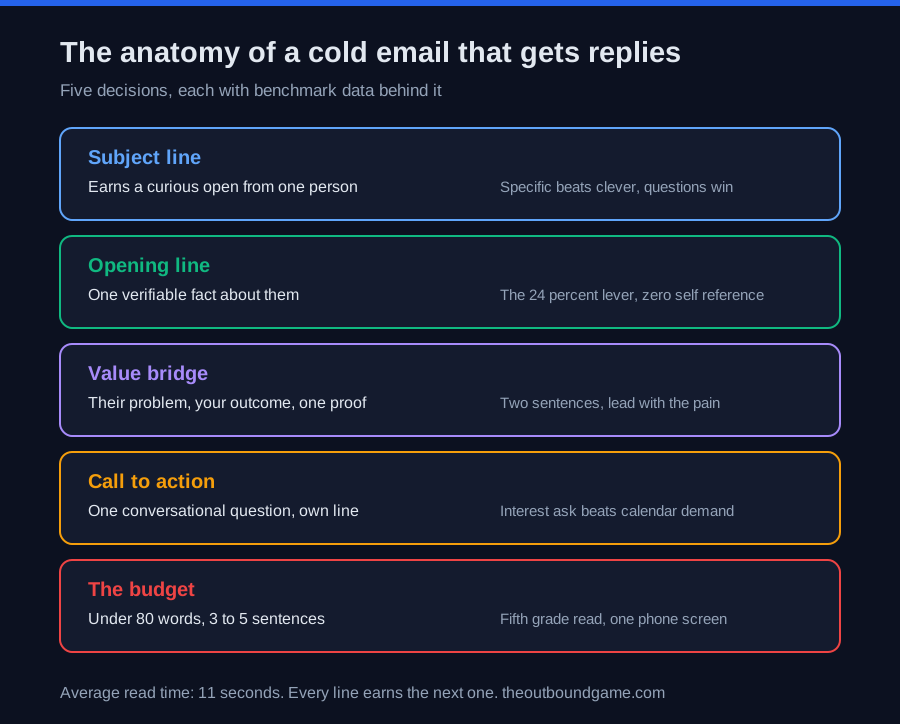
Learning how to write a cold email in 2026 means accepting one number before anything else: 11 seconds. That is the average time a recipient spends reading, according to research HubSpot has published, and it reframes the whole job. You are not writing a letter. You are making five decisions, the subject line, the opening line, the value bridge, the call to action, and the length budget, and each decision has benchmark data behind it. Emails of 50 to 125 words earn the highest reply rates, beating 200 plus word emails by more than double in the largest 2026 datasets, and elite senders keep first touches under 80 words.
The good news hiding in the grim averages: copy is a solved problem at the structural level. One clear call to action beats multiple asks by 37 percent. Question format subject lines lift opens by about 21 percent. Writing at a third to fifth grade reading level beats college level prose by 36 percent on responses. The opening line alone accounts for roughly 24 percent of the performance difference between campaigns. None of that requires talent. It requires following the anatomy, which is what this guide walks through line by line.
One boundary before we start: this is the craft layer of our cold email cluster. The list that makes any of this matter is built in how to build a b2b prospect list, the relevance engine lives in how to personalize cold emails at scale, and if replies are dead despite good copy, the diagnosis is almost always the infrastructure ranked in why cold emails go to spam. Copy is the last mile of b2b prospecting, not the whole road.
Decision one: the subject line earns the open, nothing more
The subject line has one job, and it is not selling. It is earning a curious open from one specific person. The 2026 data says specific beats clever: reference the recipient’s company, situation, or a visible problem, keep it short, and consider the question format, which lifts open rates by roughly 21 percent. A hiring focused subject like a five word question about the roles they just posted outperforms any generic hook.
The 2026 warning is new: subject lines that once worked, the quick question family, now read as automation because millions of AI generated sequences use them. If a subject could open any mass email, it signals mass email. Our cold email subject lines guide carries the tested formulas; the rule here is simply that specificity is the last unfakeable signal.
Decision two: the opening line is about them, entirely
The first sentence drives about 24 percent of campaign performance variance, the single biggest copy lever measured, and the test is brutal: does the line prove this email could only have been sent to this person today? A verifiable fact does that: something they posted on LinkedIn, a funding round, a hiring surge, a product launch. Filler does the opposite, and the hope this finds you well opener burns a third of your 11 seconds saying nothing.
Write the opening line about the recipient, never about yourself. The introduction of you and your company can wait until the bridge, or skip entirely, because your signature already says who you are.
Decisions three and four: the bridge and the one ask
The value bridge is one or two sentences connecting their situation to an outcome, with proof. The reliable pattern: name the problem their signal implies, state the outcome you produce for companies like theirs, anchor it with one number or one recognizable peer. Lead with their problem, not your product, and resist listing features, because the meeting exists to expand and the email exists only to earn the meeting.
Then the call to action, singular. One clear ask beats two or more by 37 percent, questions beat statements by around 2 to 1, and interest questions beat calendar demands: asking whether the topic is on their radar outperforms asking for 15 minutes, because it lets a busy person engage without committing. The best performing CTA in the current benchmark data is conversational and low friction, a couple of minutes to chat about this in the next few days, placed at the very end, on its own line. That is the whole cold email structure: context, value, ask, in three blocks and 3 to 5 sentences.
Decision five: the budget, and the follow ups that carry it
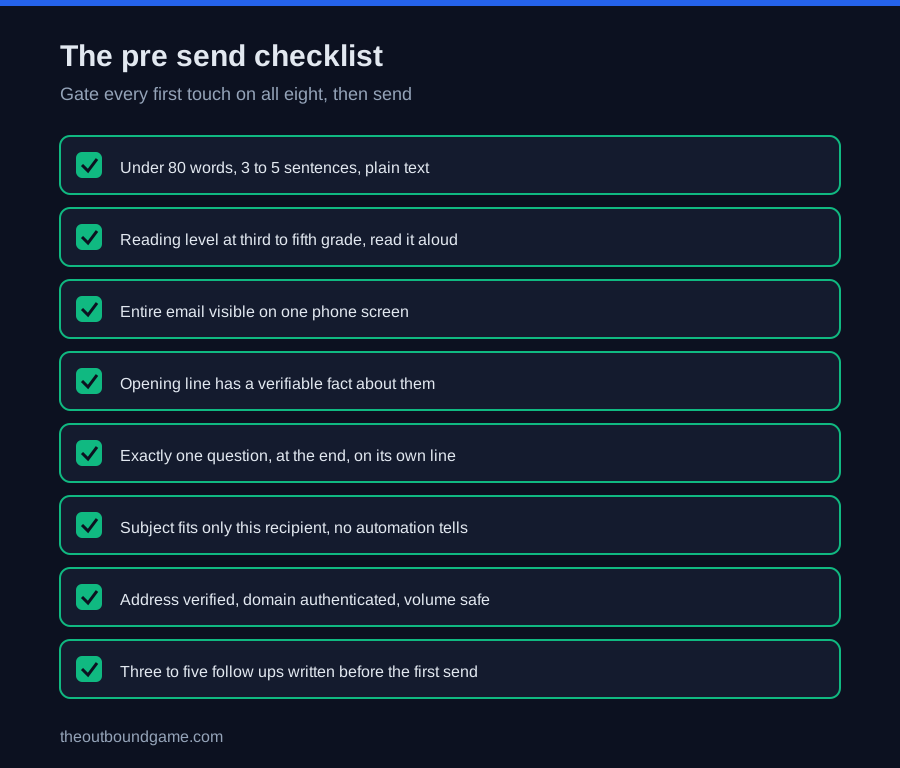
The length budget is the constraint that makes the other four decisions honest. First touch under 80 words, total range 50 to 125, 3 to 5 sentences, plain text formatting, third to fifth grade reading level, no attachments, one link at most. Ultra short is not the goal either, since sub 50 word emails underperform the winning band because they lack the context to persuade; the discipline is compression, not amputation.
And the first email is only the opening move. A single follow up lifts replies by 65.8 percent, the first follow up alone generates about a quarter of all positive replies, and the winning shape for step two feels like a reply rather than a reminder, which outperforms formal bumps by about 30 percent. Follow ups stay short but keep 4 plus sentences, because the largest study of prospecting emails found multi sentence follow ups book dramatically more meetings than one line bumps. The rhythm, spacing, and 4 to 7 touch ceiling live in the sales cadence playbook, and the mechanical sending discipline lives with your cold email software.
Five mistakes that kill otherwise good cold emails
-
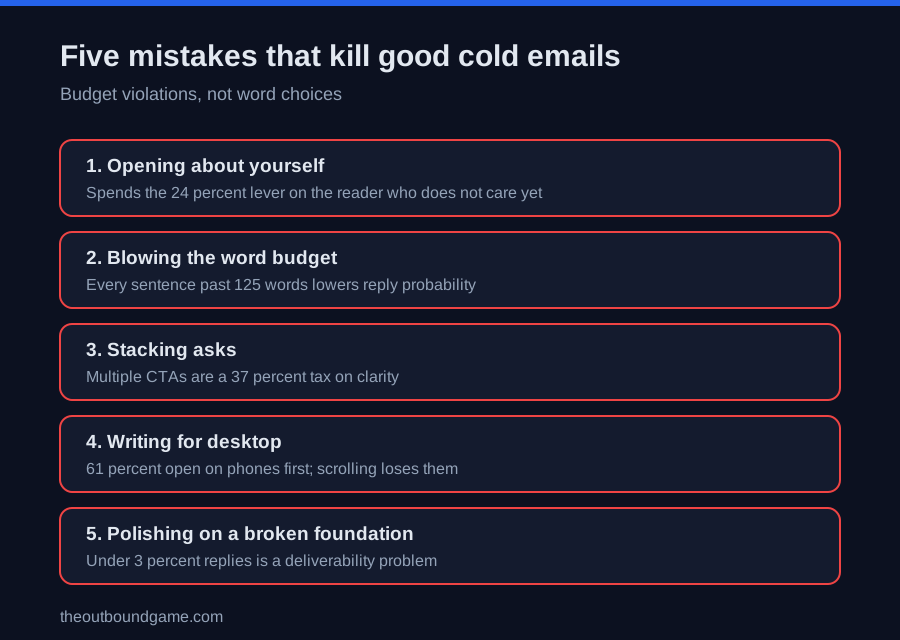
Opening about yourself. The first sentence is the highest leverage real estate in the email, and spending it on your company name wastes the 24 percent lever on the one reader who does not care yet.
-
Blowing the word budget. Every sentence past 125 words actively lowers the reply probability. If the draft runs long, the fix is deleting, not tightening.
-
Stacking asks. A demo link, a case study, and a calendar invite in one email is a 37 percent tax on clarity. One question, at the end, on its own line.
-
Writing for a desktop reader. With 61 percent of opens happening on phones first, an email that requires scrolling has already lost half its audience before the bridge.
-
Polishing copy on a broken foundation. A perfect email to an unverified list from an unauthenticated domain performs identically to a bad one. Reply rates below 3 percent are usually a deliverability problem, not a writing problem.
The eight step writing process, start to send
-
Start from the signal, not the blank page. Pull the verifiable fact about the prospect first; the email assembles around it.
-
Write the CTA before the email. Decide the one question you want answered, then write only the sentences that earn it.
-
Draft the opening line about them. One sentence, one fact, zero self reference. If it could open an email to anyone else, rewrite it.
-
Build the bridge in two sentences. Their problem, your outcome, one proof point. Steal structure, never sentences, from the cold email templates library.
-
Cut to budget. Under 80 words, 3 to 5 sentences, one link maximum. Read it aloud; anything you stumble on gets simplified to a fifth grade level.
-
Run the mobile test. Send it to yourself and check that the entire message, ask included, fits one phone screen.
-
Write the follow ups now, not later. Three to five touches, each adding a new angle on the same signal, step two shaped like a reply.
-
Gate the send on the checklist. Verified address, authenticated domain, safe volume, single ask, subject that only fits this recipient. Then send, and let reply rates rather than opens judge the work.
How writing fits the broader outbound stack
-
The strategy above the sentence lives in the b2b outbound sales pillar, where copy is one subsystem.
-
The recipient is chosen long before the writing, in how to build a b2b prospect list.
-
The facts that power openers arrive through how to personalize cold emails at scale, the assembly line behind hand written feel.
-
The open itself is contested at the cold email subject lines layer, one decision deep and worth its own study.
-
Proven skeletons live in the cold email templates library, raw material for the bridge and the ask.
-
Arrival is decided by the causes ranked in why cold emails go to spam, which outrank every word choice.
-
Persistence is engineered in the sales cadence playbook, where the 65.8 percent follow up lift is claimed.
-
And the AI drafting question, useful assistant or generic slop, is settled honestly in ai cold email, where the machine writes and the operator still decides.
FAQ
Frequently asked questions
How do you write a cold email that gets replies?
How long should a cold email be?
What is the best cold email CTA?
What should the first line of a cold email say?
Do cold email subject lines really matter?
How many follow ups should a cold email get?
Why are my cold emails not getting replies?
The bottom line
How to write a cold email in 2026 reduces to five decisions made inside an 11 second budget: a subject only this recipient could receive, an opener entirely about them, a two sentence bridge with one proof, one conversational question at the end, and the whole thing under 80 words on a phone screen. The benchmarks are unusually kind to discipline: shorter beats longer, one ask beats three, questions beat statements, simple beats clever, and the follow up you almost did not send earns a quarter of the replies. Write less, mean more, and let the list and the infrastructure carry the copy the way they always have.
Want more tested breakdowns like this? We publish one honest teardown of outbound tools, tactics, and playbooks each week. Join the newsletter.
More on Cold Email
Cold Email Call to Action: What Converts in 2026 (Data)
Cold email call to action data for 2026: why interest CTAs win cold, when specific time asks take over, and the ladder that escalates across a sequence.
How to Respond to Cold Email Replies (2026 Playbook)
How to respond to cold email replies in 2026: the six reply lanes, the speed windows that decide conversion, and the plays that turn replies into meetings.
How to Follow Up on Cold Emails in 2026 (What to Send)
How to follow up on cold emails in 2026: the day by day map, what each touch should say, breakup emails that earn replies, and when to stop.