Cold Email Call to Action: What Converts in 2026 (Data)
Cold email call to action data for 2026: why interest CTAs win cold, when specific time asks take over, and the ladder that escalates across a sequence.
The cold email call to action is the highest leverage sentence in the message and the least understood, because the biggest studies appear to contradict each other until you notice the variable everyone skips: stage. The landmark 304,000 email analysis split CTAs into three buckets, interest asks like worth exploring, open ended meeting asks, and specific time asks, and found interest CTAs winning cold outreach decisively: 12 percent total replies against 7 for time requests, with 68 percent of those replies positive against 41. Then the same research found the specific time ask winning once a conversation exists, with meeting bookings jumping from 15 percent at the cold stage to 37 percent in deal, a 2.5x reversal. The conclusion that reconciles every dataset: the CTA is a stage instrument, not a style choice, and the entire craft is asking for exactly as much commitment as the relationship has earned.
The mechanism is loss aversion, and it explains the whole cold stage hierarchy. Time is the one thing a stranger cannot give back, so a meeting ask in a first touch triggers the protective reflex, with time requesting emails earning 44 percent fewer replies in LinkedIn’s sales research, while an interest question costs the prospect nothing but a nod. The field data stacks the same way at every scale: across 200,000 client emails, soft question CTAs averaged 4.2 percent replies, medium specific asks 3.1, and hard book-a-demo asks 1.4, a 3x spread on identical copy and lists.
This is the closing line monograph of our copy coverage: the full message anatomy lives in how to write a cold email, the line that gets the message opened in cold email subject lines, and what happens after the reply lands in how to respond to cold email replies. Here we cover the last line only: the types, the stage switch, the ladder, and the mechanics.
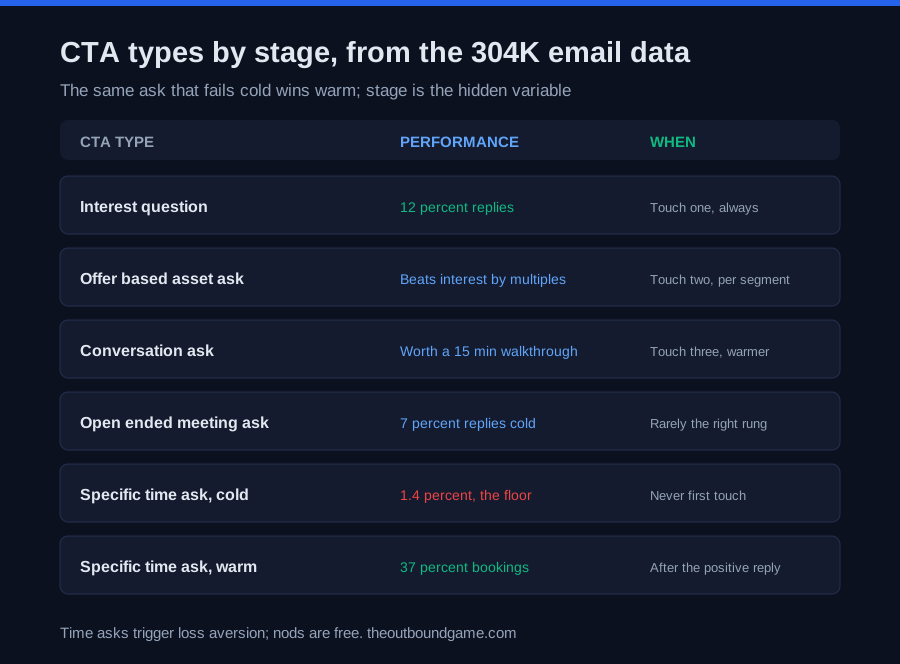
The cold email call to action hierarchy, and the upgrade
At the cold stage, the working hierarchy runs from low friction upward: the interest question first, is reducing no show rates on your radar this quarter, which asks only for relevance confirmation; the specific curiosity ask second, open to seeing the actual sequence we used, which outperforms generic quick chat requests because specificity signals thought; and the meeting ask last, because you have not earned it yet. The per thousand arithmetic makes the stakes concrete: interest CTAs produce roughly 82 positive conversations per thousand sends against 29 for time requests, and 53 extra qualified conversations is the cheapest pipeline expansion in this entire discipline, bought by changing one sentence.
The upgrade most teams miss is the offer based CTA, and the 85 million email analysis behind it found offers beating generic interest questions by multiples: instead of asking whether the topic is interesting, offer a specific asset in exchange for a reply, want the benchmark report on your segment, or can I send the exact playbook a similar company used. The three elements that make it work are a specific asset, relevance proof, and one keystroke acceptance, and a practitioner test across 8,000 sends showed the shape clearly, with a can I show you the demo video ask driving 50 percent of all positive replies against 22 for a vague see the site. The offer converts curiosity into a concrete yes, and the follow up that delivers the asset carries the meeting ask on its back, per the reply handling plays.
The stage switch and the ladder across the sequence
The moment interest exists, the hierarchy inverts, and clinging to soft asks becomes its own failure: once a prospect has replied positively, the specific time CTA, Tuesday at 2 or Thursday at 10, more than doubles booking rates against open ended asks, because friction removal now beats pressure reduction, the prospect has decided to talk and every additional decision you leave them is decay. This is the exact handoff the booking mechanics formalize, two named times with the calendar link as fallback, and it means the CTA question is never which type is best but which stage this thread is in.
Across a full sequence, the types arrange into the CTA ladder: touch one carries the interest or relevance question, touch two the offer based asset ask, touch three the direct conversation ask, worth a 15 minute walkthrough, and the breakup carries the easy out with a permission ask for a named quarter, never the guilt trip, per the follow up craft in how to follow up on cold emails. The ladder matters because 58 percent of replies come from the first email and the first CTA carries the most weight, so the softest, highest converting ask gets the largest audience, while the escalating asks meet the smaller, warmer remainder where they now are.
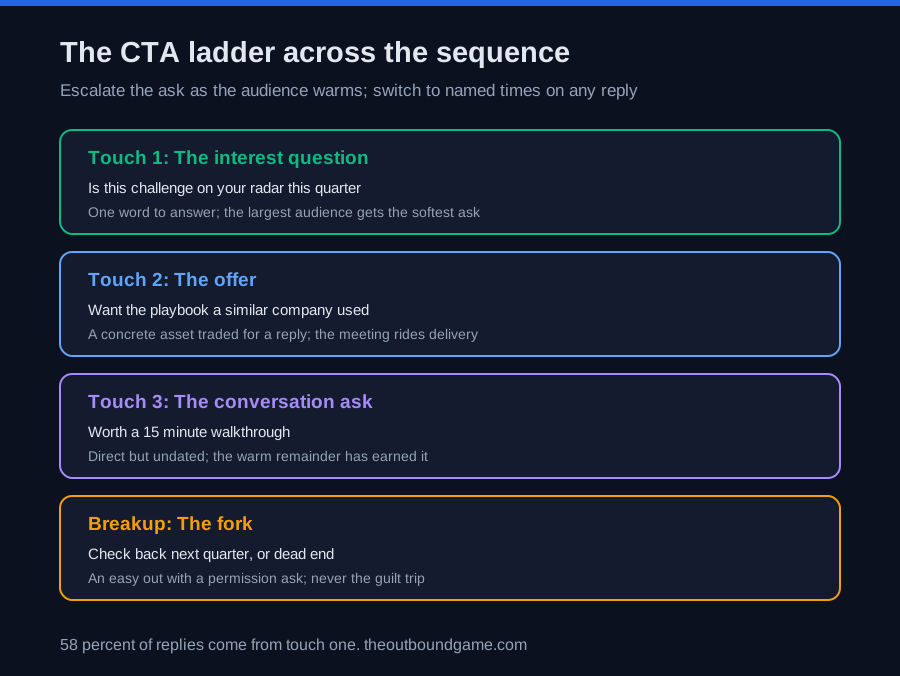
The mechanics: one ask, last line, no links
The structural rules hold regardless of type. One ask per email, always, because stacked CTAs, want to chat, or here is my calendar, or I can send a one pager, dilute into decision paralysis, and single clear CTAs outperform multi ask emails by wide margins in Instantly’s benchmark data; the permitted flexibility lives inside one ask, prefer a call, or should I send the case study first, which is one decision with two doors. Position is the last line, on its own, with nothing after it before the signature, because a paragraph after the ask buries it. And the first touch carries no links: a calendar link doubles the friction, a commitment plus a click, and links in first emails cost deliverability on top, which is why the naked link CTA loses twice.
Language rules follow the same physics as the rest of the word budget: the ask stays under 15 words, question marks outperform statements, pitch language in the CTA carries the same 57 percent reply penalty it carries anywhere else, and let me know if interested is a null ask, giving the prospect nothing specific to answer. Measure the line the way it deserves: A/B tested one variable at a time with real volume per variant, judged on positive replies and downstream booking rate rather than raw responses, because a thoughts-ask that lifts replies while cutting bookings 20 percent is optimizing the wrong end of the funnel, the same trap the reply rate monograph warns against.
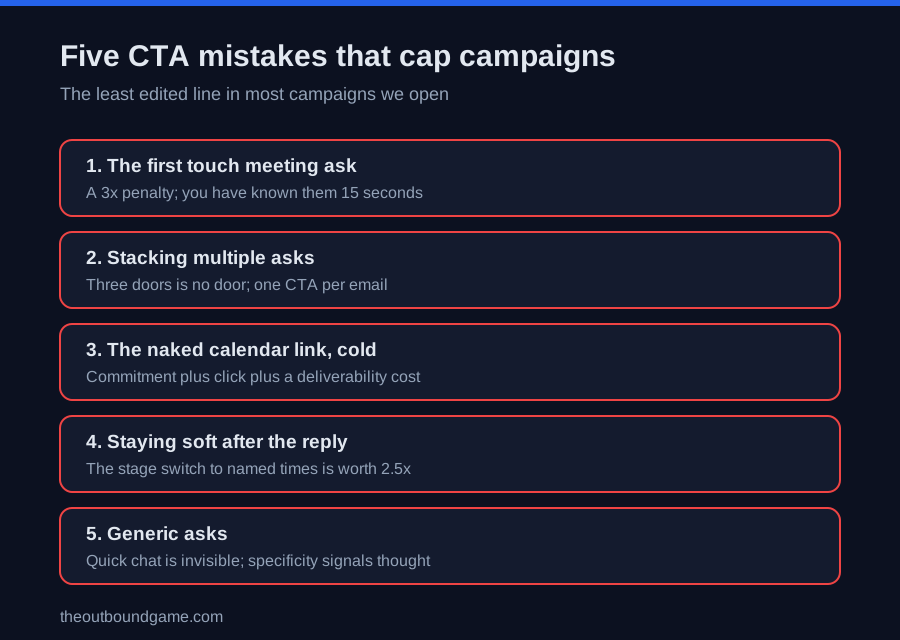
Five CTA mistakes that cap campaigns
-
The first touch meeting ask. The lowest converting close in every dataset, a 3x penalty against the soft question. You have known them 15 seconds; act like it.
-
Stacking multiple asks. Three doors is no door. One CTA per email, with flexibility folded inside it if needed.
-
The naked calendar link cold. Commitment friction plus click friction plus a deliverability cost. Named times enter only after interest exists.
-
Staying soft after the reply. Once they have said yes, open ended asks leak bookings. The stage switch to two named times is worth 2.5x.
-
Generic asks that could close any email. Quick chat is invisible. The specific version, open to seeing the exact sequence, signals a human thought about this prospect.
The eight step CTA system
-
Map the ladder to the sequence in writing. Interest question, offer ask, conversation ask, breakup with an easy out, one rung per touch.
-
Write the interest question against a real pain, specific to segment, answerable with one word, per the relevance rules in how to personalize cold emails at scale.
-
Build one offer asset per segment. A benchmark, a teardown, a playbook, something a reply genuinely fetches, with the meeting ask riding the delivery.
-
Enforce the mechanics in the template. One ask, last line, no first touch links, under 15 words, question form, in every template the team touches.
-
Trigger the stage switch on sentiment. A positive reply flips the thread to two named times inside the 15 minute window from the reply handling playbook.
-
Write the breakup as a fork, not a guilt trip. Should I check back next quarter, or is this a dead end, which earns answers the passive aggressive version never sees.
-
Test one CTA variable at a time with enough volume to mean something, judged on positive replies and bookings, never raw responses.
-
Report the line’s whole funnel, ask to reply to booking, per the measurement stack in how to measure outbound sales, because per Apollo’s sequence data the CTA is where reply rate and booking rate most often diverge, the fork the whole b2b outbound sales funnel runs through.
How the CTA fits the broader outbound stack
-
It closes the anatomy built in how to write a cold email, the fifth decision in the 11 second budget.
-
Its opening line counterpart is cold email subject lines, the other single sentence with outsized leverage.
-
Its replies land in how to respond to cold email replies, where the stage switch executes.
-
Its escalation rungs live in how to follow up on cold emails, value per touch, breakup included.
-
Its silence diagnosis, when no ask earns an answer, runs through why cold emails get no replies.
-
Its reusable forms ship in cold email templates, ladder rungs included.
-
Its output metric is manufactured in cold email reply rate and graded in cold email benchmarks.
-
And its craft parent is cold email, where the last line was always half the game.
FAQ
Frequently asked questions
What is the best call to action for a cold email?
Should you ask for a meeting in a cold email?
What is an interest based CTA?
When should you use a specific time CTA?
How many CTAs should a cold email have?
Should you put a calendar link in a cold email?
How do you A/B test cold email CTAs?
The bottom line
The cold email call to action resolves into one principle applied twice: ask for exactly as much as the relationship has earned. Cold, that means the interest question or the offer, one ask, last line, no links, under 15 words, because a stranger protects their time and gives away nods for free. Warm, it means the stage switch, two named times the moment the reply lands, because a decided prospect wants friction removed, not pressure withheld. Run the ladder across the sequence, test the line on bookings rather than replies, and edit the last sentence before touching anything else in the email, because in every dataset worth citing, it is the cheapest doubling available in cold outreach, and it is sitting one line above the signature.
Want more tested breakdowns like this? We publish one honest teardown of outbound tools, tactics, and playbooks each week. Join the newsletter.
More on Cold Email
How to Respond to Cold Email Replies (2026 Playbook)
How to respond to cold email replies in 2026: the six reply lanes, the speed windows that decide conversion, and the plays that turn replies into meetings.
How to Follow Up on Cold Emails in 2026 (What to Send)
How to follow up on cold emails in 2026: the day by day map, what each touch should say, breakup emails that earn replies, and when to stop.
How to Write a Cold Email in 2026 (Line by Line Guide)
How to write a cold email in 2026, line by line: the five decisions, word counts that win, CTA formats that get replies, and the pre send checklist.