Cold Email Reply Rate: What Is Good and How to Raise It
Cold email reply rate in 2026: what counts as good, how to measure it honestly, and the seven levers that raise it, ranked by real effect size.
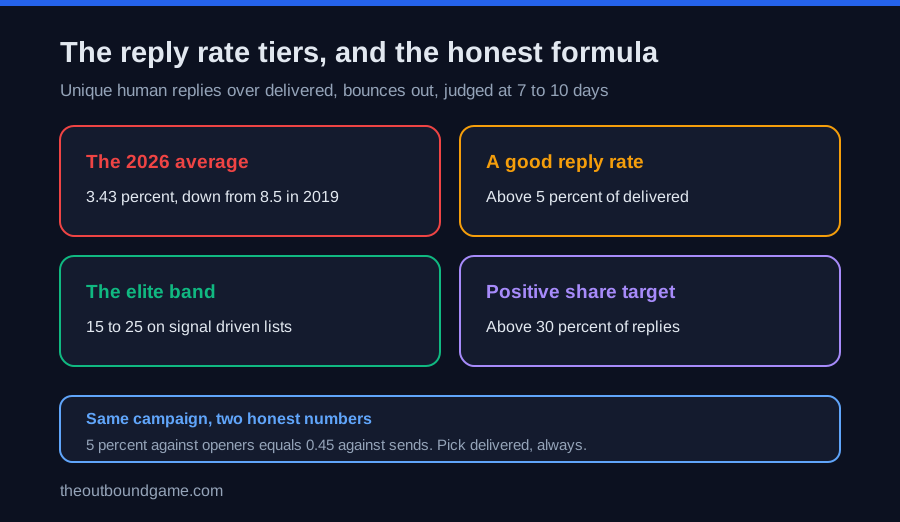
Cold email reply rate is the one metric that deserves your obsession, because it is the earliest number that translates directly into pipeline: replies become conversations, conversations become meetings, and everything upstream of a reply is either plumbing or theater. The 2026 tiers are well mapped: the platform wide average sits between 2 and 3.5 percent, above 5 percent is a good reply rate that beats most of the market, 8 to 12 is excellent, and 15 to 25 is the elite band that signal driven campaigns reach. The full metric panel lives in our cold email benchmarks hub; this page goes deep on the one number that matters most, how to measure it honestly, and the seven levers that raise it, ranked by measured effect size.
Start with the measurement discipline, because the metric is routinely gamed by accident. The same campaign can honestly report a 5 percent response rate against openers and 0.45 percent against total sends, as the largest 2025 agency dataset demonstrated when it switched denominators, and neither number is a lie; they measure different things. The clean formula: unique human replies divided by delivered emails, hard bounces excluded from the denominator, auto replies and out of office excluded from the numerator, judged only after 7 to 10 days when the stragglers have arrived.
Then split by sentiment, because raw replies flatter the wrong campaigns. Classify every response, positive, referral, objection, not now, unsubscribe, and track positive reply rate as the true message market fit signal: healthy campaigns hold a positive share above 30 percent, elite targeting pushes past 50, and a 6 percent reply rate made of unsubscribes loses to a 4 percent rate made of interest.
The seven cold email reply rate levers, ranked by effect size
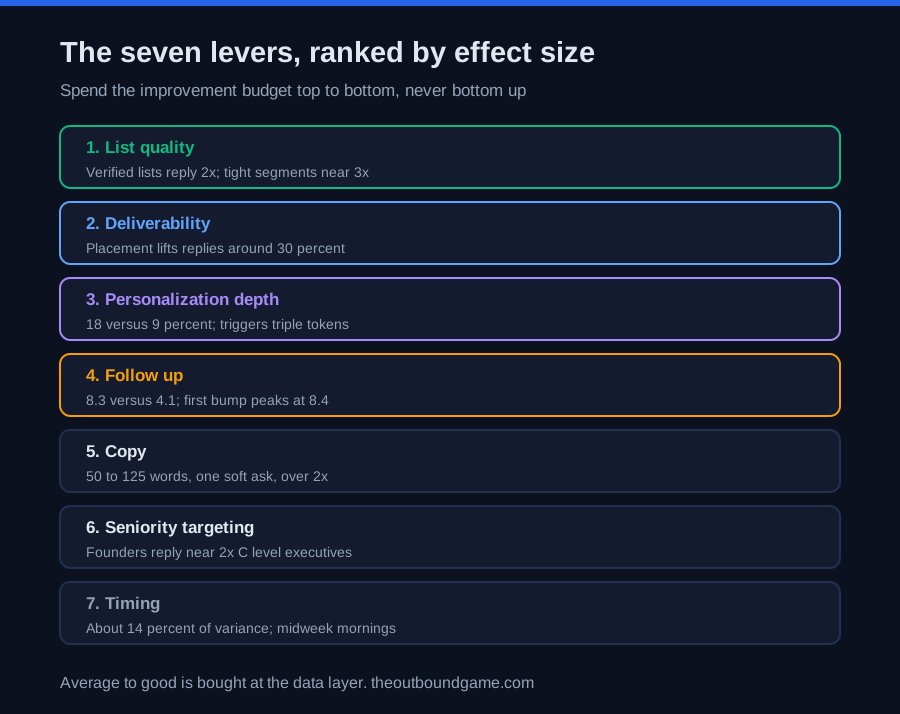
Lever one is list quality, the biggest coefficient in the equation and the one teams fix last. Verified lists earn roughly twice the reply rate of unverified ones, and the tightness of the segment compounds it: campaigns under 50 recipients average 5.8 percent against 2.1 for large blasts, nearly triple, before a word of copy exists. The construction discipline lives in how to build a b2b prospect list, and the arithmetic is humbling: 100 researched prospects at 18 percent produce the same replies as 1,000 sprayed ones at 1.8, with a tenth of the infrastructure load and a far better positive share.
Lever two is deliverability, the silent multiplier on everything. Emails cannot be answered from the spam folder, deliverability optimized programs report reply lifts around 30 percent, and the ranked causes plus thresholds live in why cold emails go to spam with the deep repair work at our sister publication’s deliverability guides.
Lever three is personalization depth. Advanced personalization doubles responses at 18 versus 9 percent, referencing a live trigger event triples token level efforts, and multiple researched fields beyond a first name lift replies by up to 142 percent. The assembly line that manufactures this at scale is how to personalize cold emails at scale, and it is the lever separating the good tier from the elite one.
Lever four is follow up. Sequences with 3 to 5 follow ups run 8.3 percent against 4.1 without, the first follow up alone peaks at 8.4 percent, often the strongest single step in the entire sequence, and the full craft is mapped in how to follow up on cold emails. Levers five through seven are copy, targeting seniority, and timing, in that order: the 50 to 125 word band with one soft ask beats long emails by more than double per how to write a cold email; founders and owners reply at nearly twice the rate of C level executives, and 11 to 50 person companies at more than twice the enterprise rate, so aim at the responsive middle rather than the impressive top; and midweek mornings, Wednesday or Thursday, 8 AM to noon local, now win the timing race outright since AI inbox triage killed the old evening send window, though timing explains only about 14 percent of variance.
Why the average keeps falling, and why it should not scare you
The cold email reply rate decline is real and structural: from 8.5 percent in 2019 to about 5 in 2025 to 3.43 in 2026, driven by inbox saturation, stricter filtering after the bulk sender rules, and a flood of low effort AI generated outreach. But the decline lives almost entirely in the lazy tier of the distribution. The elite band has held: tight, signal led, verified campaigns still report 10 to 18 percent across the major datasets, and per Instantly’s benchmark work, top performers exceed the average by 2 to 4 times year after year. The falling mean is the market’s laziness being averaged; it is not a ceiling on your campaign, which is the survivorship argument made in full in why outbound sales still works.
There is also a seasonal rhythm worth planning around: reply rates in the biggest agency dataset peaked in February and sagged into December, so quarter over quarter comparisons should adjust for the calendar before adjusting the strategy.
Five ways teams get this metric wrong
-
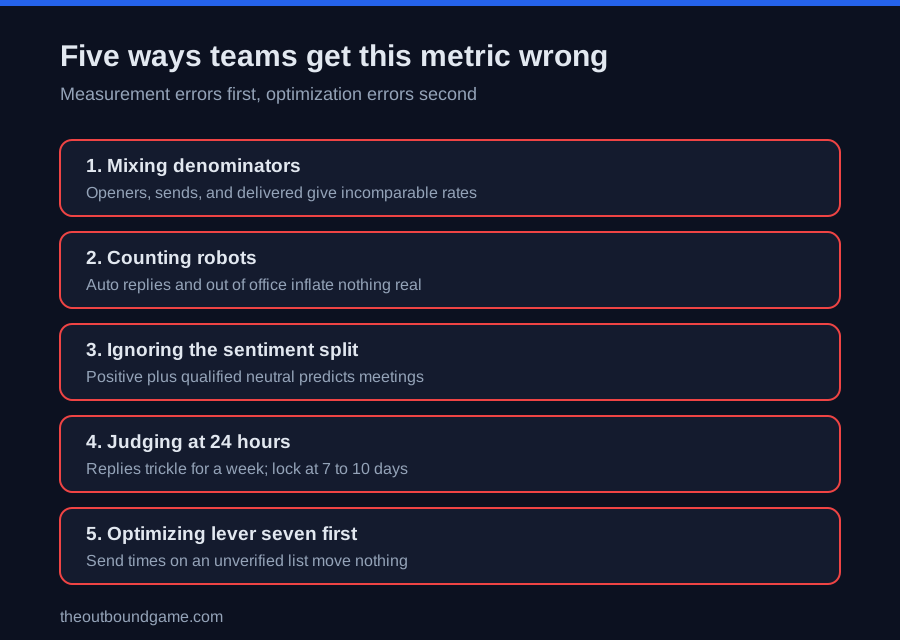
Mixing denominators. Replies over openers, over sends, and over delivered are three different metrics. Pick delivered, exclude hard bounces, and never compare across counting rules.
-
Counting robots. Auto replies and out of office messages inflate the number without meaning anything. Unique human replies only.
-
Ignoring the sentiment split. Total replies without a positive share is a vanity number. The effective rate is positive plus qualified neutral, and it is the one that predicts meetings.
-
Judging too early. Replies trickle for a week or more. Lock the final number at 7 to 10 days, not 24 hours after the send.
-
Optimizing lever seven first. Send time tweaks on an unverified list rearrange deck chairs. Work the levers in ranked order: list, deliverability, personalization, follow up, then everything else.
The eight step reply rate improvement sprint
-
Recompute the baseline honestly. Unique human replies over delivered, bounces excluded, sentiment classified, 90 days of history.
-
Place yourself on the tiers. Under 3 percent means diagnosis, not optimization, starting with the tree in why cold emails get no replies.
-
Verify and shrink the list. One segment of 50 to 200, verified to under 2 percent projected bounces, with a signal on every row.
-
Prove placement. Authentication tested, Postmaster clean, a seed test in the primary inbox before any copy work begins.
-
Raise the personalization tier. Two or three researched fields per contact, the trigger in the first line, per the assembly line.
-
Extend the sequence. Four to seven touches with the day 1, 4, 8, 15 skeleton, since the first follow up is often the best performing email you own.
-
Then, and only then, touch the copy. Word budget, one soft ask, midweek morning sends, guided by HubSpot’s and the platform datasets’ craft numbers.
-
Remeasure after 2 to 4 weeks of stable sending, against the same denominator, with the positive share tracked beside the headline, and clone whatever the winning segment did.
How reply rate fits the broader outbound stack
-
It is the earliest revenue predictive number in the b2b outbound sales system, upstream of meetings and pipeline.
-
Its full metric family, opens, bounces, meetings, cost per meeting, lives in the cold email benchmarks hub.
-
Its biggest lever is built in how to build a b2b prospect list, where verification and fit set the ceiling.
-
Its silent multiplier is governed by why cold emails go to spam, because unseen emails have a rate of zero.
-
Its elite tier is manufactured in how to personalize cold emails at scale, the 18 percent machinery.
-
Its cheapest lift is claimed in how to follow up on cold emails, where the best single email in the sequence lives.
-
Its craft margin is written in how to write a cold email, five decisions inside 11 seconds.
-
And its first impression is still contested at the cold email subject lines layer, where the open is earned before the reply is possible.
FAQ
Frequently asked questions
What is a good cold email reply rate?
How do you calculate cold email reply rate?
What is a positive reply rate?
What raises cold email reply rates the most?
Why is my reply rate so low?
Why are cold email reply rates declining?
Who replies to cold emails the most?
The bottom line
Cold email reply rate rewards two disciplines most teams skip: honest measurement and ranked effort. Measure it as unique human replies over delivered, split by sentiment, settled at 7 to 10 days, and benchmarked against the tier above you. Then spend the improvement budget in effect size order, list, deliverability, personalization, follow up, copy, targeting, timing, because the distance between average and good is bought at the data layer and the distance between good and elite at the signal layer. The average will keep falling as the lazy tier floods the denominator. Your rate does not have to follow it, and the seven levers are the entire reason why.
Want more tested breakdowns like this? We publish one honest teardown of outbound tools, tactics, and playbooks each week. Join the newsletter.
More on Metrics & Ops
Cold Email Open Rates: What Is Good and What Is Real
Cold email open rates in 2026: the honest benchmarks, how Apple MPP inflates the number, the three uses that survive, and what to track instead.
How to Measure Outbound Sales: KPIs That Matter in 2026
How to measure outbound sales in 2026: the three layer KPI stack, pipeline coverage and velocity formulas, benchmarks, and the review cadence that works.
Cold Email Benchmarks 2026: Every Number That Matters
Cold email benchmarks for 2026 in one place: reply rate, open rate, bounce rate, sequence length, meeting rates, and cost per meeting, tiered and sourced.