Cold Email Open Rates: What Is Good and What Is Real
Cold email open rates in 2026: the honest benchmarks, how Apple MPP inflates the number, the three uses that survive, and what to track instead.
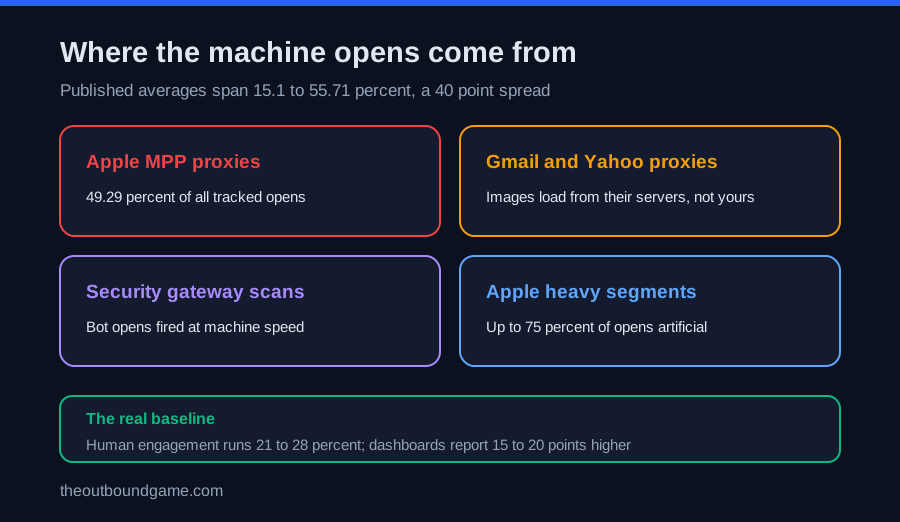
Cold email open rates are the most quoted, most benchmarked, and least real number in outbound, and the 2026 evidence is now overwhelming. Published averages for the same metric range from 15.1 to 55.71 percent, a forty point spread that is not measurement error but the visible footprint of machine opens: Apple Mail Privacy Protection alone drives 49.29 percent of all tracked opens in Instantly’s cold outreach data by preloading tracking pixels through proxy servers whether or not a human ever reads the message, Gmail and Yahoo route images through their own proxies, and enterprise security scanners fire pixels in milliseconds while screening mail. The result: your dashboard number runs 15 to 20 plus points above human reality, and in Apple heavy segments up to three quarters of reported opens are artificial.
This piece is the open rate monograph of our metrics coverage, the sibling of the cold email reply rate deep dive, and its thesis is a demotion with a job attached: the open rate is a smoke alarm, not a scoreboard. It can no longer compare campaigns across audiences, power segmentation, trigger automations, or benchmark you against industry averages, and it retains exactly three legitimate uses, all covered below. The full metric panel it sits inside lives in the cold email benchmarks hub, and the number that replaced it at the top of the dashboard gets its own treatment there and in the reply rate guide.
One reframe before the numbers, because it explains everything: a tracking pixel firing does not mean a human read your email. It means something loaded an image, and in 2026 that something is, half the time, a machine.
How open tracking works, and why it broke
Open tracking embeds a one pixel transparent image in the email; when the image loads from the tracking server, the event logs as an open. The mechanism was always a proxy for attention rather than a measure of it, and since iOS 15 it has been systematically wrong: Apple’s proxy servers download every image, tracking pixel included, on delivery, registering an open for every Apple Mail user regardless of behavior, and Apple Mail’s share of tracked opens sits near half of the total. Gmail’s image proxy and Yahoo’s equivalent strip the device and location data, and secure email gateways scan and fire pixels before delivery, adding bot opens that arrive at machine speed.
The corruption spreads beyond the vanity number. Open triggered follow ups misfire, either bumping people who never saw the email or re touching engaged readers; segments built on opened in the last 30 days fill with phantoms; A/B tests judged on opens reward whichever variant reached more Apple devices. And the pixel itself carries a cost most teams never price in: tracking pixels and redirect domains are fingerprinting signals that filters weigh against you, which is why deliverability first senders run plain text with open tracking off for cold campaigns, trading a broken number for better inbox placement, and why the warmup phase runs pixel free by default per how to warm up an email domain.
Honest cold email open rates, with the methodology attached
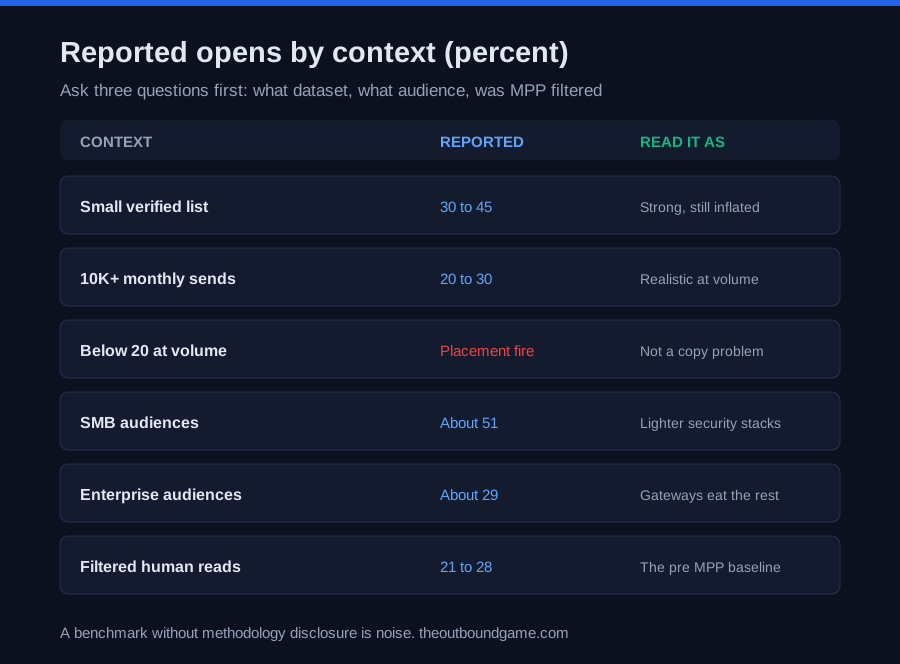
With the machine open caveat stated, the 2026 ranges: cold outreach reported opens average around 27.7 percent in the largest datasets, with 30 to 45 achievable on small, clean, verified lists and 20 to 30 realistic at ten thousand plus monthly sends. The pre MPP human baseline, and what filtered measurement still shows, sits closer to 21 to 28 percent. Audience mix moves the number more than copy does: SMB targeted campaigns report 51.2 percent against 29.4 for enterprise in a five million email study, a 22 point gap produced by security stack differences rather than subject lines, and Apple heavy North American lists inflate harder than Outlook heavy European ones.
So before comparing your number to any benchmark, ask the three questions the serious 2026 research now leads with: what dataset, cold outreach and newsletters behave nothing alike; what audience, since segment explains 20 plus points; and has MPP been filtered, because if the source does not say, the number is inflated by 15 to 20 points. A sourced benchmark without methodology disclosure is, in 2026, noise, which is the same lesson the whole cold email benchmarks hub is built on.
The three uses that survive, and the doctrine for each
First, the smoke alarm. A sustained drop of 5 to 10 plus points in reported opens on the same list, same sender, and same volume is a deliverability signal worth investigating immediately, because whatever the absolute number means, its collapse means placement broke: reported opens under about 20 to 30 percent at volume points at spam foldering, authentication gaps, or reputation damage rather than subject lines, and the diagnosis moves to the ranked causes in why cold emails go to spam and the deeper deliverability guides. Full authentication alone separates roughly 95 plus percent placement from under 85, which dwarfs anything a subject line rewrite can do.
Second, relative comparison inside one send. Two subject line variants tested on the same audience on the same day carry the same machine inflation, so the difference between them is directionally real; per Apollo’s measurement guidance, that keeps subject line testing alive as a relative tool, sized at hundreds of recipients per variant and validated against replies. Third, trend on a fixed segment: month over month movement on the same list is meaningful even when the absolute level is not. Everything else, cross audience comparison, open based segmentation, open triggered automation, benchmarking against a vendor’s average, is dead usage, and the replacement stack is the one the measurement system already prescribes: delivered, placed, replied, positive replies, meetings, pipeline.
Five cold email open rates mistakes teams still make
-
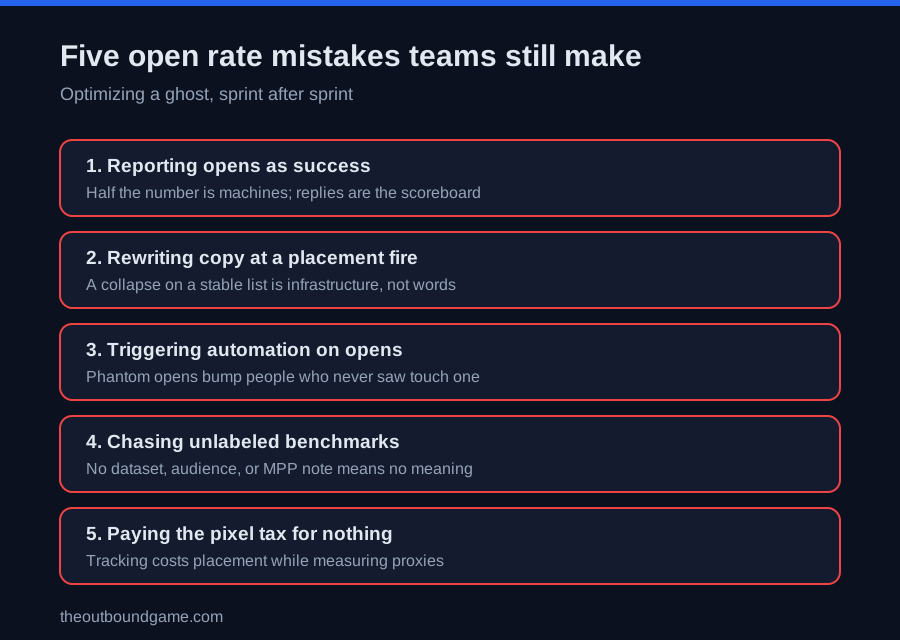
Reporting opens as the success metric. Half the number is machines. Replies, positive replies, and meetings are the scoreboard; opens are context at best.
-
Rewriting subject lines at a placement problem. A collapse in opens on a stable list is infrastructure breaking, not copy failing. Check Postmaster before the thesaurus.
-
Triggering automation on opens. Follow ups fired by phantom opens bump people who never saw touch one, and read as noise to the people who did.
-
Comparing your number to an unlabeled benchmark. Without the dataset, audience, and MPP filtering disclosed, a benchmark is a random number with a percent sign.
-
Paying the pixel tax for nothing. Tracking pixels cost deliverability while measuring machines. For cold sends, plain text with tracking off frequently nets more replies than the data was worth.
The eight step open rate doctrine
-
Demote the metric in the dashboard. Opens move to the diagnostics row; the headline rows are replies, positive replies, meetings, and pipeline.
-
Fix the denominator. Opens over delivered, never over sent, with bounces excluded, the same discipline as every metric in the reply rate guide.
-
Decide the tracking question deliberately. For pure cold campaigns, test tracking off and plain text against your current setup, and let replies judge which nets more.
-
If tracking stays on, filter it. Segment Apple Mail and machine speed opens where your platform allows, and read the filtered trend.
-
Set the smoke alarm. An alert on any 5 to 10 point drop in opens on a fixed segment, wired to a placement check, not a copy review.
-
Test subject lines relatively. Same audience, same day, hundreds per variant, winners confirmed by replies, per the formulas in cold email subject lines.
-
Interrogate every benchmark. Dataset, audience, MPP filtering, or it does not enter the deck.
-
Spend the recovered attention downstream, because the levers that actually move pipeline, list quality, placement, personalization, and follow up, are the ranked ones in the reply rate guide, and none of them is a subject line, the operating truth the whole b2b outbound sales system keeps rediscovering.
How the open rate fits the broader outbound stack
-
Its honest place in the metric panel is set in the cold email benchmarks hub, one row, diagnostic only.
-
The number that replaced it on top gets the full monograph in cold email reply rate.
-
Its smoke alarm role reports into why cold emails go to spam, where the placement causes are ranked.
-
Its healthiest era, the pixel free warmup phase, is scheduled in how to warm up an email domain.
-
The one lever it still tests, relatively, is written in cold email subject lines.
-
Its replacement measurement stack is built in how to measure outbound sales, leading indicators and all.
-
The silence it cannot explain gets diagnosed in why cold emails get no replies, arrival first.
-
And the craft it once claimed to measure lives in how to write a cold email, where the reply was always the point.
FAQ
Frequently asked questions
What is a good cold email open rate in 2026?
Why are open rates unreliable now?
Should you track opens on cold emails?
What does a sudden drop in open rates mean?
Can you still A/B test subject lines with open rates?
What are machine opens?
What should I track instead of open rates?
The bottom line
Cold email open rates in 2026 measure delivery infrastructure and device behavior, not human attention, with half of every dashboard’s opens generated by proxies and scanners that never read a word. The metric keeps exactly three jobs, a placement smoke alarm on a fixed segment, a relative subject line test inside one send, and a trend line over time, and loses everything else it once did: no cross audience comparisons, no segmentation, no automation triggers, no benchmark chasing. Demote it, filter it or switch it off, and move the obsession one row down to the number machines cannot fake, because the reply was always the product, and the open was only ever the doorway your prospect may or may not have walked through.
Want more tested breakdowns like this? We publish one honest teardown of outbound tools, tactics, and playbooks each week. Join the newsletter.
More on Metrics & Ops
How to Measure Outbound Sales: KPIs That Matter in 2026
How to measure outbound sales in 2026: the three layer KPI stack, pipeline coverage and velocity formulas, benchmarks, and the review cadence that works.
Cold Email Benchmarks 2026: Every Number That Matters
Cold email benchmarks for 2026 in one place: reply rate, open rate, bounce rate, sequence length, meeting rates, and cost per meeting, tiered and sourced.
Cold Email Reply Rate: What Is Good and How to Raise It
Cold email reply rate in 2026: what counts as good, how to measure it honestly, and the seven levers that raise it, ranked by real effect size.