Why Cold Emails Get No Replies in 2026 (and the Fix)
Why cold emails get no replies in 2026: the diagnosis order that finds the real cause, the four reply killers after arrival, and the fix for each one.
Asking why cold emails get no replies is the most common diagnostic question in outbound, and it has a property most teams miss: the causes have an order, and fixing them out of order wastes the quarter. Roughly 91 percent of cold outreach earns zero response, the platform average reply rate sits near 3.4 percent, and the reflex response to silence is a rewrite: new subject line, new opener, new closer. Then nothing changes, because in the large 2026 datasets the difference between a 2 percent and a 10 percent reply rate is almost always data quality and targeting, not copywriting. Silence is a system output, and systems are debugged in sequence.
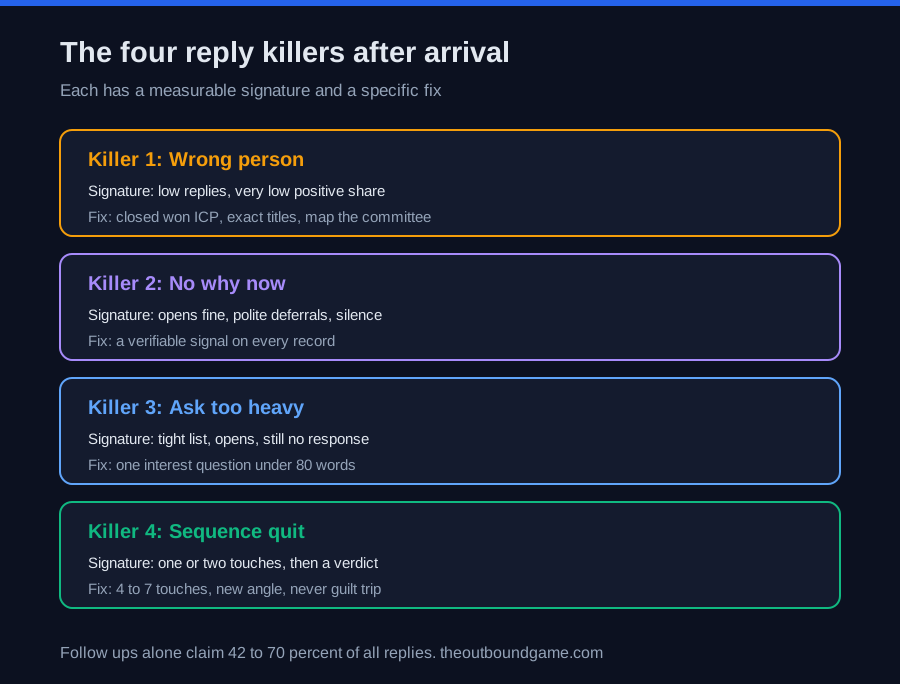
So this piece is the diagnosis tree. Step zero rules out the failure mode where nobody ever saw the email, which is its own ranked discipline covered in why cold emails go to spam. Then, assuming your message arrived and was read, four reply killers explain nearly all remaining silence, in descending order of likelihood: the wrong person, no reason to care right now, an ask too heavy for a stranger, and a sequence that gave up. Each one has a measurable signature and a specific fix, and each gets its section below, benchmarked against the tiers in our cold email benchmarks hub.
One expectation reset before the tree: no response is the default state of cold outreach, not a verdict on you or the channel. The question is never how to eliminate silence. It is whether your silence rate matches the healthy tiers, above 5 percent replies is good and 15 plus is elite, or signals one of the four breaks below.
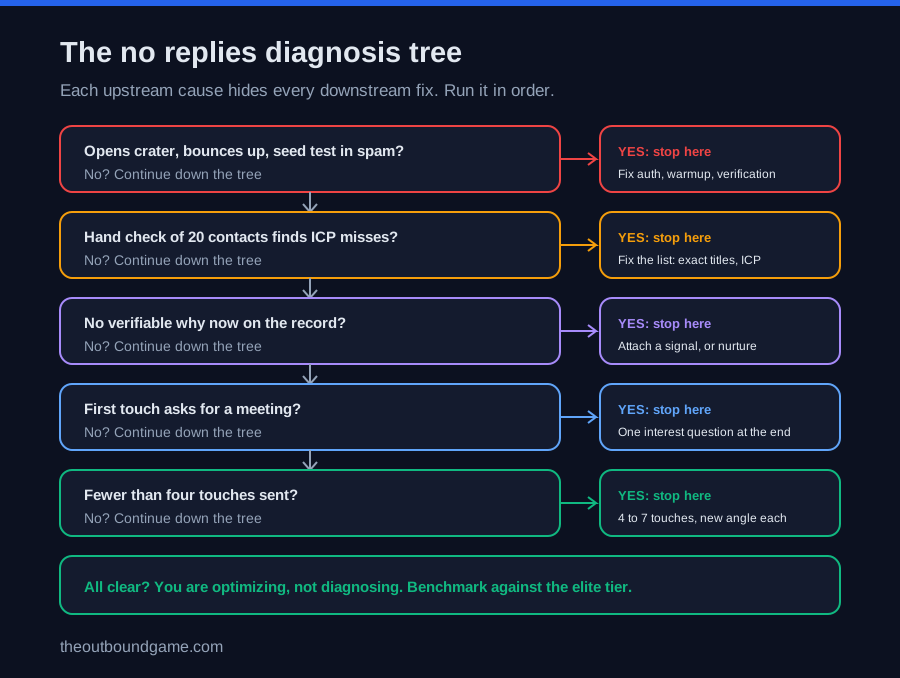
Step zero: prove the email actually arrived
Before diagnosing silence, rule out the case where there is nothing to diagnose. The signature of an arrival problem is distinctive: replies at or near absolute zero rather than merely low, reported opens cratering below about 30 percent, bounce alerts climbing, or test sends to your own accounts landing in spam. If any of those are true, stop here, because no targeting or copy fix moves an email nobody sees. The full repair protocol lives in the ranked causes of why cold emails go to spam and the deeper deliverability guides at our sister publication.
The distinction matters because the two failure modes get opposite treatment. Arrival problems are infrastructure work: authentication, warmup, volume, verification. Reply problems, the subject of the rest of this piece, are relevance work. Teams that confuse them rewrite copy at a spam filter or rebuild domains at a targeting problem, and both waste months.
Reply killer one: the wrong person
The heaviest cause of read but ignored email is that the reader was never going to buy, approve, or care. Loose lists produce exactly this: contacts who match a title filter but not the ICP, seniority levels that cannot act, or the classic miss where the CEO gets an email about a problem the operations lead owns. The signature is a low reply rate with a very low positive share, and the occasional not the right person response is actually the diagnosis confirming itself.
The fix is upstream, in list discipline: closed won evidence in the ICP, exact titles over broad categories, and the account first approach from how to build a b2b prospect list, because with six to ten people in a typical buying committee, one silent contact never means a dead account. Small targeted segments also carry the benchmark evidence: campaigns under 50 recipients average 5.8 percent replies against 2.1 for 500 plus blasts, a near tripling produced entirely before a word is written.
Reply killer two: no reason to care right now
The second killer is relevance without timing. The email describes a real problem, but nothing answers the reader’s silent question: why you, why now. Generic cold outreach that could have been sent to anyone reads as automation and earns automation’s reply rate, while messages referencing a live trigger, a funding round, a hiring surge, a launch, run at triple the replies of token personalization, and the fully signal driven tier reaches 15 to 25 percent per Instantly’s benchmark data.
The signature of this break is decent open behavior with silence underneath, and sometimes polite deferrals, not right now, circle back next quarter. The fix is the signal and enrichment assembly line in how to personalize cold emails at scale: a verifiable why now attached to every account before it enters a sequence, and accounts without one waiting in nurture rather than burning the list.
Reply killer three: the ask is too heavy
A stranger’s first email that demands 30 minutes of calendar time asks for too much trust too early, and busy readers resolve that friction by ignoring it. The data is unambiguous: a single call to action beats stacked asks by 37 percent, question formats roughly double statement formats, and interest questions, asking whether the topic is even on their radar, outperform meeting requests because they let a reader engage without committing. The winning shape in the current benchmark reports is conversational and tiny: a couple of minutes to chat about this in the next few days.
The signature here is opens without replies on an otherwise tight list, sometimes with prospects surfacing much later saying they had meant to respond. The fix costs nothing: shrink the call to action to one low friction question at the end of a sub 80 word email, per the full anatomy in how to write a cold email, and save the demo request for the second conversation, when it is no longer a stranger asking.
Reply killer four: the sequence gave up
The final killer is arithmetic. Follow up emails generate somewhere between 42 and 70 percent of all replies depending on dataset, a single follow up lifts response by about 66 percent, and yet 44 percent of senders quit after one touch, donating half their potential pipeline to whoever emails next. Silence after one email is not rejection; per the persistence math HubSpot and every 2026 benchmark confirm, most buyers simply were not ready on the day the first email landed.
The fix is a 4 to 7 touch sequence with two rules: every touch adds a new angle on the same signal rather than repeating the ask, and no touch guilt trips, because never heard back from you phrasing measurably reduces bookings. Step two performs best written like a reply to the original thread, and the full rhythm, spacing, and channel mix live in the sales cadence playbook.
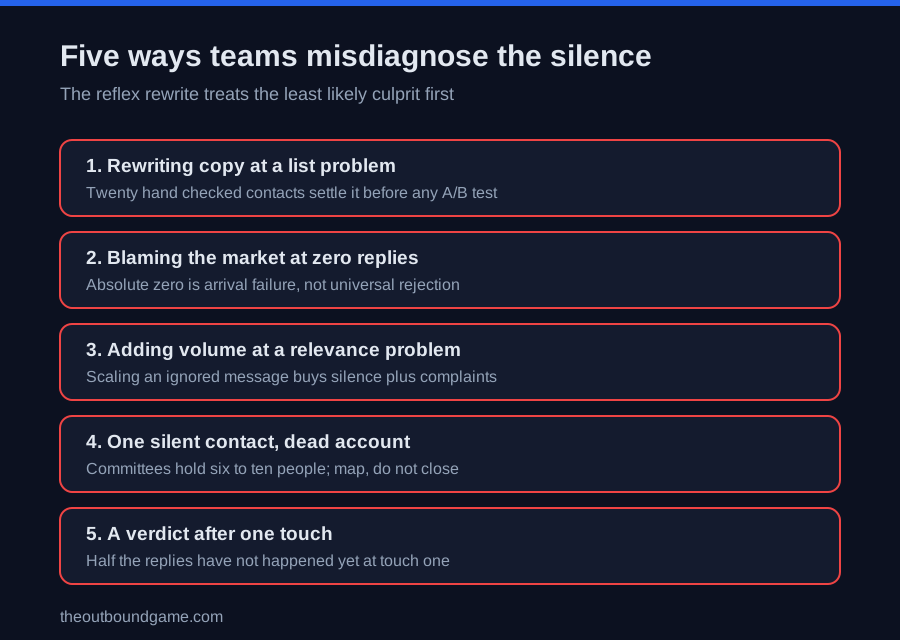
Five ways teams misdiagnose the silence
-
Rewriting copy at a list problem. If a hand check of 20 contacts finds wrong titles and stale records, no opener fixes it. The list ships the reply rate.
-
Blaming the market at an infrastructure problem. Zero replies is nearly always arrival failure, not universal rejection. Prove placement before concluding anything.
-
Adding volume at a relevance problem. Scaling a message nobody cares about produces more silence plus complaint risk. Fix the why now, then scale.
-
Reading one silent contact as a dead account. Committees hold six to ten people. Silence from one title is an instruction to map the account, not close it.
-
Judging the campaign after one touch. Nearly half the replies have not happened yet at touch one. A verdict before touch four is a coin flip presented as data.
The eight step no replies audit
-
Check arrival first. Postmaster reputation, reported opens above 30 percent, bounces under 2 percent, a seed test landing in the inbox. Fail any of these and the fix is infrastructure.
-
Hand check 20 contacts. Titles, companies, and current employment against the ICP. More than two or three misses means the list is the cause.
-
Audit for a why now. Every contact should carry a verifiable signal. If the honest answer is that anyone could have received this email, killer two is confirmed.
-
Weigh the ask. If the first touch requests a meeting, cut it to an interest question and remeasure before touching anything else.
-
Count the touches. Fewer than four means the sequence, not the market, ended the campaign.
-
Split replies by sentiment. A positive share under 30 percent points at targeting and offer even when the raw reply rate looks acceptable.
-
Fix exactly one killer, then remeasure. Two to four weeks of stable sending per change, so the next decision is evidence rather than mood.
-
Benchmark against the tier above you. The cold email benchmarks tiers, not the platform average, define what fixed looks like.
How the diagnosis fits the broader outbound stack
-
Silence is a system output of the whole b2b outbound sales machine, and the tree debugs it layer by layer.
-
Arrival, step zero, is governed by the ranked causes in why cold emails go to spam.
-
Killer one is prevented at the how to build a b2b prospect list layer, where fit is decided.
-
Killer two is solved by the signal engine in how to personalize cold emails at scale.
-
Killer three is a craft decision from how to write a cold email, one light question at the end.
-
Killer four is engineered away in the sales cadence playbook, where follow up emails claim their half of the replies.
-
The healthy ranges that define fixed live in the cold email benchmarks hub.
-
And the reason the debugging is worth it at all is the channel evidence in why outbound sales still works.
FAQ
Frequently asked questions
Why are my cold emails getting no replies?
Is it normal to get no response to cold emails?
How do I know if it is a deliverability problem or a copy problem?
How many follow up emails should I send before giving up?
Does the call to action affect reply rates?
Should I email someone again if they never replied?
What reply rate should I expect after fixing these issues?
The bottom line
Why cold emails get no replies has a short, ordered answer: they never arrived, they reached the wrong person, they gave no reason to care today, they asked for too much, or they stopped too soon. The order is the method, because each cause upstream makes every downstream fix invisible, and the reflex rewrite addresses the least likely culprit first. Run the tree, fix one killer at a time, benchmark against the tier above you, and treat silence as what it is: not a verdict on the channel, but a debug log pointing at exactly one layer of the system.
Want more tested breakdowns like this? We publish one honest teardown of outbound tools, tactics, and playbooks each week. Join the newsletter.
More on Cold Email
Cold Email Call to Action: What Converts in 2026 (Data)
Cold email call to action data for 2026: why interest CTAs win cold, when specific time asks take over, and the ladder that escalates across a sequence.
How to Respond to Cold Email Replies (2026 Playbook)
How to respond to cold email replies in 2026: the six reply lanes, the speed windows that decide conversion, and the plays that turn replies into meetings.
How to Follow Up on Cold Emails in 2026 (What to Send)
How to follow up on cold emails in 2026: the day by day map, what each touch should say, breakup emails that earn replies, and when to stop.