How to Build a B2B Prospect List in 2026 (Step by Step)
How to build a b2b prospect list in 2026: the seven step system, the reverse funnel math, sourcing paths compared, and the quality benchmarks that matter.
Anyone learning how to build a b2b prospect list in 2026 should start with one reframe: the list is infrastructure, not ammunition. Every downstream metric, opens, replies, meetings, even whether your emails arrive at all, is capped by the quality of the contacts you load in. The benchmark data is blunt about it. A 200 person list at 90 percent fit with your ideal customer profile outperforms a 2,000 person list at 30 percent fit, teams that hold bounce rates under 2 percent protect the sender reputation everyone else burns, and the teams hitting 5 percent plus reply rates share one trait: they spend more time on data quality than on copy.
The clock works against you, which is why list building is a system rather than a task. B2b data decays at roughly 22.5 percent a year, about 2.1 percent every month, as people change jobs and companies reorganize, so a list purchased six months ago has already lost more than a tenth of its accuracy. Meanwhile Gartner puts the average cost of poor data quality at 12.9 million dollars a year per organization, and in outbound that cost shows up as burned domains and empty pipeline. Fresh, verified, tightly targeted lists are not a nice to have. They are the whole game.
This is the hands on build guide for our data cluster: the b2b data providers landscape covers where data comes from, the data enrichment tools guide covers the filling of gaps, and this piece covers the assembly, from revenue math to a segmented, send ready list. It feeds directly into the personalization system, because everything that article personalizes is built here first.
Start with the math, not the database
Before touching any tool, size the job backwards from revenue. Take the annual target from outbound, divide by average deal value to get deals needed, then walk conversion rates back up the funnel: deals to opportunities, opportunities to meetings, meetings to replies, replies to contacts. The output surprises most teams: a 100,000 dollar outbound target commonly demands contact with 5,000 to 10,000 prospects across the year, and most small teams need 200 to 500 fresh contacts a month to keep the pipeline from drying up between cycles. That monthly number, not a one time export, is what your list building system has to produce.
Then define the ideal customer profile with closed won evidence rather than wishful thinking. Analyze the last 12 to 24 months of wins for shared patterns: industry micro verticals, headcount bands, budget authority, sales cycle length, tech stack. Write the ICP as filters, exact titles rather than broad categories, 50 to 200 employees rather than 10 to 500, named industries rather than software, because generic filters return generic lists. And remember the modern buying reality: Gartner counts six to ten decision makers in a typical B2B purchase and deals are 2.3 times more likely to close when multiple stakeholders engage early, so think account first, mapping the committee, instead of collecting one name per company.
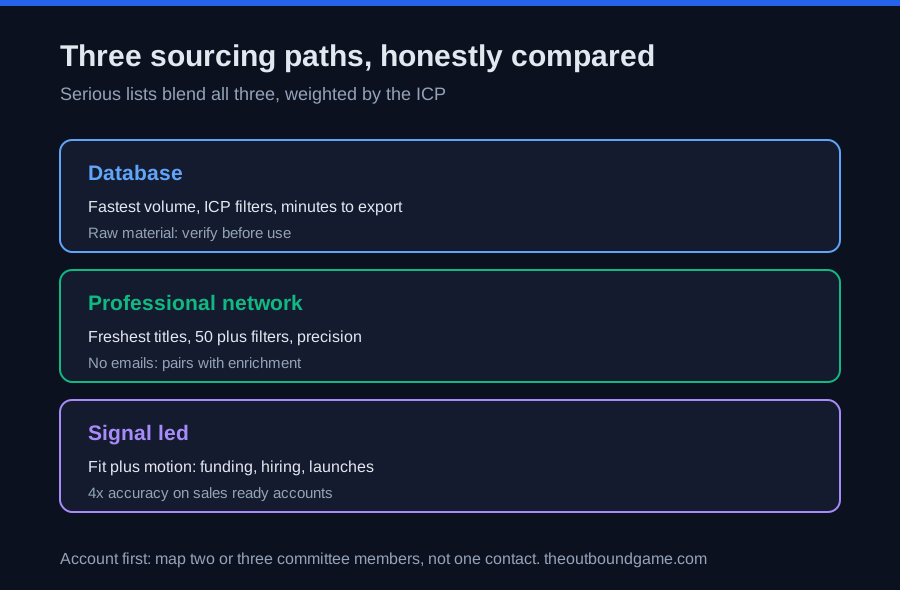
The three sourcing paths, honestly compared
Path one is the database, the fastest route to volume. Platforms with hundreds of millions of contacts let you stack ICP filters and export in minutes, and our apollo vs zoominfo verdict covers which one fits which team. The tradeoff is freshness and depth on niche segments, which is why database output should be treated as raw material for verification, never as a finished lead list.
Path two is professional network research. LinkedIn Sales Navigator offers the most current title and company data available with more than 50 filters, at roughly 120 dollars a month, and our linkedin sales navigator guide covers working it properly. It returns precision without email addresses, so it pairs with enrichment rather than replacing it, and it is the strongest source when the ICP is narrow and seniority sensitive.
Path three is signal led sourcing, and it is where 2026 lists earn their edge. Instead of asking who fits, ask who fits and is in motion: funding rounds, hiring surges, leadership changes, tech adoptions, the buying signals that separate a static profile match from an account actively in market. The research backs the effort: intent aware qualification identifies sales ready prospects with 4 times the accuracy of demographic only filtering, and HubSpot’s research shows pricing page visitors convert at 3 times the rate of content readers. Signals come from sales intelligence tools and become scoring columns in your workspace.
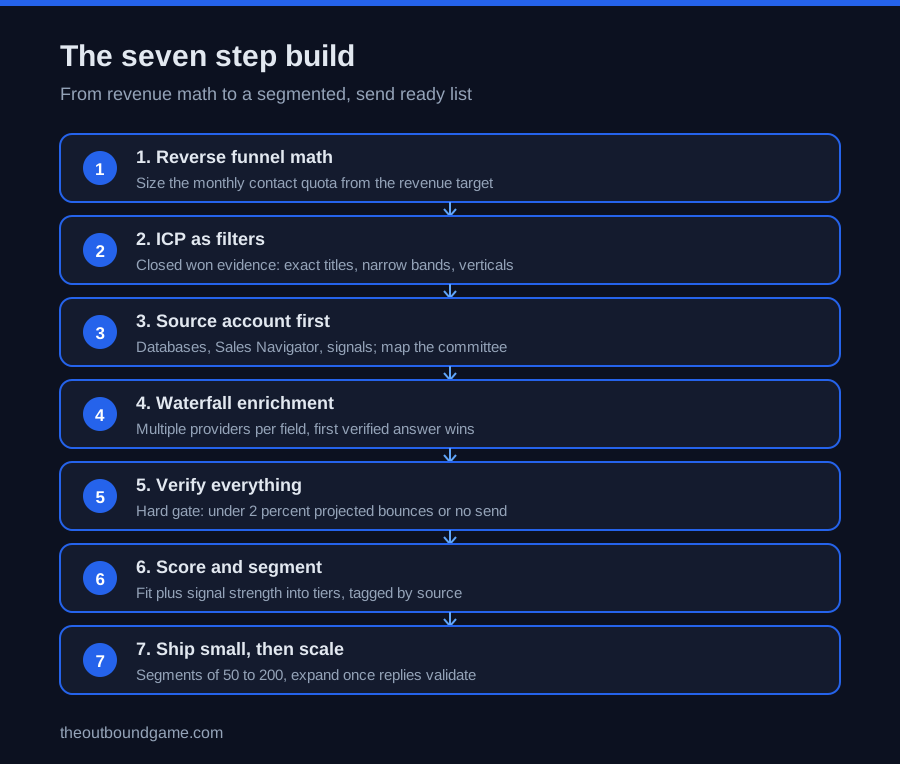
The seven step build
Step one, run the reverse funnel math and set the monthly contact quota your pipeline actually needs.
Step two, write the ICP as filters from closed won evidence: exact titles, narrow bands, named verticals, tech and funding criteria.
Step three, source account first from the paths above, mapping two or three committee members per account instead of one lonely contact.
Step four, enrich through a waterfall. Route every record through multiple providers via data enrichment tools, keeping the first verified answer per field; this is the step that lifts email match rates by 15 to 25 percentage points over any single source, and the step the clay vs instantly breakdown calls the intelligence layer.
Step five, verify everything. Multi provider email validation with a hard gate: the campaign list ships at under 2 percent projected bounces or it does not ship, because bounce rate is the fastest diagnosis of list quality and the direct input to the spam placement causes ranked in why cold emails go to spam.
Step six, score and segment. Weight ICP fit and signal strength into tiers: tier one gets deep personalization, tiers two and three get lighter sequences, and every contact carries tags for source and trigger so you can later see which sources actually convert.
Step seven, ship segments of 50 to 200 into outreach, expanding to 500 to 1,000 per campaign only after replies validate the message, exactly the small first pattern the benchmark data rewards.
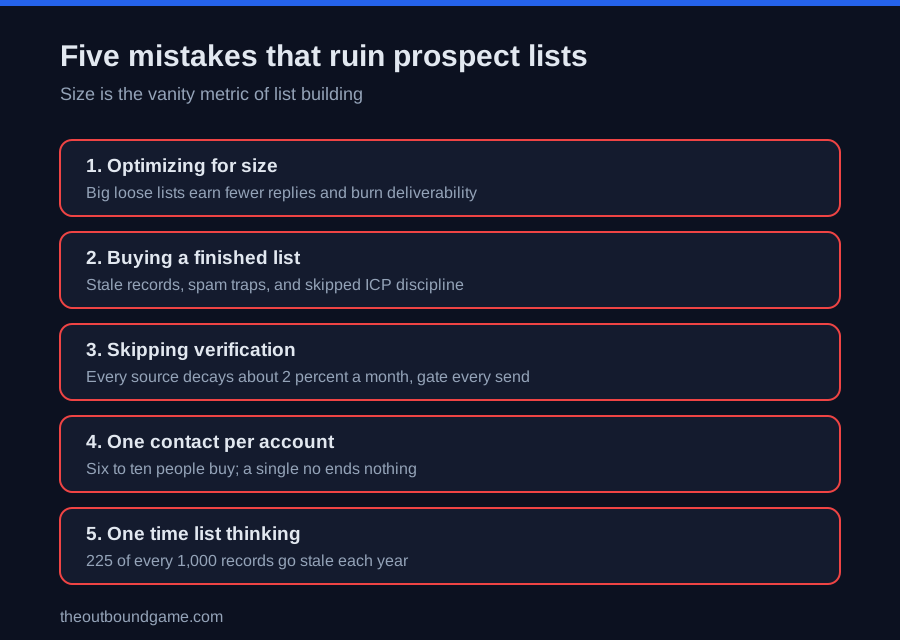
Five mistakes that quietly ruin prospect lists
-
Optimizing for size. A big loose list produces fewer replies than a small tight one and damages deliverability while doing it. Size is the vanity metric of list building.
-
Buying a finished list. Purchased lists carry stale records, spam traps, and compliance risk, and they skip the ICP discipline that makes messages resonate. Build from sources, never buy outcomes.
-
Skipping verification because the source looked reputable. Every source decays at roughly 2 percent a month. Verification before every campaign is a gate, not a courtesy, and hard bounces get removed immediately after every send.
-
Collecting one contact per account. With six to ten people in the buying committee, a single no from a single title ends accounts that were never really worked. Map the committee up front.
-
Treating the list as a one time asset. At 22.5 percent annual decay, a thousand row list loses 225 accurate records a year. Re verify every 90 days, re enrich every six months, prune non responders after a full sequence, and add fresh contacts weekly.
An eight step quality regime that keeps the list alive
-
Gate every campaign on verification. Projected bounce under 2 percent, no exceptions, with failures routed back through the waterfall.
-
Refresh on a calendar. Re verify at 90 days, re enrich at six months, and treat senior, high turnover titles as the fastest decaying rows.
-
Prune ruthlessly. Hard bounces out immediately, unsubscribes honored instantly, non responders retired after three to four touches.
-
Feed the machine weekly. 200 to 500 fresh contacts a month arrive on a schedule, not in panic bursts before quota reviews.
-
Tag provenance. Source and signal tags on every contact turn next quarter’s reporting into a ranked answer to which sources deserve budget.
-
Score dynamically. Signals change daily; a list that re ranks itself keeps reps working the warmest accounts, which is the practical edge of buying signals over static fit.
-
Split test segments, not individuals. Reply rate per segment is the honest verdict on your ICP hypothesis; iterate the definition, not just the copy.
-
Audit quarterly against wins. Fold each quarter’s closed won accounts back into the ICP filters so the list building system learns from revenue, not opinions.
How the prospect list fits the broader outbound stack
-
It is the supply layer of the entire b2b outbound sales system: every downstream metric inherits its quality.
-
Its raw material comes from the b2b data providers landscape, where source choice sets the ceiling.
-
Its gaps close through data enrichment tools, the waterfall layer that turns names into dossiers.
-
Its edge comes from sales intelligence tools, where signals separate in market accounts from lookalikes.
-
Its niche coverage often runs through linkedin sales navigator, the freshest professional data available.
-
Its output feeds the how to personalize cold emails at scale assembly line, which spends the relevance the list earns.
-
Its hygiene protects deliverability, the ranked causes in why cold emails go to spam all trace back to list decisions.
-
And its cadence of touches follows the sales cadence playbook once segments ship to sequences.
FAQ
Frequently asked questions
How do you build a B2B prospect list from scratch?
How many prospects should be on my list?
What makes a good B2B prospect list?
How often should I clean my prospect list?
Should I buy a B2B prospect list?
What is the difference between a prospect list and a lead list?
What are the best buying signals for list building?
The bottom line
How to build a b2b prospect list in 2026 comes down to treating the list as infrastructure with a maintenance schedule, not ammunition to spray. Size the job with reverse funnel math, define the ICP from evidence, source account first across databases, LinkedIn, and signals, enrich through a waterfall, verify to a hard bounce gate, segment small, and keep the whole asset alive against a 22.5 percent annual decay rate. The teams winning outbound are not writing better emails than you. They are sending ordinary emails to extraordinary lists, and the seven steps above are the entire difference.
Want more tested breakdowns like this? We publish one honest teardown of outbound tools, tactics, and playbooks each week. Join the newsletter.
More on Prospecting Tools
How to Find Email Addresses for Cold Outreach in 2026
How to find email addresses in 2026: the five methods ranked by find rate, the waterfall that reaches 85 percent, and the verification gate that matters.
How to Use LinkedIn Sales Navigator for Prospecting
How to use LinkedIn Sales Navigator for prospecting in 2026: the account first workflow, spotlight filters, saved searches, and the export bridge.