How to Find Email Addresses for Cold Outreach in 2026
How to find email addresses in 2026: the five methods ranked by find rate, the waterfall that reaches 85 percent, and the verification gate that matters.
Knowing how to find email addresses at scale is the unglamorous skill that caps everything downstream in outbound, because a prospect you cannot reach is a row in a spreadsheet, not a lead. The 2026 numbers frame the problem precisely: a single data provider finds valid addresses for roughly 40 to 60 percent of a real B2B list, waterfall enrichment through multiple providers pushes cumulative coverage to 85 percent and beyond, and the gap between those two numbers is about 300 additional conversations per thousand contacts. In one published European B2B test, the first provider found 55 percent of a cleaned list, a three step cascade raised it to 85, and after verification the final usable output was 68 percent of the cleaned list, which is the honest arithmetic this guide is built on.
The thesis follows from that math: the find rate is a system property, not a tool property. No provider is universally best, because every database has geographic and industry blind spots, with some US strong vendors finding 5 to 10 times fewer addresses in Europe, which is why the winning setup sequences providers rather than crowning one. And the number that actually matters is not the find rate at all but the usable rate: found, then verified, then cleared of the catch all trap, because an unverified address is not an asset, it is a bounce waiting to spend your sender reputation.
This is the contact acquisition layer of our prospecting coverage: who to target is decided in how to build a b2b prospect list, where the names come from is covered in how to use linkedin sales navigator for prospecting, and the tool roundup lives in best data enrichment tools. Here we cover the methods, the cascade, the verification gate, and the catch all doctrine.
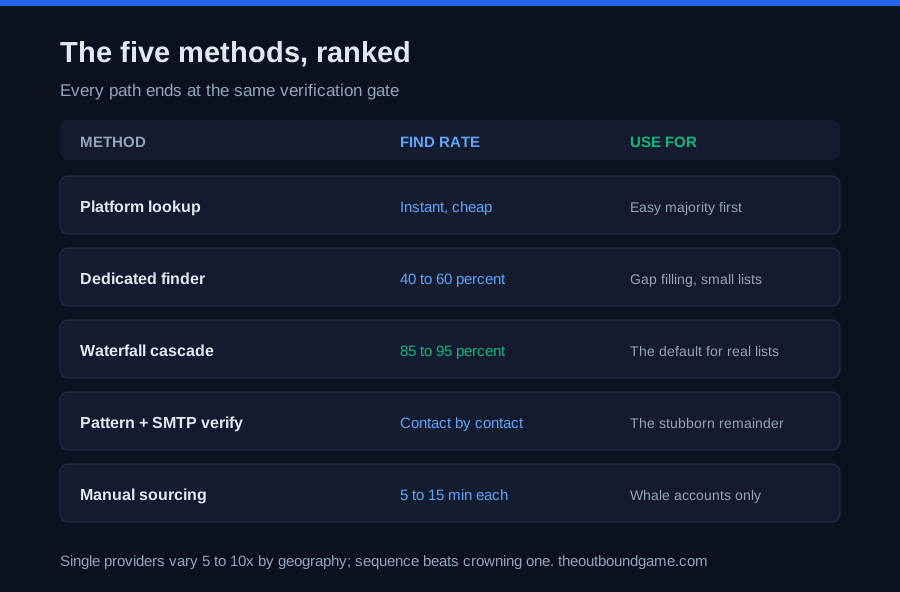
How to find email addresses: the five methods ranked
Method one is the all in one platform lookup: databases like Apollo resolve a name and company against hundreds of millions of pre crawled contacts, instant and cheap per hit, with the coverage and freshness limits any static database carries, and the full provider landscape compared in b2b data providers. Method two is the dedicated email finder, single purpose tools like Snov.io that take a name plus domain and return an address, landing in the same 40 to 60 percent single source band. Method three is the one that changed the category: waterfall enrichment cascades each contact through multiple providers in sequence, stopping at the first verified hit, and reaches 85 to 95 plus percent cumulative coverage because each provider recovers a block the previous ones missed.
Method four is pattern plus verify: generate the likely candidates from the roughly 15 common corporate naming conventions, detect the company’s actual format from public signals, and confirm via SMTP checks that never send a message, useful for stubborn contacts and tiny targeted lists, and the machine version of what manual guessing does in 5 to 15 minutes per contact. Method five is manual sourcing, websites, signatures, registries, which survives only for the handful of accounts worth any effort. The working doctrine: platform lookup for speed on easy contacts, the waterfall as the default for real lists, patterns for the remainder, and manual for the whales.
The waterfall, done properly
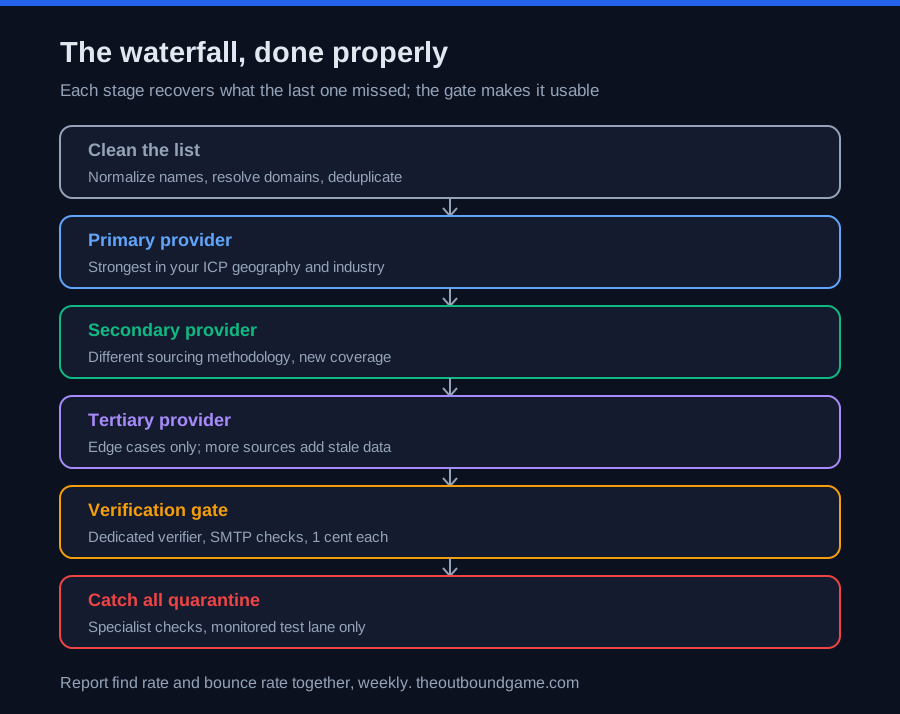
A waterfall is a sequenced cascade, not a pile of providers, and the 2026 field guides agree on the shape: a primary provider chosen for strength in your ICP’s geography and industry, a secondary with a different sourcing methodology so their blind spots do not overlap, a tertiary for edge cases, and then a dedicated verification pass as a separate, non negotiable stage. More providers is not better past that point, because low quality sources late in the cascade return stale and recycled addresses that pass syntax checks while poisoning the output, and because many providers share the same weaknesses around catch all domains. Limit the sequence, order it quality first, and judge it on the pair of numbers that expose each other: find rate and subsequent bounce rate, read together.
The build paths differ by team. Clay offers full configuration control over which providers run for which list segments, the managed waterfall platforms run fixed cascades with pay per verified hit pricing in the few cents per email range, and Apollo runs waterfall natively with its own database as the first source and a verified only setting the platform itself recommends. Cost gets modeled through two lenses or not at all: cost per raw lead processed and cost per usable verified email, because a cheap cascade with a weak verification layer is expensive precisely where it hurts, in the bounce budget.
The verification gate and the catch all doctrine
Email verification is the stage that converts found into usable, and it is a different discipline from finding: MX and syntax checks first, then SMTP level mailbox confirmation that asks the server whether the address exists without sending anything, run through a dedicated verifier rather than trusted from the finding provider, since weak verification at the top of a cascade floods the output with data that looks like wins. The payoff is the whole game: verified lists bounce around 1.5 percent against 2.5 for unverified and vastly worse for purchased data, verification costs roughly a cent per address, and the 2 percent bounce ceiling it protects is the load bearing threshold under every deliverability outcome and every reply rate tier.
Catch all domains get their own doctrine because they break the machinery: a catch all accepts mail to any address at the domain, which makes standard SMTP verification meaningless there, and providers that politely label those results risky while charging for them are selling you bounces. The working rules: detect catch alls explicitly, quarantine them out of the main send, run them through a specialist secondary check where available, and release survivors only into a small, tightly monitored test segment where a spike in bounces pulls the lane immediately. On enterprise heavy lists, catch alls can be a meaningful share of the total, which is exactly why the usable rate, not the find rate, is the number that belongs in your reporting.
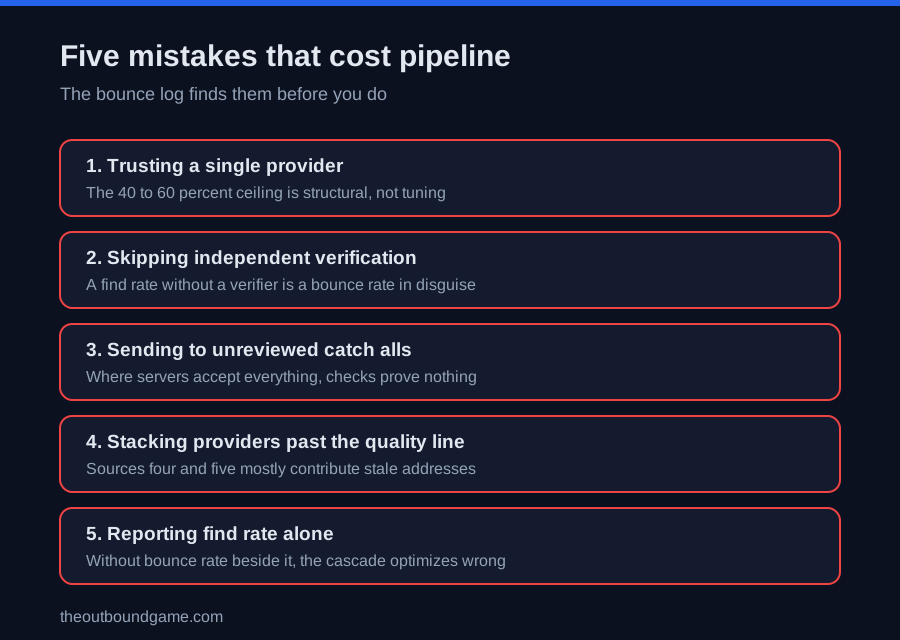
Five email finding mistakes that cost real pipeline
-
Trusting a single provider’s coverage. Every database has geographic and industry holes, some 5 to 10x deep. The 40 to 60 percent single source ceiling is structural, not a tuning problem.
-
Skipping the independent verification pass. A find rate without a verifier is a bounce rate in disguise, and the domain pays the difference.
-
Sending to unreviewed catch alls. Where the server accepts everything, verification proves nothing. Quarantine, specialist check, monitored test, in that order.
-
Stacking providers past the quality line. The fourth and fifth sources mostly contribute stale, recycled addresses that pass syntax and fail in the wild.
-
Reporting find rate without bounce rate. The pair exposes each other; either alone rewards exactly the wrong cascade design.
The eight step contact data pipeline
-
Start from a defined list, not a database browse. The ICP and account selection from how to build a b2b prospect list decide who enters the pipeline.
-
Clean before you enrich. Normalize names, resolve domains, and deduplicate, because garbage rows consume credits and return garbage hits.
-
Run the platform lookup first. The cheap, instant layer resolves the easy majority before the cascade spends anything.
-
Cascade the remainder through a 3 to 4 source waterfall, primary matched to your ICP’s geography, secondary on a different methodology, per the platforms in best data enrichment tools and the deeper mechanics in data enrichment tools.
-
Gate everything through a dedicated verifier. One cent per address, bounce projection under 2 percent, no exceptions.
-
Quarantine and process the catch alls separately, with specialist checks and a monitored test lane.
-
Report the pair weekly. Find rate and bounce rate together, per source, so the cascade order improves from evidence.
-
Refresh on a decay schedule. Contact data rots at 22 plus percent a year, so re verify anything older than a quarter before it sends, the same hygiene the whole b2b outbound sales system depends on.
How email finding fits the broader outbound stack
-
It executes the list strategy defined in how to build a b2b prospect list, turning named accounts into reachable rows.
-
Its richest input source is the export bridge from how to use linkedin sales navigator for prospecting, names in, addresses out.
-
Its tool landscape is compared in best data enrichment tools and the category explainer in data enrichment tools.
-
Its database tier decision runs through b2b data providers and the head to heads like apollo vs zoominfo.
-
Its bounce ceiling protects the sender reputation built in how to warm up an email domain.
-
Its failure mode, bounces and spam placement, is ranked in why cold emails go to spam.
-
Its payoff shows up as the verified list multiplier in cold email reply rate, roughly 2x on its own.
-
And the messages the addresses receive are written in cold email, where the data finally becomes a conversation.
FAQ
Frequently asked questions
How do you find someone's email address for cold outreach?
What is a good email find rate?
What is waterfall enrichment?
Do you need to verify emails from an email finder?
What are catch all domains and how do you handle them?
How much does it cost to find email addresses?
How often should you refresh contact data?
The bottom line
How to find email addresses in 2026 is a pipeline question wearing a tool question’s clothes: platform lookup for the easy majority, a 3 to 4 source waterfall matched to your ICP’s geography for the rest, patterns for the stubborn tail, and a dedicated verification gate that nothing skips, with catch alls quarantined into their own supervised lane. The find rate is a system property, the usable rate is the real product, and the pair of numbers that keeps the whole machine honest is find rate beside bounce rate, reported together every week. Built that way, the pipeline reaches 85 plus percent of the list at under 2 percent bounces, which is 300 extra conversations per thousand contacts, bought with process rather than any single vendor’s promise.
Want more tested breakdowns like this? We publish one honest teardown of outbound tools, tactics, and playbooks each week. Join the newsletter.
More on Prospecting Tools
How to Use LinkedIn Sales Navigator for Prospecting
How to use LinkedIn Sales Navigator for prospecting in 2026: the account first workflow, spotlight filters, saved searches, and the export bridge.
How to Build a B2B Prospect List in 2026 (Step by Step)
How to build a b2b prospect list in 2026: the seven step system, the reverse funnel math, sourcing paths compared, and the quality benchmarks that matter.