Instantly vs Smartlead in 2026: A Full Operator Verdict
Instantly vs Smartlead in 2026, compared by job. The founder-simple sender vs the agency control layer: real pricing and the input that beats both.
The honest answer to Instantly vs Smartlead in 2026 is that both are excellent deliverability-first cold email platforms, and the gap between them is smaller than either company’s marketing suggests, so the choice comes down to your operating model rather than a feature scorecard. Both were built to solve the same core problem, sending high volumes of cold email without burning sender reputation, and both do it well, with unlimited sending accounts on flat pricing, automated warmup, inbox rotation, and per-mailbox reputation monitoring. The deliverability delta between them is real but narrow; the difference that matters is who each was designed for.
That is the frame that actually decides it. Instantly is the founder and lean-operator pick: the cleanest interface, the fastest setup, a lower entry price, a larger warmup pool, and more developed in-product AI, built to get a small team sending within an hour. Smartlead is the agency and power-user pick: best-in-class account-level inbox rotation, native white-label client portals, deeper analytics, and a stronger API, built for managing many domains and clients with fine-grained control. This guide compares them the way an operator running B2B prospecting actually decides: by operating model, then by price, with the one input that beats both platforms kept firmly in view.
This is a head-to-head inside the cold email cluster, which covers the channel at the pillar level, with cold email software on the wider field and cold email templates on the copy. Whichever you pick is a sending layer that lives or dies on email deliverability and the data beneath it.
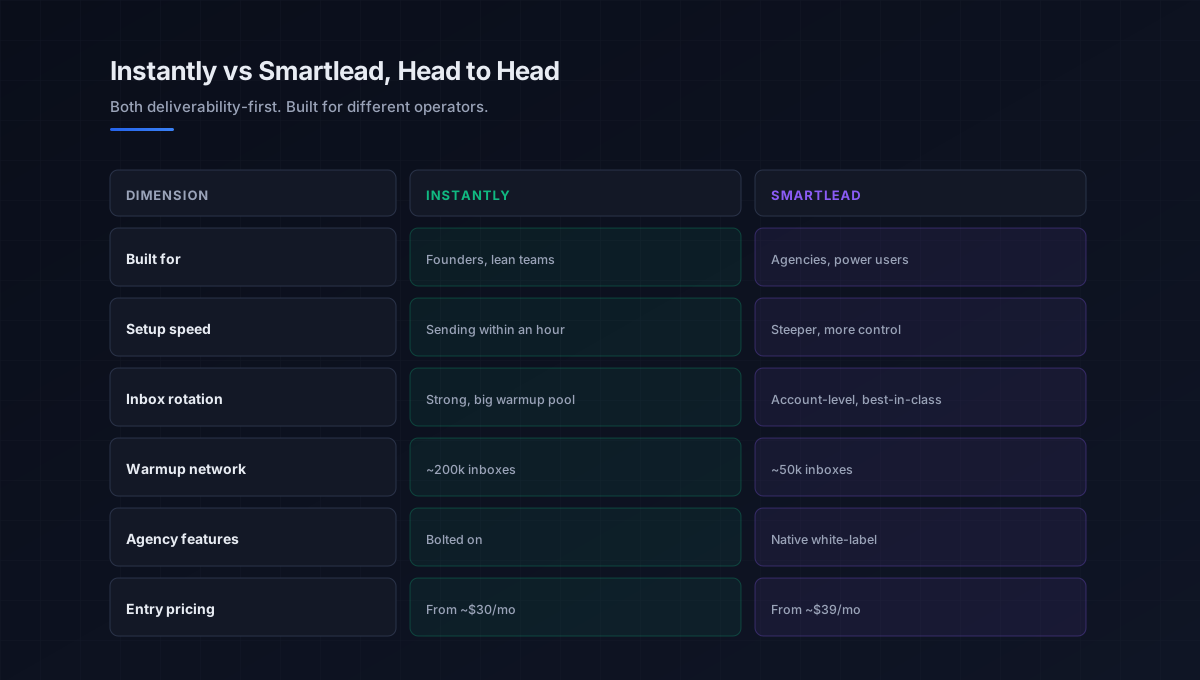
Instantly vs Smartlead: where the two genuinely differ
Both send at volume with warmup and rotation, so focus on the dimensions where they actually diverge, because that is what should settle the choice.
Ease of use and setup
This is Instantly’s clearest edge. The interface is deliberately clean and beginner-friendly: import a list, set up a sequence, connect your inboxes, and you are sending within an hour. Smartlead is more powerful but has a steeper interface, built for operators who want fine-grained control rather than the fastest path to a first send. For a founder or lean team that values launch speed, Instantly wins; for a technical user who wants depth, Smartlead’s complexity is the point.
Inbox rotation and deliverability control
This is Smartlead’s signature strength. Its inbox rotation engine distributes sending across mailboxes at the account level, not just the campaign level, which helps high-volume, multi-domain senders maintain reputation, and its domain-level analytics show which mailboxes are warming correctly. Instantly also rotates inboxes well and runs a larger warmup pool (roughly 200,000 real inboxes versus Smartlead’s 50,000), which strengthens early reputation signals. Both handle deliverability competently; Smartlead offers more granular control, Instantly a larger warmup network.
Agency and multi-client features
This is where Smartlead pulls decisively ahead. It was built with agencies in mind: native white-label client portals let clients log in under your brand, and per-client workspaces keep campaigns, leads, and inboxes cleanly separated. Instantly has added agency features over time, but they feel bolted on rather than native. If you run a cold email agency managing many clients, Smartlead’s sub-account structure is the stronger fit; if you run your own outbound, the distinction matters less.
AI, lead data, and pricing
Instantly bundles more into the base: a built-in lead database, more developed AI for sequence writing and inbox management, and flat pricing from around 30 to 37 dollars a month at entry. Smartlead starts around 39 dollars with unlimited warmups and rotation, climbing to roughly 94 dollars at Pro, and leans on a stronger API and native integrations with Clay, HubSpot, and Salesforce rather than bundled AI. For a single user on basic campaigns Instantly is cheaper; at large mailbox fleets Smartlead’s economics catch up.
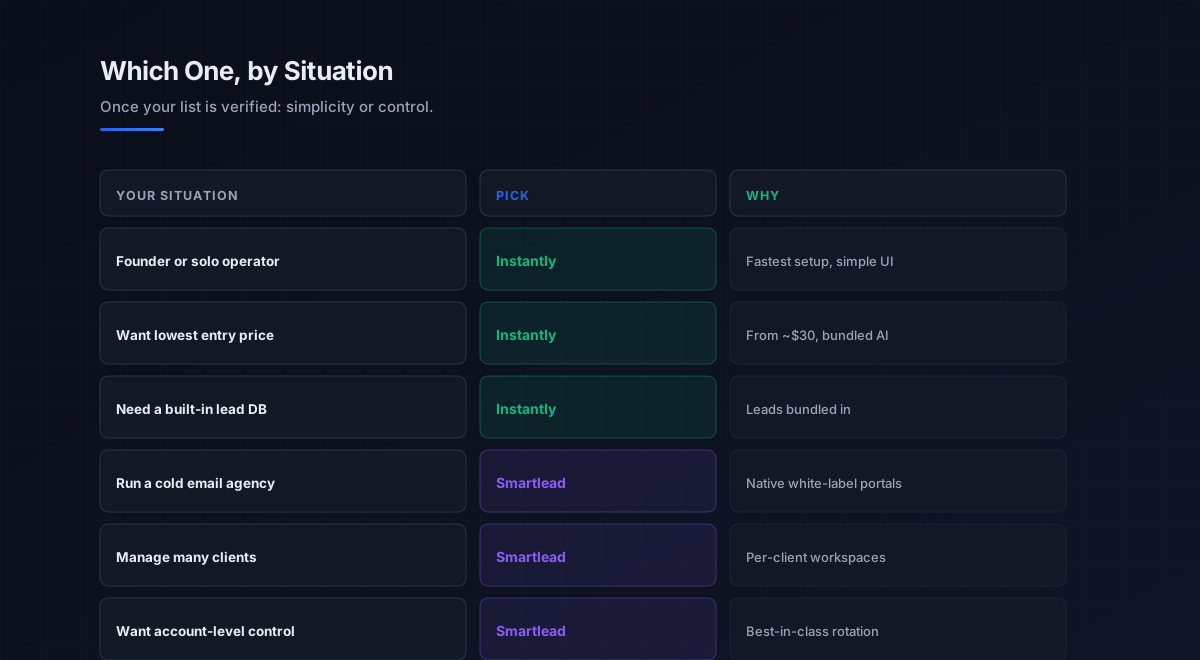
The decision in one question
Because the deliverability is close, the cleanest way through the smartlead vs instantly choice (once your list is verified) is a single question: are you running your own outbound or managing many clients. The answer resolves it faster than any feature grid.
If you are a founder, solo operator, or lean team that values launch speed, a simple interface, lower entry pricing, and bundled AI and lead data, choose Instantly. It gets you sending within an hour and is the more cost-effective path for founder-led outbound. If you are an agency or a technical power user who needs white-label client portals, per-client workspaces, account-level inbox rotation, and deeper analytics and API control, choose Smartlead. It was built for managing many domains and clients cleanly, and that infrastructure is exactly what an agency motion needs.
There is no wrong answer between two genuinely strong tools here, only a fit question, and both run email-only (neither does LinkedIn, and enrichment happens outside the platform). The broader field of sending tools sits in the cold email software guide, the channel discipline in the cold email pillar, and the copy that runs through either platform in cold email templates and cold email subject lines.
The input that beats both platforms
If you take nothing else from this comparison, take this: the sending platform is the last decision, not the first, because both Instantly and Smartlead are multipliers on the list you feed them, and a multiplier on a bad list is worse than no campaign at all. A five-point inbox-placement advantage means nothing the moment eight percent of your contacts bounce, because the bounces torch the sender reputation both platforms depend on. Deliverability is an infrastructure problem long before it is a platform choice.
That is why the verified data comes first, from the b2b data providers and data enrichment tools layers, with bounce rate kept under one percent before a single campaign launches. The technical foundation comes next: authenticate with SPF, DKIM, and DMARC, warm the domains, and control the volume, the discipline covered in email deliverability and sender reputation. Only on that foundation does the platform’s rotation engine earn its keep. And cold email is one channel in a motion, so it works best sequenced through the sales cadence and logged to the CRM software that surround it. Verify the list, fix the infrastructure, then pick the sender; the order matters more than the brand.
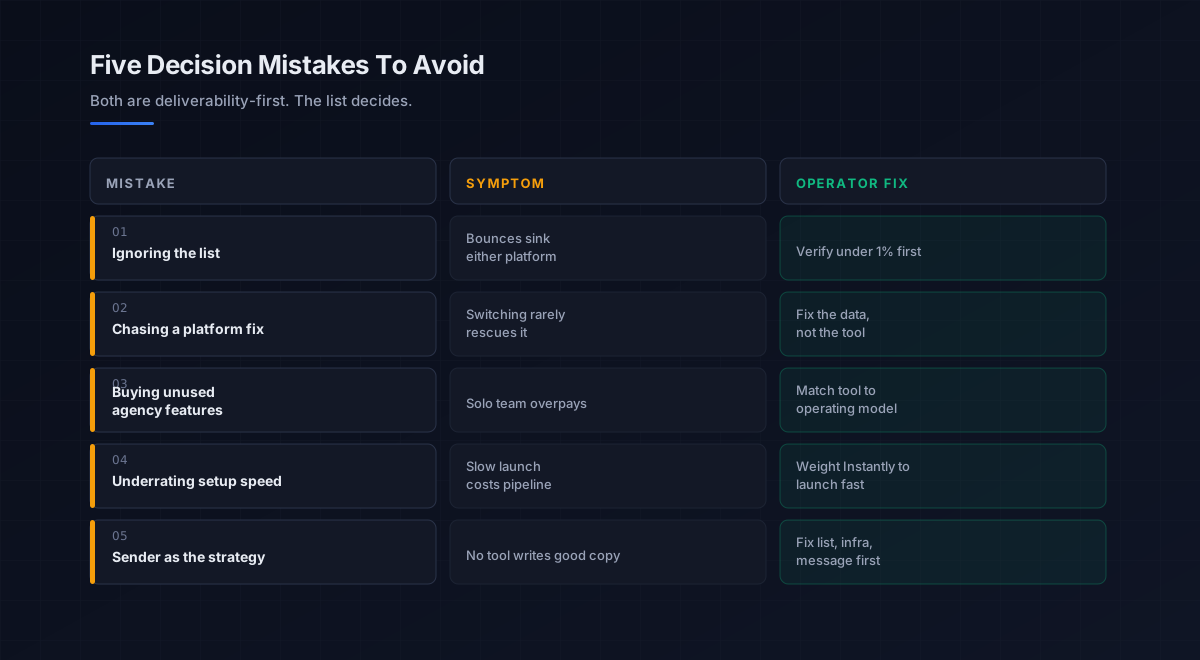
Five mistakes teams make choosing between them
What we see most often is the same handful of errors in this specific decision.
-
Ignoring the list. Both platforms are deliverability-first, but neither fixes bad data. Verify to under one percent bounce before you compare features.
-
Chasing a platform fix for a data problem. Switching tools rarely rescues deliverability. The well-configured-versus-sloppy gap dwarfs the platform gap.
-
Buying agency features you will not use. Instantly’s simplicity beats Smartlead’s portals for a solo operator. Match the tool to your operating model.
-
Underrating setup speed. A founder who needs to launch this week should weight Instantly’s hour-to-first-send over Smartlead’s deeper controls.
-
Treating the sender as the strategy. Neither platform writes good copy or fixes a vague ICP. Fix the list, infrastructure, and message first.
An eight-step framework for the decision
This is the order we work through with the teams we work with on this specific choice. Run it before subscribing.
- Verify the list first. Get to under one percent bounce, since a bad list sinks either platform regardless of features.
- Lock the infrastructure. Authenticate with SPF, DKIM, and DMARC and warm the domains before sending.
- Name your operating model. Decide whether you run your own outbound or manage many clients, the deciding factor.
- Match the tool. Founder and lean teams lean Instantly; agencies and power users lean Smartlead.
- Weigh setup speed versus control. Instantly for the fastest launch; Smartlead for fine-grained, account-level control.
- Model the real cost. Compare Instantly’s lower entry against Smartlead at your mailbox count, where the economics converge.
- Check the integrations. Confirm Clay, HubSpot, or Salesforce sync if you need it, where Smartlead’s API leads.
- Trial both, then commit. Run a real, warmed campaign through each, measure placement and reply, then choose.
How this choice fits the broader stack
Whichever platform you pick, it is a sending layer that executes the email channel. Each connected layer has a deeper guide.
- The channel. Why and how cold email works, in the cold email pillar.
- The wider field. All the sending tools by job, in cold email software.
- The copy. What runs through the platform, in cold email templates and cold email subject lines.
- The data layer. The list both platforms run on, in b2b data providers and data enrichment tools.
- Deliverability. What actually decides placement, in email deliverability.
- The cadence. How email sequences with other touches, in sales cadence.
- The system of record. Where replies and activity log, in CRM software.
- Strategy. The motion the channel amplifies, in outbound sales.
That is the map. The data layer supplies the verified list, deliverability earns the inbox, the platform rotates and sends, and the CRM records the replies, with the sending tool only as effective as the list and infrastructure beneath it.
Frequently asked questions
Is Instantly or Smartlead better in 2026?
What is the main difference between Instantly and Smartlead?
How much do Instantly and Smartlead cost in 2026?
Which is better for a cold email agency?
Does Instantly or Smartlead have better deliverability?
Can I switch from Instantly to Smartlead or back?
Does the sending platform matter more than my list?
The bottom line
Instantly vs Smartlead in 2026 is not a contest of which sends better, since both are deliverability-first platforms with unlimited accounts, warmup, and inbox rotation, and the gap between them is narrow, but of which fits your operating model. Instantly is the founder and lean-operator pick: simplest interface, fastest setup, lower entry pricing, a larger warmup pool, and more bundled AI and lead data. Smartlead is the agency and power-user pick: best-in-class account-level rotation, native white-label client portals, deeper analytics, and a stronger API. Decide whether you run your own outbound or manage many clients, and the Instantly vs Smartlead choice resolves itself.
If you take one rule from this comparison, make it this: the sending platform is the last decision, not the first, because both are multipliers on the list you feed them. Verify your data to under one percent bounce, authenticate and warm your domains, and control your volume before you ever weigh the feature grids, since the gap between a clean setup and a sloppy one on either tool dwarfs the gap between the tools. Fix the list and the infrastructure, then pick Instantly for simplicity or Smartlead for control, because you will always gain more from a deliverable foundation than from choosing between two senders that, on deliverability itself, are nearly matched.
Get the operator playbook in your inbox. The Outbound Game publishes one operator-grade breakdown a week on B2B outbound sales, tactics, tooling, and ops. No fluff, no vendor talking points. Subscribe and get the next one when it ships.
More on Cold Email
Cold Email Call to Action: What Converts in 2026 (Data)
Cold email call to action data for 2026: why interest CTAs win cold, when specific time asks take over, and the ladder that escalates across a sequence.
How to Respond to Cold Email Replies (2026 Playbook)
How to respond to cold email replies in 2026: the six reply lanes, the speed windows that decide conversion, and the plays that turn replies into meetings.
How to Follow Up on Cold Emails in 2026 (What to Send)
How to follow up on cold emails in 2026: the day by day map, what each touch should say, breakup emails that earn replies, and when to stop.