Cold Email vs LinkedIn Outreach: Which Wins in 2026?
Cold email vs LinkedIn outreach in 2026: the reply rate and cost data, the volume caps, when each channel wins, and the combined sequence that beats both.
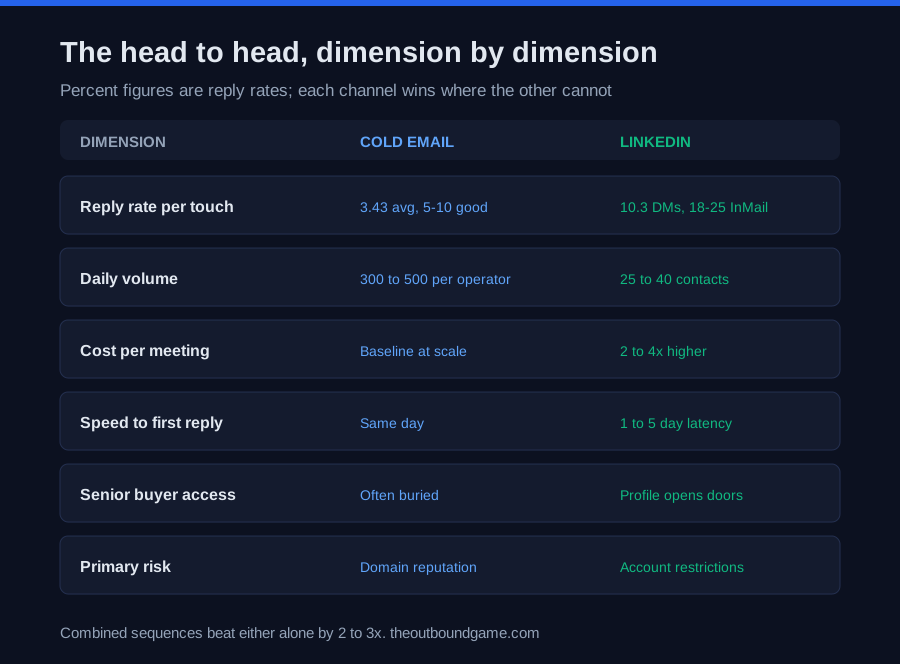
The cold email vs LinkedIn outreach debate has a clean 2026 answer, and it is not the one either camp wants: LinkedIn wins on reply rate per touch, cold email wins on cost per conversation at scale, and the channel that wins on meetings per dollar is usually the two of them combined. The per touch numbers are lopsided: LinkedIn DMs earn roughly 10.3 percent response rates, about double cold email’s, InMail runs 18 to 25 percent with top campaigns higher still, and personalized connection requests get accepted 30 to 45 percent of the time, while cold email’s platform wide average reply sits at 3.43 percent in Instantly’s billions of sends, with well run campaigns at 5 to 10.
Then the volume math flips the story. One operator with proper infrastructure sends 300 to 500 cold emails a day at pennies per prospect, while LinkedIn caps the same operator at 100 to 150 connection requests a week, which at a healthy acceptance rate means 120 to 180 new conversations a month, and the late 2025 clampdown that cut Open InMail allowances from roughly 800 a month to under 100 for many accounts tightened the ceiling further. Run the division and LinkedIn typically costs 2 to 4 times more per booked meeting at scale, which is exactly why it cannot be the volume engine, and exactly why its scarcity keeps its response rates high. Email gets seen more; LinkedIn gets answered more.
This comparison is the budget decision layer under the multichannel outbound pillar: that piece orchestrates all the channels as one machine, and this one settles where the next dollar and hour go when the choice is between the two biggest. The channel crafts live in cold email and linkedin outreach respectively.
What each channel actually is, structurally
Cold email is the scale channel because its constraints are infrastructure, not platform policy: with warmed secondary domains and the per inbox sending limits respected, capacity grows linearly with domains, it carries unlimited length, attachments, and formatting, it reaches everyone with an inbox regardless of platform activity, and every step is measurable in your sequencer. Its costs are technical: deliverability is a discipline with its own physics, the address itself must be found and verified, and a burned domain is a real asset loss.
LinkedIn is the trust channel because the message arrives with your face, title, work history, and mutual connections attached, in a context where professional outreach is native rather than intrusive, and aimed at profile data the prospects maintain themselves while email databases decay around it. Its costs are structural: hard caps on connection requests, InMail credits rationed and now tighter, 1 to 5 days of acceptance latency on every new thread, 300 character connection notes, aggressive account restrictions on automation, and per LinkedIn’s own positioning, a seat cost that makes it a precision instrument. One deserves the volume; the other deserves the accounts where a single conversation moves real money.
Cold email vs LinkedIn outreach: when each wins
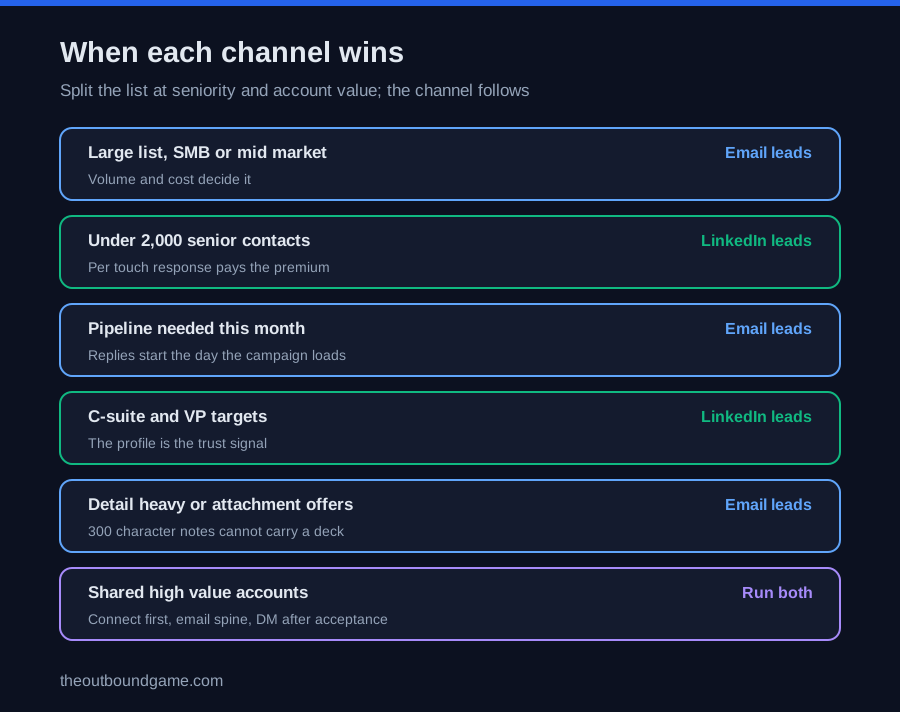
Cold email leads when the list is large and the motion needs speed: hundreds of target accounts, SMB and mid market buyers, transactional to mid deal sizes, offers needing detail or attachments, and teams that need pipeline this month, because email starts producing replies the day the campaign loads. It also leads wherever measurement discipline matters, since A/B testing and step level analytics live natively in email, feeding the reply rate levers directly.
LinkedIn leads when the targets are few and senior: C-suite and VP buyers who answer the phone and the DM but bury cold email, lists under roughly 2,000 high value contacts, recruiting and talent motions where prospects live on the platform, and any deal size where 2 to 4x the cost per meeting is cheap against the contract. It also leads as the warmth layer even when email carries the volume: profile views, thoughtful comments, and content engagement build the familiarity that makes the eventual email feel half warm, which is the mechanism behind the combined sequence’s premium. Per HubSpot’s sales research, social selling leaders create significantly more opportunities than peers, and that lift concentrates exactly at the senior, relationship heavy end of the market.
The combined sequence that beats both
The head to head misses the finding that settles it: combined sequences produce 2 to 3 times the positive replies of either channel alone at the same contact volume, teams adding a LinkedIn touch for email non responders report 23 to 31 percent higher total replies, and the mechanism is narrative reinforcement, the connection request making the email feel warmer while the email gives the connection context. The working two channel skeleton: day 0, profile view plus a no pitch connection request; day 2, the opener email; day 5, the second email on a new angle; day 8, a soft DM if the connection landed; day 12, the direct ask email with breakup framing; day 18, the final low friction touch, all inside the spacing rules of the sales cadence playbook and the follow up craft the email spine inherits.
Two disciplines keep the combination working. Respect each platform’s tolerance: email carries the full follow up spine, while LinkedIn takes 1 to 2 gentle follow ups at most, because the platform is more sensitive to perceived spam and your reputation there is public. And wire the channels to one record, since a DM reply must stop the email sequence instantly, the coordination requirement the multichannel outbound pillar treats as the whole product. Where tooling is thin, the pragmatic split is automation for email and manual LinkedIn for the top accounts, which is also the compliance safe default.
Five channel choice mistakes that waste the quarter
-
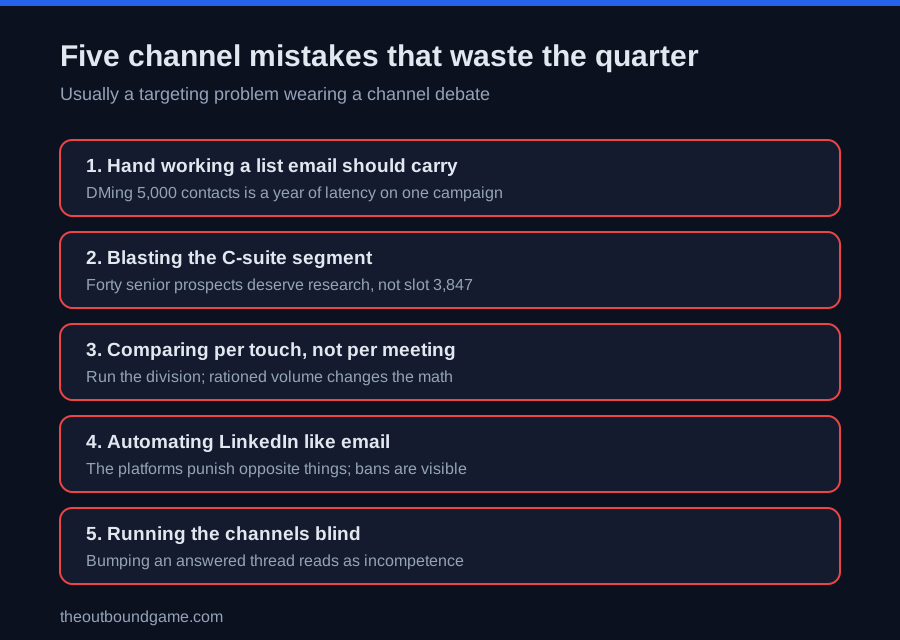
Hand working a list email should carry. DMing 5,000 contacts at 120 conversations a month is a year of latency on a one month campaign.
-
Blasting the C-suite segment. Forty senior prospects deserve connection requests and research, not sequence slot 3,847. The reply rate difference is 3 to 8x.
-
Comparing per touch instead of per meeting. InMail’s 20 percent reply at rationed volume and a seat cost can still lose the cost per meeting math to email at scale. Run the division.
-
Automating LinkedIn like email. The platforms punish opposite things: email punishes volume spikes, LinkedIn punishes automation itself. Restrictions are expensive and visible.
-
Running both channels blind to each other. Bumping a thread the prospect answered in the other inbox reads as incompetence, and it is the most common multichannel failure we see.
The eight step channel allocation playbook
-
Split the list before choosing a channel. Seniority and account value divide it: the broad segment and the top 10 to 20 percent are different motions.
-
Give email the broad segment at full volume, on warmed infrastructure, benchmarked against the cold email benchmarks tiers.
-
Give LinkedIn the top segment by hand. Connection first, no pitch in the note, content engagement before the ask.
-
Spend InMail like the rationed asset it is, on Open profiles and the accounts where the 18 to 25 percent response justifies the credit.
-
Run the two channel skeleton on shared accounts: view and connect, then the email spine, with the DM slotted after acceptance.
-
Cap LinkedIn follow ups at two. The platform remembers, and so do the prospects it shows your profile to.
-
Report one number per segment, meetings per week, with channel attribution underneath, per the measurement stack in how to measure outbound sales.
-
Rebalance quarterly on the division that matters, cost per meeting by segment, and let the sourcing pipeline keep feeding both sides, the same allocation discipline the whole b2b outbound sales system runs on.
How the channel decision fits the broader outbound stack
-
Its orchestration layer, where the two channels become one sequence, is the multichannel outbound pillar.
-
Its email side craft lives in cold email, word budgets, openers, and the follow up spine.
-
Its LinkedIn side craft lives in linkedin outreach, connection notes, DMs, and content warmth.
-
Its email capacity math is set by how many cold emails per day and the warmup behind it.
-
Its LinkedIn sourcing engine is how to use linkedin sales navigator for prospecting, accounts first.
-
Its scaled LinkedIn tier, used carefully, is compared in linkedin automation tools.
-
Its rhythm rules, spacing and touch counts across both, live in sales cadence.
-
And its verdict metric, replies that become meetings, is kept honest in cold email reply rate.
FAQ
Frequently asked questions
Is cold email or LinkedIn outreach better in 2026?
What are the response rates for LinkedIn vs cold email?
What are LinkedIn's outreach limits?
Is LinkedIn outreach more expensive than cold email?
Should you use LinkedIn and cold email together?
When should you lead with LinkedIn instead of email?
How many follow ups should you send on each channel?
The bottom line
Cold email vs LinkedIn outreach resolves into a division of labor the moment the list is split correctly: email is the volume engine, structurally unlimited, cheap per conversation, and measurable to the step, while LinkedIn is the precision instrument, capped hard, costlier per meeting, and several times more likely to be answered by the senior buyers who matter most. Give the broad segment to email at full infrastructure, work the top of the list by hand on LinkedIn, run the two as one sequence on shared accounts, and judge the split quarterly on meetings per dollar per segment. The debate was never really email against LinkedIn. It was always a list that had not been divided yet.
Want more tested breakdowns like this? We publish one honest teardown of outbound tools, tactics, and playbooks each week. Join the newsletter.
More on Outbound Strategy
How to Start Outbound Sales in 2026 (60 Day Roadmap)
How to start outbound sales from zero in 2026: the 60 day roadmap from ICP to first meetings, the starter stack, and the metrics that prove the channel.
LinkedIn Connection Request Message: What Works in 2026
LinkedIn connection request message guide for 2026: the note paradox, the 120 to 180 character sweet spot, and the acceptance rate math that gates volume.
Multichannel Outbound in 2026: The Complete Playbook
Multichannel outbound in 2026: the channel roles, the coordinated 15 day cadence, behavior triggers, and why orchestration beats channel count.