How Many Cold Emails Per Day? Safe Limits for 2026
How many cold emails per day is safe in 2026: the per inbox limits, warmup ramp, why the cap includes warmup sends, and the math for scaling volume.
Asking how many cold emails per day you can send is the right question measured in the wrong unit, and the unit is the whole answer. The 2026 consensus across every major deliverability dataset is 20 to 50 cold emails per inbox per day for a properly warmed mailbox, 10 to 20 for a new one, and the ceiling is per inbox, never per domain or per campaign, because Gmail and Microsoft judge sender reputation at the level of the individual sending address. Your email platform may technically allow 2,000 sends a day from one account; using that allowance on cold outreach gets the account throttled, flagged, and eventually suspended, because the technical limit and the safe limit are entirely different numbers.
The second half of the answer is that scale comes from infrastructure, not throttle. Teams that need 500 sends a day do not push one inbox harder, they run a pool: the working formula is daily target divided by 40, plus a 20 percent buffer, so 500 a day means about 16 warmed inboxes spread 2 to 3 per domain across secondary domains, never the primary brand domain. Each mailbox earns its own trust and carries its own ceiling, and the sending platform rotates the load so no single address ever crosses its safe daily volume.
This piece is the volume layer of our deliverability coverage: the full ranked spam causes live in why cold emails go to spam, the funnel math that decides how much volume you even need sits in the cold email benchmarks hub, and the deep infrastructure work lives in our sister publication’s deliverability guides. Here we settle the number, the ramp, and the scaling architecture.
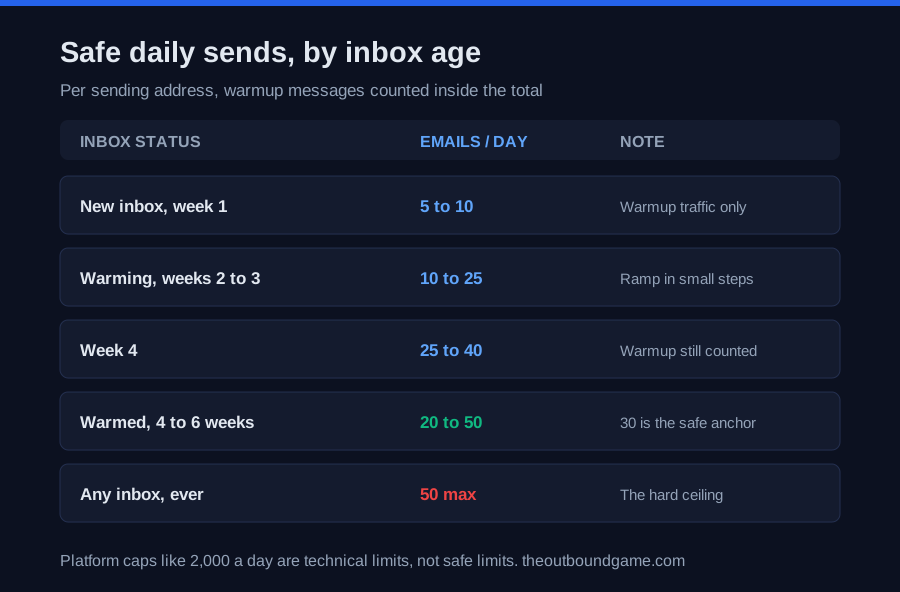
The sending limits, by inbox age
A brand new inbox on a brand new domain starts at 5 to 10 emails a day, and those first sends should be warmup traffic, not prospects. Through weeks two and three it ramps by small daily increments toward 15 to 25, and by week four a healthy mailbox handles 25 to 40 total daily sends. After four to six weeks of clean history, the working range settles at 20 to 50 cold emails per day, with 30 as the conservative anchor most agencies enforce and 50 as the hard ceiling almost every operator agrees on, because above it volume based filtering starts triggering even with perfect content and authentication.
One detail most guides bury, and the source of many mysterious flags: the cap includes warmup sends. If your warmup tool exchanges 10 messages a day from an inbox whose safe total is 40, you have 30 cold slots left, not 40. Both streams draw from the same reputation budget, and stacking campaign volume on top of warmup volume is how teams exceed their limit while believing they are under it.
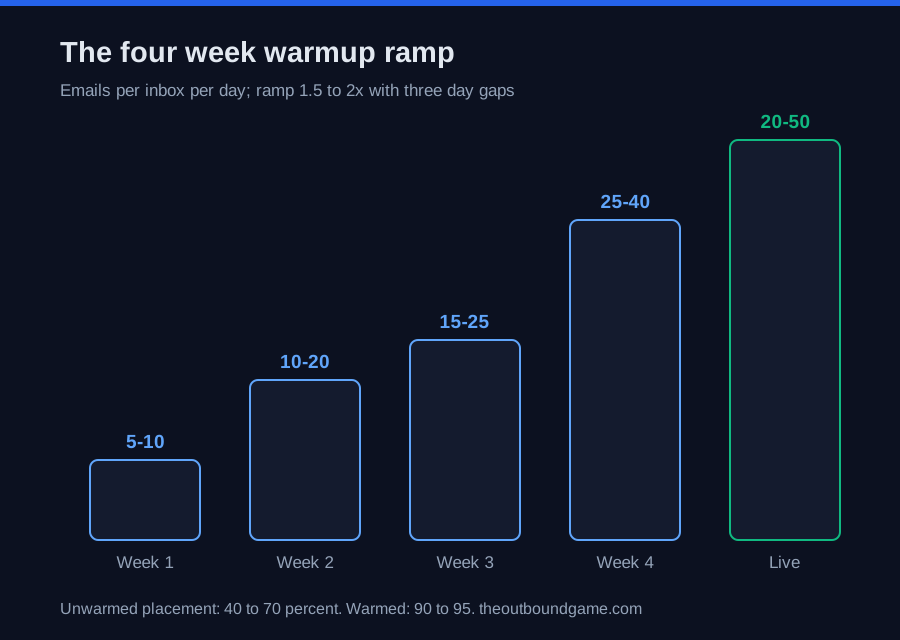
The other 2026 specific trap is the ramp rate. Microsoft’s updated anti spam system specifically flags senders whose volume more than triples within 48 hours, so increases should move in 1.5 to 2x steps with at least three days between them. Sudden spikes read as a compromised account or a spammer, even from a mailbox with months of good history.
Warmup: the ramp that sets the ceiling
Email warmup is the four week process that makes any of these numbers available. The schedule that holds up across the major 2026 datasets: 5 to 10 emails a day in week one, 10 to 20 in week two, 15 to 25 in week three, 25 to 40 in week four, generated as automated conversations that get opened, replied to, and rescued from spam, teaching providers your address behaves like a human. Per Instantly’s benchmark data, the difference is not marginal: unwarmed new domains land in the inbox 40 to 70 percent of the time, while properly warmed ones hit 90 to 95, which on identical lists and copy is the gap between 3 replies per hundred sends and 12.
Two rules protect the investment. First, never skip week one, because launching campaigns on an unwarmed domain triggers spam classification within days and costs 6 to 8 weeks of recovery, longer than the warmup would have taken. Second, never fully switch warmup off: sender reputation decays without positive signals, so the standing practice is keeping warmup running indefinitely at 5 to 10 emails a day per inbox, roughly a fifth of send volume, alongside live campaigns.
Scaling: the multiple inbox architecture
Real daily volume is an infrastructure product built on multiple inboxes: pool size times safe limit. The standard build is 2 to 3 mailboxes per domain, spread across several lookalike secondary domains registered specifically for outbound, so a reputation problem on one asset never touches the brand domain or the rest of the pool. Five inboxes across three domains safely carries 150 to 250 cold sends a day; the 16 inbox pool carries 500 plus; and agencies running thousands of daily sends operate 40 to 80 inbox fleets with the same per unit discipline, rotated automatically by platforms like the ones compared in cold email software and instantly vs smartlead.
Two compliance anchors bound the whole system. Google and Yahoo’s bulk sender rules set a 5,000 a day threshold that triggers stricter requirements for consumer sending, and while sane cold campaigns never approach it per domain, the underlying requirements, SPF, DKIM, DMARC, one click unsubscribe where applicable, and complaint rates under 0.3 percent with 0.1 as the working target, apply to every sender at every volume. Bounces stay under 2 percent, which is a list quality function: the verification disciplines in how to build a b2b prospect list decide whether your volume budget gets spent on prospects or on burning reputation.
And before scaling at all, run the arithmetic honestly: the funnel math says roughly 500 well targeted delivered emails per client at average to good metrics, so a five client quarter needs about 3,200 sends, which two or three healthy inboxes cover without any fleet. Tight targeting and real personalization lower the required daily volume dramatically, because a higher cold email reply rate buys the same meetings with fewer sends, while volume without targeting just burns domains faster.
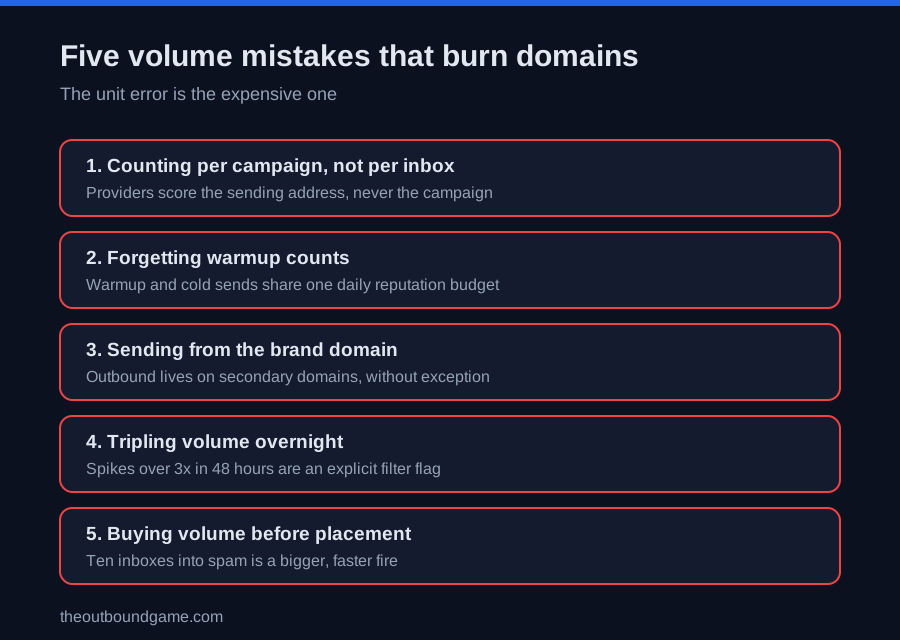
Five volume mistakes that burn domains
-
Counting per campaign instead of per inbox. Four hundred a day across four inboxes is 100 each, double the ceiling. Providers score the address, not the campaign.
-
Forgetting warmup counts. Warmup sends and cold sends draw from the same daily budget. Thirty cold plus twenty warmup is fifty total, at the hard limit.
-
Sending from the primary brand domain. One bad quarter of outbound can poison the domain your invoices, support, and internal mail depend on. Outbound lives on secondary domains, always.
-
Tripling volume overnight. Spikes over 3x in 48 hours are an explicit Microsoft flag and an implicit Google one. Ramp 1.5 to 2x with three day gaps.
-
Buying volume before earning placement. Ten inboxes sending to an unverified list at 20 percent spam placement is a bigger, faster fire. Fix placement first, then scale what works.
The eight step volume plan
-
Size the real need. Work backwards from meetings required through the funnel math, times 1.2 for safety. Most teams need fewer sends than they assume.
-
Compute the pool. Daily target divided by 40, plus 20 percent buffer, at 2 to 3 inboxes per domain on dedicated secondary domains.
-
Authenticate before anything. SPF, DKIM 2048 bit, DMARC on every sending domain, verified in DNS before warmup begins.
-
Warm on the four week schedule. 5 to 10, then 10 to 20, then 15 to 25, then 25 to 40 a day, with reply behavior monitored weekly in Google Postmaster Tools.
-
Launch at a third of capacity. First campaigns run 10 to 15 cold sends per inbox per day, ramping 1.5 to 2x per step with three day gaps.
-
Keep warmup alive. 5 to 10 warmup messages a day per inbox indefinitely, counted inside each inbox’s total.
-
Gate volume on the metrics. Bounces under 2 percent, complaints under 0.1, reported opens above 30. Any breach freezes the ramp until fixed, per the spam cause rankings.
-
Warm capacity ahead of demand. New inboxes enter warmup 4 to 6 weeks before the campaign that needs them, so growth never tempts anyone to push a mailbox past its ceiling, the discipline the whole b2b outbound sales system rests on.
How the volume limits fit the broader outbound stack
-
Volume is the third ranked spam cause in why cold emails go to spam, which is why the limits exist at all.
-
The funnel math that sizes your daily volume honestly lives in the cold email benchmarks hub.
-
Higher reply rates buy the same pipeline with less volume, per the levers in cold email reply rate.
-
The verification that keeps bounces under 2 percent is built in how to build a b2b prospect list.
-
The rotation machinery that keeps every inbox under its ceiling is the job of your cold email software.
-
The sequences those sends carry are designed in how to follow up on cold emails, where touches multiply per prospect.
-
Silence despite healthy volume gets diagnosed in why cold emails get no replies, arrival first.
-
And the strategy the whole sending machine serves is the cold email pillar, where volume is a means, never the metric.
FAQ
Frequently asked questions
How many cold emails can I send per day?
Is the cold email limit per inbox or per domain?
How many cold emails can I send from a new domain?
Do warmup emails count toward daily sending limits?
How do I send 500 or more cold emails per day safely?
Does the Gmail and Yahoo 5,000 email rule apply to cold email?
What happens if I exceed safe cold email volume?
The bottom line
How many cold emails per day comes down to three numbers and one unit: 20 to 50 per warmed inbox, 10 to 20 per new one, 50 as the ceiling nobody profitable crosses, all measured per sending address with warmup counted inside. Scale is bought with infrastructure, more warmed inboxes on more secondary domains, never with throttle, and the ramp obeys physics: four weeks up, 1.5 to 2x steps, three day gaps, metrics gating every increase. Most teams discover the liberating part last: at healthy reply rates the funnel needs far fewer sends than they feared, and the volume question quietly becomes a targeting question, which is the better question anyway.
Want more tested breakdowns like this? We publish one honest teardown of outbound tools, tactics, and playbooks each week. Join the newsletter.
More on Deliverability
Best Email Warmup Tools in 2026 (Tested and Ranked)
The best email warmup tools in 2026 ranked by pricing model, warmup network quality, and team shape, from dedicated tools to sequencer bundled warmup.
How to Warm Up an Email Domain in 2026 (30 Day Plan)
How to warm up an email domain in 2026: the 30 day schedule, the graduation gates, why the calendar is only the input, and the recovery playbook.
Why Cold Emails Go to Spam in 2026 (and How to Fix It)
Why cold emails go to spam in 2026: the seven causes ranked by how often they are guilty, the thresholds Google enforces, and the fix for each one.