Best Email Warmup Tools in 2026 (Tested and Ranked)
The best email warmup tools in 2026 ranked by pricing model, warmup network quality, and team shape, from dedicated tools to sequencer bundled warmup.
The best email warmup tools in 2026 do the same job through the same mechanism, a warmup network of real inboxes that opens, replies to, stars, and rescues your mail from spam so mailbox providers read your account as human, which means the buying decision is not really about features. It is about two axes the roundups bury: the pricing model, because per inbox tools that look cheap at 2 mailboxes become the most expensive line in the stack at 20, and network quality, because a warmup pool full of synthetic or recycled accounts teaches the filters exactly the wrong lesson. This guide ranks the market on both, by the team shape actually doing the buying.
The category context matters before the list: warmup is non negotiable at any scale, the 30 day ramp is the 2026 floor, and maintenance warmup continues for the life of every sending inbox at roughly a fifth of volume, all covered in the process guide at how to warm up an email domain, which this roundup converts into a purchase decision. The tools below split into three structural camps: dedicated warmup platforms, warmup bundled inside sequencers, and warmup bundled inside sending infrastructure, and for many teams the honest answer is that the bundle they already pay for is enough.
One 2026 reality check frames every purchase: reported inbox placement rates in vendor tests cluster between 91 and 98 percent after four weeks across the serious tools, which means the marginal differences are small and the real risks are structural, wrong pricing model for your mailbox count, wrong provider support for your stack, or a network whose quality you cannot verify. Buy against those risks, not against a percentage point of placement in someone else’s test.
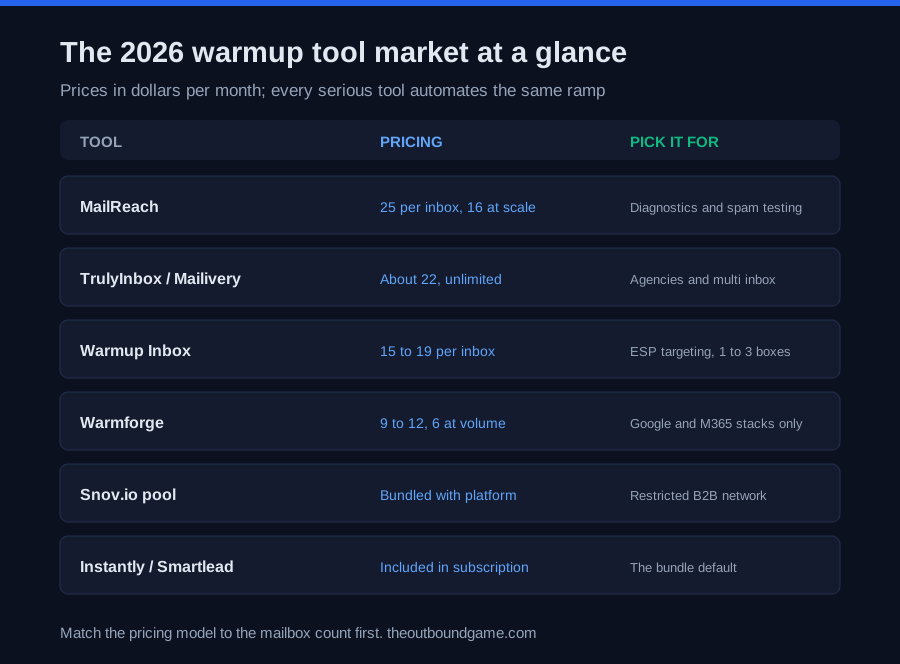
The best email warmup tools, ranked by what they are for
MailReach is the diagnostics pick: a 30,000 plus inbox warmup network across any SMTP provider, up to 100 warmup emails a day per mailbox, built in spam testing that shows placement across Gmail, Outlook, and Yahoo before campaigns launch, and an AI deliverability assistant that in independent testing caught a DKIM alignment issue every other tool missed. Pricing runs about 25 dollars per inbox down to 16 at volume, which positions it for teams and agencies that want visibility and sender reputation analytics beside the warmup itself rather than the cheapest possible slot.
TrulyInbox and Mailivery are the unlimited picks, and they change the arithmetic entirely: both offer unlimited mailboxes on every paid plan from roughly 22 dollars a month, against per inbox tools where 50 mailboxes can run 950 dollars monthly, which makes them the default answer for agencies and anyone running the multi domain, multi inbox architecture the volume math requires. Warmup Inbox is the targeting pick, with a 30,000 plus inbox network, ESP specific warmup that concentrates engagement on whichever provider is filtering you, five language warmup for international sending, and human audited AI content, at per inbox pricing that suits 1 to 3 mailboxes and punishes 20. Warmforge is the infrastructure pick for Google Workspace and Microsoft 365 stacks only: aged account network, a heat score per mailbox, monthly placement tests, and DNS and blacklist monitoring, at 9 to 12 dollars a slot falling to 6 at volume. And Snov.io’s premium warmup pool is the quality control pick, restricting warmup traffic to verified high quality B2B inboxes, the direct answer to the recycled network problem.
The bundles, and when they end the conversation
For teams already sending through a modern sequencer, the bundled warmup frequently ends the purchase before it starts: Instantly includes warmup for unlimited accounts inside its sending subscription, Smartlead bundles its own native network the same way, and Lemwarm ships with every paid Lemlist plan carrying a 20,000 plus domain network, comparisons the instantly vs smartlead head to head covers in full. The bundle wins on price and on integration, warmup that automatically coordinates with live campaign volume inside one dashboard, and its honest weaknesses are the ones the dedicated tools sell against: shallower diagnostics, a network you share with every other customer of a mass market platform, and no spam testing depth when placement breaks and you need to know why.
The working rule by team shape: solo founders on 1 to 3 inboxes take the bundle inside whichever cold email software they run, or Warmup Inbox if sending outside a sequencer; scaling teams on 10 to 50 inboxes take an unlimited plan, TrulyInbox or Mailivery, with MailReach worth its premium where diagnostic depth pays; agencies default to unlimited plus a placement testing layer; and Google or Microsoft only infrastructure operations price Warmforge first. Whatever the pick, the tool executes the same doctrine the process guide fixed: randomized ramps, engagement realism, plain text and pixel free, business hours sending, and gates over calendar.
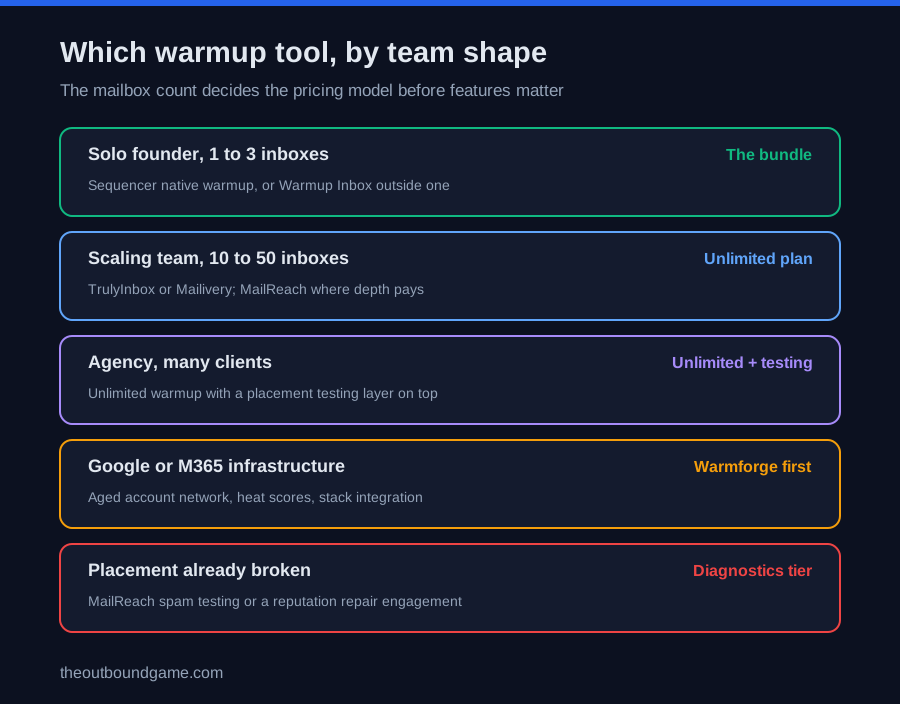
What separates the best email warmup tools: network and tests
Since every serious tool automates the same ramp, the durable differentiators are the warmup network and the verification layer. Network questions worth asking before paying: how many inboxes, 20,000 to 30,000 plus is the credible range for the majors; what kind, real aged accounts against synthetic ones, with some vendors now advertising exclusively aged Google Workspace and Microsoft 365 pools precisely because recycled networks stopped working; what content, AI generated conversation that reads human, ideally human audited, because gibberish warmup threads are themselves a filter signal; and whose company you keep, since a shared pool full of abusive senders bleeds reputation sideways, the problem restricted B2B pools exist to solve.
The verification layer is the other half: inbox placement testing that shows where mail actually lands per provider, reputation scoring with alerts on drops, blacklist and DNS monitoring, and per ESP breakdowns, because Gmail and Microsoft filter differently and a blended score hides the fire. This is where the deeper deliverability tooling conversation lives, and the practical rule is simple: whatever warms the inbox, an independent placement test gates the launch at day 30, and reported open rates on a fixed segment work as the ongoing smoke alarm afterward.
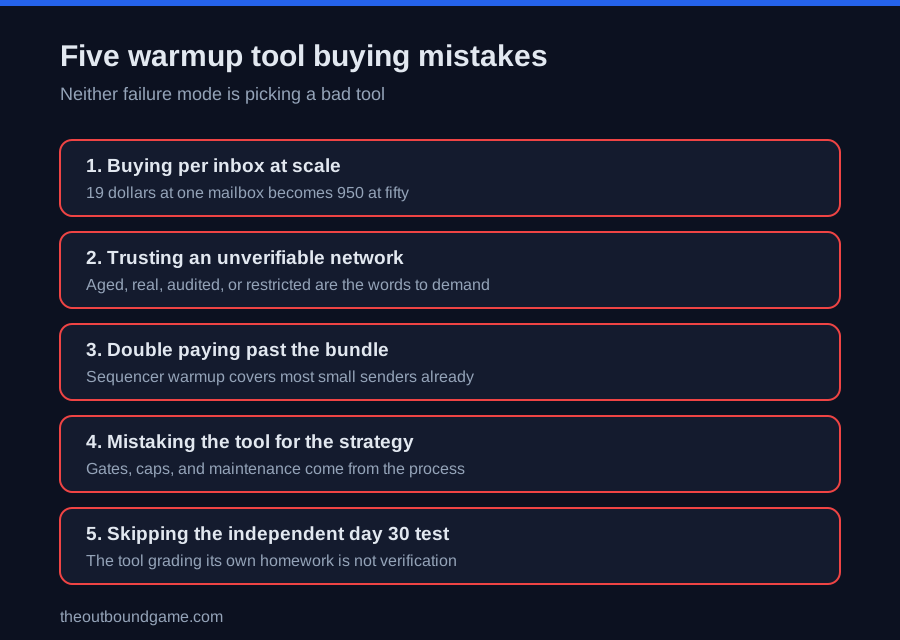
Five warmup tool mistakes that waste the spend
-
Buying per inbox at scale. The model that costs 19 dollars at one mailbox costs 950 at fifty. Match the pricing model to the mailbox count before comparing features.
-
Trusting an unverifiable network. If the vendor cannot say what their pool is made of, assume the worst. Aged, real, audited, or restricted are the words to look for.
-
Buying a second tool the bundle already covers. Sequencer native warmup is sufficient for most small senders; pay for dedicated tools when diagnostics or scale demand it.
-
Treating the tool as the strategy. The tool automates the ramp; the doctrine, gates, maintenance, caps, comes from the process, and skipping it burns domains with any vendor.
-
Launching without an independent placement test. The tool grading its own homework is not verification. Day 30 gets a third party placement check before real volume.
The eight step warmup tool selection playbook
-
Count the mailboxes first, including next quarter’s. The number decides the pricing model, per inbox under 5, unlimited above 10, before any feature matters.
-
Check provider support against your stack. Google and Microsoft only tools are useless to SMTP mixed operations, and vice versa.
-
Take the bundle test. If your sequencer includes warmup, start there and let a real deficiency, not marketing, justify a dedicated purchase.
-
Interrogate the warmup network. Size, account quality, content quality, pool restrictions, in writing from the vendor.
-
Demand the verification layer. Placement testing per ESP, reputation alerts, blacklist monitoring, or budget a separate testing tool.
-
Run the doctrine through the tool. Randomized ramp, engagement realism, pixel free plain text, business hours, bounce and complaint gates.
-
Gate launch on an independent day 30 placement test, then hold maintenance warmup forever at about a fifth of volume inside the daily caps.
-
Review the bill quarterly against mailbox count, because the right tool at 3 inboxes is routinely the wrong tool at 30, the same scaling discipline the whole b2b outbound sales stack demands, from a founder’s first campaign onward.
How warmup tools fit the broader outbound stack
-
They execute the ramp doctrine fixed in how to warm up an email domain, the process this roundup buys software for.
-
Their output defends the placement causes ranked in why cold emails go to spam.
-
Their capacity ceiling feeds the sending math in how many cold emails per day, maintenance included.
-
Their bundled tier lives inside the platforms compared in cold email software and instantly vs smartlead.
-
Their smoke alarm metric afterward is the fixed segment trend from cold email open rates.
-
Their payoff shows up as the placement floor under every tier in cold email benchmarks.
-
Their first buyer is the founder shipping the 60 day roadmap in how to start outbound sales.
-
And their deeper diagnostic layer belongs to the deliverability discipline the sister coverage at The Inbox Ledger owns.
FAQ
Frequently asked questions
What is the best email warmup tool in 2026?
How do email warmup tools work?
How much do email warmup tools cost?
Is bundled warmup in Instantly or Smartlead good enough?
What should you look for in a warmup network?
How long should you run an email warmup tool?
Do warmup tools guarantee inbox placement?
The bottom line
The best email warmup tools in 2026 are separated less by their ramps, which all automate the same doctrine, than by their pricing models and their networks, which is why the buying playbook starts with a mailbox count and a stack audit rather than a feature grid. Take the bundle when you are small and already inside a sequencer, take unlimited the moment the multi inbox architecture arrives, pay the diagnostics premium when you need to know why placement breaks and not just that it did, and interrogate every vendor’s network like the shared infrastructure it is. Then remember what the tool is: plumbing that executes a process, gated by independent placement tests, running forever at a fifth of volume, underneath a reputation that remains, as always, yours to spend.
Want more tested breakdowns like this? We publish one honest teardown of outbound tools, tactics, and playbooks each week. Join the newsletter.
More on Deliverability
How to Warm Up an Email Domain in 2026 (30 Day Plan)
How to warm up an email domain in 2026: the 30 day schedule, the graduation gates, why the calendar is only the input, and the recovery playbook.
How Many Cold Emails Per Day? Safe Limits for 2026
How many cold emails per day is safe in 2026: the per inbox limits, warmup ramp, why the cap includes warmup sends, and the math for scaling volume.
Why Cold Emails Go to Spam in 2026 (and How to Fix It)
Why cold emails go to spam in 2026: the seven causes ranked by how often they are guilty, the thresholds Google enforces, and the fix for each one.